In today’s hyper-competitive business landscape, the allure of keeping options open often overshadows the strategic power of decisive commitment. While many professionals are conditioned to maintain a degree of flexibility, evidence suggests that true competitive advantage, particularly at the executive level and beyond, is forged through unwavering dedication to a chosen path. This principle, often learned through hard-won experience, is emerging as a critical differentiator for leaders and organizations seeking sustained success.
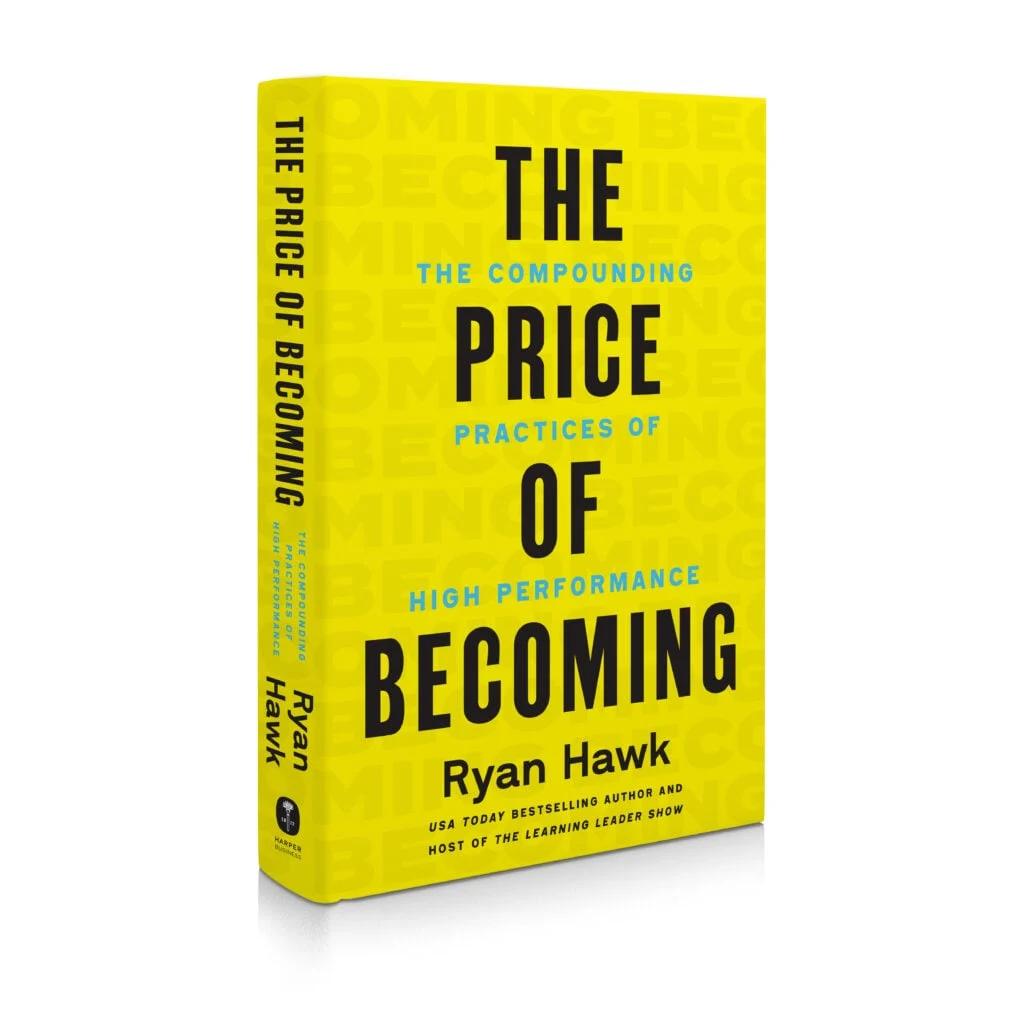
The prevailing cultural narrative frequently champions optionality. This mindset, while seemingly prudent, can inadvertently lead to diffusion of effort and a lack of deep expertise. As leaders attempt to juggle multiple burgeoning opportunities, a common pitfall emerges: becoming average at everything rather than excellent at anything. This was a realization that dawned on Ryan Hawk, host of "The Learning Leader Show" and author of the excerpted material.
Hawk’s personal journey illustrates this point starkly. Several years into establishing his podcast, its burgeoning success presented him with a confluence of promising avenues: keynote speaking engagements, leadership development training requests, and executive coaching offers. Simultaneously, he held the position of Vice President of Sales at a major corporation, overseeing a team responsible for over $500 million in annual revenue. The inherent conflict of trying to excel in both domains became apparent. "I was trying to do it all, and I started to notice a bad pattern: I was becoming average at everything instead of excellent at anything," Hawk recounts.
The critical juncture demanded a choice: either curtail his expanding media presence and the associated opportunities, or leave the corporate world to dedicate himself entirely to the burgeoning enterprise he had inadvertently cultivated. He opted for the latter, a decision that represented a profound commitment to exploring the untapped potential of his media and leadership consulting business. This leap of faith, made in late 2017, was fueled by the conviction that only 100 percent commitment could reveal the true scope of this new endeavor.
The initial years following this pivotal decision were financially challenging. Despite securing good clients, the income generated did not immediately rival his previous VP salary and bonuses. However, the trend since that foundational commitment has been one of consistent year-over-year improvement. Hawk now expresses an inability to envision an alternative career path, emphasizing that the full potential of his chosen direction could only be unlocked through complete dedication and the willingness to make significant sacrifices.
The Strategic Imperative of Commitment
This experience underscores a broader organizational and individual principle: sometimes, the only viable method to ascertain the success of a chosen venture is to systematically eliminate all alternative options and immerse oneself fully in its pursuit. When individuals or teams commit wholeheartedly to a specific trajectory—whether in a relationship, a business venture, or a craft—they unlock levels of achievement that remain inaccessible to those who maintain a partial disengagement.
The inherent fear associated with commitment stems from its necessary corollary: saying "no" to other possibilities. It requires an acceptance that one cannot simultaneously possess, embody, or accomplish everything. This necessitates a reconciliation with the paths not taken, a cognitive and emotional challenge that many in today’s society find difficult to navigate.
The cultural affinity for optionality is often rooted in a perceived sense of safety and reduced discomfort. The rationalization frequently employed is that this approach is "smart" and "strategic," a method of preserving resources and flexibility. However, beneath this veneer of strategic prudence often lies an avoidance of the vulnerability inherent in deep commitment. The truth is that significant achievements, particularly in business and innovation, demand complete dedication. This involves closing off avenues of retreat and taking full ownership of the chosen path. In an environment where keeping options open is highly valued, the courage to commit emerges as a potentially rare and exceptionally valuable asset.
Magnetic Leadership: Cultivating Talent and Trust
The commitment to a particular path naturally raises a subsequent critical question: how does one effectively build the relationships and attract the opportunities that are instrumental to success along that chosen trajectory? The answer, as exemplified by leadership principles, often lies in cultivating a magnetic quality that draws talent and fosters unwavering loyalty.
A compelling case study in this regard is Microsoft’s ambitious undertaking to develop Azure, its cloud computing platform. This initiative was launched against a backdrop of significant internal skepticism, with a substantial portion of the company still believing that the future of technology resided with desktop software. The challenge was immense: to create a cloud platform capable of rivaling the dominance of Amazon Web Services.
Recognizing the need for exceptional leadership, then-CEO Steve Ballmer recruited Dave Cutler, the acclaimed engineer credited with the development of Windows NT. Ballmer recounted this pivotal hiring to the hosts of the "Acquired" podcast, Ben Gilbert and David Rosenthal. He described how Cutler brought with him his "favorite guys," a testament to his ability to attract and assemble high-performing teams. "He brings them over because he’s a magnet for talent and we get started," Ballmer stated.

This anecdote highlights a fundamental aspect of magnetic leadership. It transcends merely hiring individuals; it involves assembling a cohesive unit. Cutler’s ability to draw upon his established network of trusted colleagues, individuals who had previously collaborated with him and recognized the value of his vision, was crucial. These individuals were not simply seeking a job; they were betting on Cutler’s leadership and the likelihood of building something significant under his guidance.
The Compounding Value of Professional Relationships
Every robust professional relationship cultivated over time acts as an investment that appreciates in value. A former manager who contacts you about an emerging opportunity, or a colleague with whom you collaborated effectively, could later become the executive who recruits you to join their innovative startup. This effect compounds exponentially. A single individual who trusts your judgment can influence a dozen hiring decisions throughout their career. Those dozen individuals, in turn, can influence a hundred more.
The mathematical trajectory is favorable, but only if there is a consistent delivery of results and a principled approach to interpersonal interactions. When talented individuals choose to follow a leader to new ventures, it sends a powerful signal to the broader professional community, indicating that the leader is a reliable and valuable asset. This cultivates a virtuous cycle where quality begets more quality.
Cutler’s team followed him because they had prior experience with his leadership, understood the caliber of challenges they would address, and respected the high standards he maintained. This established track record proved more persuasive than any job advertisement or financial incentive.
Demonstrating Character in Every Interaction
Magnetic leadership is not an inherent trait but rather a quality forged through consistent behavior in everyday interactions. It is demonstrated in how disagreements are handled under pressure, how credit is shared during project successes, and how setbacks are navigated with resilience. These seemingly small moments accumulate and shape perceptions.
Individuals observe how leaders support their teams during challenging periods, such as layoffs, and how they treat those who cannot directly advance their careers. These cumulative actions build a reputation that ultimately determines whether people will willingly follow a leader into uncertain situations.
The development of this magnetic quality necessitates a long-term perspective, extending beyond quarterly objectives. It involves investing in enduring relationships, prioritizing collective team success over individual accolades, and upholding high standards even when inconvenient. This patience creates durable advantages that are difficult for competitors to replicate. While many professionals optimize for immediate gains, magnetic leaders focus on cultivating long-term trust and consistently delivering value.
The impact of this approach compounds over time. The ability to attract top talent becomes increasingly valuable as a career progresses. Each successful project, each strong relationship, and each demonstration of reliable leadership contributes to a reputation that unlocks opportunities previously inaccessible.
The Ultimate Competitive Edge
When organizations confront their most significant challenges, they seek more than just skilled individuals. They desire individuals capable of attracting and collaborating with other exceptional people. This is the fundamental difference between being hired for one’s existing skills and being recruited for the potential talent upgrade one represents to the entire organization.
The ability to become a magnet for talent is not a matter of innate charisma or political maneuvering. It is the product of consistently delivering results, treating individuals with respect, and building trust through reliable conduct over an extended period. For those willing to make this sustained investment, it yields a form of career leverage that grows exponentially throughout their professional lives, empowering them to tackle problems that would otherwise be insurmountable. The most significant benefit is that, once this reputation is established, opportunities begin to seek out the leader, rather than the other way around.
This phenomenon has tangible implications for corporate strategy and individual career development. Organizations that foster environments where magnetic leadership can thrive are better positioned to attract and retain top-tier talent, a critical factor in innovation and market competitiveness. For individuals, cultivating these leadership qualities is not merely about personal advancement; it is about building the capacity to lead impactful initiatives and contribute significantly to organizational success. The principle of commitment, coupled with the cultivation of magnetic leadership, represents a powerful, albeit often overlooked, pathway to sustained competitive advantage in the modern business world.