Apex Logistics, a prominent mid-sized supply chain and logistics firm with a workforce of 3,200 employees, is currently navigating a complex ethical and operational challenge. The company, which manages end-to-end freight, warehousing, and last-mile delivery operations across India, finds itself at a crossroads following a pre-joining disclosure from its new Regional Head of Operations, Neha Joshi. Joshi, a standout candidate appointed to spearhead a critical two-year transformation mandate, informed the company two weeks before her scheduled start date that she is three months pregnant. This revelation has thrust Apex Logistics into a nuanced dilemma, testing its commitment to inclusion against the immediate operational demands of a high-stakes leadership role requiring significant travel across six states and direct accountability for nearly a quarter of the company’s revenue.
The Critical Appointment and Its Mandate
The search for a Regional Head of Operations at Apex Logistics had been an arduous three-month process. The role, designed to lead a vital two-year transformation initiative, is pivotal for the company’s strategic growth and efficiency. It demands a leader with a strong track record, exceptional strategic acumen, and the agility to navigate the complexities of India’s diverse logistics landscape. Crucially, the position entails extensive travel across six states, particularly during its nascent stages, to drive immediate operational overhauls and integrate new strategies on the ground. The business unit under this role’s purview contributes a substantial portion of Apex’s revenue, underscoring the urgency and impact of its mandate.
Neha Joshi emerged as the unanimous choice from a highly competitive pool of candidates. Her impressive background in supply chain leadership, coupled with her compelling performance during multiple interview rounds, left the hiring panel with little doubt about her suitability. Her capability to deliver on the demanding transformation mandate was unquestioned, and her experience perfectly aligned with the role’s requirements. An offer was extended, enthusiastically accepted by Joshi, and all parties looked forward to her joining.
A Timely Disclosure and the Unfolding Dilemma
The situation took an unexpected turn two weeks before Neha Joshi’s official joining date. She proactively contacted Apex Logistics’ HR department to disclose her pregnancy, revealing she was three months along. Joshi explained that while she had not disclosed this personal information during the hiring process – which she was under no legal or ethical obligation to do – she felt it was important to inform the organization before her commencement. Her decision, framed as an act of professional trust, aimed to provide transparency regarding a significant life event that could potentially impact the immediate execution of her role.

Apex Logistics leadership acknowledges that Joshi’s pregnancy does not diminish her qualifications, expertise, or her capacity to eventually fulfill the two-year transformation mandate. Her capability, experience, and the strategic importance of her appointment remain undisputed. However, the disclosure immediately introduces a new variable into the operational equation. The extensive travel requirements, particularly critical for the initial phase of the transformation, now clash with the practical considerations of late-stage pregnancy and impending maternity leave. The business cannot simply halt a critical transformation, and Apex must now meticulously consider how the next six to nine months will unfold differently from its initial plans.
The core dilemma for Apex Logistics crystallizes into several critical questions:
- Honouring the Offer Unconditionally: Should Apex proceed with the offer exactly as made, absorbing all necessary operational adjustments, and treating Neha’s pregnancy as any other personal circumstance arising post-offer acceptance? This path aligns with a strong commitment to non-discrimination and inclusion.
- Initiating Role Modification Discussions: Should the organization engage in a conversation about temporarily modifying certain aspects of the role? While potentially practical, this approach carries the risk of Neha perceiving it as a consequence of her disclosure, regardless of how sensitively it is handled.
- Preserving Role and Seniority with Practical Accommodations: Is there a middle ground that preserves the role, mandate, and seniority precisely as offered, while simultaneously agreeing on temporary, practical accommodations for travel and operational coverage? This option seeks to balance business needs with individual circumstances.
Navigating the Ethical and Legal Landscape
This scenario presents Apex Logistics with a profound test of its stated commitment to diversity, equity, and inclusion (DEI) when confronted with genuine operational complexities. The distinction is crucial: Neha’s pregnancy does not make her less capable of being a Regional Head of Operations; it merely alters the immediate circumstances of her role execution. If Apex were to diminish Neha’s opportunity due to her pregnancy, it risks setting a dangerous precedent, turning professional transparency into a career disadvantage. Conversely, ignoring the operational implications entirely would replace genuine inclusion with a mere pretence, potentially jeopardizing the urgent transformation. A truly progressive organization, therefore, must be adept at safeguarding both the opportunity for its talent and the strategic imperatives of its business.
In India, the Maternity Benefit Act, 1961, provides significant protections for women in the workplace. It mandates paid maternity leave, prohibits dismissal of a woman during pregnancy or maternity leave, and generally aims to protect the employment of women during this period. While the Act primarily addresses existing employees, its spirit extends to preventing discrimination against pregnant women in hiring and ensuring continuity of employment. Any action that could be construed as discriminatory based on pregnancy, even if subtly framed as an "operational adjustment," carries significant legal and reputational risks for the employer.
There’s also the question of Neha’s non-disclosure during the hiring process. Legally and ethically, candidates are generally not obligated to volunteer personal information that is not directly relevant to their ability to perform the job. Pregnancy, like many other personal circumstances, falls into this category. Neha’s decision to disclose before joining can be interpreted as a gesture of trust and professionalism, allowing Apex to plan proactively rather than facing a surprise after her commencement. However, some might argue that given the explicit and significant travel requirement, an earlier, albeit voluntary, disclosure might have facilitated a smoother pre-joining discussion about potential accommodations. Yet, this perspective often overlooks the societal pressures women face regarding career progression and family planning, making them hesitant to disclose personal information that could, rightly or wrongly, impact their candidacy.
The time horizon of the role is also a crucial factor. Apex has hired Neha for a two-year transformation mandate, not merely for the initial six months. A temporary constraint, such as late-stage pregnancy and early maternity, should ideally not determine a long-term leadership decision. Organizations routinely accommodate employees facing temporary challenges such as illness, injury, or other caregiving responsibilities, adapting roles temporarily without questioning long-term capability or commitment.

The ultimate question for Apex is not whether it can pretend nothing has changed; clearly, something has. Instead, it is whether the organization can respond to this change without allowing pregnancy to diminish the opportunity it has already deemed Neha worthy of. The deeper, more resonant question that emerges is: when an employee’s honesty creates inconvenience for the organization, does the organization reward the trust behind the disclosure or inadvertently penalize the employee for it?
Insights from HR Leadership
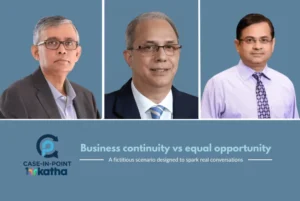
To gain diverse perspectives on this complex scenario, Apex Logistics’ leadership likely sought counsel from experienced HR professionals. Three prominent HR leaders shared their approaches to similar dilemmas, offering valuable insights into balancing ethical obligations with business realities.
Praveen Purohit, CHRO, Vedanta Aluminium, Power, Mines and Port, highlighted the multi-faceted nature of the problem. While acknowledging that an ideal scenario would involve earlier disclosure from the candidate, he emphasized that a progressive organization should prioritize finding a practical solution rather than creating negativity. Purohit suggested exploring an interim alternative role if the original position’s immediate demands were truly unfeasible, with a clear understanding that the original opportunity could be revisited later. He stressed that while transparency from the candidate is the "gold standard," companies must also demonstrate flexibility and empathy, giving the candidate "the benefit of the doubt" in situations involving maternity.
Vivek Tripathi, Senior HR Leader, focused on the critical importance of how any decision is communicated. He asserted that pregnancy should not disqualify a candidate from a leadership role, drawing a parallel to an existing employee becoming pregnant – an event that would not lead to demotion. Tripathi advocated for not renegotiating the fundamentals of the role but engaging in conversations around "reasonable and temporary accommodations." He suggested that if extensive travel is temporarily difficult, another team member could provide support, allowing Neha to retain ownership of the role’s long-term mandate. This approach, he argued, makes the situation workable without signaling that pregnancy has diminished her suitability for leadership.
Chandrasekhar Mukherjee, Senior HR Leader, strongly advocated for honouring the offer once made, emphasizing ethical and moral obligations. He dismissed concerns about non-disclosure during interviews, noting that candidates are not obligated to share personal information and may not even be aware of their pregnancy at that stage. Mukherjee highlighted that Neha’s disclosure before joining demonstrated honesty. He further reasoned that if an existing employee were to face a temporary limitation (e.g., illness, accident), the organization would build a support system around them rather than reduce their opportunity. He proposed adding temporary capacity to support the function during Neha’s limited travel period, believing that "doing the right thing creates a stronger employee proposition" and builds trust, ultimately strengthening retention.
Broader Implications and the Business Case for Inclusivity

This case at Apex Logistics transcends a single hiring decision; it reflects a broader societal challenge faced by women in leadership roles across industries. Despite increasing awareness of gender diversity, women often encounter subtle and overt biases related to family planning and maternal responsibilities. Companies that navigate such situations with empathy, foresight, and adherence to inclusive principles stand to gain significantly in terms of employer branding, talent attraction, and retention.
The business case for inclusivity is compelling. Organizations that successfully support women through maternity and beyond report higher employee morale, reduced turnover, and a more diverse leadership pipeline. A supportive stance by Apex Logistics would send a powerful message not only to Neha but to its entire female workforce and the broader talent market. It would solidify Apex’s reputation as a progressive employer, capable of adapting to individual circumstances while driving critical business objectives. Conversely, any perceived unfair treatment could severely damage its employer brand, making it harder to attract top talent in a competitive market.
Apex Logistics’ Path Forward
Given the urgency of the transformation mandate and the need for immediate action, Apex Logistics is likely considering a comprehensive approach that integrates the best elements of the expert advice. This might involve:
- Affirming the Offer and Role: Reassuring Neha Joshi that her offer, role, and long-term mandate remain unchanged, reinforcing Apex’s commitment to her capabilities and the importance of her leadership.
- Collaborative Accommodation Planning: Engaging in an open, empathetic dialogue with Neha to collaboratively design a temporary accommodation plan. This would focus on how the extensive travel and initial on-ground presence can be managed for the next 6-9 months without diminishing her authority or long-term accountability.
- Leveraging Temporary Support: Deploying temporary resources or reallocating existing team members to provide on-ground support for the initial travel-intensive phase. This could involve senior managers temporarily overseeing specific state operations or a dedicated project manager facilitating initial groundwork, reporting directly to Neha.
- Flexible Work Arrangements: Exploring enhanced virtual collaboration tools, strategic scheduling of essential in-person meetings, and phased onboarding that prioritizes critical strategic planning and team building remotely before physical presence becomes more feasible.
- Clear Communication and Support: Establishing clear communication channels and offering robust support systems, including access to employee assistance programs, to ensure Neha feels valued and supported throughout her pregnancy and return to work.
- Long-Term Vision: Emphasizing that these are temporary adjustments for a defined period, after which Neha is expected to fully resume all aspects of her demanding role, reaffirming the company’s long-term investment in her leadership.
The real test for Apex Logistics lies in its ability to uphold its values of inclusion while effectively managing its operational imperatives. The decision it makes will not only shape Neha Joshi’s career trajectory but also define Apex’s identity as a responsible and progressive employer in India’s dynamic business landscape. The deeper question remains unavoidable: when an employee’s honesty creates inconvenience for the organization, should that honesty change the opportunity she was already judged capable of handling? Apex Logistics’ response will provide a definitive answer.