Early indicators of hiring demand are showing signs of improvement, Randstad executives said on Wednesday, suggesting a labor-market downturn that has weighed on staffing firms for more than two years may be beginning to bottom out. Chief Executive Sander van ‘t Noordende stated that demand improved across a broad range of markets during the second quarter, led by Randstad’s operational, or blue-collar, business and temporary staffing services, which typically recover ahead of permanent recruitment. This optimistic outlook, shared by one of the world’s largest human resources services companies, signals a potential shift in the employment landscape that has been characterized by cautious hiring and reduced labor demand since the post-pandemic economic recalibration.
The nuanced recovery observed by Randstad is not uniform across all sectors. In the United States, for instance, Randstad’s revenue saw a 4% increase, primarily driven by a substantial 13% surge in its operational business. Conversely, professional staffing revenue experienced a 6% decline. This divergence highlights that the nascent recovery is currently concentrated in the more cyclical segments of the labor market, which are often the first to rebound as economic activity picks up. Germany, Europe’s largest economy and a critical market for recruitment agencies, presented a similar pattern, further underscoring the trend of operational and temporary roles leading the charge.
The "Big Clients Move First" Phenomenon
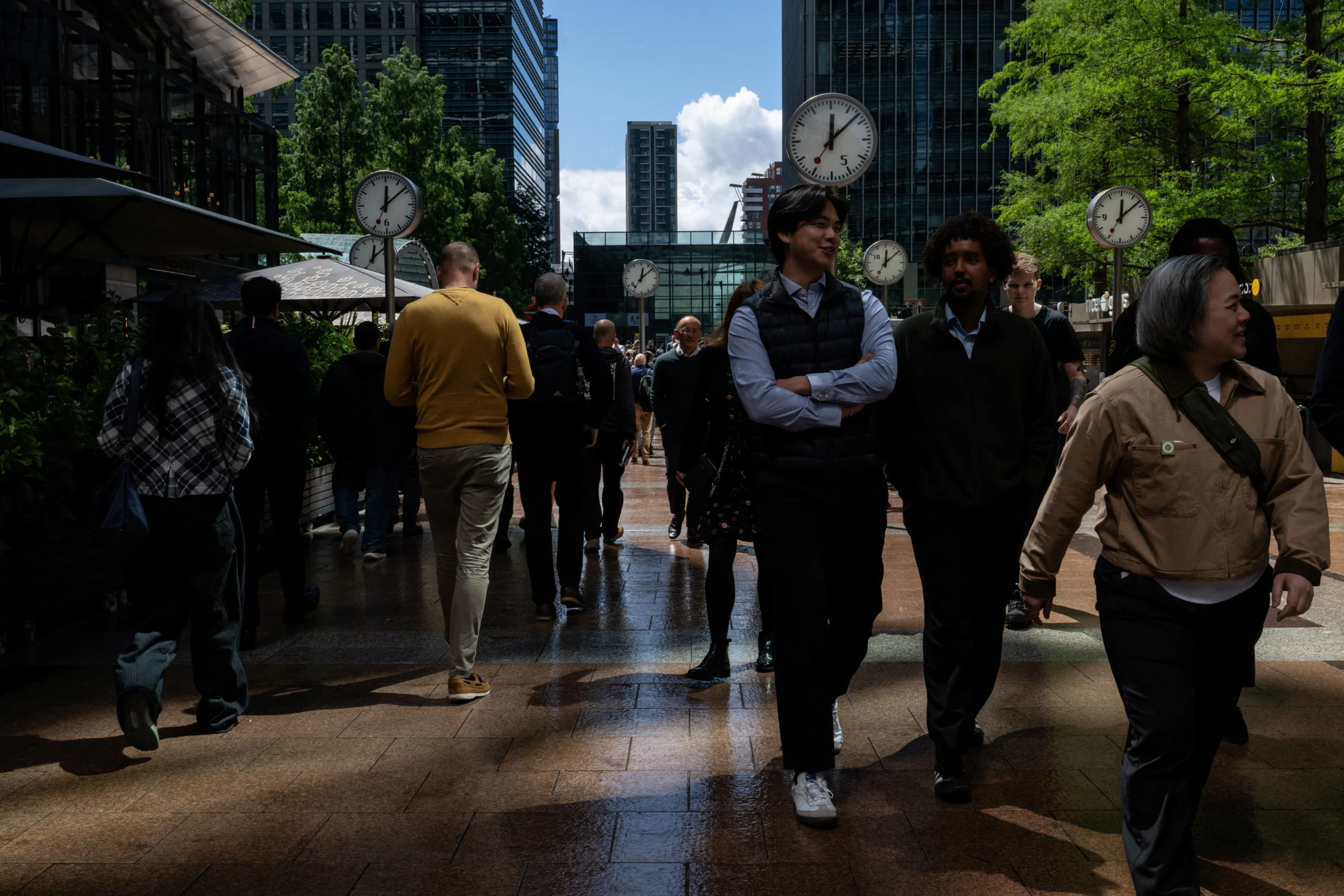
A key observation from Randstad’s leadership is the differentiated approach taken by businesses of varying sizes. According to van ‘t Noordende, larger corporate clients have demonstrated a greater willingness to engage in hiring activities, while smaller businesses continue to adopt a more reserved, "wait-and-see" stance. "The larger customers have been less shy," van ‘t Noordende commented, drawing a clear contrast with smaller enterprises that are still exercising caution in their recruitment strategies. This suggests that established corporations, often with more robust financial reserves and clearer strategic outlooks, are better positioned to capitalize on any emerging market stabilization.
This sentiment was echoed by Chief Financial Officer Jorge Vazquez, who highlighted improving labor market indicators in the United States. Vazquez noted that the hiring rate, which has remained below pre-pandemic levels since the post-COVID economic slowdown, was beginning to edge higher. This upward tick in hiring rates, even if modest, is a crucial data point for the staffing industry, which relies heavily on the overall health and dynamism of the job market.
Historical Context and Market Sentiment
The staffing industry has been under pressure for an extended period. Following the surge in hiring during the initial post-pandemic economic rebound, many sectors experienced a slowdown as global economic headwinds, including inflation, rising interest rates, and geopolitical uncertainties, took hold. This led to a contraction in demand for both temporary and permanent roles, impacting the revenue and profitability of companies like Randstad. The current signs of improvement, therefore, are particularly significant, suggesting that the prolonged downturn may be reaching its nadir.

The financial markets have also begun to reflect this growing optimism. Shares in European staffing companies have experienced a notable rally in recent weeks. This upward trend is attributed to improving business surveys and positive hiring indicators, which are fueling hopes that the sector is nearing a turning point after a protracted period of subdued activity. This investor confidence can be a self-fulfilling prophecy, as it can encourage companies to invest more in their workforce and expansion plans.
Analyzing the Early Indicators: Operational vs. Professional Roles
The distinction between the recovery in operational (blue-collar) and temporary staffing versus the continued subdued nature of permanent recruitment is a critical insight. Operational roles often encompass essential services and production, which are typically among the first to see increased demand when economic activity accelerates. Similarly, temporary staffing serves as a flexible tool for businesses to scale their workforce up or down in response to fluctuating demand, making it a sensitive barometer of immediate hiring needs.
The fact that these segments are showing resilience and growth suggests that businesses are beginning to increase their operational capacity and manage short-term labor needs more actively. This can be a precursor to increased confidence in long-term economic stability, which in turn would drive demand for permanent hires. However, the lag in permanent recruitment indicates that while companies are becoming more comfortable with immediate staffing needs, they may still be exercising caution regarding long-term commitments, perhaps awaiting further confirmation of sustained economic recovery.

Supporting Data and Economic Underpinnings
While the article provides specific revenue figures for Randstad in the US, a broader look at macroeconomic data can further contextualize these observations. For instance, the US Bureau of Labor Statistics (BLS) has been reporting on job openings and labor turnover. While job openings have seen some moderation from their record highs, they still indicate a degree of employer demand. Similarly, the unemployment rate has remained historically low in many developed economies, suggesting a tight labor market in certain areas, which can paradoxically lead to more active hiring to fill essential roles, even amidst broader economic caution.
The Federal Reserve and the European Central Bank have been engaged in monetary policy tightening to combat inflation. As these policies begin to show their full effect, and as inflation rates potentially stabilize, businesses may find more certainty in their future cost structures and revenue projections. This increased certainty is a crucial factor in fostering a more robust hiring environment. Furthermore, government stimulus programs or infrastructure projects, where applicable, can also create demand for operational and skilled labor, contributing to the observed trends.
Broader Implications for the Labor Market
The potential bottoming out of the labor market downturn has significant implications for both employers and job seekers. For employers, it suggests a gradual easing of the hiring challenges that many have faced, potentially leading to a more balanced labor market where talent acquisition becomes slightly less competitive. However, the continued strength in demand for operational and temporary roles also implies that specialized skills and reliable labor will remain in demand.

For job seekers, especially those in sectors that are leading the recovery, this trend is encouraging. It suggests an increase in opportunities, particularly in roles that are essential for business operations. Those seeking permanent positions may need to continue demonstrating their value and adaptability, as the pace of permanent hiring might still be catching up. The focus on larger clients being less shy about hiring also indicates that opportunities might be more abundant with established, larger corporations in the immediate future.
The insights from Randstad serve as an important early signal, but sustained recovery will likely depend on several factors. Continued moderation of inflation, stable interest rate environments, and the absence of major geopolitical shocks will be critical. The ability of businesses, particularly small and medium-sized enterprises, to regain confidence and invest in their workforce will also play a pivotal role in shaping the broader employment landscape in the coming quarters. The staffing industry, acting as a vital intermediary, will be keenly observing these developments and adapting its services to meet the evolving needs of the market.
The current phase, characterized by a divergence in recovery across different segments of the labor market, is a common feature of economic cycles. The leadership at Randstad appears to be prudently interpreting these early signals, recognizing that while a full-scale hiring boom may not be imminent, the trajectory is shifting towards a more positive outlook. This nuanced understanding is essential for businesses and individuals alike as they navigate the complexities of the global economy. The next few months will be crucial in determining whether these initial positive indicators translate into a sustained and broad-based improvement in hiring demand.