A palpable tension filled the executive boardroom. The Vice President, tasked with navigating a critical budget allocation, faced a room of seasoned leaders locked in fierce debate over two strategic initiatives vying for the same limited funds. Arguments, meticulously prepared and data-laden, had reached an impasse, leaving the VP at a standstill, the weight of the decision pressing down. In a moment that defied conventional meeting protocol, the VP paused, not to close the door and signal a private decision, but to beckon a young protégé into the room with a whispered invitation: "Come in. See how this meeting unfolds." This seemingly small act of inclusion, witnessed by questioning senior leaders, became a pivotal illustration of a fundamental truth about leadership development and organizational resilience: wisdom, when hoarded, depreciates; when shared, it compounds.
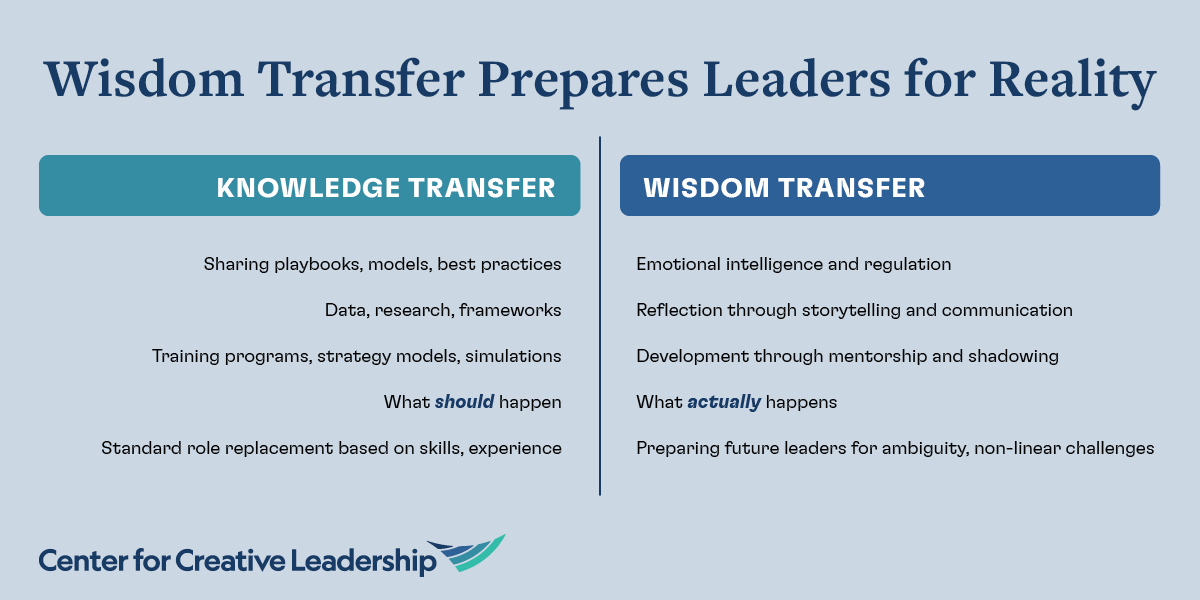
This vignette, drawn from a recent study on leadership succession, encapsulates a growing concern within the corporate world: the inadequacy of traditional succession planning models. For decades, organizations have focused on a transactional approach, prioritizing the transfer of technical knowledge and the fulfillment of procedural checklists. This "knowledge transfer" model, while essential for day-to-day operations, falls short when confronting the unpredictable complexities and unforeseen challenges that define real-world leadership. The study, conducted by the Center for Creative Leadership (CCL), highlights that true readiness for leadership roles, particularly at senior levels, hinges on a deeper, more nuanced form of development: wisdom transfer.
The Limitations of Knowledge Transfer in a Complex World
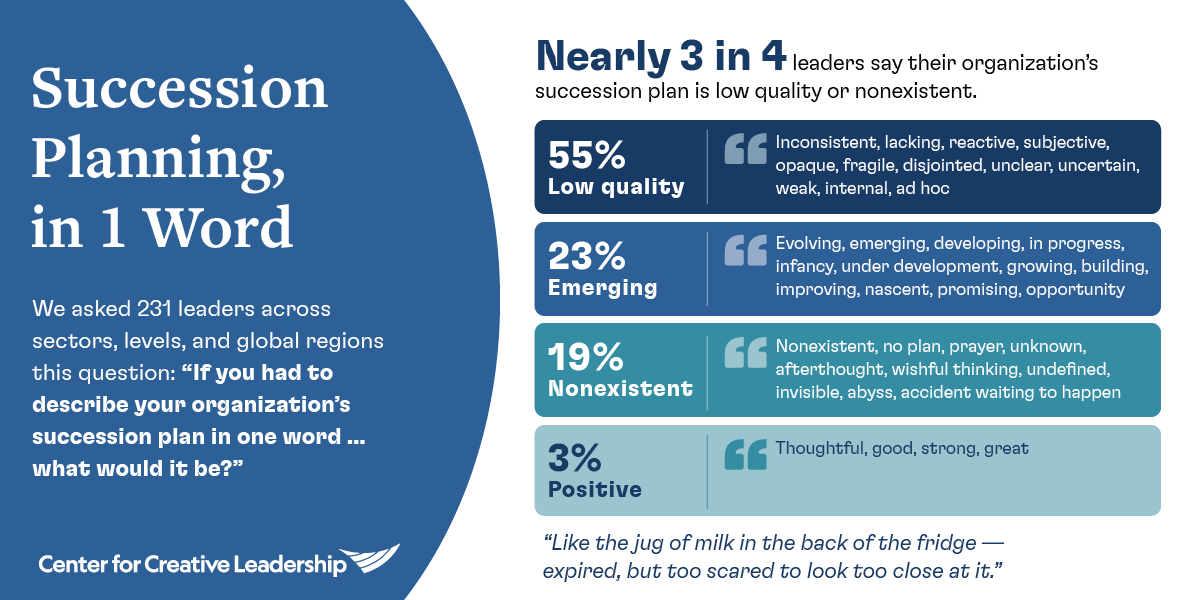
Succession planning, as commonly practiced, often resembles a reactive scramble. Organizations meticulously document responsibilities, outline required competencies, and identify potential successors based on demonstrated skills and experience. This process typically involves completing forms, deploying frameworks, and communicating best practices – all vital components for ensuring continuity in routine operations. Knowledge transfer answers questions such as: "Who possesses the technical expertise for this role?" or "What are the standard operating procedures for this function?"
However, this approach falters when faced with the "real" scenarios that define leadership’s most critical moments. C-suite executives frequently report that the most significant leadership challenges occur outside of predictable, ideal circumstances. These moments can include unexpected departures of key personnel, abrupt shifts in market dynamics, geopolitical crises, or internal organizational transformations that push leaders beyond their formally trained capabilities. In these high-stakes situations, a leader’s ability to interpret context, anticipate consequences, and exercise sound judgment under pressure – the essence of leadership wisdom – becomes paramount.
The CCL research indicates that organizations relying solely on knowledge transfer often struggle to balance short-term operational needs with long-term strategic vision. Without proactively cultivating this deeper leadership capacity, they lack the foresight to identify roles that, when vacant, would cause the most significant disruption, nor do they possess the high-leverage strategies to mitigate such risks. This reactive stance prevents them from building the robust "wisdom infrastructure" necessary to identify and nurture future leaders before they are critically needed.
Wisdom Transfer: The Shift from Replacement to Readiness
Leadership wisdom is not merely the accumulation of experience; it is the ability to synthesize that experience into insightful judgment and discerning action. It involves the capacity to navigate ambiguity, understand underlying dynamics, and make sound decisions in the face of uncertainty and competing priorities. Wisdom transfer, therefore, is the intentional and systematic sharing of this judgment, experience, and discernment from one generation of leaders to the next.

The study posits that organizations achieving effective leadership transitions prioritize the transfer of wisdom as a central tenet of their succession infrastructure. This shift reframes succession planning from a static, procedural exercise into a dynamic, strategic mindset. It encourages leaders to view succession not as a mere administrative task, but as a profound leadership opportunity to cultivate the next wave of capable individuals.
Consider the VP in the opening anecdote. His decision to invite the protégé into the tense budget meeting was not about imparting specific financial data. It was about demonstrating how to lead through ambiguity. The protégé’s observation of the VP’s real-time calculations, persistent "why" questions, and emotional regulation to balance competing priorities with a commitment to a shared direction offered an invaluable lesson. The subsequent debrief, where the discussion focused not just on the data but on the VP’s deliberative pause and the power of waiting, underscores the essence of wisdom transfer. This is the kind of development that rarely appears in a job description or a formal succession plan, yet it is crucial for building future leaders’ capacity to imagine, request, and ultimately offer such developmental experiences themselves.
Building the Wisdom Infrastructure: Avenues for Transfer
To embed wisdom transfer into an organization’s DNA, a deliberate and multi-faceted approach is required. The CCL research outlines four core elements that form the structural pillars of a modern, wisdom-powered succession system:
1. Witnessing Decisions in Real-Time
Emerging leaders gain invaluable insights by observing consequential decisions as they are made at higher leadership levels. This practice goes beyond simply attending meetings; it involves cultivating the capacity to sense undercurrents, anticipate shifts, and respond with discernment rather than rote procedure. Organizations can foster this by designing development journeys that encourage interpretation and integration of these observations into their own evolving leadership thinking. These experiences provide a clearer understanding of the essential, often unwritten, capabilities required for advancement. Witnessing judgment in action is one of the most potent forms of wisdom transfer.
- Implication: By actively mapping high-stakes decision-making moments and considering who is present and who should be, organizations can strategically involve emerging talent in these critical learning opportunities.
2. Communicating Continuity Through Leadership Transition
Leadership transitions are often unpredictable, occurring during periods of organizational change or uncertainty. Navigating these moments requires leaders who can consistently orient themselves and their organizations within shifting landscapes. A powerful practice identified in the research is the establishment of a "wisdom council." This council comprises individuals with real influence and deep institutional memory, ensuring representation from all major functions, either through their leaders or their most trusted direct reports. Such a network can collectively address fundamental questions: "Who are we? Who are we becoming? What must we carry forward?"
Organizations that fail to answer these questions during transitions risk calcifying around outdated strengths or abandoning those that were foundational to their success. The answers reside within people, and they surface when wise leaders can accurately read the room and articulate sentiments that others may feel but cannot yet express.
- Implication: Proactively identifying individuals who embody the organization’s historical context and values, and ensuring their voices are heard during transitions, is crucial for maintaining strategic continuity and preventing the loss of institutional memory.
3. Fostering Developmental Relationships
Wisdom flourishes in environments of trust and honesty, and developmental relationships are the primary conduits for its transfer within organizations. These relationships provide emerging leaders with indispensable guidance as they prepare for and assume new roles. Judgment, a critical leadership attribute that is abstract and difficult to teach formally, is effectively transferred through these connections. Seasoned leaders can walk through hypothetical scenarios, articulate their reasoning processes, compare thought processes, and discuss the factors influencing their consequential decisions.
The research highlights that these developmental relationships can endure for decades, even after formal roles have ended, indicating that wisdom transferred through personal connections compounds over time and does not expire with a change in position.
- Implication: Organizations must actively identify and protect existing developmental relationships, ensuring they are sustained and nurtured even as individuals transition between roles.
4. Mapping Influence Networks
Organizational wisdom does not always reside within the formal hierarchy. It is often concentrated at critical nodes where leaders are deeply connected to multiple stakeholders and diverse perspectives. Network science consistently demonstrates that the most influential carriers of wisdom and institutional memory are frequently found at the "edges and bridges" of an organization – individuals who connect disparate groups.
Three key network properties are crucial for effective succession:
-
Status: Reflects the depth and breadth of a leader’s connections. Wisdom-rich leaders are embedded across multiple influence circles, and their value to succession planning can be overlooked until their departure.
-
Boundary Spanning: The ability to carry perspectives across functions, generations, and organizational lines. Boundary spanners often lead without formal authority, controlling information flow and setting agendas. Their relational influence can be invisible to traditional succession planning, which often focuses on positional authority.
-
Coalition Capacity: The ability to build trust across differences and hold competing perspectives in productive tension. Organizations that lose this capacity during leadership transitions struggle to attract and develop future leaders.
-
Implication: By mapping these influence networks, organizations can identify individuals who possess critical, often latent, wisdom and ensure their insights are leveraged in succession planning, thus building greater organizational resilience and fostering innovation.
The Value Proposition of Wisdom Transfer
In an era where artificial intelligence can generate competency frameworks, feedback templates, and succession documents instantaneously, the true value lies in what cannot be automated: the human labor of wisdom. The VP who opens the door, the mentor who maintains a connection across decades, the council convened to guide an organization through a difficult transition – these actions demand time, presence, and dedicated energy. It is precisely these "costs" that imbue wisdom transfer with its profound value.
Years of studying successful leadership transitions have led to a critical conclusion: succession plans falter when the transfer of wisdom ceases. The nuanced judgment, the hard-won instincts, and the deep perspective forged through years of navigating reality and complexity are what wisdom transfer aims to preserve and propagate. When implemented effectively, succession planning evolves from a risk-mitigation strategy into a regenerative leadership system that grows wiser with each transition.
The future of leadership, and indeed organizational sustainability, hinges on this deliberate cultivation of wisdom. The organizations that thrive will be those that recognize leadership wisdom as their most valuable asset, understanding that its worth is preserved only through intentional transference. This work, while not automatable, is foundational to building a workforce that is not only prepared to keep the lights on but is also visionary enough to know where to shine them next. It begins with a simple, yet powerful, act: an open door, an invitation to learn, and a commitment to sharing the intangible essence of leadership.
Ready to Take the Next Step?
Succession works best when leadership is transferred, not just assigned. Learn how our new Succession Reimagined program helps you build it.