The explosive growth of generative artificial intelligence, heralded by the impressive capabilities of frontier models from companies like OpenAI and Anthropic, is undergoing a significant transformation in the enterprise landscape. While these foundational models command massive valuations, the true return on investment (ROI) for businesses is increasingly being derived from the practical applications and the unique data that power them, rather than the underlying AI technology itself. This evolution mirrors a pivotal shift observed in the relational database market during the 1990s, where the focus moved from the database technology to the applications built upon it.
This paradigm shift is underscored by the growing availability of both proprietary "frontier" models from major players like Microsoft (MAI), Google, and Anthropic, alongside a burgeoning ecosystem of free, open-source alternatives such as GLM, Deepseek, Kimi, Mistral, and IBM’s Granite. This proliferation of powerful AI tools prompts a critical reevaluation: should companies continue to "buy AI" simply for its novelty and impressive demonstrations, or should they embrace it as another sophisticated tool within their existing technology stack, aimed at solving specific business problems?
Microsoft CEO Satya Nadella, in a recent article published by The Wall Street Journal titled "We Can’t Let AI Giants Eat the Economy," echoed this sentiment, aligning with the view that AI is transitioning from a revolutionary novelty to an integrated enterprise technology. This perspective is supported by recent research, which indicates that only a small fraction of companies are currently developing robust enterprise AI applications. A forthcoming report, "Enterprise AI Playbook," based on research involving over 200 companies, found that approximately 8% are actively building substantial enterprise AI solutions. A significant portion of remaining companies appear to be adopting AI on a more ad-hoc basis, with an expectation that individual employees will discover its utility, often treating it as an employee perk.
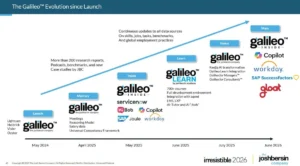
The challenge with this "employee-driven adoption" approach is the potential for inefficiency and wasted resources. As demonstrated by the use of tools like Galileo, which leverages models such as Claude but is designed for specific problem-solving, without a clear focus on domain-specific challenges and business objectives, employees can easily become engrossed in exploring the capabilities of AI tools without generating tangible business value. This is particularly true when consumption costs are not carefully managed.

The Maturing Enterprise Technology Lifecycle
The trajectory of AI adoption within enterprises is increasingly mirroring the established lifecycle of traditional enterprise technologies. In a typical technology acquisition scenario, organizations rigorously evaluate solutions based on a compelling business case, collaborate with IT departments to ensure security and data integration, and implement systems with clearly defined goals and measurable ROI. This methodical approach is evident in the adoption of specialized AI applications, such as those offered by Paradox, Eightfold, or Radancy, which are designed to address specific business functions. However, this structured process has been less common with the direct acquisition of foundational AI models like Claude, where the expectation has sometimes been that simply providing access will yield positive outcomes.
The inherent "fun and interesting" capabilities of generative AI—such as code generation, image creation, data analysis, and question answering—do not automatically translate into business value, especially when faced with the significant consumption costs associated with these powerful models. The real payoff for AI in the corporate world is intrinsically linked to an organization’s proprietary data, its existing applications, and its unique operational context.
The initial exuberance surrounding AI has been partially fueled by substantial investment, with an estimated $1.5 trillion from forward-looking investors supporting the development of the underlying infrastructure, including engineers, data centers, advanced processors like those from NVIDIA, and energy resources. However, as these investments mature, the expectation of tangible returns will intensify. The era of "free" experimentation with AI is drawing to a close, with increased costs for usage and exploration anticipated. This trend is further amplified by recent price adjustments, such as Apple’s notable price increase for its AI-integrated products, signaling a broader market trend towards monetization.
The Emergence of AI Price Wars and Commoditization
The recent emergence of price wars among major AI vendors, as reported by The Wall Street Journal, is a significant indicator of AI’s progression toward becoming a commodity. When leading providers like OpenAI and Anthropic begin to engage in competitive pricing strategies, it suggests a market where switching costs are becoming lower and differentiation is shifting from the core technology to value-added services and applications.
Satya Nadella’s vision for Microsoft’s AI offerings, particularly its "Microsoft AI" (MAI) models, which are reportedly priced significantly lower than frontier offerings, exemplifies this trend. The objective is to make AI more accessible and cost-effective for enterprises, aligning with Nadella’s concern about the potential for a few dominant AI players to disproportionately influence the economy. This competitive pricing strategy is characteristic of a maturing commodity market, where the cost of a technology is more closely aligned with the value it delivers and the specific problems it solves.
The Slowdown in Model Improvement: A Boon for Applied AI
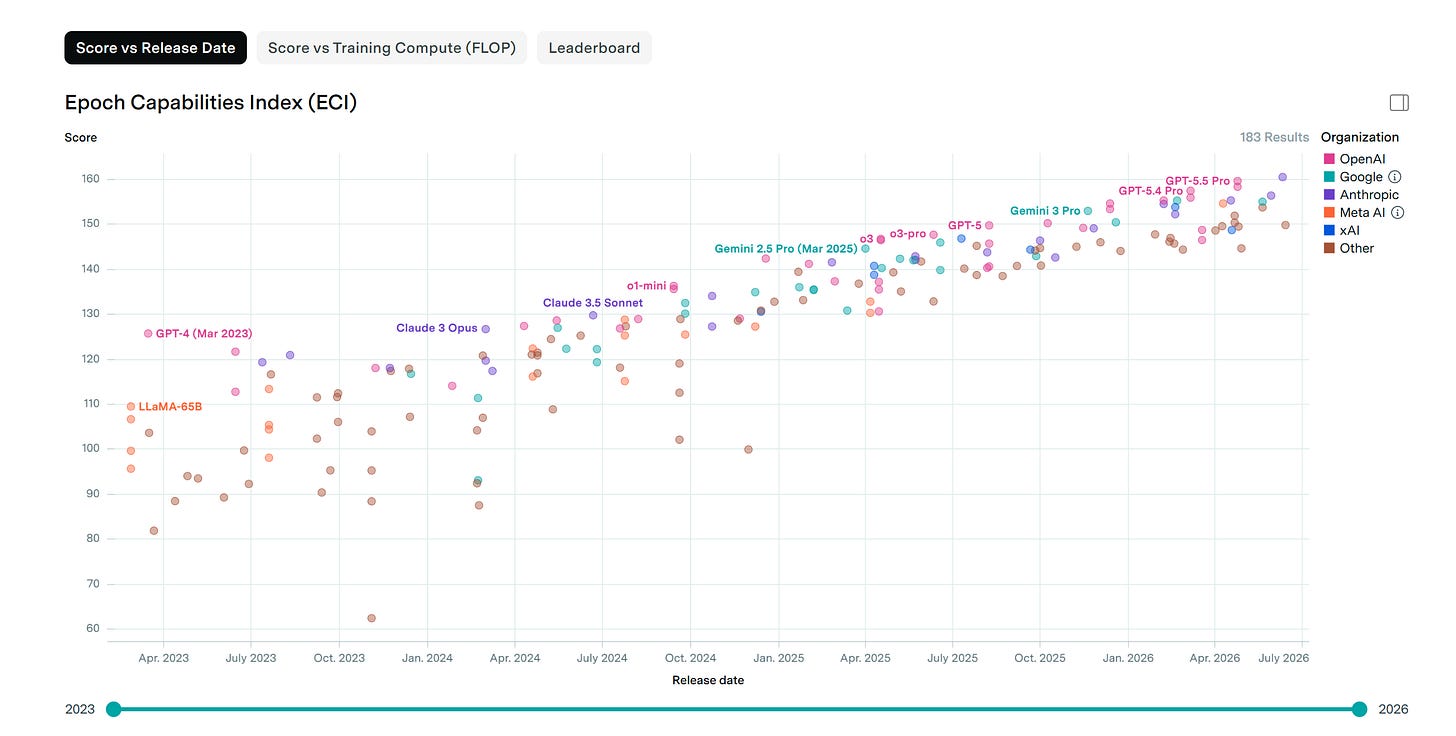
Interestingly, the rate of fundamental AI model improvement appears to be decelerating. Data visualization charts illustrating AI capability evolution suggest a slowing curve in breakthrough advancements. While this might seem counterintuitive, it presents a positive development for enterprise AI adoption. This slowdown encourages companies to shift their focus from chasing the latest model improvements to concentrating on practical problem-solving. The emphasis is moving away from merely "buying technology and hoping for magic" towards a more strategic and engineered approach to implementing AI.
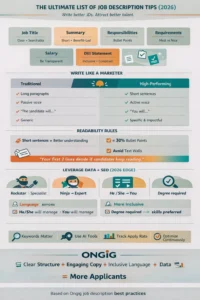
The "Enterprise AI Playbook" and the "HR 2030" model, developed by researchers, highlight that high-ROI AI use cases require more than just access to advanced models. They necessitate strategic investment and a comprehensive reengineering of business processes. For instance, transforming hiring processes with AI agents and superagents involves close collaboration with IT departments, redesigning talent acquisition workflows, and potentially redefining roles within the recruitment function. Leading vendors in this space include Paradox, Maki, Radancy, and Smartrecruiters.
Similarly, enhancing employee service centers through AI solutions on platforms like Microsoft Copilot, Workday Sana Core, or ServiceNow requires a structured project approach. This includes policy consolidation, robust governance frameworks, meticulous data management, and cross-functional team collaboration. Such initiatives often lead to the reorganization of learning and development functions to support new skill sets and operational models.
Building effective onboarding programs, as exemplified by companies like Rolls Royce and Lockheed Martin, involves creating consensus on program elements, developing numerous global and role-specific use cases, and establishing governance models to integrate tactical and strategic content. In these scenarios, the large language model (LLM) itself represents only a minor component of the overall solution.
Enterprise AI: A Reengineering Endeavor, Not Just LLM Magic
The current landscape of LLMs bears a striking resemblance to the relational database market in the late 1990s. At that time, database vendors like Oracle, Sybase, Informix, and others competed fiercely on technical features such as stored procedures and indexing techniques. However, as these technologies matured, the specific RDBMS chosen became less critical. The focus of innovation and value creation shifted to the applications built upon these databases.

A similar trajectory is unfolding with AI. While the underlying LLMs are impressive, their ultimate value in the enterprise is being realized through their integration into specific business applications and workflows. The development of tools like Galileo, which models entire organizations and addresses complex challenges in reorganization, compensation structures, and skills analytics, took nearly four years of dedicated effort. This involved not only training the system but also implementing intricate workflows and leveraging the advanced features of the LLM.
The implication for HR and IT professionals is clear: the future of enterprise AI lies in identifying high-value business problems and strategically applying AI—whether through building, buying, or customizing solutions—to address them. The "magic" inherent in the LLM is becoming increasingly secondary to the engineered application and the business outcomes it delivers.
The substantial $1.5 trillion invested in AI is now poised to demand a tangible return. This necessitates a transition for businesses from the phase of experimentation and exploration to one of architecture and engineering. By focusing on applying AI to solve real-world problems, organizations can unlock enormous payoffs. This shift requires a move from simply "implementing AI" to a more comprehensive reengineering process that leverages AI as a powerful tool within a well-defined strategy.
The Path Forward: Strategic Application and Integrated Solutions
The evolution of AI in the enterprise is characterized by a growing emphasis on strategic application and integrated solutions. Companies that succeed will be those that move beyond the novelty of AI and focus on its practical implementation to drive efficiency, innovation, and competitive advantage. This involves a deeper understanding of how AI can be tailored to specific business needs, leveraging proprietary data and existing workflows to create unique value.
The "HR 2030" blueprint, for example, identifies approximately 130 agents that can be either purchased or built, offering a framework for prioritizing AI investments. Successful implementation will require close collaboration between business units and IT, careful planning for new roles and skill sets, and the creation of new and engaging workflows.
The narrative of AI is rapidly shifting from one of technological marvel to one of practical business transformation. As the initial hype subsides and the market matures, the focus will firmly remain on the applications and data that deliver tangible ROI. This transition, mirroring historical technological shifts, signifies a move towards a more sustainable and value-driven integration of AI into the fabric of enterprise operations. Companies that embrace this reengineering mindset will be best positioned to harness the full potential of AI and achieve significant, long-term success.