The familiar scenario of a job description (JD) taking longer to approve than to fill the actual position is a persistent challenge for many organizations, particularly as the global talent landscape grows increasingly competitive. This inefficiency often stems from opaque approval bottlenecks, a lack of clarity regarding review responsibilities, and an overall disorganized workflow. Such systemic issues not only prolong time-to-hire but also introduce significant operational risks, impacting compliance, employer brand, and ultimately, the ability to secure top talent. This article delves into the critical issues plaguing job description approval processes and offers strategic insights and technological solutions to overcome these formidable hurdles.
The Pervasive Dysfunction: Common Pitfalls in JD Approval Workflows
A dysfunctional job description approval process is characterized by several recurring problems that collectively impede efficient talent acquisition. Understanding these common pitfalls is the first step toward implementing effective solutions.
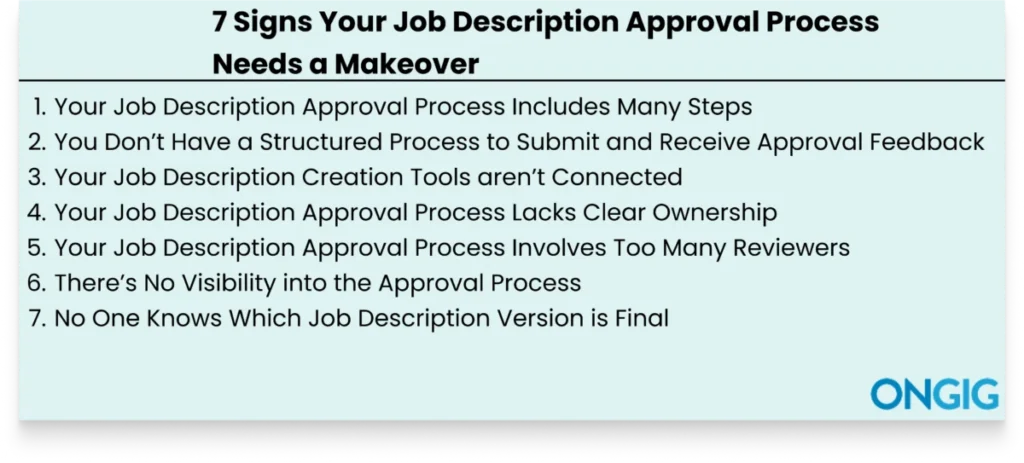
1. Overly Complex and Multi-Step Approval Chains:
Many organizations, often driven by a desire for thoroughness or an accumulation of legacy procedures, design JD approval processes with an excessive number of steps. While each stage might appear justified in isolation, their cumulative effect can transform a task that should take hours into a weeks-long ordeal. Each hand-off point represents a potential delay, a "failure point" where the process can stall due to a reviewer’s unavailability, competing priorities, or simply a lack of prompt action. For instance, a process requiring eight distinct approvals, each dependent on the previous one, creates a linear dependency that is highly vulnerable to individual bottlenecks. If a single approver is on vacation or sick leave, the entire recruitment pipeline for that role can grind to a halt. This over-engineering, while perhaps well-intentioned, often sacrifices agility for perceived rigor, ultimately leading to significant opportunity costs. Industry data from 2024 suggested that the average time-to-fill for skilled positions exceeded 40 days, with internal approval processes frequently cited as a major contributor to these delays. To counteract this, organizations must rigorously audit their existing workflows, distinguishing between essential, legally mandated, or strategically vital steps and those that merely add bureaucratic friction. The goal should be to build a lean, optimized process, ideally condensing it to a maximum of four critical stages, thereby dramatically reducing potential delay points.
2. Fragmented Feedback Mechanisms and Communication Chaos:
The absence of a standardized system for submitting and receiving feedback on JDs is a common source of chaos. When feedback is scattered across multiple platforms—edits on a Google Doc, suggestions on Slack, verbal comments during a meeting, or email threads—reconciling these inputs becomes a herculean task. HR or recruitment teams find themselves sifting through disparate channels, often missing critical suggestions or grappling with conflicting instructions. This communication disarray not only wastes valuable time but also increases the likelihood of errors, as outdated or unapproved versions might inadvertently move forward. The constant need for "just checking in" emails signifies a fundamental breakdown in communication channels, leading to inefficiency and frustration for all stakeholders. A unified feedback platform is paramount, ensuring that all comments, revisions, and sign-offs are consolidated in a single, accessible location. This enforcement of a single "source of truth" for feedback eliminates confusion, streamlines revisions, and accelerates the approval cycle.
3. Disconnected Technology Ecosystems:
The typical JD creation process in many companies often involves a patchwork of disconnected tools: drafting in a word processor, emailing for edits, using a chat application for quick approvals, and finally, manually copying the approved text into an Applicant Tracking System (ATS). This fragmented toolchain is a breeding ground for errors and inefficiencies. A common pitfall is version control issues, where a reviewer might approve an outdated document because edits made in one tool were not synchronized across all platforms. The lack of integration means there’s no central dashboard to track who has reviewed what, the current status of a JD, or which version is the definitive one. This "tool chaos" significantly exacerbates approval delays and introduces a high risk of publishing inaccurate or non-compliant job descriptions. The solution lies in centralizing the entire JD collaboration process within a dedicated job description management software. Such a platform integrates drafting, review, feedback, approval, and ATS publishing into a seamless workflow, ensuring everyone works from the most current version and has real-time visibility into the process.
4. Ambiguous Ownership and Accountability:
When asked "who owns the JD approval process?", many organizations struggle to provide a clear, consistent answer. Responses might vary from "the recruiting team" to "legal" or "HR managers," highlighting a fundamental lack of defined accountability. Without clear ownership, the process becomes rudderless. Delays go unaddressed, bottlenecks persist, and there’s no single point of contact responsible for driving the JD through its various stages. This ambiguity is particularly evident when issues arise, such as a critical JD getting stuck for weeks without anyone knowing who is responsible for follow-up or resolution. Establishing a role-based approval workflow with explicit responsibilities for each stage is crucial. This not only clarifies individual tasks but also designates an overarching process owner who is accountable for the entire workflow’s efficiency and timely completion. This structured approach fosters accountability and ensures that potential roadblocks are identified and addressed proactively.
5. Reviewer Overload and Consensus Paralysis:
Involving an excessive number of reviewers in every JD approval cycle can create a "too many cooks" scenario that ironically slows down, rather than improves, the process. While stakeholder input is valuable, mandating approval from six or more individuals for every role often leads to logistical nightmares. Tracking who has reviewed, who is pending, and reconciling conflicting edits becomes a full-time job. Furthermore, reaching consensus among a large group can be time-consuming, especially when there are disagreements on minor details. This "reviewer overload" can stretch a two-day task into weeks, particularly when trying to determine who has the final say in disputes. A strategic approach involves differentiating between "required" and "optional" reviewers. Core reviewers (e.g., hiring manager, HR business partner, compliance) should be mandated, ideally capping this group at four or fewer. Other stakeholders can be consulted on an as-needed basis or provided with a final draft for informational purposes, streamlining the critical path to approval.
6. Lack of Process Transparency and Visibility:
Operating a JD approval process blindly, without clear visibility into its current status, is a recipe for delays. If teams constantly wonder why a JD is stuck, who has it, or what the next step is, they cannot effectively manage or optimize the workflow. This lack of transparency prevents proactive intervention and accurate forecasting. For example, a delay might be mistakenly attributed to an individual’s unresponsiveness when, in reality, they are simply overloaded with review tasks. Without data on where JDs spend the most time, it’s impossible to identify systemic bottlenecks or to implement targeted improvements. Implementing a centralized dashboard or status tracking system provides real-time visibility into each JD’s progress. This allows teams to identify stalled items, understand the reasons for delays, and estimate completion times more accurately, fostering a data-driven approach to process optimization.
7. Version Control Nightmares:
In a collaborative environment without a centralized system, multiple versions of a JD are an inevitable consequence. The "original draft," a "compensation-adjusted version," and a "compliance-edited version" can all exist simultaneously, often scattered across different channels. This proliferation of documents creates immense confusion, leading to uncertainty about which version is the definitive one. The risks are substantial: a hiring manager might inadvertently post an outdated JD, or a recruiter might discuss terms with a candidate based on incorrect information. Such errors undermine credibility, waste resources, and can lead to legal complications. A robust job description management software with integrated version history and "track changes" functionality is the antidote. This ensures a single source of truth, where all revisions are logged, identifiable, and easily accessible, eliminating ambiguity and ensuring that only the approved, final version is ever used.
The Evolving Landscape of Talent Acquisition: Why Efficiency Matters More in 2026
The importance of an efficient JD approval process has escalated significantly, driven by dynamic shifts in the global talent market and regulatory environment. In 2026, these factors make optimized workflows not just a convenience, but a strategic imperative.
1. Speed Wins Qualified Candidates: The war for top talent is fiercer than ever. Highly skilled professionals are rarely on the market for long; they are often evaluating multiple offers simultaneously. A protracted JD approval process that delays posting can mean missing out on the best candidates, who may have already accepted offers from more agile competitors. Industry reports indicate that delays in hiring can increase recruitment costs by up to 20% due to extended vacancy periods and the need for interim solutions. An optimized process ensures JDs are published swiftly, positioning organizations to attract and engage premier talent before competitors.
2. Heightened Regulatory Scrutiny and Compliance: The regulatory landscape for hiring has become increasingly complex. In 2026, laws concerning equal opportunity, accessibility, and pay transparency continue to expand globally and locally. For instance, numerous jurisdictions in the U.S. now mandate salary ranges in job postings, and similar requirements are emerging in Europe and other regions. Failure to comply can result in substantial fines, legal challenges, and reputational damage. A robust JD approval process, with integrated compliance checks and legal reviews, acts as a crucial safeguard, ensuring every JD meets current legal standards before publication.
3. Preserving and Enhancing Employer Brand: An organization’s job descriptions are often the first point of contact for potential candidates, serving as a critical touchpoint for employer branding. Disorganized, poorly formatted JDs with confusing requirements or missing essential information (like salary ranges) project an image of internal dysfunction. This negative perception can deter top talent, who often view a company’s internal processes as indicative of its overall culture. A streamlined approval process ensures that all JDs are consistently professional, comprehensive, and accurately reflect the company’s values, thereby protecting and enhancing the employer brand.
4. Strategic Alignment Across Stakeholders: A job description is a foundational document that aligns various internal stakeholders—hiring managers, HR, legal, compensation, and DEI teams—on the exact requirements of a new role. Misalignment in the JD can lead to hiring the wrong candidates, resulting in costly turnover and the need to restart the entire recruitment process. An efficient approval process facilitates mandatory input from all critical stakeholders, ensuring that the JD accurately reflects the role’s needs, aligns with organizational objectives, and adheres to internal standards, thereby preventing costly mismatches.
Technological Intervention: The Role of Dedicated JD Management Software
The fundamental root cause of most JD approval challenges is reliance on manual, disparate processes. Dedicated job description management software, such as Ongig, offers a comprehensive solution by centralizing and automating the entire workflow.
- Centralized Platform: All JD drafting, editing, feedback, and approval activities occur within a single system, eliminating scattered documents and communication channels. This ensures a "single source of truth" for every job description.
- Customizable Approval Workflows: Organizations can design and automate multi-stage approval workflows tailored to their specific needs, assigning roles and responsibilities to ensure accountability. This replaces manual follow-ups with automated notifications and reminders.
- Real-time Visibility Dashboards: Interactive dashboards provide a clear overview of every JD’s status, showing who has reviewed it, who needs to review it, and where it is in the approval pipeline. This eliminates guesswork and enables proactive bottleneck resolution.
- Version Control and Audit Trails: The software automatically tracks all changes and maintains a complete version history. This feature ensures that teams are always working on the most current document and provides an immutable audit log for compliance purposes.
- Integrated Feedback and Collaboration Tools: Reviewers can leave comments, suggest edits, and approve directly within the platform, consolidating all feedback and ensuring that no input is lost.
- Compliance and Inclusivity Checks: Many platforms offer built-in tools to scan JDs for compliance with legal requirements (e.g., pay transparency, accessibility) and to identify biased language, promoting more equitable hiring practices.
- Seamless ATS Integration: Approved JDs can be directly pushed to Applicant Tracking Systems, eliminating manual data entry and reducing the risk of errors.
By leveraging such a centralized system, organizations can drastically reduce their JD approval timelines from weeks to mere days, freeing up valuable HR and recruitment resources to focus on strategic talent engagement.
Transitioning to an Optimized System: Tips for Smooth Implementation
Moving from a chaotic, disconnected system to an organized, centralized JD approval workflow can seem daunting, but a structured approach can ensure a smooth transition.
- Pilot Program with a Small Team: Begin by implementing the new system with a smaller team or for a specific department. This allows for testing the workflow, identifying any unforeseen issues, and gathering feedback in a controlled environment before a broader rollout.
- Phased Rollout: Instead of a "big bang" approach, gradually introduce the new system across different departments or job families. This allows users to adapt incrementally and provides opportunities for continuous improvement.
- Comprehensive Training and Support: Provide thorough training sessions for all stakeholders, including hiring managers, recruiters, HR business partners, and legal teams. Offer ongoing support and resources (e.g., FAQs, video tutorials) to address questions and facilitate adoption.
- Clear Communication: Clearly communicate the benefits of the new system, outlining how it will streamline their work and improve overall efficiency. Address potential concerns and solicit feedback throughout the transition.
- Develop Standardized Templates: Utilize the software to create and enforce standardized JD templates. This ensures consistency, adherence to branding guidelines, and inclusion of all necessary information from the outset.
- Integrate with Existing Systems: Prioritize seamless integration with existing HR tech stack components, particularly the ATS, to maximize efficiency and data flow.
- Regular Review and Optimization: Post-implementation, regularly review the workflow’s performance, gather user feedback, and make iterative adjustments to further optimize the process.
Whether managing a small number of JDs or thousands across a large enterprise, a well-implemented JD management system can scale to fit diverse organizational needs, ensuring clarity and efficiency in every approval.
A Foundational Checklist for Streamlined Approvals
To jumpstart the optimization process, a simple yet effective checklist can provide immediate clarity and structure. This serves as a foundational template that can be customized and integrated into a software solution.
Step 1: Recruiter Drafts the JD
- Utilize a standardized template within the JD management software.
- Ensure all core requirements, responsibilities, and qualifications are outlined.
- Include preliminary compensation range as per organizational guidelines.
- Perform an initial check for compliance and inclusive language (if automated tools are available).
- Submit for initial review by the hiring manager.
Step 2: Hiring Manager Reviews
- Verify accuracy of role description, responsibilities, and required skills.
- Confirm alignment with team needs and strategic objectives.
- Provide feedback and requested edits directly within the centralized platform.
- Approve to move to the next stage.
Step 3: Legal/Compliance Review (if necessary)
- Review for adherence to all local, national, and international labor laws.
- Verify compliance with pay transparency regulations.
- Ensure diversity, equity, and inclusion (DEI) standards are met.
- Provide final legal/compliance approval.
Step 4: Final Approval and Publication
- Final review by a designated HR/TA lead for overall quality and completeness.
- Confirm all previous approvals are recorded.
- Publish the JD directly to the ATS and relevant job boards via the integrated system.
- Communicate publication status to all relevant stakeholders.
This structured approach, when empowered by robust software, significantly reduces confusion and accelerates the entire hiring process.
Conclusion: A Strategic Imperative for 2026 and Beyond
An efficient job description approval process is no longer a mere administrative task; it is a strategic imperative in the intensely competitive talent market of 2026. Delays, disorganization, and a lack of transparency translate directly into lost opportunities, increased costs, and compromised employer brand. By embracing streamlined workflows, centralizing feedback, integrating technology, clarifying ownership, and optimizing reviewer panels, organizations can transform a cumbersome process into a powerful engine for attracting and securing top talent. Investing in dedicated JD management software moves organizations beyond manual chaos, enabling them to navigate the complexities of modern recruitment with agility and precision, ultimately shortening time-to-hire and building stronger, more compliant workforces.