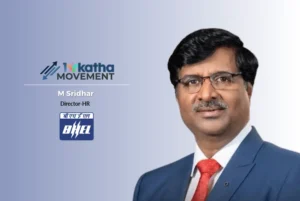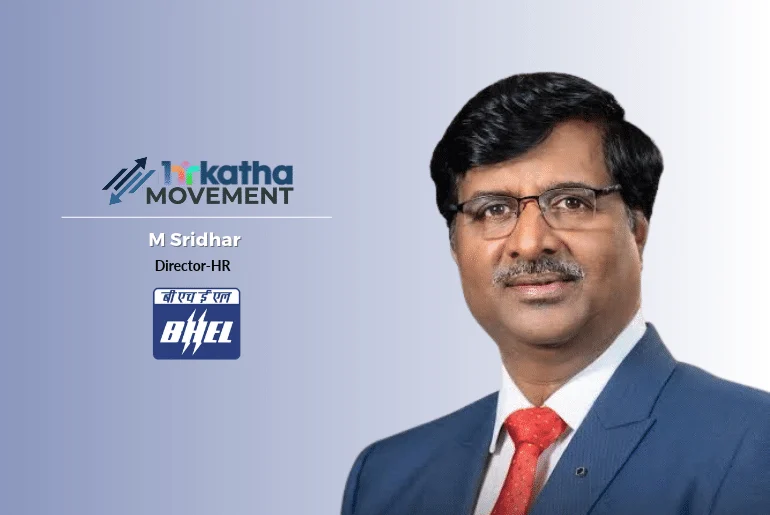
Bharat Heavy Electricals Limited (BHEL), a leading public sector engineering and manufacturing enterprise in India, has announced the appointment of M Sridhar as Director – Human Resources on its board. Sridhar officially assumed charge of this pivotal position on October 22, 2026, marking a significant transition in the company’s leadership and strategic focus on its human capital. His elevation comes after a distinguished tenure as Executive Director – Human Resources at BHEL’s corporate office in New Delhi, underscoring a commitment to internal talent development and institutional knowledge at the highest levels of management.
A Career Forged in Diverse Operational Experience
M Sridhar’s journey with BHEL began in 1990 when he joined the organization as an engineer trainee. Over the subsequent 36 years, he has meticulously cultivated a comprehensive and multifaceted career, accumulating invaluable experience across a broad spectrum of BHEL’s critical operations. His expertise spans manufacturing, commercial operations, project execution, industrial relations, and human resource management – a breadth of understanding that is rare and highly advantageous for a role as strategic as Director – HR in a complex engineering conglomerate.
His early career laid a strong foundation in core engineering and production. Sridhar gained hands-on experience in turbine and compressor manufacturing, a vital segment of BHEL’s heavy equipment portfolio. This direct exposure to the shop floor and production cycles provided him with a profound appreciation for operational efficiency, quality control, and the intricate demands of large-scale industrial production. Such ground-level insights are crucial for an HR leader, enabling them to understand the practical challenges faced by the workforce and to design HR policies that are both effective and empathetic to operational realities.
As his career progressed, Sridhar transitioned into various leadership roles across BHEL’s Hyderabad unit, a key manufacturing hub, and subsequently at its corporate headquarters. His responsibilities expanded to include critical commercial functions such as contracts management and marketing. In these capacities, he was instrumental in navigating complex business agreements, developing market strategies, and fostering client relationships, all of which require a keen understanding of both technical capabilities and market dynamics. This commercial acumen complements his manufacturing background, providing a holistic view of the business value chain.
Further enriching his profile, Sridhar also played significant roles in project execution, overseeing aspects like erection and construction, central dispatch, and productivity planning and development. These experiences are fundamental in a company like BHEL, which is heavily involved in large-scale infrastructure projects across power, industry, and transportation sectors. Managing project timelines, resource allocation, and cross-functional teams in high-pressure environments honed his leadership skills and his ability to drive results through effective coordination and problem-solving. His involvement in industrial relations further rounded out his profile, giving him direct experience in managing employee grievances, fostering harmonious labor relations, and ensuring workplace peace – a critical component for any large public sector undertaking.
Strategic HR Leadership and Vision
Prior to his elevation to the board, M Sridhar served as Executive Director – HR, a role in which he was directly responsible for leading BHEL’s corporate human resources function. In this capacity, he spearheaded several key initiatives that have had a lasting impact on the organization’s people strategy. He played a crucial role in the formulation and implementation of comprehensive HR policies, ensuring they were aligned with BHEL’s strategic objectives and the evolving regulatory landscape for public sector enterprises. His contributions extended to strengthening performance management systems, a critical area for enhancing accountability and driving a performance-oriented culture within a large organization. He was also instrumental in advancing strategic people initiatives, which likely encompassed talent acquisition, retention strategies, leadership development programs, and fostering a culture of continuous learning and growth.
Sridhar’s unique blend of technical, commercial, and HR experience positions him exceptionally well for his new role as Director – HR. This diverse background grants him an unparalleled understanding of BHEL’s operational requirements, its commercial imperatives, and, most importantly, its workforce priorities. As Director – HR, he will be tasked with overseeing the entirety of the company’s human resources agenda. His focus areas will include the continuous refinement and implementation of HR policies, further strengthening performance management frameworks, driving organizational development initiatives, and championing people-centric programs designed to enhance employee engagement, well-being, and productivity. His vision is expected to integrate human capital strategies seamlessly with BHEL’s broader business goals, ensuring that the company’s most valuable asset – its people – are empowered to drive innovation and achieve excellence.
Educational Foundation and Professional Development
M Sridhar’s strong academic background underpins his extensive professional achievements. He holds a degree in Mechanical Engineering from CBIT, Osmania University, Hyderabad, providing him with the fundamental technical knowledge essential for BHEL’s core business. Further enhancing his technical expertise, he pursued an MTech in CAD/CAM from JNTU, Hyderabad, demonstrating his commitment to staying abreast of advanced engineering technologies. Recognizing the increasing importance of management principles in leading large organizations, Sridhar also completed a Post Graduate Diploma in Business Administration from XLRI, Jamshedpur, one of India’s premier management institutes. This combination of deep technical understanding and strategic management insight makes him a well-rounded leader capable of navigating the complex interplay between technology, operations, and human capital.
BHEL’s Strategic Imperatives and the Role of HR
Bharat Heavy Electricals Limited stands as a cornerstone of India’s industrial landscape, a central public sector enterprise operating under the Ministry of Heavy Industries. Established in 1964, BHEL has grown to become India’s largest engineering and manufacturing company of its kind, playing a pivotal role in the nation’s infrastructure development across power generation, transmission, industry, transportation, renewable energy, and defence. With a sprawling network of 16 manufacturing units, two repair units, four regional offices, eight service centres, and a multitude of project sites across India and abroad, BHEL employs a vast and diverse workforce, numbering in the tens of thousands.
In the contemporary business environment, especially within large public sector undertakings (PSUs) like BHEL, the Human Resources function has transcended its traditional administrative role to become a strategic business partner. Effective HR leadership is crucial for driving organizational transformation, fostering a culture of innovation, and ensuring long-term sustainability. PSUs often face unique challenges, including attracting and retaining top talent in a competitive market, managing a large and often unionized workforce, navigating complex regulatory frameworks, ensuring succession planning for critical roles, and upskilling employees to adapt to rapid technological advancements and evolving market demands.
BHEL, like many other large PSUs, is in a continuous state of evolution, adapting to global competition, technological shifts towards renewable energy, and the government’s ‘Make in India’ initiatives. Its strategic priorities include diversification into new growth areas, enhancing manufacturing efficiency, promoting indigenous technology, and improving project execution timelines. The successful achievement of these goals is intrinsically linked to the effectiveness of its human capital strategy. An empowered, skilled, and motivated workforce is indispensable for BHEL to maintain its leadership position and contribute meaningfully to India’s economic growth.
The appointment of M Sridhar, an internal veteran with extensive cross-functional experience, signals BHEL’s strategic intent to leverage deep institutional knowledge while fostering continuity in its HR leadership. This move is particularly pertinent as the company continues to focus on organizational development and workforce priorities, which are critical for navigating the complexities of the heavy engineering sector in the 21st century.
Industry Reactions and Implications
The announcement of M Sridhar’s appointment has been met with positive anticipation from within BHEL and from industry observers. While official statements are typically reserved, it can be logically inferred that the BHEL Board of Directors, likely represented by the Chairman & Managing Director, would express strong confidence in Sridhar’s capabilities. A hypothetical statement might read: "The Board is delighted to welcome Mr. M Sridhar as Director – Human Resources. His unparalleled experience across BHEL’s diverse operations, coupled with his proven track record in strategic HR leadership, makes him the ideal choice to lead our human capital strategy. We are confident that his vision will further strengthen our organizational culture, empower our employees, and align our people strategies seamlessly with BHEL’s ambitious growth objectives, especially during this transformative period for the Indian industrial sector."
Industry analysts and HR experts often view such internal promotions favorably, especially when the individual possesses a wide array of experience. Analysts suggest that appointing an internal veteran like Sridhar ensures continuity in strategic direction while bringing fresh perspectives informed by a holistic view of the company’s operational realities. "The decision to elevate an internal candidate with such a diverse background is a smart move for a large, complex organization like BHEL," noted a senior HR consultant specializing in PSUs. "Sridhar’s deep understanding of BHEL’s manufacturing, commercial, and project execution functions will allow him to craft HR policies that are not just theoretically sound but also practically implementable and genuinely impactful for the workforce. This fosters greater trust and engagement among employees."
The broader HR community also recognizes the significance of such appointments in large public sector enterprises. HR experts note that Sridhar’s multifaceted career across technical, commercial, and HR domains equips him uniquely to bridge the gap between business objectives and people strategies. His appointment underscores a growing trend in PSUs to place seasoned professionals with a strong operational background into key HR leadership roles, recognizing that human resources are not merely a support function but a critical driver of business performance and strategic advantage.
Broader Impact and Future Outlook
M Sridhar’s tenure as Director – Human Resources is expected to have several significant implications for BHEL. Firstly, his deep understanding of BHEL’s operational intricacies is likely to lead to the formulation of HR policies that are highly relevant, practical, and effective. This could translate into more tailored talent development programs, robust performance management systems that truly reflect ground realities, and industrial relations strategies that foster a collaborative and productive work environment.
Secondly, his emphasis on ‘organizational development’ and ‘people-centric initiatives’ suggests a strategic focus on building a more agile, resilient, and employee-focused culture. This could involve enhanced training and reskilling initiatives to prepare the workforce for future technologies like Industry 4.0, artificial intelligence, and automation, which are increasingly relevant in heavy manufacturing. It may also include strengthening employee engagement programs, promoting diversity and inclusion, and enhancing employee well-being initiatives, all of which are crucial for attracting and retaining top talent in a competitive market.
Thirdly, Sridhar’s leadership will be critical in aligning BHEL’s human capital strategies with its broader business goals. As BHEL diversifies into new energy sectors such as solar, wind, and electric vehicles, and seeks to enhance its global footprint, the HR function will need to ensure that the organization has the right talent with the right skills at the right time. This includes robust succession planning to ensure leadership continuity and developing a strong talent pipeline for future growth areas. His extensive experience in project execution and commercial operations will allow him to ensure that HR initiatives directly support BHEL’s project delivery capabilities and market competitiveness.
Ultimately, M Sridhar’s appointment brings an experienced company veteran to BHEL’s board at a crucial juncture. His leadership is poised to strengthen BHEL’s human capital framework, foster a performance-driven culture, and empower its vast workforce to contribute effectively to the company’s strategic objectives and to India’s sustained industrial growth. His deep institutional knowledge, combined with a forward-looking approach to HR, positions him to drive significant positive change in one of India’s most vital public sector enterprises.