A high-stakes budget meeting was unfolding within the hushed corridors of a major corporation, a scene fraught with tension as a Vice President grappled with a critical decision. Two strategic initiatives, both vital to the company’s future, were vying for the same limited financial resources, and a clear path forward remained elusive. The room buzzed with the entrenched arguments of senior leaders, each armed with their own data and compelling logic. As the VP paused, seemingly on the brink of concluding the deliberation, a subtle yet significant act of leadership unfolded. Instead of signaling an end to the discussion, the VP gestured to a promising protégé, a rising star within the organization, and whispered an invitation: "Come in. See how this meeting unfolds." This simple, unexpected gesture resonated through the room, halting the momentum towards closure and leaving the door ajar for more than just the protégé’s entry.
This pivotal moment, witnessed by the protégé, offered an unparalleled glimpse into the nuanced art of leadership. The VP’s decision to include a junior colleague, rather than dismissing them, demonstrated a profound understanding of leadership development that transcends traditional job descriptions and formal succession plans. The protégé observed not just the VP’s ability to perform real-time financial projections and persistently probe for underlying reasons ("asking why often"), but also the critical skill of emotional regulation—the capacity to balance competing priorities with an unwavering commitment to a shared organizational direction. This wasn’t about reciting facts; it was about navigating ambiguity with seasoned judgment.
The aftermath of this intense meeting provided further insight. A debrief between the VP and the protégé revealed a striking allocation of time: a mere ten minutes dedicated to dissecting the data, while a full fifty minutes was devoted to analyzing the moment the VP had leaned back, posed the crucial "why" question for a third time, and allowed silence to foster deeper consideration. It was this unscripted, experiential learning that the protégé had never encountered in formal training or documented career paths. Such moments, the article argues, are not merely optional add-ons to leadership development; they are foundational. Without them, future generations of leaders are deprived of the very possibility of envisioning, requesting, and ultimately, cultivating this caliber of leadership within their own spheres of influence.
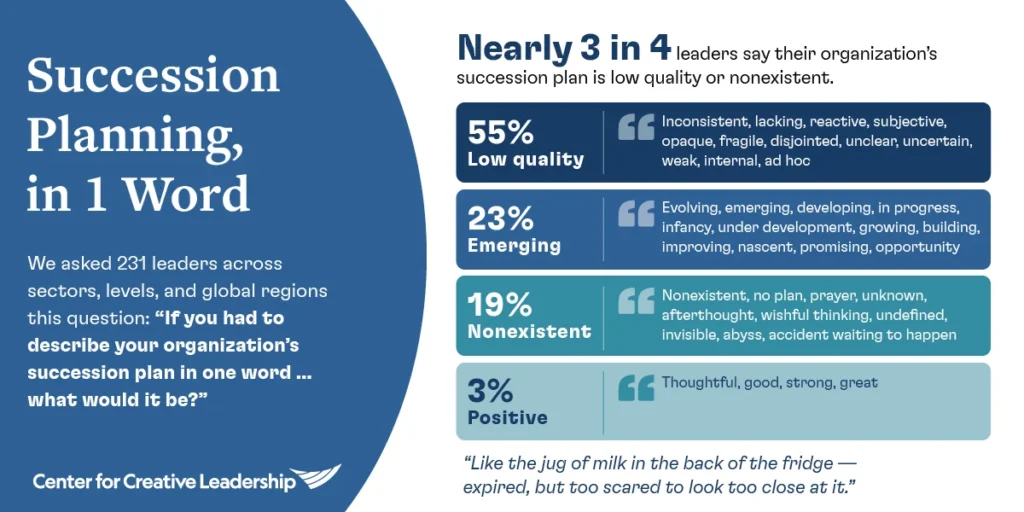
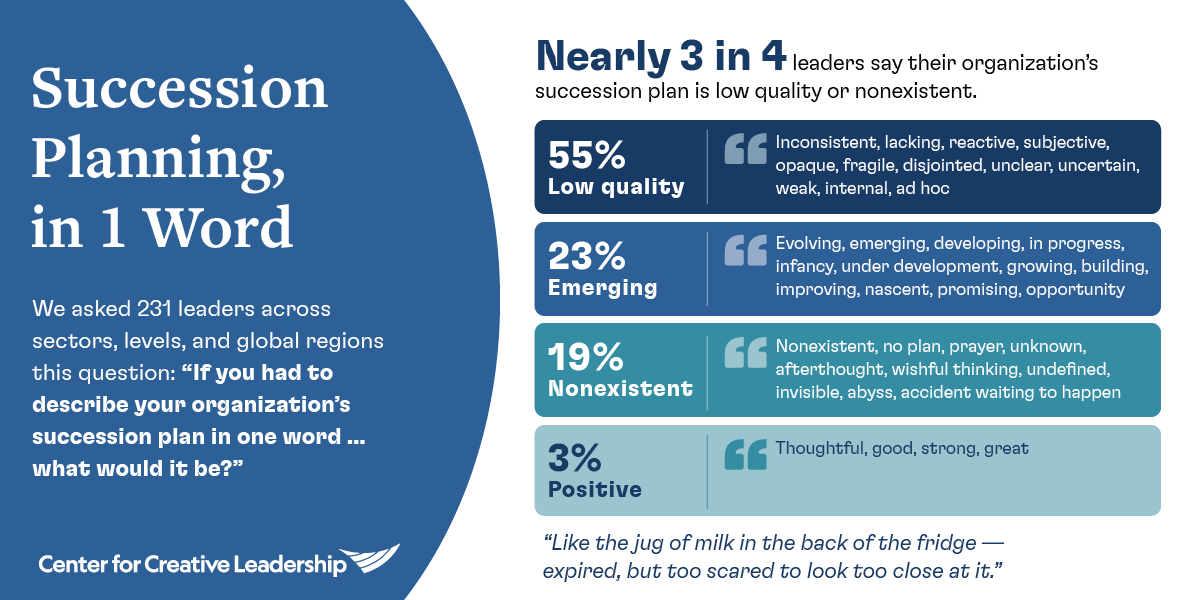
This principle extends beyond individual mentorship to the organizational level: "Wisdom depreciates if hoarded and compounds when shared." This core tenet is underscored by recent succession research, which indicates that organizations treating succession as a reactive "scramble" inevitably lose their capacity for strategic foresight. They struggle to simultaneously balance short-term operational needs with long-term strategic goals because the necessary groundwork—identifying critical roles and understanding the ripple effects of their vacancy—has not been adequately laid. The research emphasizes a paradigm shift: "Organizations need to treat succession as a living system of leadership development, one that builds the wisdom infrastructure to find and grow the right leaders before they’re needed."
Knowledge Transfer vs. Wisdom Transfer: The Shift from Replacement to Readiness
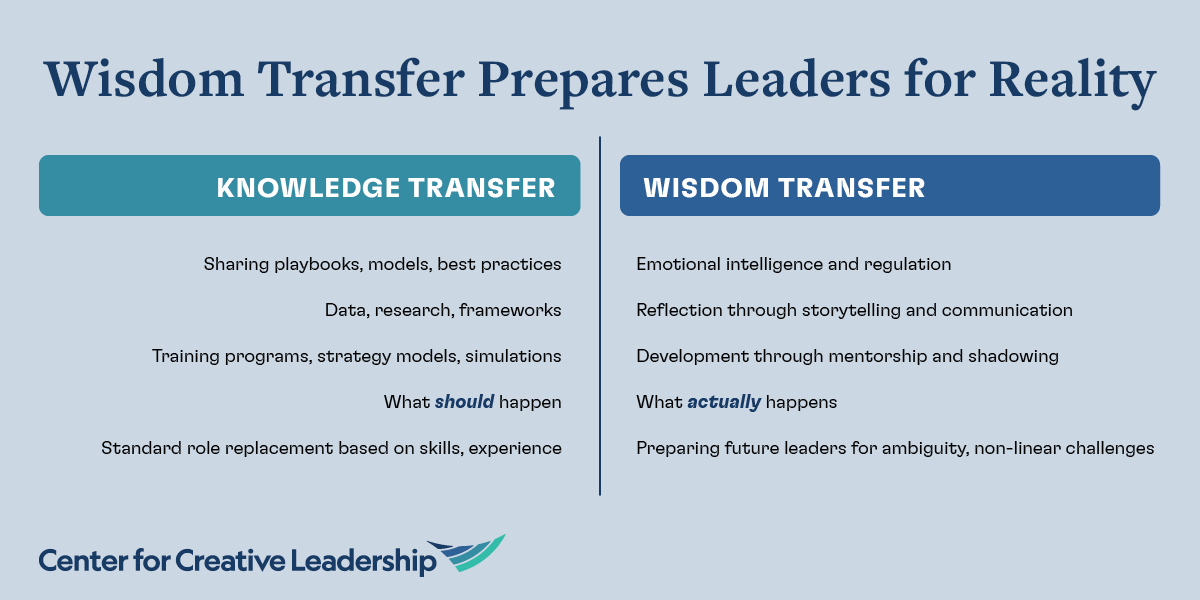
The prevailing approach to succession planning within many organizations, according to extensive leadership succession research, often centers on knowledge transfer. This encompasses the tangible, the procedural, and the easily quantifiable aspects of leadership. It involves the completion of forms, the deployment of established frameworks and data-driven decision-making tools, the communication of best practices, and the standard replacement of individuals based on predefined job-related skills and expectations.
Knowledge transfer effectively addresses questions such as:
- What are the core responsibilities of this role?
- What are the essential technical skills and qualifications required?
- What are the established processes and protocols for this position?
- What are the documented performance metrics for this role?
While indispensable, knowledge transfer alone is insufficient to cultivate the resilient and high-performing leadership systems demanded by today’s dynamic business environment. It primarily prepares leaders for an idealized scenario, failing to equip them for the unpredictable realities they will inevitably face. Senior executives consistently report that the most critical leadership challenges occur precisely outside of these predictable circumstances.
Consider the impact of unexpected departures of top-level executives, seismic shifts in external market conditions, or the inevitable moments when established playbooks prove inadequate, thrusting leaders into uncharted territory for which they have received no formal training. It is in these crucible moments that leadership wisdom becomes paramount.
Leadership wisdom is defined as the capacity to accurately interpret complex contexts, anticipate the cascading consequences of decisions, and consistently exercise sound judgment amidst uncertainty. Wisdom transfer, therefore, is the intentional and strategic dissemination of this seasoned judgment, accumulated experience, and nuanced discernment from one generation of leaders to the next, empowering future leaders to navigate ambiguity and complexity with confidence.

The research compellingly demonstrates that successful leadership transitions are a hallmark of organizations that prioritize the transfer of wisdom as a cornerstone of their succession infrastructure. This involves asking and answering a different set of questions, such as:
- What are the unwritten rules and unspoken dynamics of this role and team?
- How have past leaders navigated similar crises, and what lessons can be drawn?
- What are the ethical considerations and long-term implications of this decision?
- How can we foster resilience and adaptability in our future leaders?
Wisdom transfer fundamentally reframes succession from a static, administrative process into a dynamic, strategic mindset. When leaders embrace the significance of wisdom transfer within their succession strategies, they begin to perceive succession not merely as a checklist to be completed, but as one of their most profound opportunities for leadership. As exemplified by the opening anecdote, this crucial transfer often begins with a simple, personal invitation: "Come with me so I can show you how this really works."
Succession Infrastructure: Creating Avenues for Wisdom Transfer
If wisdom transfer is the critical ingredient for effective succession, the imperative question becomes: how can organizations actively cultivate and embed this concept within their existing succession processes? The journey begins with a deliberate step back to examine the entire leadership pipeline and system, considering multiple time horizons. Four core elements, functioning as structural pillars within a modern succession system, are essential for facilitating wisdom transfer.
1. Witnessing Decisions in Real-Time
Effective succession, at its zenith, is not merely about filling vacancies; it is a meticulously crafted journey of leadership development. No facet of this journey is more formative than providing emerging leaders with the opportunity to witness consequential decisions being made in real-time. Junior leaders need consistent exposure to observe how leadership operates at levels beyond their own, gaining insights into the unspoken dynamics that shape outcomes.
The objective of such exposure is to cultivate the nascent leader’s capacity to discern underlying currents beneath the surface of a conversation, to sense the subtle shifts in organizational momentum, and to respond with informed judgment rather than rigid adherence to procedure. Organizational systems that excel in this area intentionally create developmental pathways that encourage interpretation and the integration of these observations into the emerging leader’s own evolving thinking and actions. These firsthand experiences foster a deeper awareness of essential capabilities that are critical for advancement, irrespective of whether they are explicitly detailed in a job description. These observations serve as potent forms of wisdom transfer, as emerging leaders witness seasoned judgment in action.
Your Move: Map the most high-stakes decision-making moments for leaders within your organization. Critically assess who is present in these crucial discussions and, more importantly, who should be present to gain valuable developmental exposure.
2. Communicating Continuity Through Leadership Transition
Moments of critical succession arrive with little to no forewarning. They can occur in environments where morale has flagged, or within cultures undergoing a fundamental transformation, moving from what was to what must become. Navigating these turbulent periods demands leaders who possess the innate ability to continually orient themselves and their organizations within an ever-shifting landscape.
A highly effective practice identified through research is the deliberate formation of a "wisdom council." This council is strategically composed of individuals who wield real influence and possess deep institutional memory. It ensures that every major organizational function is represented, either by its leader or their most trusted direct report. This fosters a living network capable of collectively addressing profound questions: Who are we, who are we becoming, and what essential elements must we carry forward?
Organizations that falter in articulating these answers during a leadership transition face a significant strategic risk: they lose the clarity to distinguish between what must be preserved and what must be relinquished. The consequence is often a detrimental calcification around outdated strengths or, conversely, the abandonment of the very foundations that contributed to their initial success. The answers to these critical questions reside within individuals and surface when wise leaders accurately read the room and articulate sentiments that others feel but cannot yet express.
Your Move: Before your next significant leadership transition, identify the individuals who embody the collective memory and understanding of your organization’s foundational purpose. Ensure their voices are present and heard during these pivotal junctures.
3. Fostering Developmental Relationships
Wisdom flourishes most rapidly within relationships characterized by mutual trust and a commitment to candor. Developmental relationships are frequently the primary conduits for wisdom transfer within organizations, providing emerging leaders with their most valuable guidance before they pursue and assume new roles.
Judgment stands out as a prime example. It is an abstract quality, notoriously difficult to teach through conventional methods, yet absolutely essential to transfer. Developmental relationships create fertile ground for enhancing judgment as seasoned leaders engage in hypothetical scenario discussions, articulate their reasoning processes, compare diverse thought processes, and openly discuss the multifaceted factors they weigh in making consequential decisions.
Research has revealed enduring relationships between colleagues and mentors that have sustained themselves across decades, often long after formal roles have concluded. This longevity suggests that wisdom transferred through these relational channels does not expire with an individual’s departure from a position; rather, it continues to compound and grow over time.
Your Move: Identify the existing developmental relationships within your organization. Proactively assess whether these vital connections are being protected and nurtured, or if they are being allowed to dissipate as individuals transition between roles.
4. Mapping Influence Networks
The flow of organizational wisdom transfer rarely adheres to the formal hierarchical structure. Instead, it thrives at critical nodes where leaders are most interconnected with a diverse array of stakeholders and perspectives. Network science consistently corroborates findings from bibliometric research, indicating that the most influential carriers of wisdom and institutional memory are often situated at the periphery and bridges of an organization.
Three key network properties are particularly crucial for effective succession planning. First is status, which reflects the depth and breadth of connections a leader has cultivated within the organization. Leaders rich in wisdom are those deeply embedded across multiple influence circles simultaneously, and their value to succession planning is often imperceptible until their departure.
Second is boundary spanning, the ability to carry perspectives across diverse functions, generations, and organizational lines. Individuals who span boundaries often set agendas and control the flow of information, frequently leading without formal authority. Because their influence is relational rather than positional, they may not be readily apparent in traditional succession plans, which can explain why certain initiatives stall while others gain rapid momentum.
Third is coalition capacity, the inherent ability to build trust across differing viewpoints and to hold competing perspectives in a productive tension. Organizations that lose this capacity during leadership transitions often forfeit their ability to attract and nurture the next generation of leaders.
Research indicates that the workforce of the future will operate within a planetary network. Organizational resilience is built by those who have already navigated and reimagined survival in varied contexts. The next groundbreaking leader in your organization might be communicating in a way that is not yet understood. Influence network mapping is the strategic method for identifying these individuals before they are critically needed.
Your Move: Map your organization’s influence network. Ascertain where wisdom is most concentrated, how it is currently flowing, and identify the individuals who carry this vital knowledge, even if they are not explicitly recognized on the formal organizational chart.
Making Wisdom Transfer a Leadership Development Priority
The knowledge and competencies that have propelled organizations to their current standing may prove insufficient for the challenges that lie ahead. We are currently experiencing a period where the symbols of leadership development can be generated instantaneously and at no cost. Competency frameworks, feedback templates, and succession documents are all readily produced by artificial intelligence in mere seconds.
However, what cannot be prompted or automated is the labor of wisdom. This includes the VP who courageously opens the door to an emerging leader, the mentor who maintains a connection for decades, or the council meticulously assembled to guide organizational memory through a challenging transition. These actions require significant investment in time, presence, and sustained energy. It is precisely these investments that imbue wisdom transfer with its profound value.
Years of study analyzing the factors that differentiate organizations that successfully navigate leadership transitions from those that falter have led to a critical conclusion: succession plans falter when wisdom ceases to flow through the transition. This encompasses the judgment, the innate instincts, and the hard-won perspective that can only be acquired through years of leading through real-world complexity and adversity. Wisdom transfer is designed to re-establish this vital flow.
You hold a pivotal position in shaping this paradigm shift within your development decisions. Your influence extends to the systems, programs, and expectations that ultimately shape leadership behavior. You possess the insight to identify where wisdom resides within your organization, how it is circulating, and where its flow is impeded. By championing this work, succession planning transforms from a risk mitigation strategy into a regenerative leadership system that grows increasingly wise with each successive transition.
You possess the agency to construct such a system. And importantly, you do not have to undertake this endeavor alone.
The Future of Succession Is Wisdom-Powered
Organizations that are poised for sustained success in the coming year, decade, and indeed, the next century, will be those that recognize leadership wisdom as their most valuable asset, understanding that its worth is preserved and amplified only through deliberate transference. This critical work cannot be automated, but it can, and must, be systematically built.
Wisdom transfer is the mechanism by which organizations move from merely identifying paper successors to cultivating truly prepared leaders. It is the pathway to building an organization that not only maintains operational continuity but also possesses the foresight to identify and pursue future opportunities. And as demonstrated, it begins with an act as simple as an open door. Organizations that commit to this principle will invariably discover the leaders they seek. And those leaders will be unequivocally ready.
Ready to take the next step? Succession functions optimally when leadership is transferred, not merely assigned. Discover how our new Succession Reimagined program can empower you to build this critical capability within your organization.