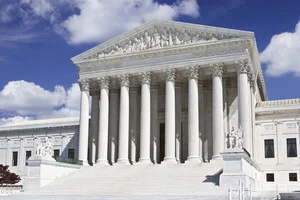
The United States Supreme Court issued a landmark ruling on June 29, 2026, in the case of Trump v. Slaughter, a decision that fundamentally alters the landscape of American administrative law by granting the President broader authority to terminate the heads of independent federal agencies. By a majority vote, the Court expressly overruled the 1935 precedent established in Humphrey’s Executor v. United States, which for nearly a century had protected the leadership of certain "independent" agencies from being removed by the President without "for-cause" justification, such as inefficiency, neglect of duty, or malfeasance in office. This decision effectively ends the era of the shielded independent commissioner and asserts that principal officers exercising executive power must remain answerable to the President through the threat of removal at will.
The legal battle originated from President Donald Trump’s January 2025 removal of Federal Trade Commission (FTC) Commissioner Rebecca Slaughter. While the dispute began as a challenge to the removal of a single official, it evolved into a constitutional referendum on the "Unitary Executive" theory—the doctrine that the President possesses the entirety of the executive power and must have the ability to control those who exercise it on his behalf. The Court’s ruling sends shockwaves through various federal bodies, most notably the National Labor Relations Board (NLRB), the Merit Systems Protection Board (MSPB), and the Equal Employment Opportunity Commission (EEOC), where leadership stability has historically been decoupled from the four-year presidential election cycle.
Historical Context: The Rise and Fall of Humphrey’s Executor
To understand the magnitude of Trump v. Slaughter, one must look back to the Great Depression era. In 1935, the Supreme Court ruled in Humphrey’s Executor v. United States that President Franklin D. Roosevelt could not fire William Humphrey, a member of the FTC, simply due to policy disagreements. The Court then reasoned that certain agencies performed "quasi-legislative" or "quasi-judicial" functions rather than purely executive ones, and therefore Congress could constitutionally restrict the President’s removal power to ensure these agencies remained non-partisan and independent.
For 91 years, Humphrey’s Executor served as the legal bedrock for the "fourth branch" of government. It allowed agencies like the NLRB to operate with staggered terms, ensuring that a new President could not immediately replace the entire board to flip labor policy overnight. However, in recent years, the Supreme Court has grown increasingly skeptical of this independence. In Seila Law LLC v. Consumer Financial Protection Bureau (2020) and Collins v. Yellen (2021), the Court began chipping away at these protections, ruling that single-headed agencies (like the CFPB and FHFA) could not be insulated from presidential removal. Trump v. Slaughter represents the final step in this judicial evolution, extending that logic to multi-member boards and commissions.
The Chronology of the Dispute
The path to this decision was marked by a series of aggressive executive actions and subsequent lower-court battles that paralyzed several federal agencies for over a year.
- January 2025: Upon taking office, President Trump moved to immediately reshape the federal bureaucracy. He terminated FTC Commissioner Rebecca Slaughter and NLRB Member Gwynne Wilcox, despite their statutory terms not yet being expired.
- Spring 2025: Both Slaughter and Wilcox filed lawsuits challenging their removals, arguing that the President lacked the "for-cause" justification required by the statutes governing their respective agencies.
- Summer 2025: A U.S. District Court judge reinstated Gwynne Wilcox to the NLRB, citing the then-binding precedent of Humphrey’s Executor. This created a period of significant legal uncertainty, as the administration refused to recognize the reinstatement.
- Late 2025: The Supreme Court issued a stay on the lower court’s order, removing Wilcox from her post once again while the justices prepared to hear the merits of the case. This stay resulted in the NLRB losing its quorum, effectively stalling all federal labor law adjudications and rulemaking for months.
- June 29, 2026: The Supreme Court released its opinion in Trump v. Slaughter, formally overturning Humphrey’s Executor and declaring that the President’s Article II authority necessitates the power to remove principal officers at will.
- July 8, 2026: In the wake of the ruling, other pending lawsuits collapsed. For example, Jocelyn Samuels, former Vice Chair of the EEOC, voluntarily dismissed her lawsuit against the administration after a district court judge suggested that the Slaughter decision rendered her claims moot.
Legal Analysis and the Unitary Executive Doctrine
The majority opinion in Trump v. Slaughter emphasized that the Constitution does not contemplate a "headless fourth branch" of government that is unaccountable to the Chief Executive. The Court argued that the distinction made in 1935 between "executive" and "quasi-judicial" functions was a legal fiction, noting that almost all agency actions—enforcing statutes, conducting investigations, and issuing rules—are exercises of executive power.
By removing the "for-cause" protection, the Court has shifted the balance of power toward the White House. Critics of the decision argue that this will lead to a "spoils system" where federal agencies become highly politicized, with every change in administration resulting in a total purge of agency leadership. Conversely, proponents argue that this restores democratic accountability, ensuring that the voters’ choice for President can actually implement the policies they campaigned on without being obstructed by holdover officials from previous administrations.
Immediate Implications for Labor and Employment Law
The most immediate impact of the Slaughter decision is being felt at the National Labor Relations Board. Historically, the NLRB has been a pendulum, swinging between pro-labor and pro-management stances depending on which party occupies the White House. However, the staggered five-year terms of Board members usually ensured a slow transition.

Under the new legal framework:
- Rapid Policy Shifts: A President can now replace the entire Board on Day One of an administration. This means that landmark precedents regarding union elections, joint-employer status, and employee handbook rules can be overturned much faster than in the past.
- Enforcement Priorities: Agencies like the EEOC and the Department of Labor will see their enforcement priorities align more closely with the White House’s agenda. Employers can expect less continuity and must be prepared for abrupt changes in regulatory focus.
- Quorum Stability: The ruling resolves the "quorum crises" that have plagued agencies during transition periods. Since the President can now appoint "acting" members or move nominees through more quickly by clearing out incumbents, the risk of an agency being unable to function due to lack of personnel is diminished.
Reactions from Legal Scholars and Stakeholders
The legal community is deeply divided over the ruling. Conservative legal scholars have hailed the decision as a long-overdue return to constitutional first principles. "The Constitution vests ‘the’ executive power in a President, not in a committee of unelected commissioners," noted one analyst from a prominent federalist-leaning think tank. "This decision ensures that those who wield the coercive power of the state are accountable to the person the people elected."
On the other hand, labor advocates and proponents of administrative independence have expressed grave concerns. "This is a dark day for the rule of law within our federal agencies," a spokesperson for a major national labor federation stated. "The NLRB was designed to be a stable, quasi-judicial body. By making its members removable at the whim of the President, the Supreme Court has turned federal labor protections into a political football."
For the business community, the impact is a double-edged sword. While many employers welcome the current administration’s deregulatory push, the Slaughter decision introduces a new level of long-term volatility. Companies that make multi-year investments based on current federal regulations may find those regulations evaporated shortly after the next inauguration.
Data and Trends in Agency Turnover
While it is too early to see the full statistical impact of the Slaughter ruling, historical data suggests a significant shift is underway. Between 1940 and 2020, removals of independent agency commissioners were exceedingly rare, occurring fewer than five times across all major agencies. In the 18 months leading up to the Slaughter decision, there were more attempted removals of "independent" officials than in the previous eight decades combined.
Legal experts predict that the 2028 presidential transition will be the first to see a "total reset" of agency leadership across the FTC, FCC, SEC, and NLRB. This will likely lead to a surge in rulemaking activity in the first 100 days of future administrations as new appointees move to repeal and replace their predecessors’ work.
Conclusion: A New Era of Governance
Trump v. Slaughter marks the end of an era for the American administrative state. The "independence" of agencies that regulate everything from the stock market to labor unions is no longer a matter of constitutional protection, but rather a matter of political discretion.
As the remaining litigation involving Gwynne Wilcox and other former officials is formally resolved, the focus for employers and legal practitioners will shift from constitutional challenges to the practical realities of a more volatile regulatory environment. The speed of government has accelerated, and with the "for-cause" barrier removed, the executive branch now wields a level of control over the federal bureaucracy that has not been seen since the early 20th century. Monitoring the composition of these boards will now be as critical for businesses as monitoring the passage of legislation itself.