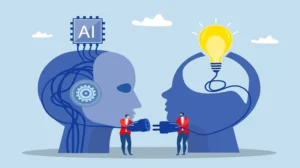
The landscape of corporate Learning and Development (L&D) is currently undergoing a radical transformation driven by the rapid integration of generative artificial intelligence. While AI has drastically reduced the cost and time required to produce educational materials, a critical bottleneck remains: the "learning transfer" gap. Organizations are finding that while employees can consume more content than ever before, the application of that knowledge in the workplace remains stagnant. Industry experts and recent data suggest that the next frontier for L&D is not the creation of more content, but the redesign of the workplace environment to support behavioral change.
The Rapid Acceleration of Content Production
The year 2025 has marked a significant turning point in how organizations approach reskilling. According to the World Economic Forum’s Future of Jobs Report 2025, approximately 59% of the global workforce will require significant training by 2030. Furthermore, the report estimates that 39% of current professional skills will either change or become entirely outdated within the next five years. This pressure to reskill has led to a massive adoption of AI tools within L&D departments.
A 2026 survey conducted by Synthesia, a leader in AI video generation, found that 88% of L&D professionals are already utilizing AI to streamline their workflows. The most cited benefit, noted by 84% of respondents, was the ability to produce content at unprecedented speeds. AI is now used to generate course outlines, localized translations, interactive quizzes, and realistic role-play scenarios in a fraction of the time it previously took human teams. However, this surge in production has highlighted a persistent issue: the delivery of knowledge does not equate to a change in behavior.
The Learning Transfer Crisis and the 10 Percent Delusion
For decades, the efficacy of corporate training has been haunted by the "10% rule"—a widely cited statistic claiming that only 10% of training is ever applied on the job. Historical analysis reveals that this figure originated from a personal estimate in a 1982 article rather than a controlled empirical study. Researchers Ford, Yelon, and Billington later categorized this as "the 10% delusion," providing a more nuanced, albeit still concerning, timeline of knowledge decay.
Their research indicates that "non-transfer"—the failure to apply learned skills—stands at approximately 38% immediately following a training session. This figure climbs to 56% after six months and reaches 66% after one year. The data suggests that without environmental reinforcement, the majority of training investment is lost to the "forgetting curve" and the gravitational pull of established workplace habits.
A comprehensive meta-analysis by Blume, Ford, Baldwin, and Huang, which reviewed 89 independent studies, identified three primary drivers of successful transfer: individual motivation, personal ability, and a supportive work environment. The study emphasized that environment is particularly critical for "open skills," such as leadership and interpersonal communication, where there is no single "correct" response and the learner must navigate complex social dynamics.
The Limitations of AI in Behavioral Change
While AI is an exceptional tool for simulating conversations and providing immediate feedback, it remains unable to influence the structural realities of the workplace. An AI coach can teach a manager the principles of empathetic feedback, but it cannot intervene when that manager returns to a high-pressure environment where senior leadership rewards speed over development.
The breakdown typically occurs when a learner faces the "path of least resistance." For example, a manager may leave a coaching seminar with the intention of asking open-ended questions. However, when a crisis emerges on a Monday morning, the systemic pressure to provide immediate solutions often overrides the new training. AI cannot repair a lack of trust between a supervisor and a subordinate, nor can it remove conflicting incentives that punish employees for taking the time to practice new, slower methods of working.
Implementing the Five-Point Application Contract
To combat the erosion of skills, many organizations are moving toward a "Five-Point Application Contract." This framework shifts the focus from the learning event itself to the period immediately following the training. By securing an agreement between the L&D team, the learner, and their direct manager, companies can create a "forcing function" for behavioral change.
1. Behavioral Definition and Observability
The first pillar of the contract is the move from vague goals to observable actions. Instead of aiming to "understand delegation," the contract requires a specific behavioral objective: "Within 14 days, the manager will delegate a recurring budgetary task, providing a clear brief and a scheduled check-in point." This clarity allows all parties to recognize whether the training has been successful.
2. Identifying the Initial Use Case
Learning transfer is most successful when the gap between the classroom and the desk is minimized. Learners are encouraged to identify a specific, real-world scenario where they will apply the new skill within 72 hours of the course conclusion. A long delay between learning and doing is the primary driver of knowledge decay.
3. Training Against Realistic Resistance
Standard training scenarios are often criticized for being too "clean." In a classroom, role-play partners are usually cooperative. In reality, employees may be defensive, time-pressured, or skeptical. Advanced L&D programs are now using AI to simulate "difficult" personas—individuals who interrupt, provide incomplete data, or show emotional resistance—to better prepare learners for the friction of the actual workplace.
4. Structured Accountability and Managerial Support
Research from Gallup indicates that managers account for roughly 70% of the variance in team engagement. This influence extends directly to learning transfer. The Five-Point Contract names a specific individual—a manager, peer, or coach—responsible for following up. This follow-up is not a formal performance review but a three-question check-in:
- What specific skill did you attempt to use?
- What was the result of that attempt?
- What support do you need for the next attempt?
5. Evidence-Based Review Cycles
The final stage is the agreement on a review date, typically 30 days post-training. Success is measured not by a "smile sheet" (satisfaction survey) but by evidence of application, such as a recorded conversation, a completed project using new methodologies, or feedback from team members regarding a shift in the manager’s approach.
From Completion Rates to Application Data
As the volume of content grows, the metrics used to evaluate L&D departments are evolving. For years, "completion rates" and "test scores" were the primary KPIs for corporate training. However, in an AI-driven world, these are increasingly viewed as "vanity metrics" that do not correlate with business value.
Forward-thinking organizations are beginning to track "Time to First Application" and "Application Rate." Much like a marketing department tracks conversion rates rather than just ad impressions, L&D teams are being asked to prove how many learners actually changed their behavior.
For instance, a program on "Difficult Performance Conversations" would be judged not by how many people finished the module, but by:
- The percentage of participants who held a scheduled performance talk within two weeks.
- The qualitative feedback from the employees involved in those talks.
- The reduction in HR escalations related to those specific performance issues over the following quarter.
Industry Implications: The Evolving Role of the Instructional Designer
The rise of AI means that the traditional role of the Instructional Designer (ID) is shifting. If AI can handle the first draft of a script, the creation of a quiz, and the generation of a video, the ID’s value moves "downstream" toward the workplace environment.
The Instructional Designer of the future will likely function more like a "Performance Architect" or "Behavioral Engineer." Their focus will be less on the aesthetic quality of the slides and more on the design of the "nudge" systems that remind a manager to use a new skill. They will spend more time consulting with department heads to remove systemic barriers to learning and less time in authoring tools.
Conclusion: The Human Element in an Automated Era
AI is an undeniable force multiplier for the "learning" side of L&D, making information more accessible and personalized than ever before. However, the "transfer" side remains a stubbornly human challenge. The responsibility for ensuring that a workforce is truly "skilled" does not lie with an algorithm, but with the organizational culture and the managers who define it.
As organizations navigate the complexities of the late 2020s, the competitive advantage will not belong to the companies that produce the most content, but to those that can most reliably bridge the gap between "knowing" and "doing." The true measure of AI’s success in the workplace will not be how much people learn, but how much of that learning they actually use when the real work begins.