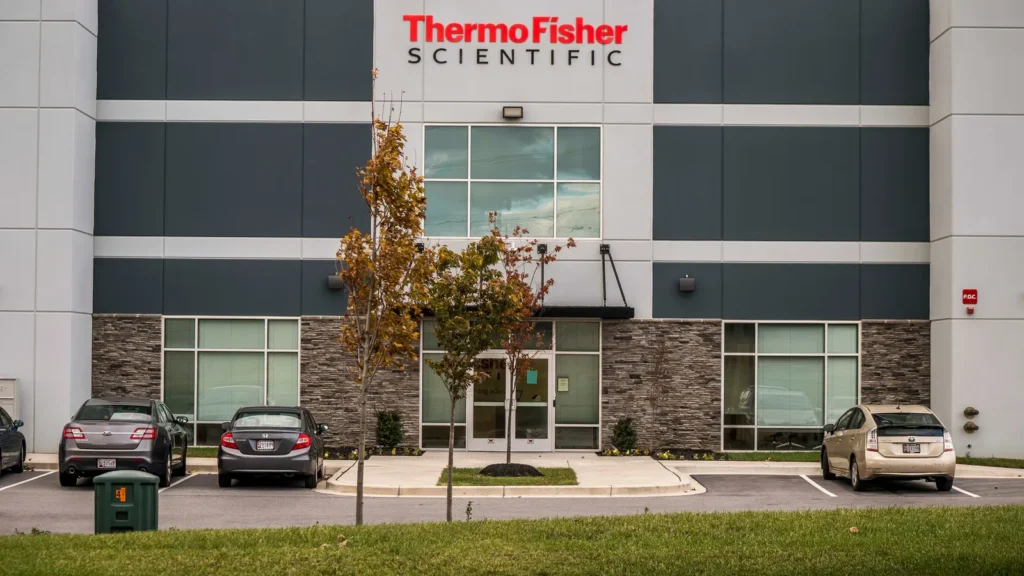
A groundbreaking lawsuit filed against Thermo Fisher Scientific on August 3, 2026, alleges that the company violated a science director’s sincerely held Christian beliefs by failing to provide a 401(k) investment option free of fossil fuel funding. This case, brought forth by a worker described as a committed Christian and active member of the United Methodist Church, is being closely watched by legal experts and advocacy groups, who argue it could establish a significant precedent in the evolving landscape of religious accommodation following the pivotal 2023 Supreme Court decision in Groff v. DeJoy. The plaintiff, whose identity has been protected in early reports, contends that his faith compels him to be a steward of the earth, rendering it "deeply immoral" to profit from or hold ownership stakes in companies contributing to the climate crisis.
The core of the plaintiff’s argument rests on the assertion that his religious convictions dictate his financial and ethical choices, extending to his retirement investments. He maintains that his Christian faith mandates active care for and stewardship of the natural world, a principle he believes is fundamentally contradicted by investment in fossil fuel entities. This conviction is not merely theoretical; the plaintiff has demonstrated a consistent commitment to climate-friendly practices in his personal life. These include adhering to a plant-based diet, relying almost exclusively on bicycling for transportation, deliberately making banking and investment choices that eschew fossil fuel companies, and donating a substantial portion of his income to environmental causes. Furthermore, he has underscored his active involvement with several environmental Christian groups, solidifying the sincerity and depth of his religiously motivated stance against climate destruction.
The Groff v. DeJoy Precedent: A New Standard for Religious Accommodation
Central to the legal strategy of the plaintiff and his attorneys from the legal advocacy group ClientEarth is the landmark 2023 Supreme Court ruling in Groff v. DeJoy. This decision significantly recalibrated the standard for religious accommodation under Title VII of the Civil Rights Act of 1964. Previously, employers could deny religious accommodation requests if they demonstrated that doing so would impose more than a "de minimis" (minimal) cost or burden. However, Groff v. DeJoy elevated this threshold, requiring employers to prove that granting an accommodation would result in "undue hardship" that is "substantial" in the context of the employer’s business.
The Groff case itself involved a U.S. Postal Service mail carrier, Gerald Groff, who sought accommodation to avoid working on Sundays due to his sincerely held Christian beliefs. The Supreme Court vacated the Third Circuit’s judgment, which had sided with the Postal Service, and remanded the case, instructing lower courts to apply the new, more rigorous "undue hardship" standard. This standard, which is widely interpreted as a higher bar for employers to meet when denying religious accommodation, has since emboldened workers to explore new avenues for aligning their faith with their professional lives. ClientEarth specifically highlights this shift, arguing that "adding a single fossil-fuel-free fund to a 401(k) menu cannot clear that bar," implying that such an accommodation would not constitute "undue hardship" for a large corporation like Thermo Fisher Scientific.
The Rise of ESG Investing and Ethical Retirement Planning
The lawsuit also intersects with the burgeoning trend of Environmental, Social, and Governance (ESG) investing. ESG funds are investment vehicles that consider a company’s impact on the environment, its social responsibility, and its governance practices alongside traditional financial metrics. Over the past decade, driven by increasing public awareness of climate change, social justice issues, and corporate ethics, ESG investing has seen exponential growth. According to reports from institutions like Morningstar and the Global Sustainable Investment Alliance, global sustainable investment assets have surged into the tens of trillions of dollars, with a significant portion allocated to retail and institutional investors.
Many employees, particularly younger generations, are increasingly seeking investment options that align with their personal values, including those related to environmental sustainability. Surveys by major financial institutions consistently show that a significant percentage of employees would be more engaged with their retirement plans if ESG options were available. While offering ESG funds in 401(k) plans is becoming more common, it is not yet universal, and the specific types of ESG funds available can vary widely. Some funds might exclude fossil fuels entirely, while others might simply invest in companies with better environmental performance within the energy sector. The plaintiff’s demand for a truly "fossil-fuel-free" option reflects a desire for a stringent ethical filter, which might not be met by all existing ESG offerings. This case could push companies to consider offering more granular and specific ethical investment choices within their retirement portfolios, particularly when faced with religious accommodation requests.
Faith and Environmental Stewardship: A Deep-Rooted Conviction
The plaintiff’s argument that his Christian faith calls him to "care for and steward the earth" taps into a theological tradition deeply embedded in many religious doctrines. In Christianity, the concept of "creation care" or "stewardship" is derived from biblical passages, particularly from Genesis, where humanity is given dominion over creation, often interpreted as a responsibility to protect and cultivate it rather than exploit it. Many Christian denominations, including the United Methodist Church (of which the plaintiff is an active member), have increasingly emphasized environmental justice and sustainability as core tenets of their faith.
For instance, the United Methodist Church’s official social principles include strong statements on environmental stewardship, calling for action to address climate change and promote sustainable practices. These principles often guide members in their personal and financial decisions, making the plaintiff’s objections to fossil fuel investments a direct manifestation of his religious adherence. This lawsuit provides a powerful example of how deeply personal religious convictions can translate into concrete demands within the workplace, particularly when those convictions align with broader societal concerns like climate change. The plaintiff’s declaration that he believes it is "deeply immoral" to profit from climate destruction underscores the gravity of his religious objection, framing it not as a mere preference but as a moral imperative.

Challenges and Implications for Employers and HR Professionals
This lawsuit presents a complex challenge for employers and Human Resources departments. On one hand, companies have a legal obligation under Title VII to reasonably accommodate employees’ sincerely held religious beliefs unless doing so would cause "undue hardship." On the other hand, managing 401(k) plans involves significant fiduciary responsibilities, complex financial regulations, and administrative overhead. Adding a new, specialized investment option might seem minor to an individual, but for a large corporation managing thousands of employee accounts and working with specific financial providers, it could entail costs, legal review, and logistical complexities.
The Groff decision, however, places the burden squarely on the employer to demonstrate that such an accommodation constitutes a "substantial" hardship. Merely claiming administrative inconvenience or minimal cost may no longer suffice. HR professionals are now advised to meticulously document their assessment of religious accommodation requests, exploring all possible avenues before denial. This case could prompt companies to proactively review their 401(k) offerings to include a wider range of ESG or values-aligned funds, not just as a general employee benefit but as a potential means of fulfilling future religious accommodation requests. It also highlights the growing need for HR to understand the diverse ways in which religious beliefs can manifest in the workplace, moving beyond traditional interpretations to encompass ethical and environmental concerns.
Broader Impact and Future Trends in Workplace Religious Freedom
The Thermo Fisher Scientific lawsuit, if successful, could indeed set a far-reaching precedent. It would validate the idea that deeply held religious beliefs can extend to financial investment choices, particularly those linked to significant global issues like climate change. This could open the door for similar lawsuits from employees seeking accommodations based on a wide array of ethical or moral convictions rooted in their faith, extending beyond traditional workplace practices.
As noted by ClientEarth, this case represents an "early post-DeGroff case study" for resistance to climate destruction within a religious framework. The Groff decision has already led to an increase in novel religious accommodation requests, particularly in the wake of the COVID-19 pandemic, where vaccine mandates spurred numerous claims. Beyond vaccines, employees have sought exemptions from diversity-related training, arguing it conflicts with their religious beliefs, and legal experts anticipate claims related to the ethical use of artificial intelligence (AI) in the workplace. The U.S. Equal Employment Opportunity Commission (EEOC) has long affirmed that religious beliefs "need not be confined to traditional concepts of religion," a stance that supports the expansive interpretation of religious accommodation seen in this current lawsuit.

This ongoing evolution of religious freedom in the workplace demands that employers maintain vigilance and flexibility. It necessitates a thorough, individualized assessment of each request, focusing on the sincerity of the belief and the true extent of the hardship an accommodation would impose. The outcome of this lawsuit will undoubtedly shape how companies approach their retirement plans, their engagement with ESG principles, and their overall strategy for navigating the increasingly complex intersection of faith, ethics, and corporate responsibility in the 21st century.
Company Response
When contacted for comment regarding the pending litigation, Thermo Fisher Scientific declined to provide a statement, adhering to a common policy for companies involved in ongoing legal proceedings. The lawsuit, filed in federal court, is expected to proceed through discovery and potentially to trial, offering a detailed examination of both the plaintiff’s religious convictions and the company’s ability to provide the requested accommodation without undue hardship. The legal community and environmental advocates will be closely monitoring the proceedings, recognizing the potential for this case to redefine the boundaries of religious accommodation in the context of corporate finance and global environmental challenges.