The modern corporate landscape is increasingly defined by data-driven decision-making, yet a significant gap remains within the Learning and Development (L&D) sector regarding the effective use of learning analytics. While most organizational leaders acknowledge the intrinsic value of data in shaping educational strategy, the transition from simple completion tracking to sophisticated impact analysis remains a hurdle for many. Dr. John Cleave, a specialist in learning solutions with a PhD in Computer Science from Northwestern University and over 30 years of experience, suggests that the industry is at a critical inflection point where the integration of Artificial Intelligence (AI) and advanced telemetry is transforming how training success is measured and validated.
The Current State of Learning Analytics: Identifying the Implementation Gap
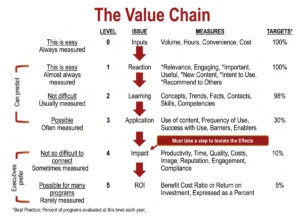
Despite the availability of sophisticated Learning Management Systems (LMS) and specialized analytics tools, the majority of L&D departments struggle to move beyond basic metrics. Industry research frequently indicates that while over 90% of organizations want to measure the business impact of their training, less than 20% actually do so effectively at the higher levels of the Kirkpatrick Evaluation Model. This discrepancy arises from a combination of technical, psychological, and methodological barriers.
Dr. Cleave identifies five primary factors that contribute to the stagnation of learning analytics within the enterprise. First is the "fear of the unknown" or fear of failure; if a high-stakes training program is analyzed and found to have no measurable impact, it may reflect poorly on the L&D leadership. Second is a lack of specialized quantitative skills within traditional HR and instructional design teams. Third is the limitation of existing infrastructure, where many LMS platforms are designed for compliance rather than deep data mining. Fourth is the "content-first" fallacy, where organizations prioritize the speed of content production over the rigor of assessment design. Finally, there is the inherent difficulty of isolating training as the sole variable in performance improvement, which often discourages leaders from attempting complex analysis.
The result of these factors is a missed opportunity. When organizations fail to collect data on training impact, they are essentially operating in the dark, unable to iterate on their designs or prove their return on investment (ROI) to executive stakeholders.
Measuring Behavioral Change: The Kirkpatrick Levels 3 and 4 Challenge
In the framework of the Kirkpatrick Model, Level 1 (Reaction) and Level 2 (Learning) are common metrics. However, Level 3 (Behavior) and Level 4 (Results) remain the "holy grail" of L&D. Measuring whether a learner actually changes their behavior on the job is notoriously difficult. Traditional methods, such as manager assessments, are often clouded by subjectivity, while direct workplace monitoring can be perceived as intrusive or ethically complex.
To address this, Dr. Cleave proposes a methodology centered on "in-situ indicators." This approach involves identifying specific, measurable actions that signify a learner is acquiring the necessary skills during the learning experience itself. By embedding high-fidelity simulations and case studies into the curriculum, L&D leaders can capture data on how a learner handles specific scenarios.
For instance, in a sales training context, rather than just testing a learner’s ability to recall product features, the training can measure their ability to ask probing questions or identify customer pain points within a simulated dialogue. This "proxy data" provides a more accurate prediction of on-the-job performance than a standard multiple-choice test. By designing assessments that mirror real-world tasks, the data collected gains "predictive validity," allowing leaders to forecast how a cohort will perform once they return to their daily responsibilities.
The Role of Existing Infrastructure: Maximizing the LMS
Many L&D leaders feel hamstrung by the limitations of their current LMS, viewing it as a mere repository for SCORM (Sharable Content Object Reference Model) packages. However, even basic systems provide foundational data that can be leveraged for strategic insight.
Status and score tracking, while rudimentary, are essential for establishing a baseline. Without knowing who completed a course, it is impossible to make any claims about its impact. Furthermore, analyzing enrollment patterns in optional or self-paced courses can serve as a "market signal" within the company, indicating which topics employees find most valuable for their career progression.
Advanced utilization of the LMS involves looking into SCORM’s cmi.interactions data. Modern authoring tools can send detailed information to the LMS regarding how individual questions were answered. This allows L&D teams to conduct item analysis, identifying specific concepts that are consistently misunderstood across the organization. If 70% of learners fail a specific question regarding a new compliance regulation, the issue likely lies with the training content or the complexity of the regulation itself, rather than the learners’ effort.
The AI Revolution in Learning Data
The advent of Generative AI and machine learning is perhaps the most significant catalyst for the evolution of learning analytics. AI thrives on data, and the L&D field is a vast, often untapped, source of it. AI’s impact is manifesting in three primary areas: personalization, evaluation, and pattern recognition.
In terms of personalization, AI can analyze a learner’s historical performance data to adapt content in real-time. If the data shows a learner has mastered a specific module but is struggling with another, the AI can pivot the curriculum to focus on the area of weakness. This "adaptive learning" ensures that training is efficient and targeted.
Furthermore, AI is solving the "evaluation bottleneck." Historically, evaluating open-ended work products—such as reports, presentations, or essay responses—required human intervention, which is slow and expensive. AI can now evaluate these products against a rubric with high consistency, providing immediate feedback to the learner and rich data to the instructor.
Finally, AI excels at pattern matching within large datasets. By processing thousands of xAPI (Experience API) statements, AI can uncover behavioral trends that would be invisible to human analysts. It can identify the "path to mastery" by observing the sequence of actions taken by top performers within a simulation, allowing L&D designers to model future training after those successful behaviors.
Strategic Implications and Business Alignment
The shift toward robust learning analytics is not merely a technical upgrade; it is a strategic necessity. As organizations face rapid technological shifts and widening skills gaps, the ability to quantify the effectiveness of upskilling initiatives becomes a competitive advantage.
For L&D leaders, the use of data serves as a bridge to the C-suite. By speaking the language of metrics—such as "time to proficiency," "error rate reduction," and "behavioral correlation"—L&D moves from being a "cost center" to a "value driver." This alignment is crucial for securing budget and resources in a tightening economic environment.
The implications extend to organizational culture as well. A data-driven L&D department fosters a culture of continuous improvement. When data is used formatively—to adjust and improve programs during their rollout—it demonstrates a commitment to quality and learner success rather than just "checking a box" for compliance.
Overcoming Internal Resistance: A Tactical Guide
Implementing a new analytics strategy often meets with internal resistance. To gain buy-in from supervisors and stakeholders, Dr. Cleave suggests a multi-pronged approach.
First, address the fear factor by framing analytics as a formative tool. Instead of using data for a final "pass/fail" judgment on a program, use it to conduct pilots and make iterative improvements. This reduces the stakes and positions the L&D team as a proactive, learning-oriented unit.
Second, counter the "time-to-market" argument by demonstrating that assessment design and content design are inseparable. By developing assessments first—a practice known as "backward design"—the team creates a "True North" that ensures the content remains focused and relevant, ultimately saving time by eliminating unnecessary material.
Third, for leaders who lack quantitative confidence, the solution lies in simplification and support. L&D professionals should provide "executive summaries" of data that focus on actionable insights rather than raw numbers. Demonstrating the value of a single, well-analyzed pilot program can often be more persuasive than a dozen theoretical presentations.
Conclusion: The Future of the L&D Craft
The future of learning analytics is one of increased automation and deeper insight. As tools become more integrated and AI becomes more accessible, the routine collection of high-quality data will become the industry standard. The transition from "design, develop, and deploy" to "discover, design, and demonstrate" marks the professionalization of the L&D craft.
By embracing these changes, L&D leaders can ensure that their programs are not just completed, but are truly transformative. The move toward data-rich learning environments promises a future where the impact of education is visible, measurable, and directly linked to the success of the individual and the organization alike. As Dr. Cleave and the experts at SweetRush emphasize, the goal is to stop guessing and start measuring what training actually changes.