In the evolving landscape of the modern workplace, employee engagement programs are no longer a supplementary HR initiative but a fundamental driver of organizational success. As businesses navigate an increasingly distributed workforce and shifting employee expectations, the strategic implementation of these programs is proving critical for fostering connection, improving retention, boosting performance, and enhancing the overall employee experience. By embedding engagement efforts into daily interactions rather than relying on sporadic campaigns, organizations in 2026 are prioritizing programs focused on recognition, rewards, employee feedback, career development, well-being, flexibility, and a pervasive sense of belonging. These initiatives are instrumental in ensuring employees feel valued, supported, and intrinsically linked to the company’s overarching goals.
Defining Employee Engagement Programs
At its core, an employee engagement program is a deliberate, structured approach designed to elevate the employee experience. It aims to cultivate a deeper connection between individuals and their organization, their direct manager, their team, and their specific role. These programs empower HR departments and leadership to create an environment conducive to engagement by fostering a sense of value, involvement, and support. Ultimately, they enable employees to contribute their best work through features such as social and monetary recognition, robust survey and feedback mechanisms, and opportunities for genuine human connection.
The Growing Imperative for Engagement
The significance of employee engagement programs has intensified dramatically in recent years. Many organizations are grappling with pervasive challenges related to employee connection, trust, belonging, and long-term commitment. Data from the 2026 State of Recognition Report, which surveyed over 3,000 employees globally, reveals a stark reality: less than one-third of respondents report feeling a strong sense of connection or purpose in their work. This disconnect is particularly pronounced as workforces become more geographically dispersed and employee expectations continue to evolve at an unprecedented pace.
In this environment, businesses require consistent and effective strategies to ensure their employees feel valued, supported, and intrinsically linked to their professional endeavors. Well-designed engagement programs are crucial for strengthening the bonds between leaders and their teams, thereby building more resilient and adaptable workforces capable of navigating the complexities of the modern business world.
Impact Across the Workforce
Employee engagement programs have a profound impact on individuals who feel disconnected from their work, their colleagues, or the organization itself. This includes a wide spectrum of employees, from new hires navigating unfamiliar territory to frontline workers who may be less integrated into traditional corporate structures, and remote and hybrid workers who require proactive efforts to maintain connection. Employees who consistently lack recognition, meaningful growth opportunities, or supportive management are particularly vulnerable to disengagement. Engagement initiatives serve to bridge these experience gaps by creating more avenues for employees to be acknowledged for their contributions, share candid feedback, connect with peers, and pursue professional development.
The Pillars of Success and the Pitfalls of Failure
The efficacy of employee engagement programs hinges on their ability to make employees feel appreciated, connected, supported in their growth, and aligned with organizational values. Crucially, these programs flourish when managers and leadership actively solicit and act upon employee feedback, and consistently acknowledge employee participation and contributions.
Conversely, engagement programs often falter when feedback is collected but not translated into meaningful action. Infrequent recognition or a failure to address the diverse needs of different employee groups can also undermine these initiatives. Such shortcomings can erode trust, weaken connections, and ultimately prevent lasting engagement from taking root. The failure to demonstrate tangible outcomes from feedback mechanisms is a primary driver of employee cynicism and disengagement.
Integration Across the Organizational Fabric
Employee engagement programs manifest in numerous touchpoints throughout an organization’s operations. They are woven into the fabric of the employee experience, appearing in onboarding processes, one-on-one manager meetings, formal recognition programs, team meetings, employee surveys, career development discussions, mentorship initiatives, milestone celebrations, wellness programs, and Employee Resource Groups (ERGs).
For optimal accessibility and impact, these programs are increasingly integrated into the digital tools employees use daily, such as Slack, Zoom, and Microsoft 365 (including Copilot and Teams). This seamless integration ensures a consistent program experience and enables employees, regardless of their global location or team structure, to remain connected to one another and the broader business objectives.
Practical Applications of Engagement Strategies
In practice, employee engagement programs function by providing ongoing opportunities for employees to actively participate in and contribute to the organizational culture. This translates into concrete actions such as consistently recognizing employee contributions, regularly soliciting and acting upon feedback, actively supporting career growth and development, celebrating both personal and professional milestones, fostering peer-to-peer connections, and reinforcing excellent work through monetary and points-based rewards.
Key Program Components and Their Impact:
-
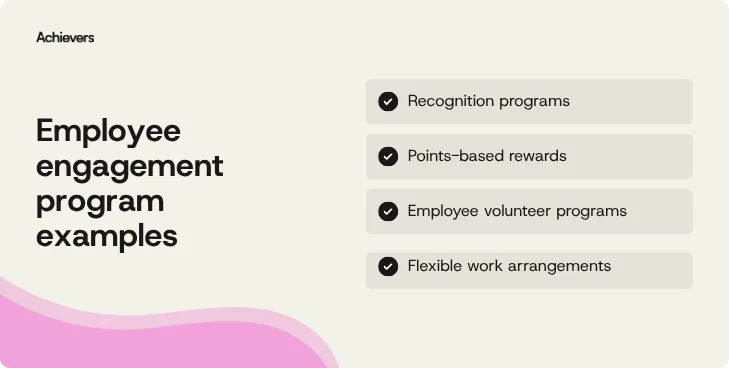
Recognition Programs: These programs are exceptionally effective in shaping organizational culture and driving performance. When employees receive real-time recognition for embodying company values and achieving results, engagement levels rise significantly. This is because employees gain clarity on what matters most and feel appreciated for their role in contributing to those objectives. Whether through peer-to-peer nominations, leadership awards, or informal moments of appreciation within the workflow, recognition reinforces desired behaviors.
-
Points-Based Rewards: The effectiveness of points-based reward systems is amplified when the rewards are genuinely meaningful to the recipient. These systems empower employees with choice, allowing them to redeem rewards that align with their personal lives, whether it’s a gift card to a favorite retailer, a travel experience, company-branded merchandise, or a donation to a charitable cause. By prioritizing flexibility and personalization, points-based rewards offer a scalable and manageable solution that still feels thoughtful and human-centric.
-
Employee Volunteer Programs: These programs foster a deeper sense of purpose for employees, both personally and professionally. By offering opportunities to give back through volunteer days, cause-based campaigns, or donation matching, organizations help employees connect their work to a larger mission. This cultivates a stronger sense of belonging, pride, and cultural alignment, which naturally fuels engagement.
-
Flexible Work Arrangements: Flexible work options, including hybrid schedules, adaptable hours, and compressed workweeks, empower employees to perform at their best. Granting individuals greater control over their work schedules supports their well-being, fosters autonomy, and builds trust. Organizations that embrace flexibility often experience higher engagement rates and reduced burnout, as they are designing work around their people rather than the reverse.
-
Mentorship Opportunities: Mentorship programs are invaluable for enhancing workplace engagement. By pairing employees with experienced mentors, organizations provide guidance for skill development, challenge navigation, and career planning. These relationships boost confidence, strengthen internal networks, and embed a culture where continuous learning and mutual support are integral to daily operations.
-
Team-Building Activities: These activities are designed to foster camaraderie and connection among colleagues. Shared challenges, team lunches, community projects, and ERG-led events provide opportunities for employees to connect on a personal level, transcending their professional roles. Over time, these shared experiences transform coworkers into collaborators and make organizational culture a tangible, lived experience.
-
Wellness Programs: Modern wellness programs extend beyond basic physical health benefits, encompassing holistic support for employees’ physical, mental, and emotional well-being. Through coaching, mindfulness resources, and accessible wellness initiatives, these programs demonstrate genuine care for employees. When individuals feel truly supported, engagement naturally follows.
-
Charity Work and Social Impact: Engaging employees in charity work, including campaigns, fundraising events, and on-site volunteer opportunities, instills a shared sense of purpose that extends beyond daily tasks. This collective impact strengthens company culture, deepens interpersonal connections, and visibly demonstrates the organization’s commitment to its values.
-
Onboarding Programs: Effective onboarding programs are crucial for welcoming new hires, ensuring they are well-prepared, and fostering a sense of connection from their very first day. When training, cultural immersion, and mentorship are seamlessly integrated, new employees gain clarity more rapidly, laying a robust foundation for long-term engagement and organizational success.
-
Employee Resource Groups (ERGs): ERGs create vital spaces for connection, advocacy, and shared experiences across the organization. Through development opportunities and culture-building initiatives, ERGs amplify diverse voices and transform inclusion into a measurable organizational strength.
-
Employee Voice and Feedback Tools: Tools such as regular check-ins, pulse surveys, and always-on feedback channels provide employees with a safe space to voice what is working well and what needs improvement. When organizations demonstrably act on this feedback and communicate transparently about subsequent steps, trust is cultivated. This "closing the loop" process is fundamental to building a feedback-rich culture.
-
Clear Career Pathways: Transparent career pathways are instrumental in fostering stronger workplace commitment. When employees understand their potential for growth, the skills required, and the benchmarks for success, they are more inclined to invest their future with the organization. Clear pathways replace ambiguity with momentum and direction.
-
Formal Award Programs: Formal award programs, recognizing everything from service milestones to culture champion achievements, celebrate significant contributions aligned with core organizational values. When executed effectively, these programs lend focus and excitement to recognition efforts while reinforcing organizational principles.
-
Flexible Work and Meaningful Time Off: A combination of flexible work arrangements and robust paid time off (PTO) policies, including opportunities for paid volunteerism, helps employees achieve a healthier work-life balance and avoid burnout. When employees feel trusted and supported in managing their personal and professional lives, their engagement, sense of balance, and pride in their workplace are enhanced.

Building an Effective Employee Engagement Program
The construction of a successful employee engagement program requires a systematic approach:
-
Identify Engagement Challenges: Begin by pinpointing areas where employees feel disconnected. This involves reviewing employee survey data, feedback, turnover trends, participation rates, and insights from managers to identify issues related to recognition, belonging, communication, career growth, or managerial support.
-
Set Clear Goals and Success Metrics: Before launching any program, define what success looks like. Objectives may include improving employee retention, increasing recognition participation, enhancing manager effectiveness, supporting career development, or boosting employee sentiment. The chosen metrics should directly align with these overarching goals.
-
Choose Programs that Address Employee Needs: Select engagement programs that directly address the identified challenges, whether on a group or individual level. For instance, recognition and reward programs can foster desired behaviors and build stronger cultures, while mentorship and career development programs equip employees with skills and highlight future opportunities within the organization. The focus should be on programs that solve specific problems rather than launching a multitude of initiatives simultaneously.
-
Train Managers on Best Practices: Equip managers with the necessary skills and clear expectations regarding recognition, coaching, feedback, and employee development to ensure consistent program reinforcement.
-
Measure Participation and Employee Outcomes: Track both activity and impact by monitoring participation rates, employee feedback, recognition activity, retention trends, engagement scores, and other metrics tied to program goals. This provides crucial insights into the program’s effectiveness in driving meaningful change.
-
Adjust Programs Based on Employee Feedback: Continuously collect employee feedback to identify areas for improvement in program participation and overall effectiveness. Programs that actively listen and adapt are more likely to achieve long-term success.
The Power of Recognition and Feedback
Research from the 2026 Engagement and Retention Report by Achievers Workforce Institute (AWI) highlights a critical disparity: only 25% of employees feel genuinely appreciated, yet those who do feel appreciated are 2.5 times more likely to remain with their company. This underscores a powerful pattern: frequent and meaningful recognition directly correlates with increased engagement, which in turn leads to higher retention.
In practice, this translates to:
- Recognition Programs: Making appreciation visible and consistent.
- Rewards and Incentive Programs: Reinforcing desired behaviors.
- Feedback and Listening Programs: Translating employee voice into actionable insights.
- Growth and Development Programs: Demonstrating a clear future for employees within the organization.
The fundamental takeaway is that recognition is not merely one component of an engagement strategy; it serves as the engine that drives the entire system.
Selecting the Right Engagement Program
Choosing the most effective employee engagement program requires careful consideration:
-
Start with Workforce Reality: Engagement programs are most effective when they reflect how and where employees work. Frontline, hybrid, global, and desk-based teams experience connection differently, necessitating programs that are accessible and relevant across diverse roles, locations, and schedules.
-
Clarify the Problem Being Solved: Different programs yield different outcomes. Recognition strengthens performance and retention, feedback programs identify risks and opportunities, and career pathways support long-term growth. A clear understanding of the primary goal helps prevent "initiative overload" and ensures programs reinforce each other rather than competing for attention.
-
Prioritize Consistency Over Novelty: The long-term value of a program far outweighs its initial impact. Engagement improves when experiences are consistent, visible, and integrated into daily workflows, rather than relying on one-off events or annual rollouts.
-
Design for Scale, Not Perfection: The most successful engagement strategies focus on programs that can consistently scale connection as the organization grows or changes. If a program is only effective for a subset of the workforce, its design or support mechanisms may need re-evaluation.
-
Look for Connection, Not Just Participation: High participation does not automatically equate to high engagement. The most impactful programs foster a sense of being seen, heard, and appreciated by peers, leaders, and the organization as a whole. When these connections are strengthened, engagement naturally follows.
Enhancing Programs with Feedback
Leveraging feedback is essential for refining engagement initiatives:
-
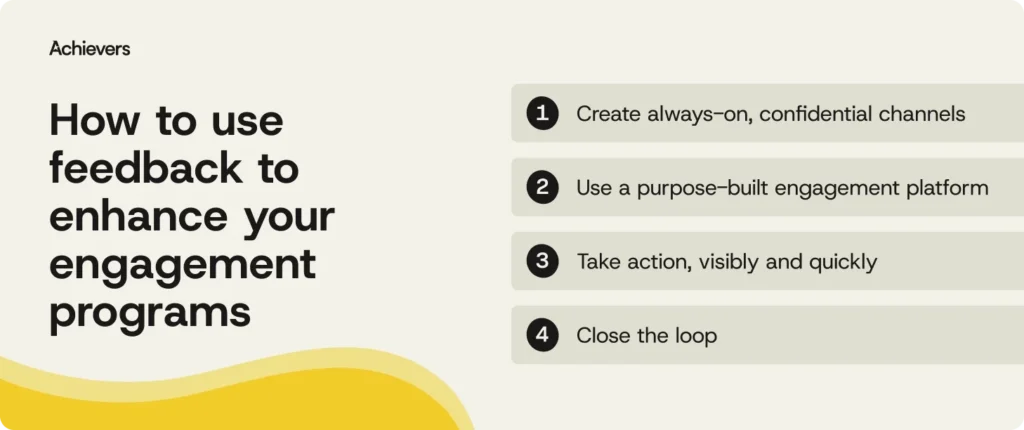
Create Always-On, Confidential Channels: Offer accessible and safe channels, such as employee surveys, digital suggestion boxes, and HR chatbots, where employees can share input anytime. Multiple confidential touchpoints signal that employee input is continuously welcomed.
-
Utilize Purpose-Built Engagement Platforms: Dedicated platforms integrate surveys, sentiment analytics, and feedback history to reveal the underlying drivers of engagement. This empowers leaders to act with speed and precision.
-
Take Visible and Swift Action: Ignored feedback is a potent catalyst for disengagement. When employees raise concerns, whether about workload, team dynamics, or resource gaps, swift, clear, and empathetic responses are crucial. Action, not just acknowledgment, drives culture change.
-
Close the Feedback Loop: Communicate what was heard, the actions being taken, and the rationale behind them. Whether it involves launching new training, updating policies, or allocating resources, clear communication transforms feedback into a shared success narrative.
The Pillars of a Successful Engagement Program
Sustaining engagement programs requires more than just launching them; it demands intention, alignment, and a people-centric culture. The most effective programs are built upon several key principles:
-
Clear, Human Communication: Open and consistent communication fosters alignment and builds trust. This includes pulse surveys, all-hands updates, and one-on-one check-ins, ensuring employees feel informed, heard, and valued.
-
A Clear Purpose: A well-defined purpose and strong values transform daily tasks into meaningful contributions, cultivating a culture of shared momentum.
-
Accountability That Empowers Growth: Growth-powered accountability involves setting clear expectations, providing regular feedback, and celebrating progress. When employees understand how their work is measured and are supported throughout the process, they remain motivated and focused.
-
Frequent and Meaningful Recognition: This serves as a powerful behavior-shaping tool that drives productivity, performance, culture, and retention. Employees who feel seen and appreciated by peers, leaders, and teams tend to engage more deeply and stay longer.
-
Strong Leadership: Leaders who exhibit empathy, offer consistent recognition, and communicate with clarity set a powerful example. They model desired behaviors and create environments where others can thrive, building trust and scalable cultures.
-
Continuous Development: Opportunities for growth, such as mentorship, upskilling, and stretch assignments, signal that employees are valued. This investment fosters loyalty and retains top talent.
-
A Culture of Belonging: Engagement flourishes in environments where individuals feel safe to express themselves, take risks, and bring their authentic selves to work. A strong culture is a significant competitive advantage.
-
Purpose-Driven Impact: Programs that support community involvement, sustainability, and ethical practices instill pride and meaning that extends beyond job descriptions.
-
Connection Across Roles, Regions, and Realities: Effective programs connect global, hybrid, and frontline employees with consistent care. This includes real-time recognition for frontline teams, communication that transcends time zones, and inclusive experiences for all employees, regardless of their role, location, or schedule.
The Tangible Business Impact of Engagement
Employee engagement is not merely about morale; it is a catalyst for organizational momentum. When employees feel recognized, connected, and supported, they are more likely to be proactive, vocal, and go above and beyond. Leading businesses understand this and build their cultures around engagement. The benefits are substantial:
-
Higher Productivity: Energized and engaged employees are more focused, efficient, and motivated to exceed expectations.
-
Stronger Company Culture: Recognition, communication, and purpose are foundational to a robust culture, creating environments where employees feel valued and excited to contribute long-term.
-
Increased Retention: Employees who feel heard, recognized, and supported are more likely to remain with an organization. Organizations with high employee engagement experience significantly lower turnover rates.
-
Better Collaboration: Engagement programs foster stronger relationships, leading to increased trust, improved teamwork, and greater cross-functional impact.
-
Improved Well-being: Engagement and well-being are intertwined. Flexible work, mental health resources, and wellness support demonstrate organizational care.
-
Stronger Alignment with Company Vision: When employees understand how their work contributes to the bigger picture, motivation increases, translating purpose into performance.
-
More Innovation and Growth: Engaged employees are more likely to generate new ideas, seek opportunities, and invest in their development, driving innovation, agility, and long-term growth. Highly engaged business units often exhibit greater profitability.
-
Higher Customer Satisfaction: Engaged employees positively influence customer interactions, fostering trust, loyalty, and memorable brand experiences.
Scaling Engagement Programs for Enterprise Organizations
For enterprise organizations, scaling engagement programs requires strategic considerations:
-
Integration with Existing Tech Ecosystem: Engagement initiatives are most effective when seamlessly integrated into existing workflows and core HR and collaboration tools.
-
Data Privacy and Security: Employees must have confidence that their data is handled responsibly and their feedback is secure. Clear privacy standards and transparent security practices build trust.
-
Consistent Program Standards and Metrics: Establishing clear standards for values, recognition behaviors, and success metrics allows for localized program implementation while maintaining organizational consistency.
-
Real-Time Engagement Data and Insights: Prioritize insights that help leaders understand program effectiveness, identify connection breakdowns, and determine areas needing attention. This demonstrates that listening leads to action.
-
Program Longevity and Scalability: Programs should be sustainable, with clear ownership and the flexibility to adapt to a changing workforce. Reliance on manual effort or a few key individuals can hinder long-term momentum.
Case Study: Wesley’s Engagement Transformation
Wesley, a non-profit healthcare and housing provider, faced challenges with retention and sought to cultivate a stronger culture within its nursing workforce. By partnering with Achievers, Wesley launched "Inspire," a company-wide recognition and rewards program designed to foster belonging and encourage peer-to-peer recognition. This initiative made recognition accessible across all shifts and locations, enabling employees to celebrate achievements, nominate colleagues, send e-cards, and redeem rewards. Wesley also utilized employee pulse surveys to gather feedback and better understand its workforce’s priorities.
The results were significant:
- Increased Recognition: Employees actively participated in recognizing their peers.
- Improved Sentiment: Feedback indicated a stronger sense of appreciation and connection.
- Enhanced Retention: Key retention metrics showed positive movement.
Wesley’s approach demonstrated that by empowering employees at all levels to contribute to recognition, a more robust workplace culture could be built.
Achievers: Driving Engagement for Results
Achievers empowers organizations to transform disparate engagement programs into a cohesive and impactful employee experience. Through integrated recognition, rewards, feedback tools, celebration features, and real-time analytics, businesses can identify engagement challenges and implement actionable strategies to better support their people. Whether the objective is to improve retention, increase recognition frequency, strengthen manager effectiveness, or cultivate a deeper sense of belonging, Achievers provides HR leaders with the tools to embed engagement as a regular and vital aspect of the employee experience.