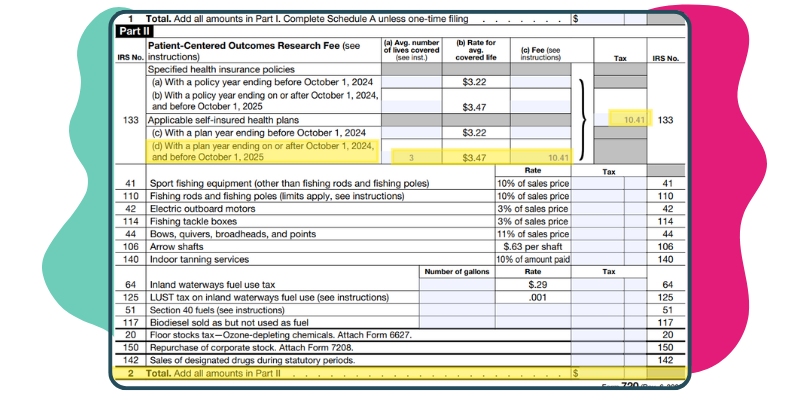
The federal deadline for filing IRS Form 720 and paying the Patient-Centered Outcomes Research Institute (PCORI) fee is approaching on July 31, 2026, marking a critical compliance milestone for small business owners and sponsors of self-insured health plans. Originally established under the Affordable Care Act (ACA), the PCORI fee is designed to fund research into the clinical effectiveness of various medical treatments. While health insurance carriers typically manage these payments for fully-insured plans, the responsibility shifts directly to the employer when self-insured arrangements, such as Health Reimbursement Arrangements (HRAs), are utilized. As the healthcare landscape continues to evolve toward more personalized and employer-funded models, understanding the nuances of these excise taxes has become essential for maintaining regulatory standing and avoiding substantial financial penalties.
The Origins and Evolution of the PCORI Fee
The Patient-Centered Outcomes Research Institute was created as part of the 2010 Affordable Care Act to address a perceived gap in medical research. The institute functions as an independent, non-profit organization tasked with conducting research to provide evidence-based information about which medical treatments work best for different patients under specific circumstances. By focusing on "patient-centered" outcomes, the organization aims to help healthcare consumers and providers make more informed decisions, ultimately improving the efficiency and quality of the national healthcare system.
To fund this research, the ACA introduced a fee imposed on both fully-insured and self-insured health plans. Under Sections 4375 and 4376 of the Internal Revenue Code, the fee was initially intended to be a temporary measure, set to expire for plan years ending after September 30, 2019. However, the federal government recognized the ongoing value of the institute’s research. In late 2019, as part of the Further Consolidated Appropriations Act of 2020, Congress extended the PCORI fee for another ten years. The fee is now authorized through September 30, 2029, ensuring that the institute remains a fixture in the American healthcare regulatory environment for the foreseeable future.

Identifying Liable Entities and Applicable Plans
Determining who owes the PCORI fee requires a clear understanding of the distinction between fully-insured and self-insured health coverage. In a fully-insured model, the employer pays a premium to an insurance carrier, and the carrier assumes the financial risk of claims. In this scenario, the insurance company is responsible for reporting and paying the PCORI fee, often baking the cost into the premium rates.
Conversely, in a self-insured or self-funded model, the employer takes on the financial risk of providing healthcare benefits. This category includes several popular arrangements used by small and mid-sized businesses to control costs and offer flexibility. Specifically, the following plans are subject to PCORI fees and require the employer to file IRS Form 720:
- Individual Coverage HRAs (ICHRA): These allow employers to reimburse employees for individual health insurance premiums rather than offering a traditional group plan.
- Qualified Small Employer HRAs (QSEHRA): Designed for businesses with fewer than 50 full-time equivalent employees that do not offer a group health plan.
- Group Coverage HRAs (GCHRA): Also known as integrated HRAs, these are offered alongside a group health insurance policy.
- Self-Insured Group Health Plans: Any traditional health plan where the employer pays for claims directly.
Exemptions do exist for certain "excepted benefits." Plans that only cover dental or vision expenses are generally not subject to the fee. Furthermore, Health Savings Accounts (HSAs) and most Employee Assistance Programs (EAPs) are exempt, provided they do not provide significant medical benefits.
The Financial Landscape: Fee Rates and Inflation Adjustments
The PCORI fee is not a static amount; it is adjusted annually by the Secretary of Health and Human Services to account for inflation in national health expenditures. The fee is calculated based on the "average number of lives covered" under the plan during the plan year. This includes not only the employees but also any dependents, spouses, or retirees covered under the plan.

For the upcoming 2026 filing cycle, the rates are as follows:
- For plan years ending on or after October 1, 2025, and before October 1, 2026, the fee is $3.84 per covered life.
- For plan years that ended between October 1, 2024, and September 30, 2025, the fee is $3.47 per covered life.
This incremental increase reflects the rising costs of healthcare and the expanded scope of research performed by the institute. For a small business with 50 covered lives on a calendar-year plan ending December 31, 2025, the total excise tax due in July 2026 would be $192.00. While the dollar amount per life may seem nominal, the administrative burden of calculation and filing remains a significant point of focus for compliance officers.
Chronology of PCORI Compliance
The timeline for PCORI compliance follows a strict annual rhythm. Because the fee applies to the previous plan year, employers must look back at their enrollment data to determine their liability.
- 2010: PCORI is established under the ACA.
- 2012: The first PCORI fees become due for plan years ending after October 1, 2012.
- December 2019: Congress passes the Further Consolidated Appropriations Act, extending the fee to 2029.
- October 2025 – September 2026: This period defines the "plan year end" dates that determine which fee rate ($3.47 or $3.84) applies.
- July 31, 2026: The deadline for all applicable plan sponsors to file Form 720 and submit payment for plans that ended in 2025.
If the July 31 deadline falls on a Saturday, Sunday, or legal holiday, the filing is considered timely if submitted on the next business day. Failure to adhere to this chronology can trigger the same penalties associated with late-filed excise tax returns.
Methodologies for Calculating "Covered Lives"
One of the most complex aspects of PCORI compliance is determining the "average number of lives covered." The IRS allows plan sponsors to use one of three primary methods, provided the chosen method is applied consistently throughout the plan year.
- The Actual Count Method: The sponsor adds the total of all lives covered on each day of the plan year and divides by the number of days in the plan year.
- The Snapshot Method: The sponsor adds the total number of lives covered on one or more dates in each quarter and divides by the number of dates used. The dates must be consistent across quarters (e.g., the first day of each quarter).
- The Form 5500 Method: For those who file a Form 5500 (Annual Return/Report of Employee Benefit Plan), the sponsor uses the participant counts reported on that form. This is often the simplest method for larger organizations, though it requires specific mathematical adjustments to account for dependents.
For employers offering an HRA integrated with a fully-insured medical plan, a special rule applies. The employer is only required to pay the PCORI fee for the HRA participants (typically the employees), while the insurance carrier pays for the lives covered under the primary medical policy. This prevents "double-dipping" of fees for the same individuals across multiple plans sponsored by the same employer.
Industry Reactions and the Cost of Non-Compliance
Financial experts and tax advisors emphasize that while the PCORI fee is relatively low in cost, the penalties for oversight are disproportionately high. David Blain, CEO of BlueSky Wealth Advisors, notes that the administrative burden often outweighs the tax itself. "We’ve seen scenarios where entities miscalculated their covered lives or missed the fee payment deadline, and both situations led to complications during their annual audits," Blain observed.
Under Internal Revenue Code §6651, the penalty for failing to file a return or pay the tax is 5% of the unpaid tax for each month the return is late, capping at 25%. For businesses that intentionally disregard the filing, the costs can escalate. Beyond the financial penalty, the "administrative burden to rectify the oversight," as Blain describes it, involves amended returns and potential increased scrutiny from the IRS.

The industry reaction to the 2020 extension was mixed. While healthcare advocates praised the continued funding for clinical research, some business groups argued that the fee represents an additional "hidden tax" on innovation in the self-insured space. However, as the use of HRAs like the ICHRA grows—projected to cover millions of employees by the end of the decade—the PCORI fee has become an accepted, if begrudged, cost of doing business.
Broader Implications and Analysis
The existence of the PCORI fee highlights the federal government’s commitment to data-driven healthcare. By taxing health plans to fund comparative effectiveness research, the ACA created a self-sustaining loop intended to eventually lower healthcare costs by identifying and eliminating ineffective treatments.
From a policy perspective, the PCORI fee serves as a reminder that the "self-insured" label carries significant regulatory weight. Small businesses moving away from traditional group plans toward HRAs must realize they are stepping into the role of a "plan sponsor." This role requires a higher level of diligence regarding ERISA (Employee Retirement Income Security Act) standards, COBRA administration, and IRS excise tax filings like Form 720.
As the July 31, 2026, deadline approaches, the integration of automated software for HRA administration has become a lifeline for small businesses. These platforms can track "covered lives" in real-time, generating the necessary reports to fill out Form 720 accurately. In an era of increasing regulatory complexity, the ability to automate these calculations is no longer a luxury but a necessity for maintaining compliance without diverting focus from core business operations.

Ultimately, the PCORI fee is a small but vital component of the broader ACA framework. For the small business owner, it represents the intersection of tax law, healthcare policy, and administrative responsibility—a trio that requires careful navigation to ensure the continued health of both their employees and their bottom line.