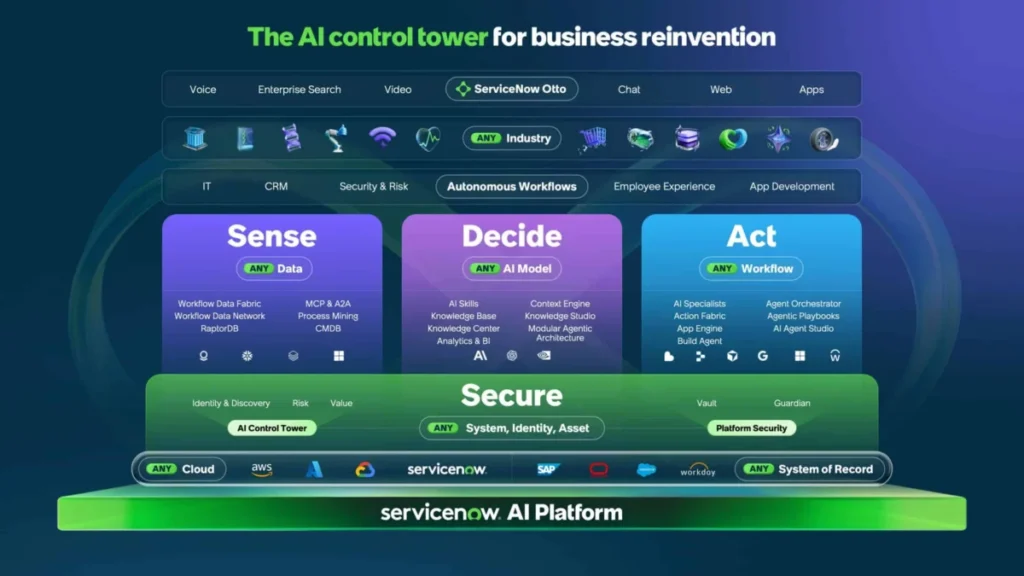
ServiceNow has launched a comprehensive suite of announcements designed to position itself as the central orchestrator of enterprise Artificial Intelligence, with an aggressive target of doubling its revenue to $30 billion within the next four years. The company’s strategy hinges on establishing itself as the primary provider of management tools, security, and the central access point for all AI agents operating within organizations. This move signals a significant shift in the enterprise software landscape, potentially marking the end of the prolonged "SaaS Apocalypse" by ushering in a new era of AI-driven monetization.
This bold ambition places ServiceNow in direct competition with tech giants like Microsoft and Workday, both of whom are pursuing similar strategies to capture the burgeoning enterprise AI market. While the competitive intensity is high, ServiceNow’s approach is rooted in a clear vision: to transform the perceived "chaos" of enterprise AI into a controlled, governed, and optimized environment. This vision resonates with CIOs concerned about the security and efficiency of AI deployments, though the practical challenge for many organizations remains the development of scalable, ROI-generating AI use cases. The success of ServiceNow’s new control tools will ultimately be measured by their ability to accelerate this crucial business imperative.
The Action Fabric: ServiceNow’s Central Nervous System for AI Agents
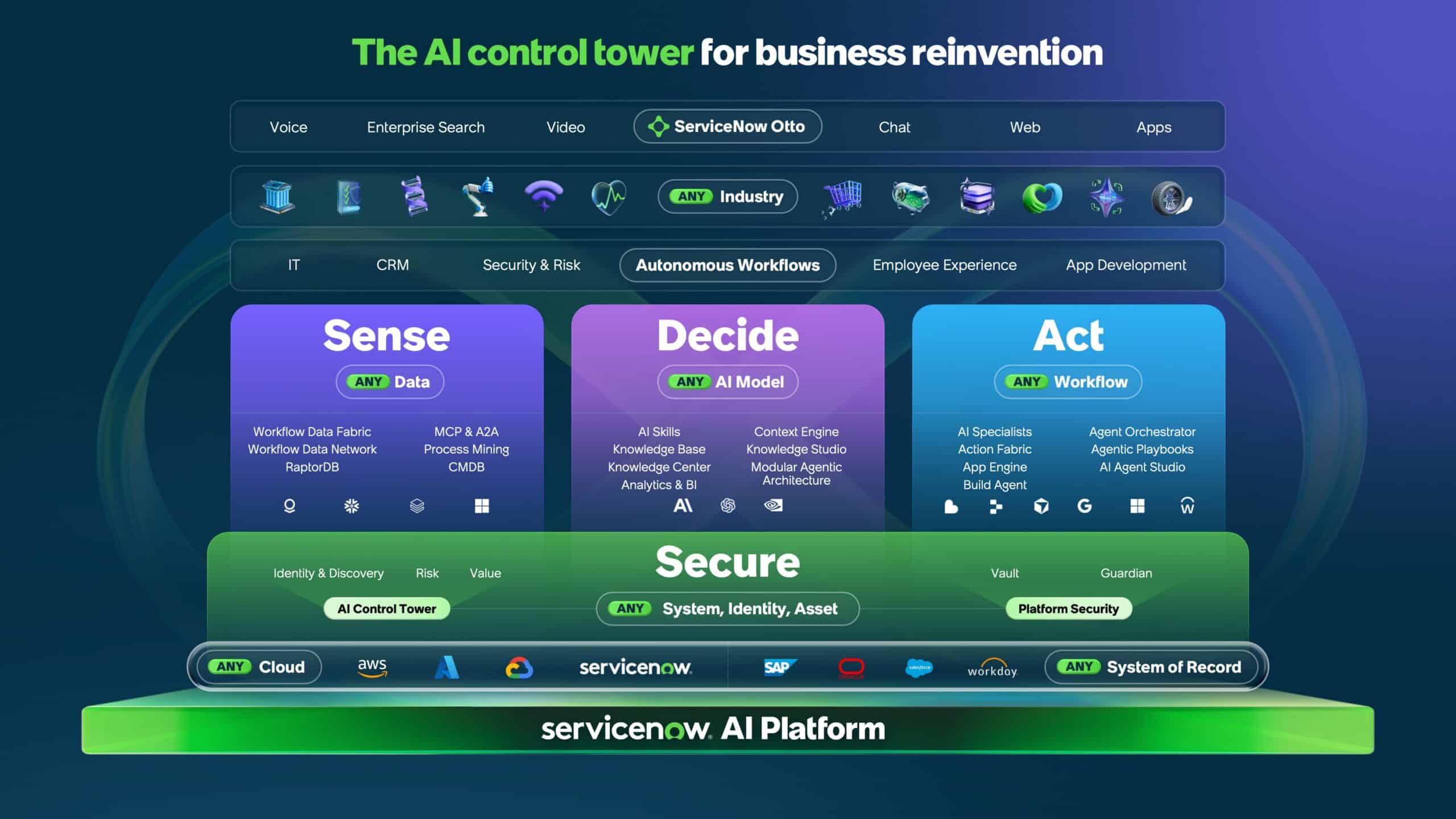
At the core of ServiceNow’s strategy is the "Action Fabric," a sophisticated monitoring and management layer designed to act as a traffic controller for all AI agent activity within an enterprise. This concept mirrors the strategies of Microsoft with its "Agent 365" and Workday’s "Agent System of Record," all aiming to provide a unified governance, monitoring, and management framework for disparate AI agents.
ServiceNow’s Action Fabric, delivered via its Master Control Program (MCP) server, emphasizes an open and inclusive architecture:
- Universal Agent Compatibility: The platform is designed to seamlessly connect with "any agent" and support "any model," irrespective of its origin or vendor. This means organizations can integrate AI agents developed by ServiceNow, Microsoft, Workday, or any third-party provider into their managed ecosystem.
- Open Ecosystem Integration: The management tools are also accessible to AI agents, enabling automated management scenarios and the integration of third-party management frameworks. This fosters an environment where agents can interact with and leverage ServiceNow’s governance capabilities.
- Comprehensive Control and Trust: A key tenet of the Action Fabric is ensuring full control and trust over AI agents. This includes robust authentication, permission scoping, auditing, and real-time monitoring. While ServiceNow highlights these capabilities, the precise enforcement mechanisms for business rules from other major vendors like Workday or SAP are still being clarified.
This approach leverages ServiceNow’s two decades of investment in foundational enterprise IT management technologies. These include its Configuration Management Database (CMDB), Workflow Data Network, configured business rules, Security Center, and robust identity and access controls. This extensive infrastructure positions ServiceNow as a mature provider of IT management systems, now adapted for the era of AI agents and applications, which the company refers to as a period of "reinvention."
Parallel efforts are underway from other enterprise software leaders. Workday’s "Agent System of Record" and "Agent Gateway" aim to open its established data and business rule rails to external agents on a per-call basis. Similarly, SAP has mandated that agents utilize its "Business Accelerator Hub" to access business rules, with usage also being metered. The choice between these platforms will likely hinge on an organization’s existing investment in Workday or SAP business rules and their preferred development environments.
Otto: The "Front Door" to Enterprise AI and Employee Experience
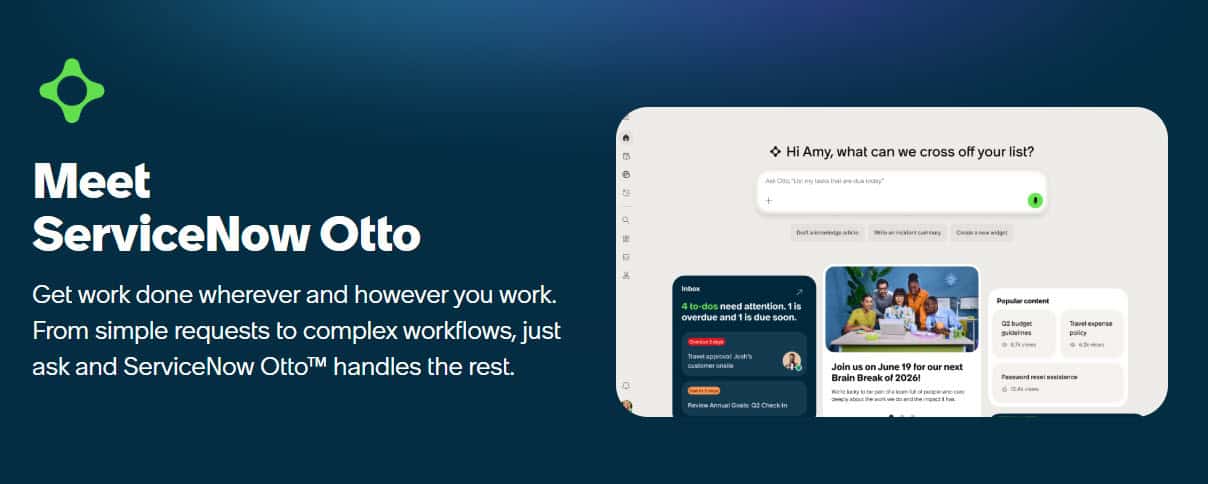
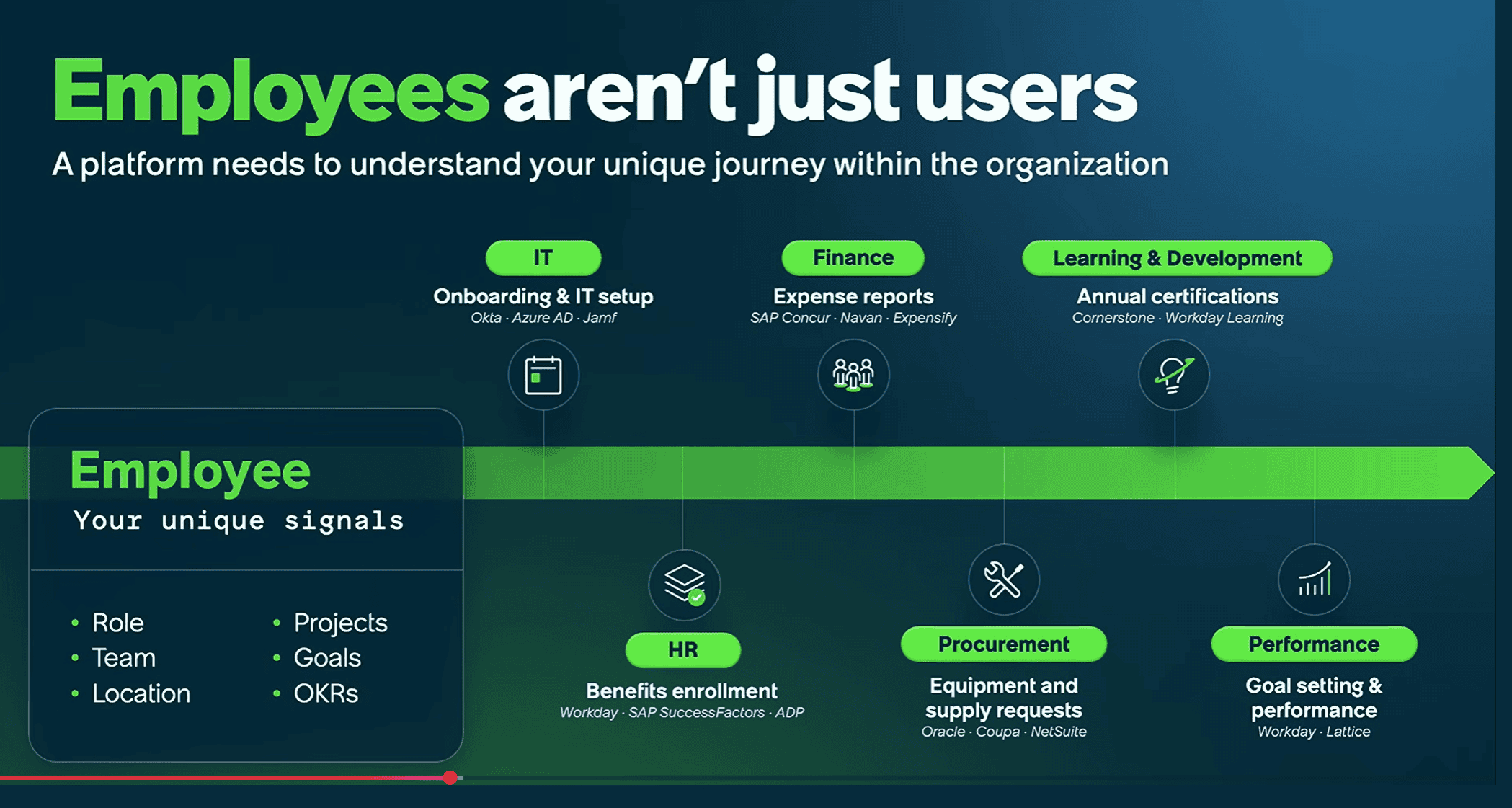
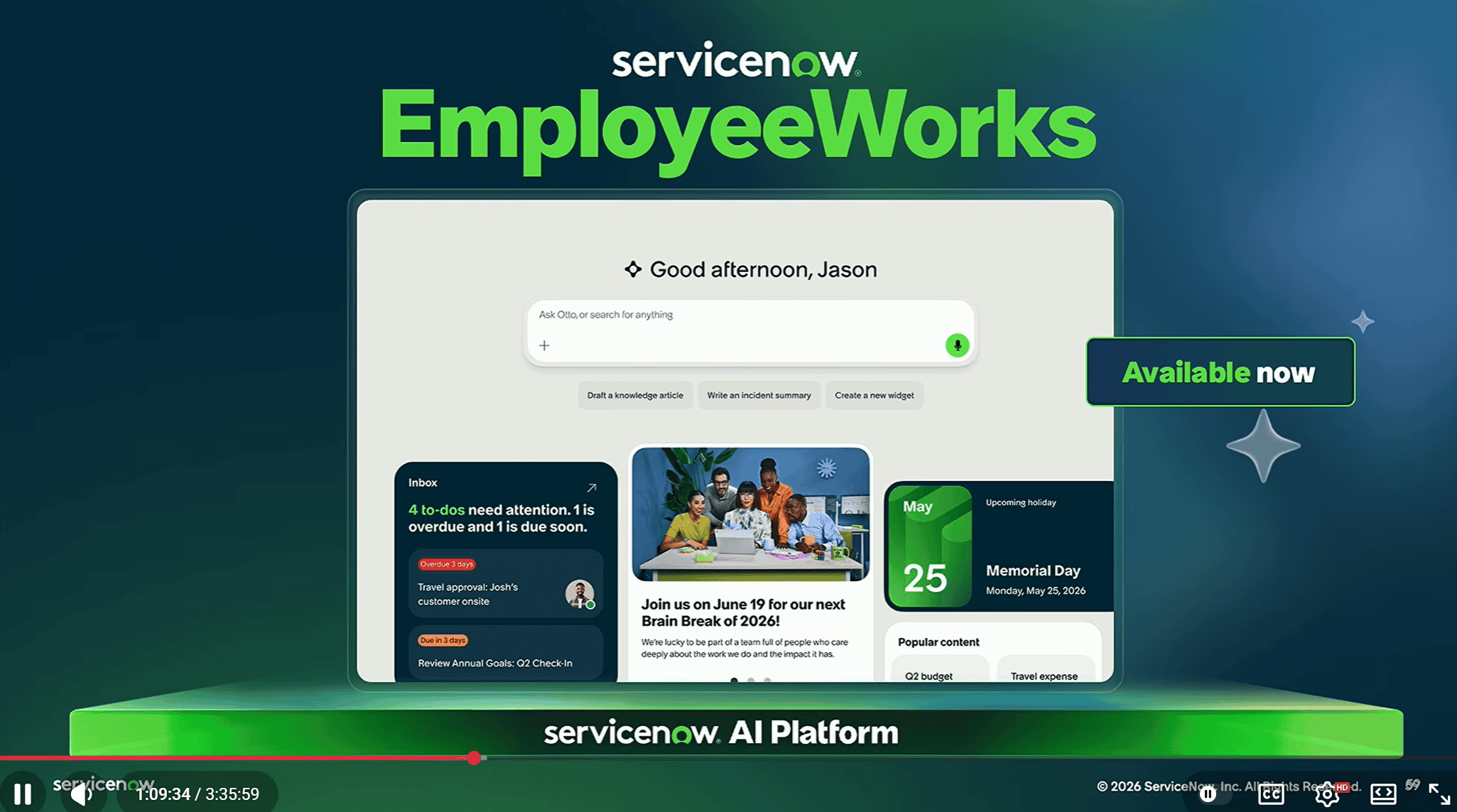
ServiceNow is also redefining its Now Assist offering, rebranding it as "Otto," a designated "Front Door" agent designed to provide a unified and intuitive interface for employees to access any enterprise resource or AI capability. This move parallels Workday’s introduction of "Sana" as its enterprise front door and echoes the broader trend of creating central conversational AI interfaces.
Otto, integrated with Moveworks technology, aims to be a friendly, persona-driven employee tool for tasks ranging from information retrieval and knowledge management to more complex operational needs. While acknowledging the strengths of competitors like Sana in learning capabilities, ServiceNow is positioning Otto as the new paradigm for Employee Experience (EX).
This strategic rebranding signifies a departure from traditional "Employee Self-Service" models towards a more proactive and personalized employee support system. The vision is to create a single point of interaction that can handle a wide array of employee inquiries and tasks, effectively becoming the primary interface for the modern workforce.
The integration of Moveworks, led by its founder Bhavin Shah, into this initiative, branded under "EmployeeWorks," underscores ServiceNow’s commitment to creating an open and accessible platform. This shift aims to simplify how employees interact with enterprise systems, moving beyond transactional self-service to a more holistic employee support experience.
The challenge for Otto and similar platforms lies in their ability to integrate with a vast ecosystem of employee needs. While a chatbot might initially appear to handle simple queries about vacation policies or benefits, its true value lies in its capacity to address a wide spectrum of issues, from IT support and HR inquiries to policy clarification and general employee well-being. The success of Otto will depend heavily on its integration capabilities with other EX platforms and internal systems.
The AI Control Tower: Governance, Security, and ROI for Enterprise AI
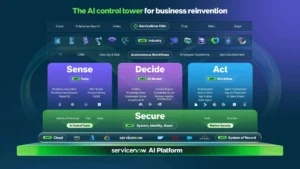
ServiceNow’s "AI Control Tower" represents an ambitious vision for managing the entire lifecycle of enterprise AI. Beyond mere monitoring and provisioning of AI agents, it aims to provide critical insights into their return on investment (ROI), identify misbehaving agents, and detect instances of excessive resource consumption, such as high token usage.
This concept bears resemblance to historical IT management systems like IBM’s "SystemView," which aimed to provide comprehensive oversight of an entire proprietary network. ServiceNow’s vision, as articulated by CEO Bill McDermott, is to manage the complex web of enterprise operations, including identities, AI agents, workflows, and human users. The feasibility of such an all-encompassing management layer remains to be seen, but its appeal to IT departments facing growing AI complexity is undeniable.
The AI Control Tower’s capabilities are designed to address critical enterprise concerns:
- Discovery and Observation: Identifying all AI agents and their functions within the organization.
- Governance and Security: Establishing clear policies, permissions, and security protocols for AI agent operation.
- Value Assessment: Quantifying the business value and ROI generated by AI agents.
- Risk Mitigation: Detecting anomalies, hallucinations, and potential security threats, such as prompt injection attacks.
A compelling demonstration showcased the AI Control Tower’s ability to autonomously detect and neutralize a prompt injection attack targeting a pricing agent. The attack, involving malicious instructions embedded across nearly 2,000 requests, was identified, traced, and mitigated within two hours by leveraging signals from leading security partners like Veza, Armis, Cisco AI Defense, and CrowdStrike. Such a demonstration effectively answers the question of why organizations would invest in advanced AI management and security tools.
However, the article also raises a crucial point about the balance between control and human judgment. While IT departments may embrace the idea of monitoring and managing every AI decision, the author cautions against over-automating judgment. Drawing parallels to the Ritz Carlton’s philosophy of empowering employees to "use their own best judgment," the piece suggests that an overemphasis on rigid control could stifle innovation and employee initiative.
The ServiceNow Autonomous Workforce: Defining AI Roles
ServiceNow is also introducing "The ServiceNow Autonomous Workforce," a framework of pre-defined "AI Specialists" designed to perform autonomous work across various business functions. This initiative seeks to address the current ambiguity in naming and defining the roles of AI agents by providing a structured taxonomy.
The proposed AI Specialist roles span critical areas, including:
- Site Reliability AI Specialist
- AI Operations Specialist
- Level 1 Service Desk Specialist
- HR Service Delivery AI Specialist
- Case Management Specialist
- Third-party Screening Specialist
- Enterprise Architecture Specialist
- Vulnerability Exposure Specialist
This initiative aligns with the author’s conceptualization of AI agents in "HR 2030" into three categories: those that "take action," those that "set rules," and those that "observe and monitor." The ServiceNow framework offers concrete examples of how these abstract categories can be translated into specialized roles, potentially automating tasks previously handled by human professionals. For instance, roles like "DEI analysis and compliance specialist" or "Manager approval agent" could consolidate responsibilities previously distributed across multiple individuals.
The company also highlights the integration of Galileo, its "digital HR consultant," as an add-on feature to Otto, further solidifying its commitment to AI-driven HR transformation. The naming of these AI Specialists is seen as a crucial step in organizational adoption, with the author humorously suggesting that AI agents might eventually self-name based on their capabilities.
The Context Engine: Unifying Enterprise Operations
ServiceNow’s "Context Engine" is a foundational layer designed to identify and locate existing system business rules and metadata, providing a unified view of enterprise operations. This engine aims to map organizational structures, privacy rules, and various business workflows, many of which originate from core ERP systems and other enterprise applications.
The Context Engine is envisioned as a dynamic system that "grows smarter about how a business works with each action." It achieves this by building a "graph of graphs," integrating ServiceNow’s workflow data network with knowledge, action, asset, and decision graphs. This comprehensive approach also includes "autonomous data analytics" facilitated by an AI Analyst Specialist, ensuring continuous data integration and insights.
This area is highly competitive. Microsoft’s "WorkIQ" offers a similar contextual layer, integrating with the Microsoft Graph and releasing its API imminently. Gloat has also introduced "Loomra," focused on human capital applications. These platforms aim to provide a holistic understanding of enterprise data and operations, enabling more intelligent and context-aware AI applications.
The Business Case and Revenue Model for Enterprise AI
ServiceNow’s ambitious strategy is underpinned by a significant revenue opportunity. The company’s goal of reaching $30 billion in revenue within four years is indicative of the immense potential seen in enterprise AI. This vision, while grand, echoes past transformative IT initiatives, such as IBM’s "Office of the Future," which promised significant advancements through new technologies.
The economic argument for investing in these AI management and governance tools is compelling, especially when contrasted with the cost of human labor. As companies explore AI to replace or augment human roles, the ROI calculation becomes critical. The author notes recent trends, such as Uber’s decision to scale back on software agents due to the comparative cost-effectiveness of human workers, highlighting the need for AI to demonstrably outperform human counterparts to justify significant investment.
The core challenge for organizations is not simply "automating work" but "transforming work." Before investing heavily in infrastructure like security layers, a strategic redesign of workflows and processes is paramount. Many customers, the author observes, have licensed software they are not yet utilizing, suggesting a potential disconnect between technological availability and business readiness.
Furthermore, the ease of development and the robustness of management tools offered by competing platforms like Workday and Microsoft Copilot will influence adoption decisions. The "total cost of AI transformation" encompasses not only the development and maintenance of groundbreaking applications but also the crucial aspects of business rules and governance.
ServiceNow, alongside Workday, Oracle, and SAP, is strategically positioning itself to monetize enterprise AI not through traditional per-seat licensing, but through agent usage. This shift signifies a new revenue model for software, where the value is derived from the performance and utilization of AI agents.
The broader ecosystem is also evolving rapidly. Anthropic has partnered with Blackstone to form a new AI services company, and OpenAI has launched its own joint venture with significant private equity backing. These developments underscore the trend of "software as a service" being redefined by AI-driven services that aim to replace or augment extensive human labor markets.
Ultimately, the future of AI in the enterprise may well mirror the principles of exceptional customer service, where human judgment and adaptability are key. As the author concludes, AI agents have the potential to "liberate us to think bigger and more clearly as humans." The coming years will reveal whether ServiceNow’s comprehensive vision for AI management and orchestration will truly redefine the enterprise landscape.