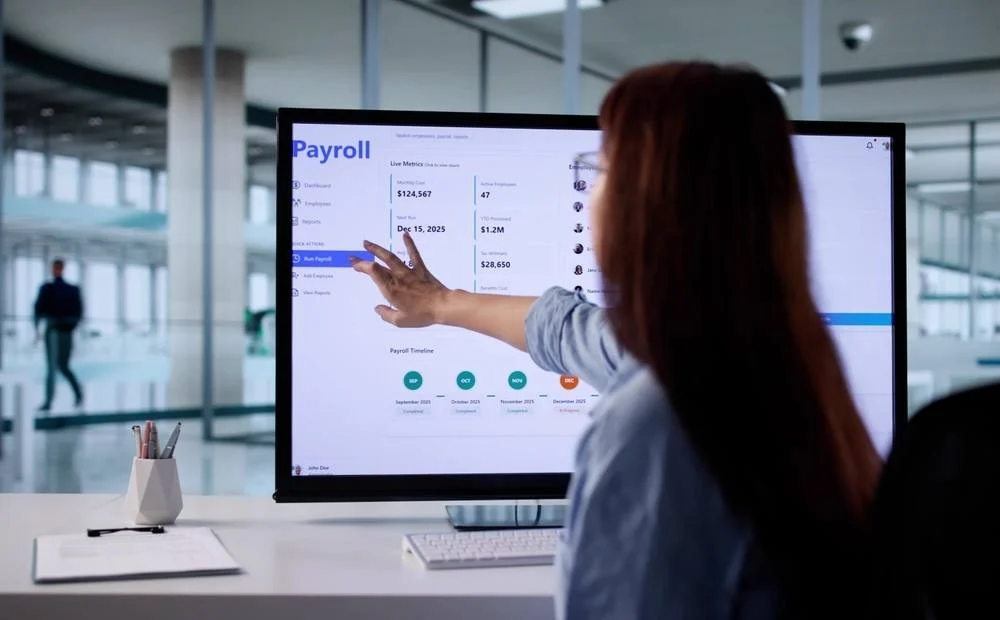
The landscape of small business administration has undergone a significant transformation over the last decade, shifting away from manual ledger entries toward automated, cloud-based solutions. At the forefront of this movement for micro-businesses and household employers is SurePayroll, a specialized service provider that offers a streamlined approach to payroll, tax compliance, and human resources documentation. As a subsidiary of Paychex, a titan in the human capital management industry, SurePayroll positions itself as a cost-effective alternative for organizations that require professional-grade payroll tools without the enterprise-level price tag.
The Strategic Positioning of SurePayroll in the Current Economy
SurePayroll was founded in 1999 and subsequently acquired by Paychex in 2011. This pedigree allows the platform to offer the technological agility of a startup backed by the robust regulatory infrastructure of a multi-billion dollar corporation. In a fiscal environment where small businesses—defined by the Small Business Administration (SBA) as firms with fewer than 500 employees—account for 99.9% of all U.S. businesses, the demand for simplified compliance tools has never been higher.
The platform is specifically engineered to alleviate the administrative burden on "micro-employers," typically those with one to ten employees. According to industry data, small business owners can spend upwards of five hours per pay period on payroll-related tasks if done manually. SurePayroll aims to reduce this to minutes through automation and a simplified user interface.
Detailed Breakdown of Pricing Tiers
SurePayroll utilizes a transparent "base fee plus per-employee" pricing model, which allows businesses to scale their costs in direct proportion to their headcount. As of 2024, the pricing structure is divided into three primary categories, each catering to a specific administrative need.
1. Self-Service Payroll (No-Tax-Filing)
This tier is priced at a base rate of $20 per month, plus an additional $4 per employee or contractor.
- Target Audience: This plan is designed for businesses that already have an external accountant or a dedicated in-house professional who handles tax filings. It is also suitable for businesses operating in states with no income tax or for those who prefer manual control over their fiscal submissions.
- Core Capabilities: Despite being the entry-level option, it includes unlimited payroll runs, direct deposit, and the ability to manage both W-2 employees and 1099 contractors. However, the critical distinction is that the employer remains responsible for calculating, filing, and depositing all federal, state, and local payroll taxes.
2. Full-Service Payroll
The Full-Service plan is the company’s flagship offering, priced at $29 per month plus $7 per employee.
- Target Audience: This is the standard choice for small business owners who want to outsource the risk and labor of tax compliance.
- Core Capabilities: In addition to all self-service features, this plan includes "Full-Service Tax Filing." SurePayroll calculates, files, and remits payroll taxes to the appropriate agencies. If a filing error occurs due to the software, the company typically provides a tax-filing guarantee, which covers any resulting fines or interest.
3. Household Payroll
A unique niche for SurePayroll is the household employer market, which includes families employing nannies, caregivers, or private chefs. This plan is priced at $39 per month plus $10 per additional employee.
- Target Audience: Families who must comply with "Nanny Tax" laws (IRS Publication 926).
- Core Capabilities: This tier automates the complex requirements of household employment, including Social Security and Medicare withholdings, federal and state unemployment taxes (FUTA and SUTA), and year-end W-2 preparation.
Technical Features and Integration Ecosystem
SurePayroll’s utility extends beyond simple check-cutting. The platform integrates several high-value features designed to create a "set-it-and-forget-it" environment for the employer.
Unlimited Payroll Runs: Unlike some competitors that charge per "pay event," SurePayroll allows users to run payroll as many times as necessary within a month for the same flat base fee. This is particularly beneficial for businesses with irregular commission structures or those that need to issue off-cycle bonus checks.
Automated Tax Calculations: The software is updated in real-time to reflect changes in local, state, and federal tax codes. This is a critical feature for businesses operating in jurisdictions with complex "locality" taxes, such as Pennsylvania or Ohio, where tax rates can vary by specific street address.
Accounting Software Integration: To maintain financial consistency, SurePayroll offers direct integration with major accounting platforms, including QuickBooks Online, Xero, and Sage. This ensures that payroll liabilities and expenses are automatically reflected in the company’s general ledger, reducing the risk of reconciliation errors during tax season.
The Mobile Administrator App: Recognizing that small business owners are rarely tethered to a desk, SurePayroll provides a mobile application that allows for the approval and processing of payroll from a smartphone. Employees also have access to a dedicated portal where they can download pay stubs and W-2s independently.
Historical Context and Market Evolution
The evolution of SurePayroll mirrors the broader trend of "SaaS-ification" in the financial sector. When the company launched in 1999, it was one of the first to move payroll entirely to the web. Before this, small businesses either used expensive local bureaus or cumbersome desktop software that required manual updates via floppy disks or CDs.
The 2011 acquisition by Paychex was a pivotal moment. It allowed SurePayroll to leverage Paychex’s massive compliance department, which monitors over 10,000 taxing jurisdictions. This background context explains why SurePayroll is often viewed as more "compliant-heavy" than newer, more "HR-heavy" competitors like Gusto or Rippling. While newer platforms focus on "employee experience" and "culture," SurePayroll remains focused on the "accuracy and cost" of the transaction itself.
Comparative Analysis: SurePayroll vs. Industry Rivals
When choosing a payroll provider, business owners often weigh SurePayroll against other leading platforms. Industry analysts suggest that while SurePayroll excels in price and simplicity, it faces stiff competition in the "all-in-one" HR space.
- SurePayroll vs. Gusto: Gusto is often cited for its superior user interface and integrated HR tools (like performance reviews and hiring workflows). However, Gusto’s base price is significantly higher (starting around $40/month plus $6/employee), making SurePayroll the more economical choice for businesses that only need payroll.
- SurePayroll vs. ADP Run: ADP offers a massive suite of services, but its pricing is often opaque and requires a custom quote. SurePayroll’s transparent, public pricing is generally preferred by micro-businesses that want to avoid the "sales call" experience.
- SurePayroll vs. OnPay: OnPay offers a single-tier plan for $40 per month plus $6 per employee. For a business with one employee, SurePayroll’s Full-Service plan ($36 total) is slightly cheaper than OnPay ($46 total), though the gap closes as the team grows.
Broader Implications and Compliance Risks
The decision to utilize a full-service payroll provider is not merely one of convenience; it is a strategy for risk mitigation. The IRS reports that approximately one-third of all small businesses receive a penalty for payroll tax errors each year. These penalties can range from 2% to 15% of the underpayment, depending on the length of the delay.
By utilizing a system that automates the "lockbox" of tax funds—meaning the software pulls the tax money at the time of payroll and holds it until it is due to the government—business owners avoid the common pitfall of spending tax money on operational expenses. This financial discipline is often the difference between a business surviving its first five years or failing due to a surprise tax bill.
Industry Reactions and Expert Analysis
Financial analysts who follow the HCM (Human Capital Management) sector note that SurePayroll’s strength lies in its "frictionless" entry point. "For the owner of a single coffee shop or a family hiring their first nanny, the complexity of the tax code is the primary barrier to entry," says one industry consultant. "SurePayroll’s strategy is to remove that barrier at a price point that is lower than the cost of a single hour of a CPA’s time."
However, some critics point out that as a company grows beyond 20 or 30 employees, SurePayroll’s lack of advanced HR features—such as an integrated Applicant Tracking System (ATS) or sophisticated benefits administration—may force a migration to more robust platforms. Therefore, SurePayroll is best viewed as the "incubation" payroll platform that helps small businesses professionalize their operations before they reach mid-market status.
Conclusion: Determining the Right Fit
Deciding on a SurePayroll plan requires a candid assessment of a business’s internal capabilities. Organizations with a strong grasp of tax deadlines and a desire to save $9 per month may find the Self-Service plan sufficient. However, for the vast majority of small businesses, the $29 Full-Service plan represents a "compliance insurance policy" that pays for itself by preventing a single IRS late-filing penalty.
As the 2024 fiscal year progresses, the trend toward automated compliance continues to accelerate. For the small business owner or household employer, SurePayroll remains a top-tier contender by offering a rare balance: the technological sophistication of the cloud and the fiscal security of a legacy institution, all at a price designed for the smallest of budgets.