The conventional wisdom surrounding employee wellbeing initiatives often frames them as a charitable expense, a well-intentioned but ultimately secondary consideration to core business objectives. This perspective, however, fails to acknowledge the profound economic implications of a healthy and engaged workforce. Recent analyses, including a landmark study by McKinsey & Company, reveal that improving employee health and wellbeing can generate between $3.7 trillion and $11.7 trillion in global economic value, a figure comparable to a 4% to 12% increase in global Gross Domestic Product (GDP). This compelling data underscores that investing in employee wellbeing is not merely an act of corporate altruism; it is a strategic imperative with direct and significant returns on productivity, innovation, and overall business success.
The symbiotic relationship between employee wellbeing and productivity is becoming increasingly evident in today’s competitive landscape. Employees themselves are recognizing this critical connection, with a significant 58% now stating that a company’s commitment to their wellbeing is more important than a 10% pay raise. This sentiment highlights a fundamental shift in employee expectations, where a supportive and caring work environment is valued as highly, if not more so, than traditional financial incentives. When individuals feel genuinely supported by their organization, their loyalty and commitment tend to deepen, leading to a demonstrable reduction in employee turnover and the invaluable retention of expertise and institutional knowledge.
This article will delve into the intricate relationship between employee wellbeing and productivity, elucidating why both are indispensable for teams and businesses alike. Furthermore, it will outline practical, people-first strategies that organizations can implement to foster a harmonious balance, ensuring that both employees and the business thrive.

The Intertwined Dynamics of Employee Wellbeing and Productivity
Employee wellbeing is a multifaceted concept that encompasses a broad spectrum of human needs, including physical health, mental resilience, social connectivity, and financial security. While the impact of mental and physical wellbeing on productivity may seem intuitively obvious – individuals who feel well are naturally more focused and capable – the influence of financial wellbeing is equally significant. Statistics indicate that a substantial 38% of U.S. employees report that the current economic climate negatively affects their ability to be productive at work. Conversely, productivity itself is not solely defined by the volume or efficiency of output, but also by the sustained quality, consistency, and long-term sustainability of that output.
The connection between these two pillars is deeply interconnected and bidirectional. When an organization actively supports employee wellbeing and addresses their needs, productivity invariably increases. Research from Gallup has consistently demonstrated this correlation. Organizations with highly engaged employees, whose wellbeing needs are met, experience demonstrably better outcomes: an 81% reduction in absenteeism, a 41% decrease in quality defects, and a significant 23% rise in profitability.
Conversely, unchecked productivity pressures can severely erode employee wellbeing. The statistics are stark: one-third (32%) of U.S. employees frequently experience stress, 26% report feeling overwhelmed, and a concerning 25% of employees indicate they are experiencing burnout. When these pressures are not adequately addressed, they can create a vicious cycle where both productivity and wellbeing suffer, ultimately leading to a scenario where neither individuals nor the business achieve their full potential. This downward spiral underscores the critical need for a proactive and holistic approach to managing employee wellbeing.
The Strategic Imperative for Prioritizing Employee Wellbeing
In contemporary business strategy, employee wellbeing has transcended its former status as a mere "nice-to-have" perk. It has evolved into a strategic business imperative, one that yields measurable and significant returns. Organizations that excel in designing and delivering a superior employee experience consistently report enhanced business outcomes. These include a remarkable 1.8 times higher workforce productivity and a 1.4 times better overall organizational performance. Furthermore, robust organizational and individual strategies dedicated to supporting wellbeing play a crucial role in preventing burnout, fostering resilience, and ensuring long-term workforce stability.

Far from competing with productivity, investments in employee wellbeing act as a catalyst, fueling enhanced output and innovation. Companies that genuinely prioritize their employees’ needs are demonstrably 1.5 times more likely to achieve high performance. By reframing wellbeing not as an altruistic cost center but as a strategic investment, organizations can unlock significant gains in employee engagement, focus, creativity, and retention. This paradigm shift is essential for building a sustainable and thriving business in the 21st century.
Achieving Equilibrium: Practical Strategies for Balancing Wellbeing and Productivity
The journey towards balancing employee wellbeing and productivity requires intentional, evidence-based strategies that are tailored to an organization’s unique culture and the specific needs of its workforce. While there is no one-size-fits-all solution, several practical approaches have proven effective:
1. Embrace Flexible Work Arrangements
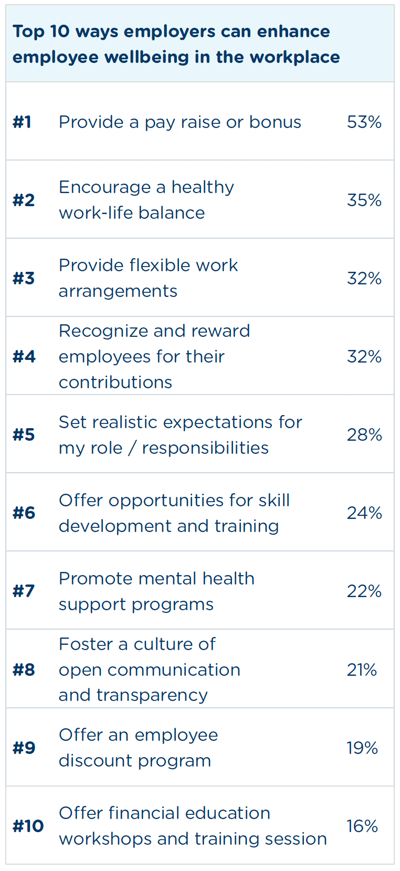
Flexibility has emerged as a cornerstone of modern wellbeing strategies. Its importance is underscored by the fact that 52% of employees consider flexible work policies a significant factor in their decision to remain with an organization. Whether through remote work, hybrid models, or flexible hours, these arrangements empower employees to better integrate their personal and professional responsibilities, thereby reducing stress and enhancing overall life satisfaction. The benefits extend beyond employee contentment; 32% of employees rank flexible work arrangements among the most impactful ways employers can enhance their wellbeing. Organizations that offer such flexibility often report reduced commuting stress, improved work-life balance, and access to a broader, more diverse talent pool.
2. Establish Clear Boundaries and Foster Disconnection
A critical element of supporting employee wellbeing, as identified by employees themselves, is the provision of clear goals and expectations. This translates into establishing realistic workload expectations and, crucially, respecting personal time. When 26% of employees cite "not working long or extra hours" as having the greatest positive impact on their work wellbeing, it becomes clear that encouraging disconnection from work actually supports better long-term performance. This principle extends to leadership; managers who model healthy boundaries by disconnecting during vacations and turning off notifications not only safeguard their own wellbeing but also set a vital precedent for their teams.
3. Prioritize Mental Health and Wellbeing Resources
Making mental health support readily accessible and destigmatized is fundamental to a healthy workforce. Employees who rate their employer’s mental wellbeing support as excellent or good report significantly lower levels of loneliness at work (only 17% experience frequent loneliness) compared to those who rate such support as poor (42% experience frequent loneliness). Organizations should equip managers with comprehensive training on available benefits, including Employee Assistance Programs (EAPs), wellbeing stipends, and access to counseling services. Furthermore, fostering a culture where open discussions about mental health challenges are safe and encouraged is paramount.
4. Promote Regular Breaks and Sustainable Work Rhythms
Sustainable productivity is inextricably linked to regular rest and recovery. Time off is a particularly valuable benefit, with 46% of employees reporting that time-off-related benefits significantly enhance their productivity. Research conducted by Ernst & Young highlights this, finding that for every 10 additional hours of vacation employees took, their year-end performance ratings improved by 8%. Encouraging frequent breaks throughout the workday, respecting vacation entitlements, and actively discouraging an "always-on" culture are essential for preventing burnout and maintaining consistent, high-level performance.
5. Expand Financial Wellbeing Programs
Financial stress is a pervasive issue that directly impacts workplace performance. Comprehensive financial wellbeing programs, which can include educational workshops, retirement planning support, and employee discount initiatives, address a critical yet often overlooked dimension of employee health. While 16% of employees specifically identify financial education workshops as a means to enhance their wellbeing, the broader impact of reducing financial stress across the entire workforce is even more significant, leading to a more focused and less worried employee base.
6. Recognize and Reward Contributions Meaningfully
Recognition stands as one of the most potent and accessible levers for simultaneously enhancing both wellbeing and productivity. A notable 32% of employees believe that recognizing and rewarding their contributions would significantly improve workplace wellbeing. Moreover, recognition can be strategically employed by managers to highlight behaviors that directly contribute to business growth, thereby doubling its positive impact. Effective recognition does not require substantial financial outlay; consistency, authenticity, and alignment with individual preferences are the key determinants of its efficacy.

Real-World Exemplars of Wellbeing Excellence
Several organizations are demonstrating the tangible benefits of strategic wellbeing investments:
Ergon Terminaling: Connecting and Energizing the Workforce
Ergon Terminaling’s management team recognized a significant opportunity to prioritize employee health and wellbeing, not only for the benefit of their staff but also to ensure their workforce was operating at peak performance. The company sought innovative ways to encourage physical activity and make fitness engaging. The implementation of the Reward Gateway | Edenred wellbeing app and the subsequent launch of wellbeing challenges proved highly successful. Within two years, the "Ergon Active" program boasted over 540 participants across the group, representing a remarkable 2,600% increase on the initial user target. Despite geographical dispersion, these challenges foster a sense of belonging and connection among employees in smaller regional locations, enabling them to engage with colleagues across the country. As one Ergon Terminaling Compliance Lead stated, "If you’re fit and active, [supporting your wellbeing,] you’re going to be better protected from illness. And people who are physically fit and feeling well are safer employees."
Montrose County School District: A Step Towards Enhanced Wellbeing
The Montrose County School District (MCSD) operates on the principle that active staff are healthier and collaborate more effectively. Utilizing the Reward Gateway | Edenred wellbeing app, MCSD supports its mission to improve the lives of its employees. The district regularly organizes short-term movement challenges and monitors monthly step goals for participants. The individual nature of these monthly goals ensures that all staff, from those embarking on fitness journeys to seasoned athletes, can set achievable targets. To further incentivize participation, staff who increased and met their monthly step goals were entered into compelling raffles, making the competition even more engaging. This initiative resulted in an impressive 57% of staff consistently hitting their monthly goals, demonstrating how wellbeing initiatives can remain a priority even during busy periods while simultaneously building community and healthy habits.
Empowering Thriving Workplaces with Reward Gateway | Edenred
The notion that balancing employee wellbeing and productivity is an insurmountable challenge is a misconception. In reality, achieving this equilibrium is not only possible but is fundamental to sustainable business success. The evidence is clear: when organizations invest comprehensively in wellbeing strategies that encompass support, connection, communication, and recognition, both their employees and their business outcomes flourish.

Reward Gateway | Edenred offers an integrated employee engagement platform designed to consolidate recognition, rewards, wellbeing resources, benefits, and communication tools into a single, accessible hub. Our solutions empower organizations to cultivate environments where employees feel valued, supported, and motivated to perform at their best. This, in turn, drives the productivity and performance that businesses need, while genuinely prioritizing the wellbeing that their people deserve.
Organizations looking to fundamentally transform their approach to employee wellbeing and productivity are invited to contact Reward Gateway | Edenred to explore how their tailored solutions can foster a truly thriving workplace.