ServiceNow has recently unveiled a comprehensive suite of announcements designed to solidify its position as a central orchestrator of enterprise Artificial Intelligence (AI), with an ambitious goal of doubling its revenue to $30 billion within the next four years. The company’s strategy centers on becoming the primary management layer, security provider, and gateway for all AI agents operating within an organization, a move that signifies a significant shift in the software-as-a-service (SaaS) landscape. This aggressive push comes as competitors like Microsoft and Workday are also making substantial bets on the burgeoning AI agent market, each vying to control the flow of AI-driven operations within businesses.
The core of ServiceNow’s announcement revolves around its "Action Fabric," a proposed system designed to bring order to what the company terms "enterprise AI chaos." This initiative positions ServiceNow as the authoritative layer for governing, monitoring, and managing all AI agents, regardless of their origin or underlying model. This strategic pivot acknowledges the rapid proliferation of AI agents across various business functions and the inherent need for robust control and governance mechanisms.
The Rise of the AI Control Tower: ServiceNow’s Strategic Vision
ServiceNow’s announcement, made in the early part of 2026, signals a significant expansion of its platform’s capabilities, moving beyond traditional IT service management to encompass the entire lifecycle of AI agents. The company’s CEO, Bill McDermott, has articulated a vision of transforming enterprise operations by providing a unified platform for managing every identity – encompassing AI agents, workflows, and human employees. This comprehensive approach aims to address the complexities of modern enterprises, which often grapple with disparate workflows and opaque business rules.
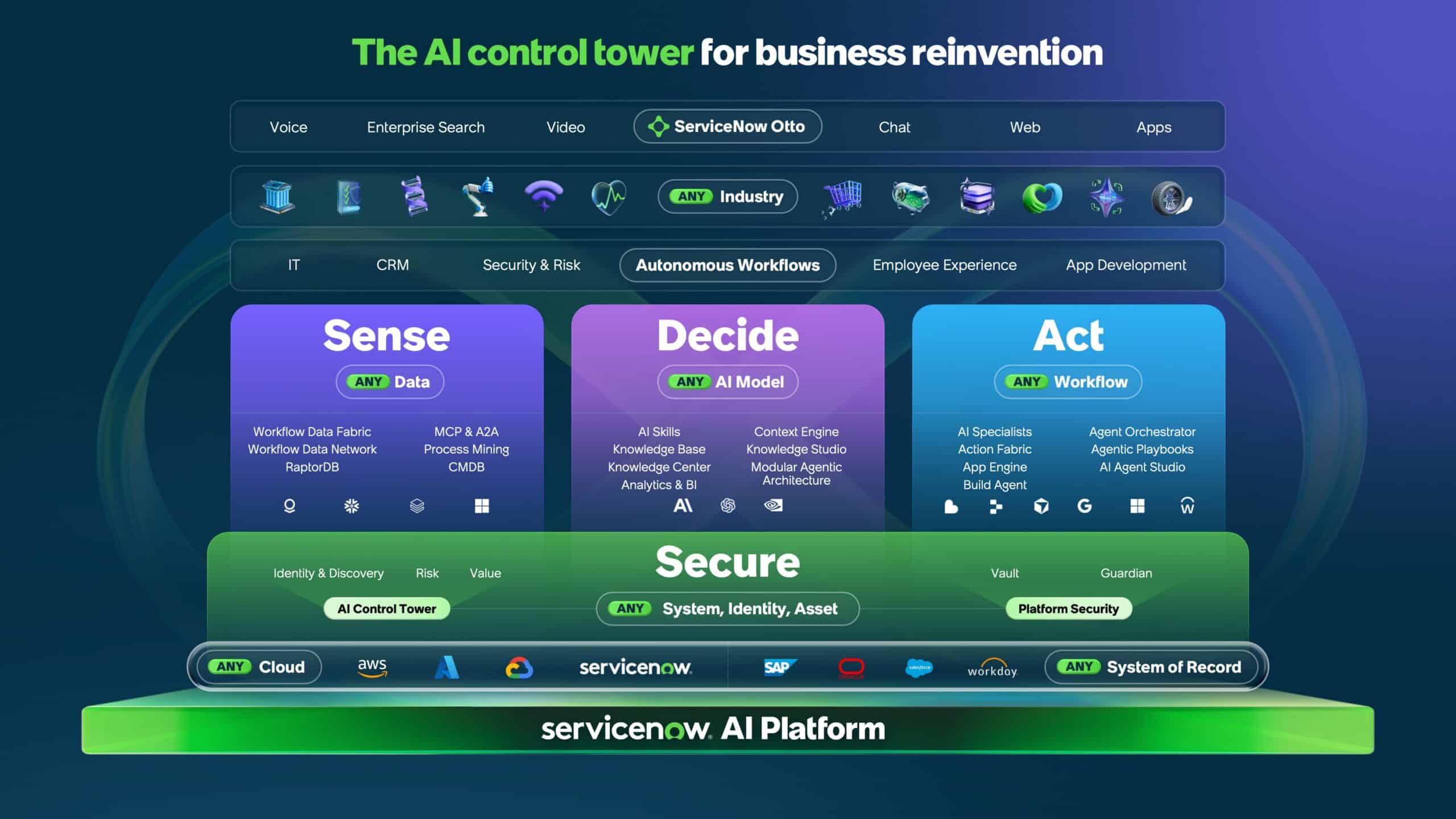
The strategy can be broken down into several key components:
Action Fabric: Orchestrating the AI Agent Landscape
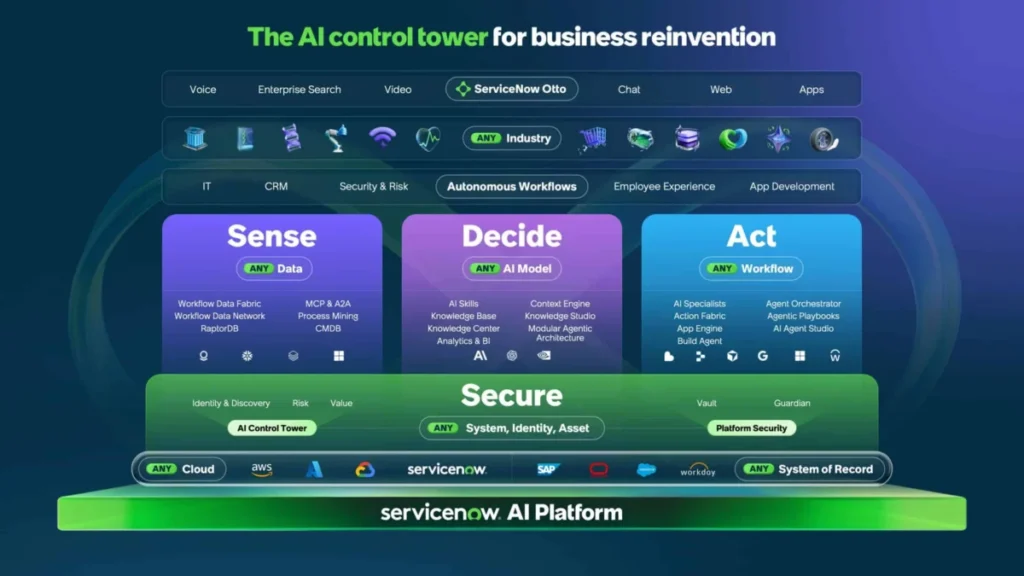
At the heart of ServiceNow’s new strategy is the "Action Fabric," described as a sophisticated traffic cop for AI agent activity. This component is designed to integrate seamlessly with any AI agent, from any provider, through its "MCP" server. The core promise is universal compatibility: "Any agent. Any model." This open architecture allows businesses to connect and manage a diverse array of AI agents, whether developed internally or procured from third-party vendors.
Key features of the Action Fabric include:
- Universal Integration: The platform is engineered to connect with any AI agent and run any model, irrespective of its origin. This interoperability is a crucial differentiator in a fragmented AI market.
- Open Ecosystem: Management tools are accessible by agents, enabling automated management scenarios and the integration of third-party management frameworks.
- Comprehensive Control and Security: All AI agents operating within the Action Fabric are authenticated, have their permissions scoped, and are subject to auditing and continuous monitoring. This focus on "Full Control; Full Trust" aims to alleviate concerns about the security and compliance of AI deployments.
ServiceNow leverages its two decades of experience in building foundational IT management systems, including its Configuration Management Database (CMDB), Workflow Data Network, configured business rules, Security Center, and identity and access controls. This existing infrastructure provides a strong backbone for managing the complexities of AI agents.
This strategic direction is mirrored by competitors. Workday has introduced its "Agent System of Record" and "Agent Gateway," which similarly aim to open its platform to external agents on a per-call basis, with built-in governance. SAP is also enforcing similar controls, requiring agents to utilize SAP’s Business Accelerator Hub to access business rules, with usage-based metering. The choice between these platforms will likely hinge on existing investments in vendor-specific business rules and preferred development environments.
Otto: The New "Front Door" to Enterprise AI
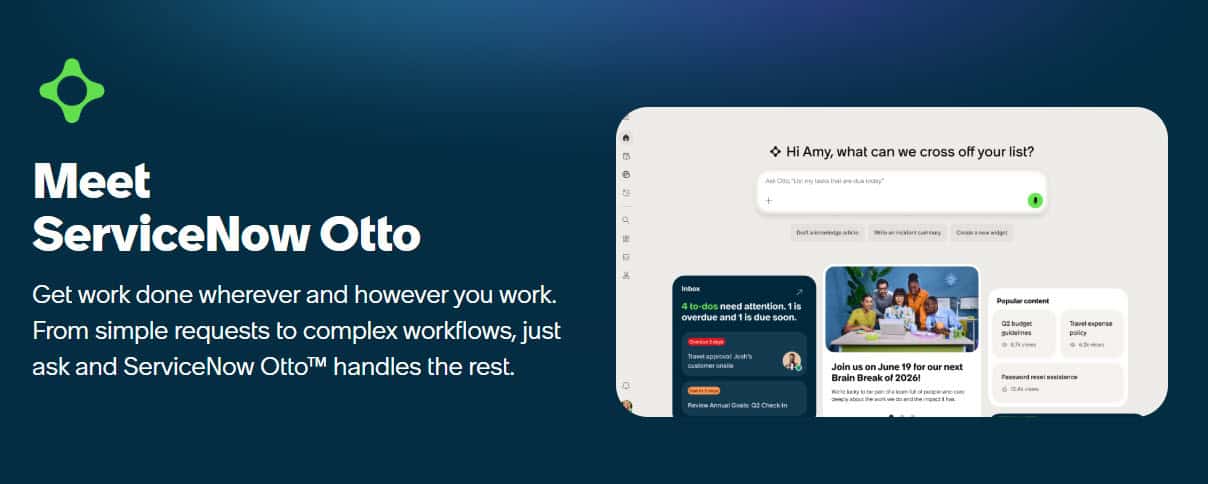
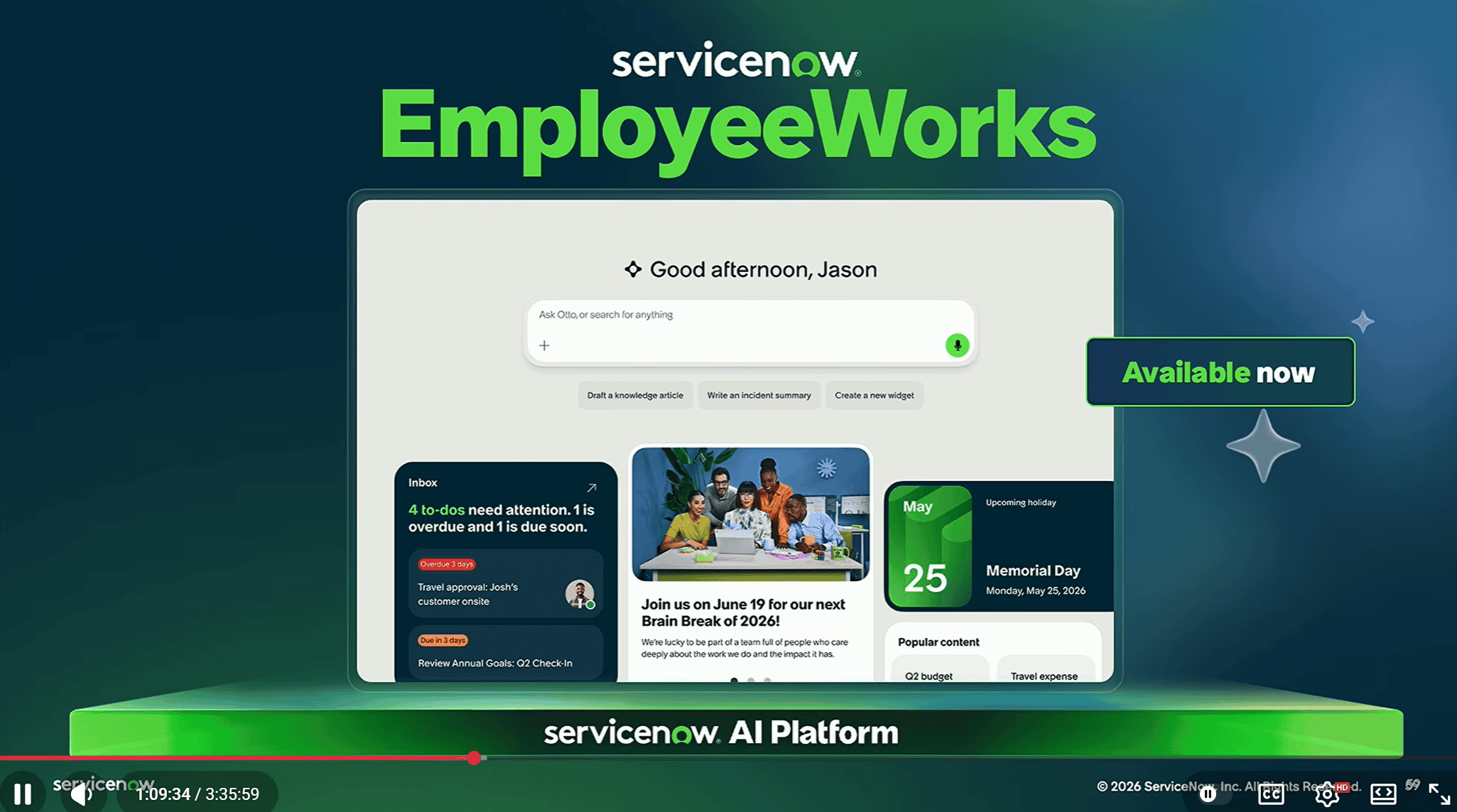
ServiceNow is also reinventing its "Now Assist" product as "Otto," positioning it as the unified "Front Door" for employees to access any enterprise resource via AI. This initiative draws parallels with Workday’s introduction of "Sana" as its enterprise front door. The integration of Moveworks technology into Now Assist and its rebranding as Otto aims to create a more intuitive and personalized employee experience.
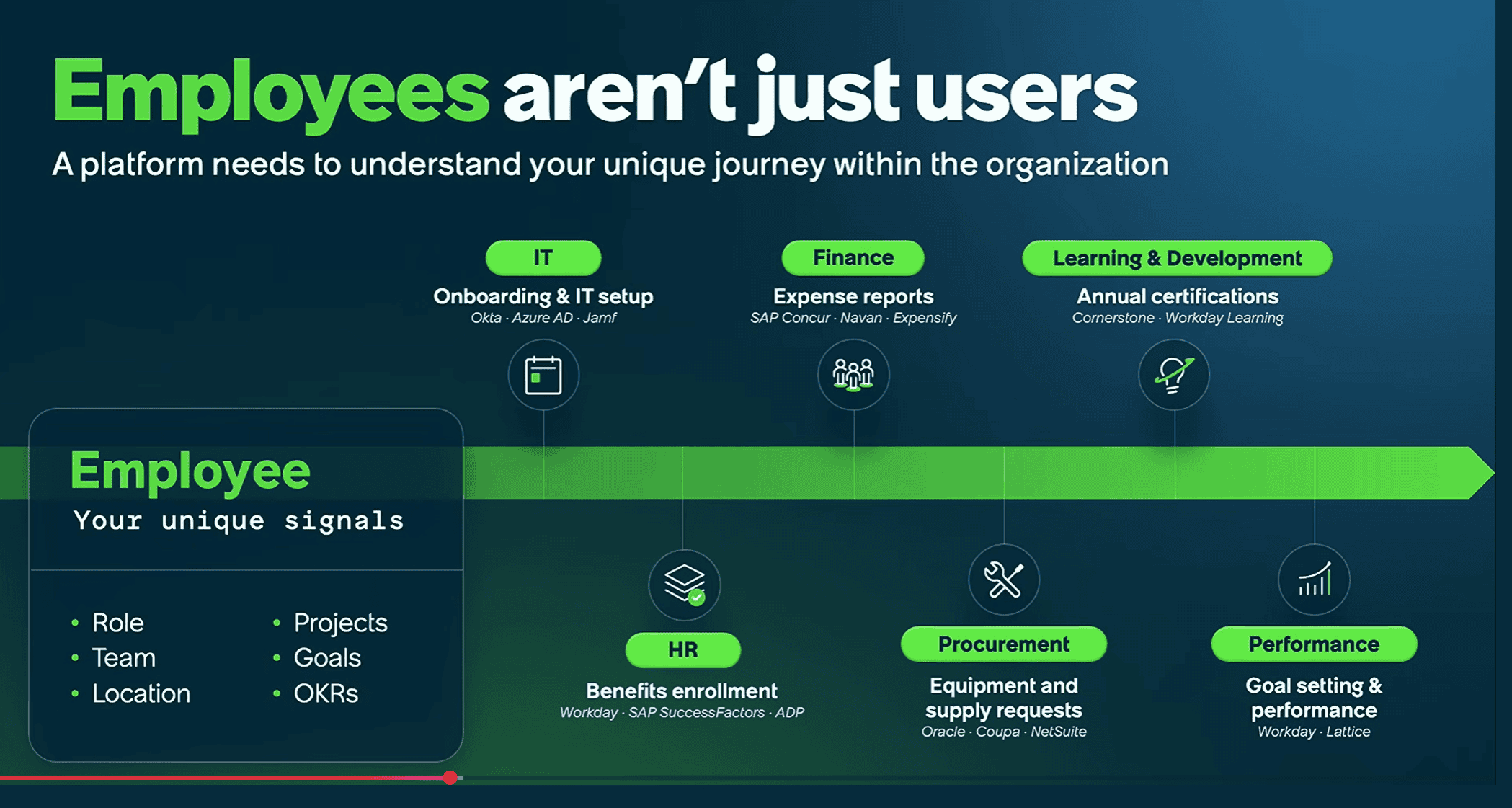
Otto is envisioned as a friendly employee persona capable of handling a wide range of tasks, from simple inquiries about company policies to more complex knowledge management needs. The company is branding this initiative under "EmployeeWorks," signaling a departure from the traditional "Employee Self-Service" paradigm towards a more proactive and intelligent support model. This rebranding aligns with the growing emphasis on Employee Experience (EX) platforms, which aim to streamline access to information, training, and support across an organization.
The evolution of EX platforms is a complex undertaking, as employee needs are often interconnected. While Otto may initially appear as a chatbot for HR-related queries, its success will depend on its ability to integrate with a broad spectrum of enterprise systems and services. This includes handling diverse inquiries, from IT support to policy clarifications, and potentially supporting complex scenarios such as crisis management, as highlighted by the example of a custom agent developed for employees facing emergencies. The competitive landscape for EX platforms is intense, with major players like Microsoft and Zoom also investing heavily in this space.
The AI Control Tower: Governance, Value, and Risk Management
The "AI Control Tower" is presented as an advanced solution for discovering, observing, governing, and securing enterprise AI. It aims to provide deep insights into how AI agents are functioning, the value they are generating, and potential risks such as "hallucinations" or excessive resource consumption. This comprehensive monitoring capability extends to computing the ROI of AI agents, allowing organizations to identify underperforming or misbehaving AI deployments.
This vision evokes historical parallels, such as IBM’s "SystemView" in the 1980s, which aimed to manage all computing resources within proprietary IBM networks. The AI Control Tower promises to offer a similar level of centralized oversight for the modern, AI-driven enterprise. The platform’s ability to detect and neutralize threats, such as a simulated prompt injection attack on a pricing agent, by integrating signals from leading cybersecurity firms like Veza, Armis, Cisco AI Defense, and CrowdStrike, underscores its security-focused design.
However, the emphasis on monitoring and managing every decision raises important questions about employee autonomy. While beneficial for IT departments seeking control, an overly restrictive approach could stifle innovation and employee empowerment, echoing the principles of exceptional customer service exemplified by companies like The Ritz Carlton, which prioritize employee judgment.
The Autonomous Workforce: Predefined AI Specialists
ServiceNow is also introducing "The ServiceNow Autonomous Workforce," a set of predefined "AI Specialists" designed to perform autonomous tasks across various business functions. This initiative aims to provide a framework for defining the roles and responsibilities of AI agents, similar to the concept of human job roles.
Examples of these AI Specialists include:
- Site Reliability AI Specialist
- AI Operations Specialist
- Level 1 Service Desk Specialist
- HR Service Delivery AI Specialist
- Case Management Specialist
- Third-party Screening Specialist
- Enterprise Architecture Specialist
- Vulnerability Exposure Specialist
This approach aligns with emerging frameworks for understanding AI agents, which categorize them as those that "take action," "set rules," or "observe and monitor." The introduction of specialized AI roles could lead to the centralization of tasks previously handled by multiple individuals, creating more efficient and data-driven workflows. The company has also integrated its "Galileo" digital HR consultant as an add-on feature to Otto, further enhancing its AI capabilities for HR functions.
Context Engine: Unifying Enterprise Operations
The "Context Engine" is another significant component of ServiceNow’s strategy. It aims to create a unified view of enterprise operations by identifying and locating existing system business rules and metadata. This context layer is designed to understand the intricate workings of a business, including organizational structures, privacy rules, and diverse business workflows, many of which originate from ERP and other core systems.
ServiceNow describes this as a "graph of graphs," integrating its workflow data network into a comprehensive model that encompasses knowledge, action, asset, and decision graphs. The introduction of "autonomous data analytics" through an "AI Analyst Specialist" further supports this vision of a self-optimizing operational environment. This approach directly competes with solutions like Microsoft WorkIQ and Gloat’s Loomra, which are also focused on creating contextual layers for AI to understand and interact with enterprise data.
The Economic Implications and Future of Enterprise AI
ServiceNow’s aggressive expansion strategy is underpinned by a clear revenue model: monetizing the management and governance of AI agents. The company’s goal of reaching $30 billion in revenue in four years signifies a belief in the massive economic potential of enterprise AI, shifting from traditional per-seat licensing to usage-based fees for AI agent interactions.
The economic viability of this model is a subject of ongoing discussion. While AI promises to automate tasks and potentially reduce labor costs, the expense of AI token fees and the infrastructure required for management and governance must be justified by demonstrable ROI. The recent trend of companies like Uber scaling back on software agents due to the comparative cost-effectiveness of human labor highlights the delicate balance between AI adoption and economic realities.
The emphasis on "transforming work" rather than merely "automating work" suggests a need for organizations to first redesign their processes and workflows before investing heavily in AI management infrastructure. The ease of development and integration offered by competing platforms like Microsoft Copilot and Workday could influence vendor selection, impacting the total cost of AI transformation, which encompasses development, maintenance, business rules, and governance.
The broader market is witnessing significant investment in AI services, with companies like Anthropic and OpenAI forming new ventures to offer integrated AI products and services. This trend underscores the shift towards a "software is a service" model, where AI-driven services replace traditional human workforces in many areas.
While the drive for control and efficiency through AI is powerful, the human element remains critical. The ultimate impact of AI agents on the workforce and the nature of work itself is still unfolding. As ServiceNow and its competitors forge ahead, the question remains whether AI agents will truly liberate humans to think more creatively and strategically, or if the focus on monitoring and management will inadvertently stifle the very innovation they are intended to enable. The coming years will reveal how effectively these complex AI ecosystems can be integrated into the fabric of enterprise operations, balancing technological advancement with human ingenuity and organizational agility.