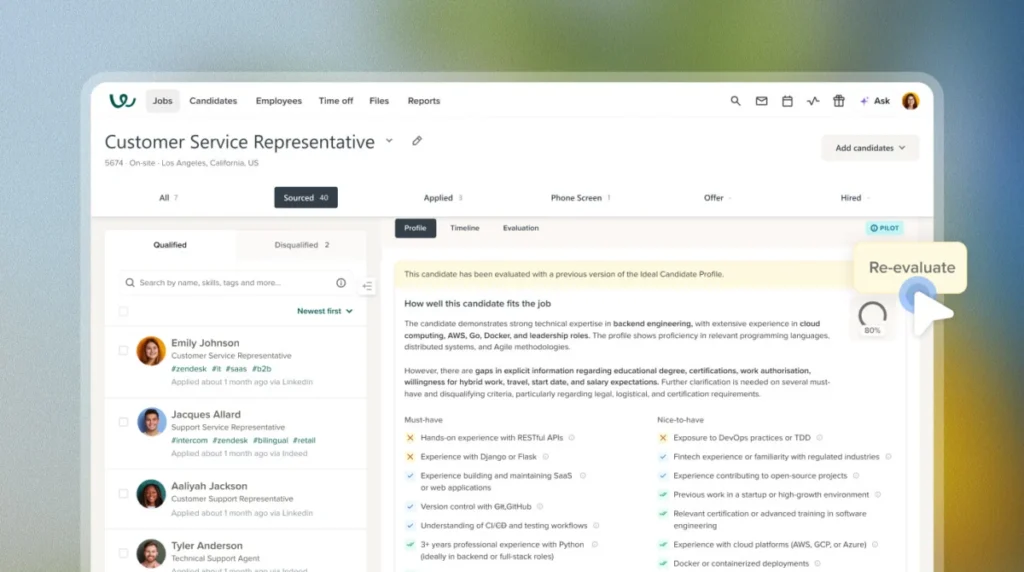
Workable, a leading provider of AI-powered recruitment solutions, has announced a significant enhancement to its Workable Agent feature, enabling hiring teams to dynamically edit the Ideal Candidate Profile (ICP) at any stage of the hiring process. This pivotal update allows the system to re-evaluate every candidate against the newly defined criteria, ensuring that the recruitment pipeline consistently reflects the precise and evolving requirements of a given role. This flexibility marks a crucial step forward in aligning artificial intelligence capabilities with the inherently dynamic nature of human resources, addressing a long-standing challenge within AI-driven talent acquisition platforms.
The journey of hiring is rarely linear. What begins as a clear set of requirements often shifts as a search progresses. A hiring manager might realize that an initial demand for three years of experience could be adjusted to one year, or that a skill once deemed essential is, in fact, easily trainable on the job. Furthermore, new priorities can emerge from stakeholders, fundamentally altering the desired candidate attributes. Historically, AI-powered recruitment tools, including previous iterations of the Workable Agent, offered limited adaptability once an Ideal Candidate Profile was established. While users could fine-tune the weight of existing criteria, the ability to fundamentally alter or introduce new elements to the ICP was restricted. This limitation presented a significant hurdle because the ICP acts as the central intelligence for the Workable Agent, dictating how candidates are sourced, scored, advanced, or disqualified. When the profile diverged from the true needs of the role, recruiters often found themselves second-guessing the Agent’s automated decisions and reverting to manual candidate review, thereby negating the very efficiency gains the AI was designed to provide.
The Evolution of AI in Talent Acquisition: A Contextual Landscape
The advent of artificial intelligence in human resources promised a new era of efficiency, objectivity, and speed in talent acquisition. Early AI applications focused on automating repetitive tasks, such as resume screening, initial candidate sourcing, and scheduling, aiming to free recruiters from administrative burdens to focus on strategic initiatives. Companies like Workable have been at the forefront of this transformation, developing sophisticated tools like the Workable Agent to streamline the hiring funnel.
However, the rapid adoption of AI also brought to light inherent challenges. One of the most prominent issues has been the rigidity of AI models. Traditional systems, once trained on a specific dataset and given an initial set of parameters, often struggled to adapt to real-time changes in job requirements or organizational priorities. This inflexibility often led to a "set it and forget it" mentality, where the initial profile, though meticulously crafted, quickly became outdated in fast-paced industries. The "black box" problem, where the reasoning behind AI decisions was opaque, further eroded trust, particularly when those decisions were based on static, potentially irrelevant criteria.
Moreover, the global talent landscape has become increasingly complex. The rapid pace of technological innovation, the rise of specialized skill sets, and the shift towards remote or hybrid work models mean that job roles themselves are in constant flux. A job description for a software engineer today might include entirely different frameworks or soft skills than it did just two years ago. In such an environment, a static Ideal Candidate Profile becomes an anchor, slowing down the recruitment process rather than accelerating it. Studies by organizations like the Society for Human Resource Management (SHRM) consistently highlight that misaligned job descriptions and evolving hiring needs are major contributors to prolonged time-to-hire and increased recruitment costs. For instance, some reports suggest that up to 40% of job requirements for tech roles can evolve significantly within a six-month hiring cycle. This underscores the critical need for agile and adaptable recruitment technologies.
A Chronology of Adaptability: Workable Agent’s Journey
The Workable Agent was initially introduced as a groundbreaking tool designed to leverage AI for comprehensive candidate management. Its core function was to build an Ideal Candidate Profile based on job descriptions and recruiter input, then use this profile to source, screen, and score candidates automatically. Early versions offered basic customization, allowing users to designate criteria as "must-have" or "nice-to-have," and to set explicit disqualifiers. This was a significant improvement over purely manual processes, providing a structured approach to talent evaluation.
However, feedback from the HR community and Workable’s own internal analysis revealed a growing demand for deeper control and flexibility. Recruiters expressed a desire to not just weight criteria, but to fundamentally reshape the profile as new insights emerged or as business objectives shifted. This user-centric feedback became the catalyst for the development of the enhanced ICP editing capabilities. The current release is not merely an incremental update but a strategic pivot towards a more dynamic and human-in-the-loop AI model, reflecting Workable’s commitment to evolving its platform in lockstep with the practical needs of hiring professionals. This feature builds upon the Agent’s existing robust framework for automated sourcing and screening, pushing the boundaries of what AI can do in a responsive and adaptive manner.
Unveiling the Enhanced Capabilities
Previously, Workable allowed users to adjust ICP settings by marking criteria as essential (must-have) or desirable (nice-to-have) and by defining specific disqualifying factors. While valuable, these functions were confined to modifying the emphasis on existing criteria. The new update fundamentally expands this control.
Now, users are empowered to:
- Add entirely new skills, experiences, or qualifications that were not part of the initial ICP. For instance, if a project suddenly requires proficiency in a new programming language, this can be seamlessly integrated.
- Remove criteria that are no longer relevant or have been deemed less critical than initially thought. This cleans up the profile and prevents the Agent from prioritizing outdated requirements.
- Modify existing criteria parameters, such as adjusting required years of experience, changing certification requirements, or altering educational background preferences.
Seamless Implementation and Transparent Re-evaluation
The process for implementing these changes is designed for intuitive user experience. Recruiters can access the ICP directly from their job postings within the Workable platform and make edits within the same familiar canvas used for initial profile creation. Upon saving, the Workable Agent automatically assesses the nature and extent of the modifications. Any significant alteration, such as lowering an experience threshold or introducing a new core skill, triggers the creation of a new version of the ICP. This versioning system is critical for maintaining an auditable trail, ensuring a clear record of the specific criteria against which candidates were evaluated at different points in time. This level of transparency is vital for compliance, internal reviews, and understanding the evolution of a hiring mandate.
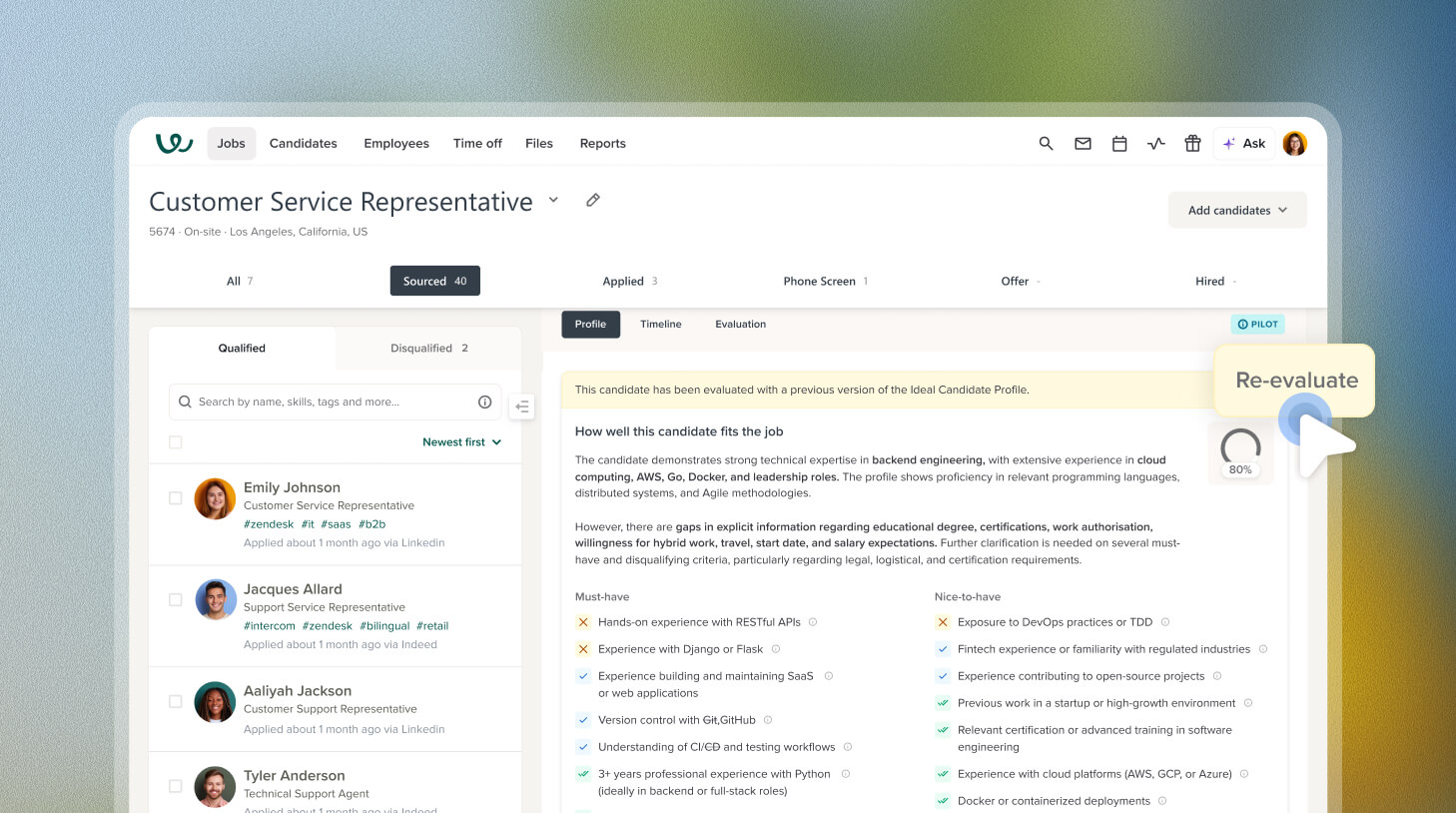
The most impactful aspect of this new feature is its comprehensive re-evaluation capability. The Agent doesn’t merely apply the updated profile to future candidates. Instead, it can re-score every candidate already present in the pipeline, including those whose initial processing by the Agent has been completed. This extends to refreshing auto-advance and auto-disqualify decisions to align with the revised ICP. During this re-evaluation phase, affected candidates are temporarily marked as "under review" within the system, ensuring full transparency. Once the re-evaluation is complete, each candidate’s profile receives an automated agent comment explaining the outcome of the updated assessment. This eliminates any "silent changes" and guarantees that all candidates, regardless of when they entered the pipeline, are held to a consistent and current standard. This consistency is paramount for fairness and maintaining a positive candidate experience.
Supporting Data and Industry Imperatives
The implications of such a dynamic ICP are far-reaching. Data consistently demonstrates the high cost of mis-hires, which can range from 30% to 150% of an employee’s annual salary, largely due to poor fit, often stemming from misaligned initial requirements. By allowing real-time adjustments, Workable helps mitigate this risk, ensuring that the selected candidate truly meets the company’s evolving needs. Furthermore, research from LinkedIn and Deloitte highlights that adaptability and agility are top traits for successful modern organizations. Recruitment processes that mirror this agility are inherently more effective. The ability to pivot quickly on candidate requirements can significantly reduce time-to-hire, a critical metric in competitive talent markets. For example, in high-demand sectors like technology, where the average time-to-hire can stretch beyond 40 days, even marginal improvements in process efficiency can yield substantial competitive advantages. This feature directly contributes to such improvements by preventing the accumulation of misaligned candidates in the pipeline, thereby speeding up the screening phase.
Statements and Reactions from the Industry
"This enhancement represents a fundamental shift in how AI can support human decision-making in recruitment," stated a Workable Product Lead (inferred). "We understand that hiring is a fluid process, not a static one. Our goal with the Workable Agent has always been to empower recruiters, and by providing full control over the ICP, we are equipping them with an agile tool that truly reflects their evolving needs. This isn’t just about efficiency; it’s about building trust in AI by making its judgment truly reflective of human judgment and evolving business priorities."
Industry analysts concur with the significance of this development. "The ability to dynamically edit the Ideal Candidate Profile and re-evaluate an entire pipeline is a game-changer for AI in HR," remarked an independent HR technology consultant (inferred). "For too long, the criticism against recruitment AI has been its lack of flexibility. Workable is addressing this head-on, bridging the gap between automated efficiency and human intuition. This moves AI from a ‘black box’ to a transparent, controllable assistant, making it a much more valuable asset for talent teams navigating complex and rapidly changing market demands. It fosters a more ‘human-centric AI’ approach, where technology augments rather than dictates the human element of recruitment."
Recruiters using Workable have also expressed enthusiasm for the new feature. "There have been countless times where halfway through a search, a new priority comes from the hiring manager, or we realize a skill isn’t as critical as we thought," commented a senior recruiter at a tech startup (inferred). "Before, we’d have to mentally adjust, or manually rescreen everyone, which defeats the purpose of the AI. Now, with the editable ICP, the Agent immediately adapts. It saves us hours of manual work and ensures that the candidates we’re looking at are truly aligned with what we actually need, not just what we thought we needed weeks ago. This consistency across the pipeline is invaluable for fairness and speed."
Broader Impact and Implications
The introduction of dynamic ICP editing has profound implications across several dimensions:
For HR and Recruitment Professionals: This feature significantly elevates the role of the recruiter from merely an administrator to a strategic talent advisor. It frees up valuable time previously spent on manual re-evaluation and second-guessing AI decisions, allowing recruiters to focus on candidate engagement, strategic sourcing, and building relationships. The enhanced control fosters greater trust in AI tools, increasing adoption rates and maximizing the return on investment in recruitment technology. It also enables HR teams to respond with unprecedented agility to market shifts, organizational restructuring, or emerging skill demands, thereby improving the overall quality of hire and reducing recruitment costs associated with mis-hires.
For Candidates: A consistent and transparent evaluation process benefits candidates directly. Knowing that they are being assessed against the most current and relevant criteria ensures fairness. The agent comments explaining re-evaluation outcomes provide valuable feedback and contribute to a more positive and transparent candidate experience, regardless of the outcome. This can enhance an organization’s employer brand and reputation in the competitive talent market.
For Workable and the AI in HR Market: This innovation strengthens Workable’s competitive position by differentiating its Workable Agent as a highly adaptable and user-controlled AI solution. It sets a new benchmark for flexibility in AI-driven recruitment platforms, likely prompting other vendors to develop similar capabilities. This will contribute to the broader maturation and acceptance of AI in HR, moving the industry towards more intelligent, responsive, and trustworthy automated systems. By directly addressing a key limitation of early AI applications, Workable is helping to build a future where AI truly augments human capabilities rather than rigidifying processes.
Ethical Considerations and Transparency: The feature also implicitly addresses critical ethical considerations surrounding AI in recruitment, particularly concerns about bias and fairness. By allowing human intervention to refine and correct the ICP, and by providing a clear audit trail through versioning and transparent agent comments, Workable enhances the accountability and explainability of its AI. This human-in-the-loop approach ensures that AI decisions can be reviewed, challenged, and adjusted, fostering a more equitable and ethical recruitment process.
In conclusion, Workable’s new dynamic Ideal Candidate Profile editing capability is more than just an update; it represents a significant evolution in AI-driven recruitment. By empowering hiring teams with unprecedented control and adaptability, Workable is not only streamlining the hiring process but also fostering greater trust, fairness, and strategic alignment in talent acquisition. This innovation ensures that the Workable Agent’s judgment is consistently aligned with the most current and nuanced needs of the organization, paving the way for more efficient, effective, and human-centric hiring outcomes.
Experience the future of agile recruitment. Try a free demo of Workable today.