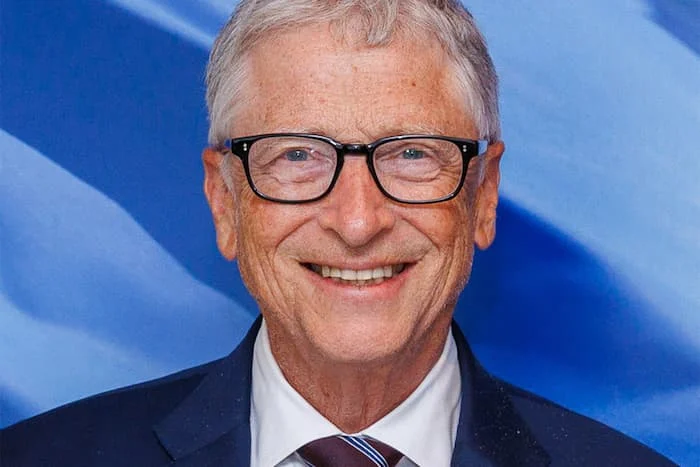
In a thought-provoking essay published on his personal platform, Gates Notes, technology magnate and philanthropist Bill Gates has articulated a bold vision for navigating the profound societal shifts anticipated from the rapid advancement of artificial intelligence (AI). Gates argues that AI possesses the potential to automate a significant portion of entry- and mid-level jobs, particularly those systems designed to operate with minimal or no direct human intervention. This projection, he contends, necessitates a proactive and comprehensive public transition plan, encompassing the establishment of new national and international governance structures, the designation of specific work domains exclusively for human employment, and the implementation of a novel taxation framework for AI-driven labor.
"It is great that some AI companies are proposing solutions to challenges raised by their own technology, but we should not expect them to lead the charge," Gates stated in his essay. He emphasized that certain critical issues extend beyond the direct expertise of AI developers and that, within a democratic society, such fundamental decisions about the future of work and societal structure should not rest solely with private entities.
The Concept of "Human Reserved" Domains
Central to Gates’s proposal is the concept he terms "Human Reserved" domains. This idea draws an analogy to ecological nature reserves, areas that society could develop for economic gain but chooses to preserve due to the immeasurable value of maintaining them in their natural state. Applied to the workforce, Gates suggests that certain tasks or professions should be intentionally set aside for human workers, particularly when automation would displace individuals who lack the immediate capacity to transition to alternative occupations. Beyond mere economic considerations, Gates posits that some work inherently benefits from human involvement due to its empathetic or interpersonal nature. He cites the example of delivering sensitive medical prognoses, a task where the human element of compassion and understanding is deemed indispensable, regardless of AI’s potential to process and present information efficiently.
The proposed Human Reserved domains are not envisioned as static allocations but rather as fluid concepts that could evolve over time. Gates identifies education and mental healthcare as potential sectors where human oversight and interaction are crucial. He acknowledges that the implementation of such a policy raises complex questions, including the mechanisms for determining which roles are designated as "Human Reserved," the specific criteria that would govern these decisions, and the methods for preventing companies from circumventing these protective measures. "These will need to be worked out in public as part of the transition plan," Gates underscored, highlighting the need for broad societal consensus and deliberation.
Rethinking Labor Taxation: Taxing AI Tokens and Robots
Gates also addresses what he perceives as a systemic incentive favoring automation over human employment within current economic frameworks. He observes that employers typically incur payroll taxes when hiring human employees, a cost that is often waived or significantly reduced when investing in machinery or AI systems, which can be written off as business expenses. This disparity, he argues, inadvertently encourages the substitution of robots and AI for human workers.
To counteract this imbalance, Gates advocates for a direct tax on AI-related labor. "I believe we should tax AI tokens and robots," he wrote. He proposes that such a targeted tax could serve a dual purpose: to moderately decelerate the displacement of human workers and to generate revenue. This revenue, in turn, could be earmarked for essential initiatives such as worker retraining programs and the strengthening of social safety nets, providing a crucial support system for those affected by automation. Critically, Gates emphasizes that this tax should be structured to avoid hindering AI applications that demonstrably improve affordability and accessibility in vital sectors like medicine and education.
Identifying Vulnerable Occupations and the Impact on Younger Workers
Gates identifies several white-collar professions that are likely to be among the first to experience significant AI-driven disruption. These include roles in sales and customer support, software engineering, and paralegal work. Furthermore, he anticipates that by the end of the current decade, sophisticated robots will begin to compete for a range of physical tasks in industries such as construction and hospitality.
A particular area of concern for Gates is the potential impact on younger generations entering the workforce. He notes that younger workers may face a labor market with fewer entry-level opportunities, a trend already reflected in declining employment rates among young individuals in jobs particularly susceptible to replacement by generative AI. As previously reported by HR Executive, these foundational entry-level positions are critical for early-career professionals to develop the essential skills and capabilities that organizations will rely on in the future. The erosion of these roles could have long-term implications for career development and economic mobility for an entire cohort of workers.
A Call for Global Collaboration and Unprecedented Action
The confluence of these technological advancements and their potential societal repercussions, Gates argues, demands a response of similar magnitude. "This unprecedented technology demands an unprecedented global response," he concluded in his essay. He expressed a hopeful outlook, stating, "If we get it right, the payoff for humanity will be phenomenal and the world will be a more equitable place." This statement encapsulates his belief that, with careful planning and collaborative action, the AI revolution can be steered towards outcomes that benefit society as a whole, fostering greater equity and prosperity.
The context for Gates’s intervention is a period of accelerating AI development. Innovations in machine learning, natural language processing, and robotics have rapidly advanced from theoretical possibilities to practical applications impacting various industries. Major AI models, such as those developed by OpenAI, Google, and Anthropic, have demonstrated remarkable capabilities in content generation, complex problem-solving, and sophisticated pattern recognition, fueling both excitement and apprehension about their future role.
Broader Implications and Expert Reactions
Gates’s call for proactive governance and economic adjustments echoes concerns raised by various economists, sociologists, and policymakers. Research from institutions like Stanford University has begun to quantify the impact of AI on the job market, with studies tracking millions of jobs and identifying those most at risk. For instance, a study might indicate that roles involving repetitive data processing, routine customer inquiries, or predictable pattern recognition are highly susceptible to automation. The implications extend beyond individual job losses, potentially affecting wage stagnation, income inequality, and the overall structure of economic opportunity.
While AI companies are indeed exploring ethical frameworks and potential solutions, as Gates acknowledges, the broader responsibility for societal adaptation is increasingly being placed on governments and international bodies. The creation of new regulatory frameworks, such as those proposed by Gates for AI taxation and human-reserved domains, would require significant legislative effort and international cooperation. The challenge lies in developing policies that are agile enough to keep pace with rapid technological change while ensuring that the benefits of AI are broadly shared and its risks are effectively mitigated.
The suggestion of taxing AI tokens and robots, while innovative, would necessitate complex discussions about defining what constitutes a "taxable AI event" and how to implement such a system without stifling innovation or creating loopholes. Similarly, defining and enforcing "Human Reserved" domains would involve intricate negotiation and ongoing evaluation to ensure fairness and effectiveness.
The timeline for these potential disruptions is also a critical factor. While some impacts are already being felt, particularly in sectors like content creation and customer service, the broader transformation of industries like construction and hospitality is projected to accelerate in the coming years. This underscores the urgency of developing and implementing the transition plans that Gates advocates for. The coming decade is likely to be a pivotal period in shaping the relationship between humans and artificial intelligence in the workplace, and proactive, globally coordinated strategies will be essential for navigating this complex future.