Hybrid work has emerged as a definitive paradigm shift, offering a compelling synthesis of remote flexibility and in-person collaborative advantages, thereby redefining the modern organizational landscape. At its core, this model allows employees to strategically divide their workweek between on-site and remote environments, acknowledging that optimal productivity and engagement can stem from varied conditions. This nuanced approach caters to individual preferences for focused remote work and the collective benefits of face-to-face interaction, enabling organizations to foster both employee satisfaction and sustained performance.
The transition to hybrid models gained unprecedented momentum following the global shifts of 2020, as organizations rapidly adapted to remote operations. What began as a necessity quickly evolved into a recognized opportunity to re-evaluate traditional work structures. Initial emergency measures gradually gave way to more deliberate strategies, with businesses identifying the enduring benefits of flexible arrangements. This period saw a rapid adoption of digital collaboration tools and a re-evaluation of office space, moving from a default daily presence to a more intentional hub for connection and innovation. By 2021, surveys from major consulting firms indicated a strong employee preference for hybrid arrangements, pushing companies to formalize policies and invest in supporting infrastructure.
Key Engagement Benchmarks for Mid-Market Firms in a Hybrid Environment
For mid-market firms, navigating the hybrid landscape presents unique challenges and opportunities. As these companies often experience rapid growth, their cultural development efforts can struggle to keep pace, leading to potential communication breakdowns and inconsistent employee experiences, particularly when teams are geographically dispersed. Therefore, establishing clear engagement benchmarks is paramount. According to research from the Achievers Workforce Institute (AWI), critical indicators for hybrid success revolve around employee connection, recognition, and belonging. These metrics provide HR leaders with vital insights into whether employees feel genuinely integrated into the organization, irrespective of their physical work location.
The AWI’s global research, which indicates that only 26% of employees are fully engaged, underscores the significant imperative for organizations to fortify connection, communication, and culture. For hybrid teams, connection stands out as a particularly crucial metric. Highly connected employees, as revealed by AWI studies, demonstrate significantly higher rates of retention, productivity, and overall job satisfaction. For instance, employees in strongly connected organizations are estimated to be 2.5 times more likely to feel a sense of belonging, 3 times more likely to report high job satisfaction, and 4 times more likely to recommend their employer to others. This heightened connection directly translates into reduced turnover intentions and increased commitment to organizational goals.
Another indispensable benchmark is employee appreciation. Research consistently demonstrates that employees who feel appreciated are remarkably more likely to find their work meaningful – up to 12 times more likely – and exhibit a substantially greater commitment to their long-term career with their employer, being 17 times more likely. These robust correlations between appreciation, meaningful work, and career commitment serve as potent indicators of a thriving and sustainable hybrid culture. In mid-market contexts, where individual contributions are often highly visible and impactful, consistent and authentic recognition can significantly bolster morale and reinforce organizational values, counteracting the potential for isolation that can arise when team members are not co-located daily.
Characteristics of Effective Hybrid Engagement
Successful hybrid engagement in mid-market organizations is typically characterized by several key attributes. Employees in such environments consistently report a strong sense of connection to their colleagues and the broader organizational mission. They feel valued for their contributions, experiencing regular and meaningful recognition that transcends physical location. Furthermore, these employees perceive a clear sense of belonging, feeling integrated into the company culture regardless of whether they are working from home or the office. Crucially, they maintain high levels of performance and productivity, demonstrating that flexibility does not come at the expense of output. The most effective hybrid workplaces prioritize outcomes over mere office attendance, leveraging connection, belonging, recognition, and performance as the true measures of engagement. Frequent, authentic recognition plays a pivotal role in reinforcing all these elements, cultivating a culture where every employee feels seen, valued, and motivated, wherever their work takes them.
The Enduring Appeal of Hybrid Work
Hybrid work is not merely a transient trend; it represents a strategic evolution in how organizations approach productivity, talent management, and employee well-being. Its widespread adoption stems from its capacity to address contemporary workplace demands more intelligently and sustainably. This model offers employees a superior work-life balance, integrating professional responsibilities with personal commitments more seamlessly than traditional models. For organizations, it translates into demonstrably better business results, including enhanced employee retention, increased productivity, and broader access to talent pools.
The appeal of hybrid work is multi-faceted. From an employee perspective, the flexibility to manage personal appointments, reduce commuting stress, and optimize work environments for specific tasks contributes significantly to job satisfaction and reduced burnout. A recent survey by Gallup indicated that 53% of remote-capable employees prefer a hybrid arrangement, while 32% prefer to be entirely remote. Only 15% desire a full return to office. This strong preference highlights its role in talent attraction and retention, as companies offering flexible options are more competitive in the labor market.
From a business standpoint, hybrid models can lead to cost savings through optimized office space utilization, a wider talent pool unconstrained by geographic proximity, and potentially increased diversity and inclusion. By allowing individuals to work from diverse locations, companies can tap into a broader range of skills and perspectives, fostering a richer, more innovative workforce. Moreover, the environmental benefits of reduced commuting, though secondary, contribute to corporate social responsibility goals. The strategic implementation of hybrid work is increasingly viewed as an essential component of a forward-thinking business strategy, aligning organizational needs with evolving employee expectations.
Distinguishing Hybrid from Remote Work
While often discussed interchangeably, hybrid work and fully remote work represent distinct operational models, each with unique characteristics and implications.
- Hybrid Work: This model involves employees splitting their time between working in a physical office location and working remotely, typically from home. The core principle is intentional integration of both environments. For example, employees might spend two or three days a week in the office for collaborative sessions, team meetings, and social interaction, and the remaining days working remotely for focused tasks. This approach aims to leverage the benefits of in-person collaboration while retaining the flexibility and autonomy of remote work.
- Remote Work: In a fully remote model, employees primarily or exclusively work outside of a traditional office environment, usually from their homes or co-working spaces. There is no expectation or requirement for regular in-office presence. Communication and collaboration are entirely digital, and the organizational culture is built around distributed teams. This model is often favored by companies with highly dispersed workforces or those seeking to minimize real estate overheads.
Both models heavily rely on sophisticated digital tools to maintain connectivity and productivity. However, hybrid work uniquely offers a dedicated physical space for spontaneous connection, intensive brainstorming sessions, or simply a change of scenery from the home office. It’s not an "either-or" proposition but rather a deliberate combination designed to provide flexibility while preserving the cohesive identity and collaborative spirit of a "team."
Diverse Architectures of Hybrid Work Models
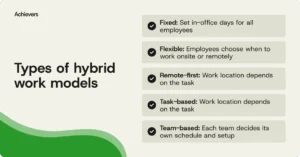
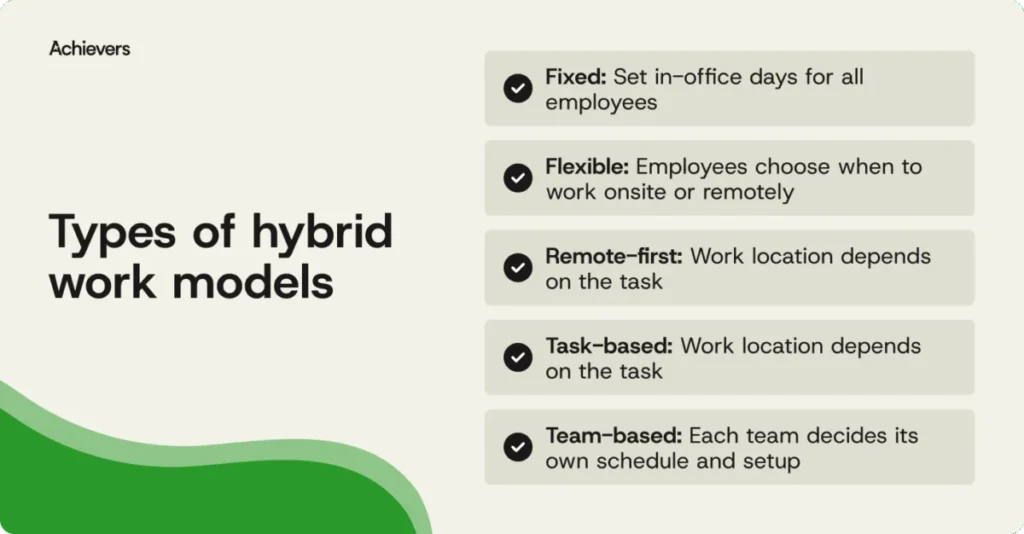
The implementation of hybrid work is not monolithic; various models exist, each tailored to different organizational needs and cultures. Understanding these distinctions is crucial for effective deployment.
-
Fixed Hybrid Model: This model operates on a predetermined schedule, where employees work remotely and in the office on specific, consistent days or weeks. For instance, an organization might mandate all employees to be in the office on Tuesdays and Thursdays, with remote work on other days. This structure offers predictability, allowing teams to know precisely when and where their colleagues will be, which can simplify planning for collaborative activities. While beneficial for stability and routine, its rigidity may not suit all roles or individual preferences for greater flexibility.
-
Flexible Hybrid Model: Often considered the most employee-centric approach, this model empowers individuals to choose their work location and schedule within agreed-upon guidelines. Employees might decide to come into the office for a specific project meeting or a social event, otherwise working remotely. This model significantly enhances work-life balance and autonomy, making it a strong attraction for talent. However, it requires robust communication protocols and effective calendar management tools to ensure team synchronization and avoid potential "ghost towns" in the office or difficulty in scheduling spontaneous collaborations. Clear expectations regarding availability and responsiveness are vital for its success.
-
Remote-First Model: In a remote-first setup, working from home or another remote location is the default. The physical office serves as a secondary resource, primarily utilized for occasional team meetups, strategic offsites, or intensive project sprints. This model is particularly effective for organizations with geographically distributed teams or those deeply committed to maximizing flexibility. Success hinges on a strong digital communication infrastructure, virtual recognition programs, and a culture that intentionally fosters connection and belonging despite physical distance. Company culture must be designed to thrive independently of physical co-location.

-
Task-Based Hybrid Model: This practical model allows employees to select their work environment based on the specific tasks at hand. For instance, deep-focus work requiring uninterrupted concentration might be best performed remotely, while brainstorming sessions, client presentations, or team-building activities are optimally conducted in the office. This approach prioritizes efficiency and effectiveness by matching the environment to the nature of the work, potentially leading to higher quality outputs and greater individual productivity. It demands a high degree of trust and self-management from employees, along with clear guidelines on when each environment is most appropriate.
-
Team-Based Hybrid Model: Under this framework, individual teams or departments are granted the autonomy to determine their optimal mix of in-office and remote work. Managers, in consultation with their teams, establish the rhythm that best suits their unique operational needs, project cycles, and collaborative requirements. This decentralized approach recognizes that different departments may have vastly different needs – a sales team might benefit from more in-person client interactions, while a software development team might thrive with extended periods of remote, focused work. It fosters a sense of ownership within teams but requires consistent communication between team leaders to ensure alignment with broader organizational goals and prevent fragmentation.
Addressing the Challenges of Hybrid Work
While offering significant advantages, hybrid work is not without its complexities. Successfully navigating this model requires proactive planning and the right tools to mitigate potential pitfalls.
-
Communication Gaps: The asynchronous nature of hybrid work can lead to missed messages, misunderstandings, and a lack of real-time context. This is particularly challenging for mid-market firms where informal communication often drives collaboration.
- Solution: Implement robust digital communication platforms (e.g., Slack, Microsoft Teams) with clear guidelines for their use. Encourage regular virtual stand-ups, transparent documentation, and "always-on" communication channels for quick queries. Leaders must model effective hybrid communication practices.
-
Maintaining Culture and Connection: Without daily in-person interactions, maintaining a strong, unified company culture and fostering deep team bonds can be difficult, leading to feelings of isolation or disengagement.
- Solution: Organize intentional virtual and in-person social events. Utilize recognition platforms to celebrate achievements publicly. Invest in team-building activities that can span both environments, focusing on shared experiences rather than just shared physical space.
-
Ensuring Equity and Inclusion: There’s a risk of creating a "two-tier" system where in-office employees receive more visibility or opportunities than their remote counterparts. This can disproportionately affect underrepresented groups.
- Solution: Leaders must actively ensure equitable access to information, development opportunities, and mentorship regardless of location. Hybrid meetings should be designed to be inclusive, using technology to ensure remote participants have equal voice and visibility. Performance evaluations should be based on outcomes, not presence.
-
Technology and Infrastructure: Reliable home internet, ergonomic setups, and secure access to company systems are essential but not universally available, creating potential disparities.
- Solution: Provide stipends for home office equipment and internet access. Invest in robust, secure cloud-based systems and collaboration tools. Offer technical support tailored to remote workers.
-
Leadership Skills and Management: Managers accustomed to overseeing co-located teams may struggle with leading and motivating a hybrid workforce, often defaulting to micromanagement or disengagement.
- Solution: Provide comprehensive training for leaders on managing hybrid teams, focusing on trust, empathy, asynchronous communication, performance management by outcomes, and fostering psychological safety. Encourage regular one-on-one check-ins.
-
Employee Burnout: The blurred lines between work and home, coupled with the pressure to be "always on" digitally, can lead to increased stress and burnout.
- Solution: Promote clear boundaries between work and personal life. Encourage digital detoxes and offer mental health resources. Leaders should model healthy work habits and emphasize well-being.
Six Strategies for Cultivating a Thriving Hybrid Work Culture
Building a successful hybrid workplace is not an accidental outcome; it demands a deliberate combination of flexibility, genuine connection, and enlightened leadership. By implementing strategic initiatives, organizations can cultivate a hybrid culture where employees consistently feel valued, supported, and empowered to excel, regardless of their physical location.
-
Integrate Recognition into Daily Operations: In a hybrid setting, the spontaneous "thank you" in the hallway is less frequent. Therefore, a formalized and pervasive recognition system becomes critical. Organizations must implement a robust recognition platform that is easily accessible, integrates seamlessly with existing communication tools, and offers rewards that genuinely resonate with employees. This platform should facilitate peer-to-peer recognition, manager-to-employee appreciation, and company-wide celebrations, ensuring that every achievement, big or small, is acknowledged and celebrated, preventing distance from diluting appreciation. Aligning recognition with company values can also reinforce desired behaviors and cultural norms.
-
Empower Employees with a Resonant Voice: Effective hybrid cultures are built on feedback. Limiting feedback channels to informal in-office interactions is insufficient. Organizations must establish diverse, accessible, and user-friendly channels for employees to voice their perspectives, concerns, and suggestions. This includes implementing regular pulse surveys, anonymous feedback tools, and even AI-powered chatbots for immediate input. Crucially, the act of listening must be followed by tangible action. Demonstrating that feedback is heard, analyzed, and leads to discernible improvements builds trust and reinforces a culture of continuous improvement, validating employees’ contributions to organizational evolution.
-
Craft Flexible Policies Responsive to Employee Needs: The inherent flexibility of hybrid work must be reflected in organizational policies. Outdated, one-size-fits-all policies are counterproductive. Companies should explore and implement progressive policies such as flexible hours, compressed workweeks, and diverse location options (e.g., work from anywhere for a certain period). These policies should empower employees to integrate their professional lives with personal responsibilities in a way that maximizes their well-being and productivity, fostering a sense of autonomy and trust. Clear guidelines, however, are essential to ensure fairness and operational consistency.
-
Provide Agile, Accessible, and Continuous Learning Opportunities: The hybrid work environment necessitates new skills, from mastering digital collaboration tools to effective time management in a distributed setting. Professional development programs must evolve to meet these demands. Offer bite-sized, self-paced learning modules, virtual workshops, and accessible coaching resources that cater to varied learning styles and schedules. This "just-in-time" learning approach ensures that employees can acquire and refine the skills needed to thrive in a hybrid context without requiring extensive time commitments or mandatory, lengthy webinars. Investing in leadership training specifically for managing hybrid teams is also paramount.
-
Embed Connection as a Routine Practice: Proximity bias can lead to disengagement among remote employees. Organizations must intentionally weave connection-building activities into the regular rhythm of the workday and week. This involves organizing a mix of fun, voluntary team activities – both virtual (e.g., online game nights, virtual coffee breaks, themed happy hours) and in-person (e.g., quarterly team lunches, project kick-offs, social gatherings). The key is to listen to employee preferences and offer diverse options that genuinely foster camaraderie and psychological safety, moving beyond mere "checkbox" team bonding to create authentic human connections.
-
Equip Leaders for Hybrid Management Excellence: The success of hybrid work hinges significantly on effective leadership. Modern hybrid leadership necessitates a shift from traditional clock-watching and micro-management to a focus on outcomes, trust, and empowerment. Leaders must be trained in the nuances of communicating effectively across locations, providing empathetic coaching, and building strong relationships with distributed team members. This involves developing skills in managing asynchronous workflows, leveraging technology for equitable participation, and fostering a culture of psychological safety where all team members feel comfortable contributing their ideas and concerns, regardless of their physical location. Empowering managers with these tools and fostering a culture of trust will enable them to confidently lead hybrid teams and maximize their potential.
Forging a Hybrid Culture of Unwavering Connection
A truly thriving hybrid workplace transcends mere flexible schedules; it is meticulously cultivated through genuine connection, consistent recognition, and responsive listening. In this evolving paradigm, employees must unequivocally feel seen, heard, and appreciated, irrespective of their login location. The right strategic approach, supported by appropriate technological tools, can make all the difference.
By making recognition an ingrained part of daily operations, offering rewards that employees genuinely value, and establishing transparent, actionable feedback mechanisms, organizations can construct a workplace where every individual feels deeply connected and profoundly valued. When employees experience this level of connection, the organizational culture does not merely endure in a hybrid world; it strengthens, innovates, and flourishes, becoming a powerful differentiator in the global talent landscape. This holistic approach transforms the hybrid model from a logistical arrangement into a vibrant, people-centric ecosystem designed for sustained success.