In an increasingly competitive global talent landscape, the strategic importance of employee recognition has never been more apparent. Organizations are recognizing that a culture of appreciation is not merely a feel-good initiative but a critical driver of core business outcomes. However, a significant challenge persists: measuring the tangible return on investment (ROI) of employee recognition software and programs. This measurement gap prevents many leaders from fully understanding and proving how consistent appreciation directly translates into enhanced engagement, improved retention, and elevated performance across the enterprise.
The ROI Imperative: Bridging the Measurement Gap in HR Technology
While the intuitive benefits of employee recognition are widely accepted, translating these into concrete financial metrics remains an enigma for many human resources departments. Research from Gartner, a leading global research and advisory company, underscores this widespread difficulty, revealing that a striking 51% of HR leaders struggle to measure the ROI of their HR technology investments. This statistic highlights a fundamental disconnect: organizations are investing in sophisticated tools designed to enhance the employee experience, yet they lack the robust frameworks to articulate the financial dividends of these investments.
The data supporting the efficacy of recognition is readily available and compelling. For instance, the comprehensive "State of Recognition Report" consistently demonstrates a powerful correlation: employees who receive weekly recognition are 2.6 times more likely to report higher productivity levels. Such findings unequivocally affirm that recognition works; the persistent challenge lies in developing clear, quantifiable methods to attribute these positive shifts directly to recognition initiatives and their associated costs.
Further emphasizing this point, a 2026 Harvard Business Review (HBR) Analytic Services study found that while 66% of leaders acknowledge the profound importance of recognition for overall business performance, only a third (33%) believe their current recognition programs are truly effective at influencing these critical outcomes. This disparity is not about questioning the intrinsic value of appreciation; it’s about establishing clear, measurable pathways to connect recognition efforts to the bottom line, demonstrating precisely how it impacts key business metrics.
Evolving Landscape: From Perceived Value to Measurable Impact
The shift towards data-driven HR is a broader trend that contextualizes the current focus on recognition ROI. Historically, HR functions were often viewed as cost centers, with initiatives like employee appreciation falling into the ‘soft skills’ category, difficult to quantify beyond anecdotal evidence or general sentiment surveys. However, the advent of sophisticated HR technology, coupled with a heightened understanding of human capital’s strategic value, has necessitated a more rigorous approach. In an era marked by phenomena like the "Great Resignation," intense competition for skilled talent, and the complexities of hybrid work models, organizations can no longer afford to overlook the measurable impact of their people strategies. Employee experience has moved from a buzzword to a central pillar of corporate strategy, and demonstrating ROI is crucial for securing continued investment and proving strategic value.
Defining and Calculating Employee Engagement and Recognition ROI
Employee engagement ROI represents the measurable business value generated by improvements in engagement, benchmarked against the total investment in programs, technology, and resources designed to foster those improvements. In the current business climate of 2026, the most effective methodology involves directly linking gains in engagement to quantifiable business outcomes such as enhanced retention, increased productivity, superior performance, and reduced absenteeism. The "employee engagement equation wheel," a conceptual framework, underscores that proving engagement ROI begins with systematically tracking engagement levels in parallel with critical business metrics like employee turnover rates and performance achievements.
A foundational formula for calculating employee engagement ROI is:
Employee Engagement ROI = [(Financial Benefits from Engagement Improvements – Program Costs) ÷ Program Costs] × 100
To elaborate on this calculation:
- Financial Benefits from Engagement Improvements: This encompasses quantifiable gains derived from improved engagement. Examples include cost savings from reduced employee turnover (avoiding recruitment, onboarding, and training expenses), increased revenue or output due to higher productivity, reduced costs associated with absenteeism, and improved customer satisfaction leading to higher sales or loyalty.
- Program Costs: This includes all expenditures related to the engagement and recognition initiatives. This might cover software subscriptions, rewards budgets, administrative time allocated to managing the program, communication expenses, and any training associated with the rollout.
Recognition is not merely a component of this calculation; it should be a core catalyst. Research, including insights from the Achievers Workforce Institute (AWI), consistently highlights that robust recognition programs significantly strengthen employee engagement, foster a greater sense of belonging, and directly contribute to higher retention rates. These outcomes are not peripheral; they directly influence critical business performance indicators. Employees who regularly receive meaningful recognition are demonstrably more likely to feel valued and engaged, and organizations that prioritize and increase recognition frequently observe corresponding improvements across engagement scores, overall productivity, and employee retention.
Consider a practical example: if an organization allocates $100,000 annually to comprehensive employee engagement and recognition initiatives and, as a direct result, realizes $300,000 in combined savings from reduced turnover, tangible productivity gains, and diminished hiring costs, its engagement ROI would be a robust 200%. This straightforward calculation powerfully illustrates the financial leverage of investing in a recognized workforce.
The Multifaceted Impact of Employee Recognition on Business Outcomes
Employee recognition strategically impacts ROI by actively cultivating and reinforcing the behaviors and attitudes that propel a business forward. From bolstering retention to igniting engagement, and from enhancing productivity to elevating overall performance, the returns become readily identifiable once organizations know precisely what indicators to monitor. The latest HBR research corroborates this, finding that organizations with highly effective recognition programs are significantly more likely to report positive improvements across a spectrum of business outcomes, including productivity, collaborative efforts, innovation, customer experience metrics, revenue generation, and the efficient execution of strategic goals, when compared to organizations with less effective programs.
1. Retention: Recognition stands out as one of the most cost-effective strategies for retaining top talent. When appreciation is made visible, frequent, and consistent, it deeply embeds a sense of "I belong here" within employees. This powerful, yet often quiet, force actively minimizes turnover and cultivates unwavering loyalty. Employees who feel genuinely recognized are not passively contemplating their next career move; instead, they are actively invested and leaning into their roles, contributing fully to the organization’s success. The cost of replacing an employee can range from tens of thousands to well over 100% of their annual salary, making retention a direct and substantial financial benefit.
2. Engagement: For engagement that demonstrably impacts the bottom line, recognition is the essential starting point. It acts as the vital bridge connecting individual effort to a profound sense of meaning, transforming work from a mere obligation into a valuable contribution. The "State of Recognition Report" indicates that employees recognized weekly are an astonishing nine times more likely to experience a strong sense of belonging within their organization. This sense of belonging is a cornerstone of true employee engagement—it’s measurable, culturally pervasive, and highly contagious, fostering a positive work environment that cascades throughout the organization.
3. Productivity: High-performing individuals are not primarily driven by surveillance; they are motivated by acknowledgement. Recognition clearly defines and reinforces what "great work" entails, transforming isolated accomplishments into repeatable, high-value habits. The direct result is enhanced focus, increased energy, and a significant reduction in workplace stress, often characterized by the absence of "Sunday scaries." This is productivity infused with purpose, rather than driven by undue pressure. Studies often link engaged employees, who are frequently recognized, to a 20-25% increase in productivity compared to their disengaged counterparts.
4. Culture: A robust and positive organizational culture is actively strengthened with every instance of recognition. When appreciation becomes an integral part of daily operational life, core values transition from abstract statements into tangible actions. This transforms culture into a powerful engine for achieving business goals, making a sense of belonging the established norm. Recognition ensures that purpose is not merely a decorative poster on a wall but becomes the living, breathing ethos guiding how people genuinely collaborate and achieve together.
5. Greater HR Efficiency: The implementation of recognition software extends beyond celebrating individuals; it yields significant gains in HR efficiency. Automation handles routine administrative tasks, while seamless software integrations ensure that disparate systems remain connected and data flows smoothly. Comprehensive analytics provide immediate insights into program effectiveness. The cumulative result is a substantial reduction in the time HR professionals spend on program management, freeing them to focus on more strategic initiatives and high-impact talent development. This efficiency translates directly into cost savings and optimized resource allocation.
6. Better Customer Satisfaction: The internal sentiment within a company profoundly influences external perceptions and customer interactions. Recognition creates a positive ripple effect: motivated and appreciated employees deliver superior service, approach customer interactions with greater empathy, and are more inclined to innovate solutions. This positive chain reaction extends far beyond the organizational walls, as genuinely happy and engaged teams are the most reliable creators of happy and loyal customers. Improved customer satisfaction directly correlates with increased revenue, customer retention, and brand loyalty, all contributing to the bottom line.
Strategic Framework for Measuring Recognition Program ROI
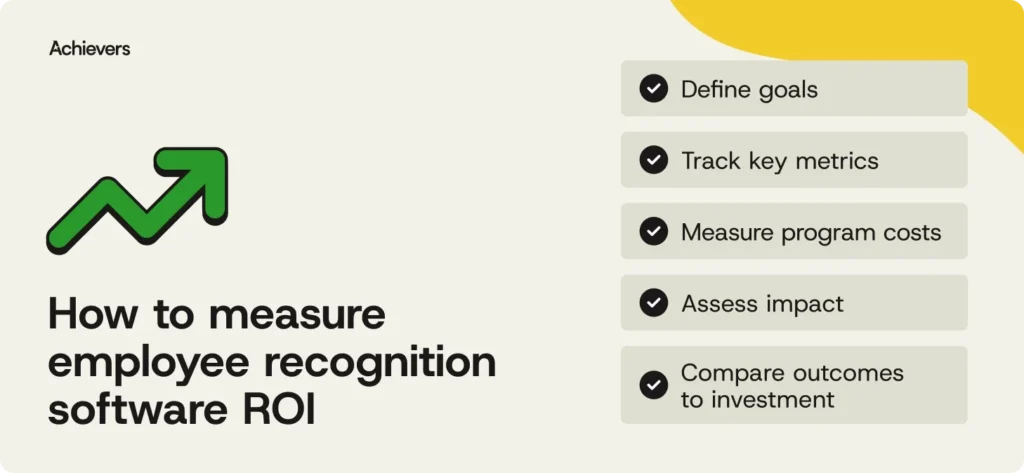
Measuring the ROI of an employee recognition program requires a systematic, multi-step approach that aligns appreciation efforts with strategic business objectives.

1. Define Your Goals: The initial and most critical step is to clearly articulate the specific outcomes that hold the greatest importance for your organization. Are the primary objectives to significantly improve employee turnover rates, bolster overall engagement levels, or substantially boost team productivity? Establishing these priorities early on ensures that the recognition strategy is intrinsically linked to measurable impact, moving beyond mere good intentions to deliver tangible results.
2. Track Key Metrics: Implement a robust system to track changes in critical performance indicators both before and after the deployment of your recognition platform. Essential metrics include employee turnover rates, Net Promoter Score (eNPS) for employee satisfaction, overall productivity metrics, absenteeism rates, and customer satisfaction scores. Crucially, integrate recognition data—detailing who is being recognized, how frequently, and the types of recognition being given—to provide a richer, more nuanced context to these raw numbers. This allows for a deeper understanding of the causal links.
3. Measure Program Costs: Accurately calculate the total investment required for your recognition program. This encompasses the annual software subscription fees, the allocated budget for rewards and incentives, and the administrative time saved by leveraging automated recognition tools. High-quality recognition software quickly demonstrates its value by streamlining manual processes, significantly reducing the administrative burden on HR teams, and providing clear, easily accessible data on program efficacy.
4. Compare Outcomes vs. Investment: Translate the measured results into concrete business value. For instance, a quantifiable reduction in employee turnover directly equates to substantial cost savings by avoiding recruitment, onboarding, and training expenses. Enhanced employee engagement is a proven driver of higher productivity and innovation, while improved morale inevitably leads to stronger individual and team performance. When the impact of recognition is rigorously measured against predefined business Key Performance Indicators (KPIs), the return on investment often becomes self-evident and highly persuasive.
5. Assess Cultural and People Impacts: Beyond quantitative metrics, it is vital to track how recognition influences the qualitative aspects of the employee experience. Monitor changes in employees’ sense of belonging, the visibility of leadership, and the degree to which organizational values are aligned with daily actions. These qualitative insights provide essential balance to the quantitative data, explaining not just what has changed, but why those changes occurred, offering a holistic view of the program’s impact.
How to Calculate ROI for Employee Recognition:
Calculating the ROI for employee recognition involves a direct comparison of the financial investment in the program against the business outcomes it influences, with a particular focus on retention, engagement, and overall performance.
A simplified way to conceptualize this is:
ROI = (Benefits – Costs) / Costs
To estimate ROI using this formula:
- Benefits: Quantify the financial gains from improved retention (e.g., turnover cost savings), increased engagement (e.g., productivity gains, reduced absenteeism), and enhanced performance (e.g., revenue growth, quality improvements).
- Costs: Sum up all expenditures related to the recognition program, including software, rewards, and administrative overhead.
Rather than isolating a single metric, organizations gain the clearest and most comprehensive picture by analyzing changes over time and meticulously connecting specific recognition activities to measurable business outcomes. When recognition is implemented frequently, consistently, and strategically aligned with overarching business goals, it emerges as a highly reliable and powerful driver of significant ROI.
Leveraging Data and Insights for Strategic Recognition
Recognition data, however comprehensive, only becomes truly powerful when it is actively used to inform and refine strategy. The real return on investment is realized when these insights are directly linked to what the business truly prioritizes: enhanced performance, robust retention, and measurable bottom-line impact.
1. Link Recognition to Business Goals: Begin by meticulously aligning both internal and external recognition metrics with the key outcomes that leadership values most—such as retention rates, overall performance, employee engagement levels, and the effectiveness of managers. Analyzing recognition data can reveal which teams are flourishing, identify areas where employee connection might be faltering, and precisely illustrate how recognition influences specific business results. When recognition data directly maps to strategic business goals, its return becomes not only easy to prove but also far easier to sustain over the long term.
2. Pair Data with Storytelling: While numbers are compelling, human narratives resonate deeply. Use quantitative recognition data to substantiate and enrich anecdotal evidence from employees, leaders, or entire teams whose performance demonstrably improved after experiencing genuine appreciation and feeling seen. This approach transforms the ROI discussion from a dry spreadsheet review into a compelling story of human transformation and business success, making the impact relatable and memorable.
3. Utilize AI-Powered Analytics to Fine-Tune Impact: Advanced AI capabilities can uncover intricate patterns that traditional dashboards might overlook. For example, AI can identify a specific department where consistent recognition is quietly driving exceptional retention rates, or highlight a team at elevated risk of burnout due to a perceived lack of appreciation. This level of insight makes recognition efforts far more intentional and precisely targeted. The value of recognition data extends significantly beyond merely quantifying appreciation; as David Bator, Managing Director of the Achievers Workforce Institute (AWI), noted in a recent edition of The Recognition Effect, organizations are increasingly leveraging recognition data to construct a clearer, more granular picture of performance, collaboration dynamics, and strategically important behaviors across their entire workforce. This enhanced visibility empowers organizations to directly connect recognition activity to measurable outcomes, thereby simplifying the process of demonstrating recognition’s profound contributions to engagement, performance, retention, and other crucial ROI metrics.
4. Showcase ROI with Outcomes that Matter: Move beyond simply presenting raw data. Instead, narrate the compelling story behind the figures. Illustrate how recognition played a pivotal role in helping a team rebuild trust following a significant organizational change, or demonstrate how a particular leader effectively utilized recognition to boost team motivation during a challenging quarter. These concrete, real-world examples imbue the data with life and make the impact of recognition truly palpable and understandable.
5. Keep Measuring and Evolving: The conversation around recognition and employee engagement ROI should be continuous and dynamic. Consistently track key indicators such as recognition frequency, program participation rates, evolving engagement scores, and overall employee sentiment. Armed with these ongoing insights, organizations can make informed adjustments, refine their strategies, and foster continuous growth and improvement within their recognition programs.
Real-World Recognition ROI Examples
While the theoretical benefits are clear, seeing recognition translate into tangible business success provides the most compelling evidence. The following organizations partnered with Achievers to transform appreciation into measurable performance gains.
General Motors (GM): General Motors successfully demonstrated that when recognition is perceived as genuine and authentic, significant positive results inevitably follow. By collaborating with Achievers to consolidate its 160,000 employees onto a single, unified global platform, GM effectively embedded appreciation into the fabric of everyday work. The payoff was swift and substantial: within just 30 days of launch, an impressive 87% of employees were actively participating in the program. Recognition rapidly emerged as a top driver of engagement across the entire company, strengthening internal connections, significantly reducing attrition risk, and unequivocally proving the substantial financial returns of a well-executed recognition strategy.
Sobeys: When Sobeys, a leading Canadian food retailer, sought to enhance performance and strengthen internal connections across its extensive retail network, it strategically prioritized recognition. Sobeys partnered with Achievers to develop "Bring It!", an innovative, gamified recognition program that ingeniously linked appreciation to core business goals and fostered healthy, friendly competition among employees. The program yielded remarkable results: Sobeys saw an increase in cube truck utilization from 77% to an impressive 86% across its retail support centers. This concrete outcome powerfully illustrates how a thoughtfully designed and strategically implemented recognition program can drive real, measurable improvements in operational efficiency and business performance.
From Employee Recognition Software to Real ROI: A Future-Forward Perspective
The evidence for the ROI of employee recognition is unequivocally clear: valuing your people directly translates into superior organizational performance. Recognition transforms simple connections into deep commitment, converts individual effort into collective impact, and refines organizational culture into something that is not only palpable but also demonstrably measurable.
The most significant wins occur when organizations move beyond superficial metrics like counting clicks or kudos and begin to strategically leverage recognition to fundamentally alter how people collaborate and contribute. This is the crucial intersection where robust data meets human ingenuity and empathy—where the ripple effects of appreciation manifest as tangible improvements in engagement levels, employee retention rates, and ultimately, core business results.
At Achievers, this understanding forms the bedrock of our mission. Our innovative platform is meticulously designed to make recognition effortlessly scalable and remarkably easy to measure, effectively transforming daily expressions of appreciation into lasting, impactful business value. Because when recognition truly works, every other aspect of the business benefits, leading to a more engaged workforce, a stronger culture, and a healthier bottom line.