
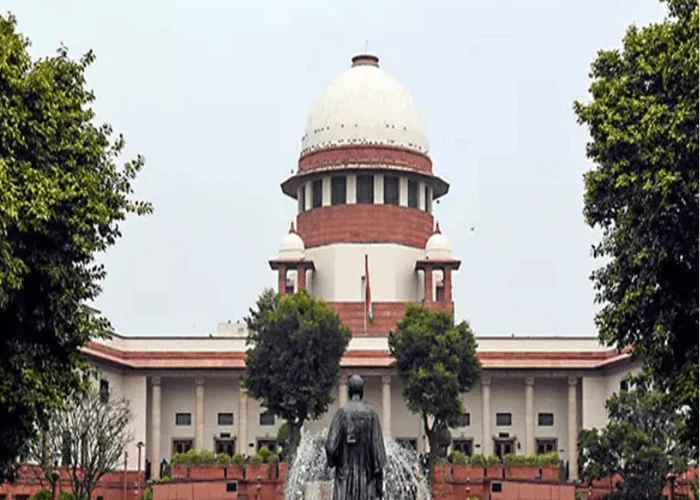
The Punjab and Haryana High Court has delivered a landmark judgment, effectively striking down the Haryana government’s sweeping restriction on foreign travel by its employees. The court unequivocally held that the measure, which imposed a blanket ban on overseas travel for both official and personal purposes, was arbitrary, disproportionate, and fundamentally inconsistent with the constitutional rights enshrined in Article 21 of the Indian Constitution, guaranteeing the right to life and personal liberty. This significant ruling reinforces the principle of judicial oversight over executive actions and underscores the limitations of state power when impinging on fundamental freedoms.
The Genesis of the Challenge: A Nursing Officer’s Pursuit of Professional Growth
The case originated from a petition filed by a nursing officer employed at the Post Graduate Institute of Medical Sciences (PGIMS), Rohtak. The petitioner, whose identity remains protected by the court’s proceedings, harbored aspirations for international professional development, specifically seeking to appear for an Objective Structured Clinical Examination (OSCE) in Australia. The OSCE is a globally recognized assessment standard, crucial for healthcare professionals, particularly nurses, intending to practice in many Western countries, including Australia. Her proactive steps towards this goal began in January 2026, when she received the requisite departmental approval to apply for an Australian visa. Demonstrating diligence, she successfully obtained the visa in May 2026, anticipating her travel for the examination.
However, her meticulously planned journey faced an unexpected and abrupt halt. On June 10, 2026, the Haryana government issued a directive that would cast a long shadow over the aspirations of thousands of its employees. These instructions imposed an outright ban on all foreign travel, whether for official assignments or personal leave, for government employees, including staff of various boards, corporations, and public authorities. The only stated exception was for medical emergencies, a narrow window that did not encompass the petitioner’s critical professional examination. Consequently, her request for earned leave, essential for her travel and examination, was not processed, directly citing the newly implemented travel restrictions. Faced with the potential derailment of her career advancement and the forfeiture of her hard-earned visa, the nursing officer had no recourse but to challenge the government’s instructions before the High Court.
The High Court’s Stance: Upholding Constitutional Rights and Judicial Scrutiny
Justice Harpreet Singh Brar, presiding over the matter, delivered a verdict that firmly re-established the boundaries of executive authority. The court’s primary contention was that the government could not, under any circumstances, impose a blanket restriction on overseas travel merely by virtue of an individual’s status as a government employee. This observation cut to the heart of the matter, challenging the inherent assumption of unfettered control that the state might presume over its workforce.
The judgment meticulously elaborated on the constitutional underpinnings of the right to travel abroad. It highlighted that this right forms an intrinsic component of the broader right to life and personal liberty, explicitly guaranteed under Article 21 of the Constitution of India. This article is a cornerstone of fundamental rights, broadly interpreted by the Supreme Court of India in landmark cases like Maneka Gandhi v. Union of India (1978) to include the right to travel outside the country and return. The court emphasized that any restriction imposed on this fundamental right must, therefore, withstand rigorous scrutiny, meeting stringent standards of fairness, reasonableness, and proportionality. These legal benchmarks ensure that any curtailment of liberty is not arbitrary but is instead based on sound legal principles and serves a legitimate state interest in a manner that is least restrictive.
Government’s Rationale and the Court’s Rebuttal: Economic Pressures vs. Fundamental Freedoms
In its defense, the Haryana government presented its travel ban as a temporary austerity measure. It argued that the state was grappling with significant economic pressures, largely attributable to global disruptions stemming from the Russia-Ukraine conflict and the evolving West Asian crisis. The government contended that these international events had precipitated a cascade of economic challenges, including disruptions in fuel supplies, strain on global supply chains, and adverse impacts on the availability and pricing of other essential resources. By imposing a travel ban, the state aimed to conserve financial resources, reduce foreign exchange outflow, and mitigate the broader economic impact on its coffers.
However, the High Court remained unconvinced by the government’s justifications. It found no discernible or clear connection between the stated objectives of economic austerity and the imposition of a sweeping, blanket ban on foreign travel. The court observed that the instructions lacked specificity and failed to differentiate between employees based on their roles, the precise purpose of their travel, or their individual circumstances. For instance, a ban on professional development trips for healthcare workers, potentially leading to enhanced skills that could benefit the state’s public health system, could hardly be deemed an effective austerity measure in the long run. The court implicitly questioned the efficacy and logical nexus of such a broad-brush approach, suggesting that a more targeted and nuanced policy would have been appropriate if genuine austerity was the goal.
Broader Implications for Government Employees: Professional Growth and Personal Liberty
The judgment further noted the profound negative implications of such restrictions on the professional and personal lives of government employees. It highlighted that a blanket ban could effectively prevent employees from pursuing crucial professional examinations, higher education, and vital career-development opportunities overseas. In an increasingly globalized world, professional growth often necessitates international exposure, collaboration, and learning from best practices. For instance, a nursing officer’s pursuit of an OSCE is not merely a personal ambition but an endeavor that could potentially lead to the acquisition of advanced skills and knowledge, which, if retained within the public health system, could ultimately benefit the citizens of Haryana. Similarly, academics, researchers, and other professionals within the government framework often rely on international conferences, workshops, and study tours to stay abreast of global advancements in their respective fields. Denying such opportunities not only stifles individual growth but also risks isolating the state’s workforce from global standards and innovations.
Moreover, the ruling underscored the infringement on personal liberty. For many, travel abroad is not solely about professional advancement but also about personal enrichment, cultural exchange, family reunification, or simply leisure. To deny these aspects of personal liberty without compelling and constitutionally sound reasons constitutes an arbitrary exercise of power.
Austerity Measures: Context and Critique
The government’s invocation of "economic pressures" as a rationale for the travel ban warrants a closer look at the broader economic landscape. India, like many nations, faced significant economic headwinds in the post-pandemic era, exacerbated by global geopolitical events. The Russia-Ukraine conflict, which began in early 2022, indeed triggered a surge in global commodity prices, particularly crude oil, natural gas, and food grains. India, being a net importer of crude oil, felt the pinch through higher import bills, inflationary pressures, and a widening current account deficit. Similarly, tensions in the West Asian region, while varying in intensity, have historically contributed to volatility in oil markets and shipping routes, impacting global supply chains.
States in India, including Haryana, operate with their own fiscal constraints. Reports from the Reserve Bank of India and various financial think tanks often highlight the fiscal health of Indian states, with concerns sometimes raised about debt-to-GSDP ratios and revenue deficits. It is plausible that the Haryana government genuinely sought to implement austerity measures to manage its finances. However, the High Court’s judgment implicitly questioned whether a blanket travel ban was a proportionate or even effective tool for achieving these financial objectives. Critics might argue that the financial savings from restricting employee travel might be marginal compared to the broader state budget, while the cost in terms of employee morale, professional stagnation, and constitutional infringement could be substantial. More targeted measures, such as reviewing non-essential official foreign tours or capping per-diem allowances, might have been considered as less restrictive alternatives.
Legal Precedents and the Right to Travel in India
The right to travel abroad has a rich jurisprudential history in India. While not explicitly mentioned as a fundamental right in the original text of the Constitution, the Supreme Court, through a series of landmark judgments, notably Satwant Singh Sawhney v. D. Ramarathnam (1967) and Maneka Gandhi v. Union of India (1978), firmly established it as an integral part of "personal liberty" under Article 21. The Maneka Gandhi judgment, in particular, expanded the scope of Article 21, asserting that any law or executive action restricting personal liberty must not only prescribe a procedure but that procedure must be fair, just, and reasonable. This "procedure established by law" cannot be arbitrary, oppressive, or fanciful. The Haryana government’s blanket ban, lacking differentiation and proportionality, evidently failed this "fair, just, and reasonable" test.
Furthermore, the principle of proportionality, central to the High Court’s ruling, requires that any restriction on a fundamental right must be suitable for achieving a legitimate aim, necessary to achieve that aim (meaning there are no less restrictive alternatives), and proportionate in its adverse impact. The court found the blanket ban to be an overreach, disproportionately impacting individual rights without a clear, direct, and compelling link to the stated austerity goals.
Reactions from Stakeholders and Future Ramifications
While immediate official statements from the Haryana government are yet to emerge, the ruling is likely to elicit varied reactions from different stakeholders. Legal experts have largely lauded the judgment as a robust affirmation of fundamental rights and a check on potential executive overreach. Many constitutional lawyers would view this as a reiteration that administrative convenience or even genuine economic concerns cannot supersede constitutional guarantees without due process and proportionality.
Government employee unions and associations are expected to welcome the decision enthusiastically. Such bans often breed resentment among employees, impacting morale and productivity. The judgment provides a significant relief to those who had their personal and professional plans disrupted. It empowers employees to pursue their aspirations without fear of arbitrary state intervention.
For the Haryana government, the ruling necessitates a re-evaluation of its administrative policies and a more nuanced approach to austerity measures. While an appeal to the Supreme Court remains a possibility, the strong constitutional grounding of the High Court’s judgment suggests that any such appeal would face an uphill battle. The government might now be compelled to consider more targeted and constitutionally compliant methods to manage its finances, rather than broad prohibitions on fundamental rights.
Conclusion: A Reinforcement of Constitutional Limits
The Punjab and Haryana High Court’s decision to strike down Haryana’s blanket foreign travel restriction on government employees is more than just a specific ruling; it is a significant reaffirmation of the delicate balance between state authority and individual liberties. By directing the authorities to permit the petitioner to travel to Australia for her examination, the court not only provided immediate relief but also sent a clear message across the executive branches of governance. Executive measures, even when purportedly driven by legitimate concerns such as economic austerity, must always remain within constitutional limits. They cannot impose sweeping restrictions on fundamental rights, such as the right to travel abroad, without a proportionate, reasonable, and constitutionally justifiable basis. This judgment stands as a vital reminder that in a democratic republic, the rule of law and the protection of fundamental rights are paramount, serving as an indispensable safeguard against arbitrary state action.








