On September 21, 2026, World Gratitude Day will once again offer a timely global reminder of a fundamental truth often overlooked in the relentless pace of professional life: individuals thrive when they feel genuinely valued. This annual observance arrives at a particularly critical juncture for organizations worldwide, as evidenced by recent data painting a stark picture of the global workforce. According to the comprehensive 2026 Engagement and Retention Report, which canvassed 2,500 employees across diverse industries and geographies, a concerning statistic emerged: a mere 25% of employees currently report being actively engaged in their work. This figure underscores a pervasive challenge that impacts productivity, innovation, and overall organizational health, making the intentional cultivation of gratitude not just a benevolent gesture, but a strategic imperative.
The Current Landscape of Employee Engagement: A Global Challenge
The finding that only a quarter of employees are engaged is more than a statistic; it represents a significant drain on human potential and economic output. Disengaged employees are less productive, more prone to absenteeism, and more likely to seek opportunities elsewhere. Research consistently links low engagement to higher turnover rates, diminished customer satisfaction, and a measurable reduction in profitability. For instance, Gallup’s ongoing studies on employee engagement have frequently shown that highly engaged teams exhibit 21% greater profitability and 17% higher productivity. Conversely, the cost of disengagement can be staggering, including recruitment and training expenses for replacements, loss of institutional knowledge, and a negative ripple effect on team morale. The 2026 report’s findings suggest that despite increasing awareness of employee well-being and talent management, many organizations are still struggling to foster environments where employees feel sufficiently connected, motivated, and recognized for their contributions.
The Transformative Power of Gratitude in the Workplace
In this context, gratitude emerges as a powerful, yet often underutilized, catalyst for change. Employees who consistently feel recognized and appreciated are not only more connected to their work and colleagues but also more committed to their organization’s mission. This heightened sense of belonging and value directly translates into increased discretionary effort, improved collaboration, and a willingness to bring their best energy and ideas to the workday. Gratitude, however, is not a spontaneous phenomenon that simply materializes. It requires deliberate effort, consistent repetition, strategic intention, and robust leadership follow-through to become an ingrained cultural norm rather than an isolated act.
Understanding World Gratitude Day
World Gratitude Day is more than just a date on the calendar; it is a global movement designed to encourage a collective pause for reflection and acknowledgment. At its core, the day prompts individuals, teams, and entire communities to intentionally identify and appreciate the people and circumstances that enrich their lives and, specifically in the professional sphere, enhance their work environments. It serves as a reminder that behind every successful project, every innovative idea, and every smooth operation are individuals whose efforts deserve to be seen and celebrated.
Unlike some holidays that shift annually, World Gratitude Day is observed consistently every year on September 21. In 2026, this falls on a Monday, providing an ideal start to the work week for organizations to initiate recognition activities. This fixed date helps establish a predictable global moment for fostering appreciation, allowing for better planning and sustained engagement around the theme of gratitude.

While World Gratitude Day does not adhere to a specific, overarching theme that changes annually, its inherent focus encourages a universal mindset: to acknowledge what is functioning well and to recognize those who contribute positively to progress. This approach aims to build collective resilience, strengthen interpersonal connections, and infuse the workplace with a more human-centric ethos. It prioritizes the recognition of positive behaviors and outcomes, moving beyond a formal thematic dictate to embrace a fundamental shift in perspective.
The Genesis of a Global Tradition
The origins of World Gratitude Day trace back to a Thanksgiving dinner held in 1965 at the United Nations building in Hawaii. During this gathering, the esteemed spiritual leader Sri Chinmoy, who was deeply involved with the Peace Meditations at the United Nations, proposed the innovative concept of dedicating a global day to the spirit of gratitude. His vision was to foster international harmony and mutual appreciation through a shared observance. The idea resonated powerfully with those present, leading to the formal establishment and first official celebration of World Gratitude Day on September 21, 1966. Since then, it has gradually gained recognition and traction, evolving into an annual occasion for individuals and organizations across the globe to reflect on and express thankfulness. This historical context underscores the day’s foundational aspiration for peace and positive human connection, extending its relevance far beyond mere workplace dynamics.
The Strategic Imperative: Why Gratitude Matters in the Workplace
For businesses and organizations, World Gratitude Day holds profound significance. It offers a structured opportunity to intentionally focus on an aspect employees consistently articulate as a top priority: genuine appreciation. In an era where talent acquisition and retention are paramount challenges, addressing the "appreciation gap" can yield substantial dividends.
The importance of the day in a professional context can be dissected into several key benefits:
- Enhanced Employee Engagement: As highlighted by the 2026 report, low engagement is a critical issue. Consistent recognition, fueled by a culture of gratitude, directly combats this by making employees feel seen, valued, and an integral part of the organization’s success.
- Improved Retention Rates: Employees who feel appreciated are significantly less likely to seek employment elsewhere. Acknowledgment fosters loyalty and reduces the costly churn associated with high turnover.
- Boosted Productivity and Performance: When individuals feel their contributions are valued, they are naturally more motivated to perform at their best. Gratitude can unlock discretionary effort, leading to higher quality work and greater output.
- Stronger Team Cohesion and Collaboration: Peer-to-peer recognition, a natural extension of a grateful culture, strengthens bonds between colleagues. It fosters a supportive environment where individuals are more willing to help each other and collaborate effectively.
- Positive Organizational Culture: Gratitude contributes to a more positive, inclusive, and respectful workplace. It sets a tone that encourages empathy, psychological safety, and a shared sense of purpose.
- Increased Trust and Manager-Employee Relationships: The Achievers Workforce Institute’s (AWI) State of Recognition Report indicates that employees recognized by their managers are 19 times more likely to trust them and 16.5 times more likely to recommend their company as a place to work. This underscores the profound impact of managerial appreciation on foundational workplace relationships.
- Reduced Stress and Improved Well-being: Research in positive psychology consistently demonstrates that practicing gratitude can reduce stress, improve mood, and enhance overall mental and physical well-being. A grateful workplace can contribute to a healthier, happier workforce.
- Reinforcement of Company Values: By publicly recognizing behaviors that embody organizational values, companies can reinforce what truly matters, guiding employees towards actions that align with the company’s mission and ethos.
Practical Strategies for Celebrating and Sustaining Gratitude
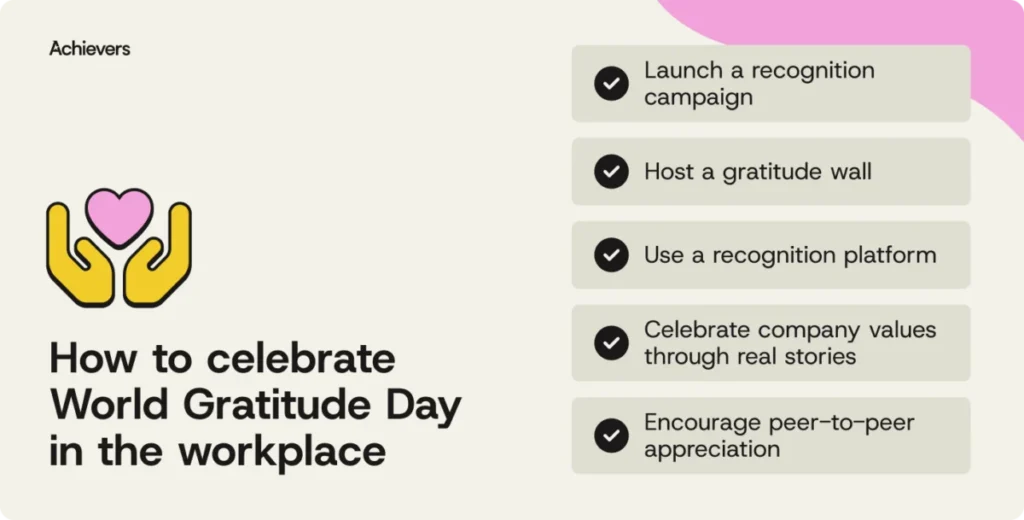
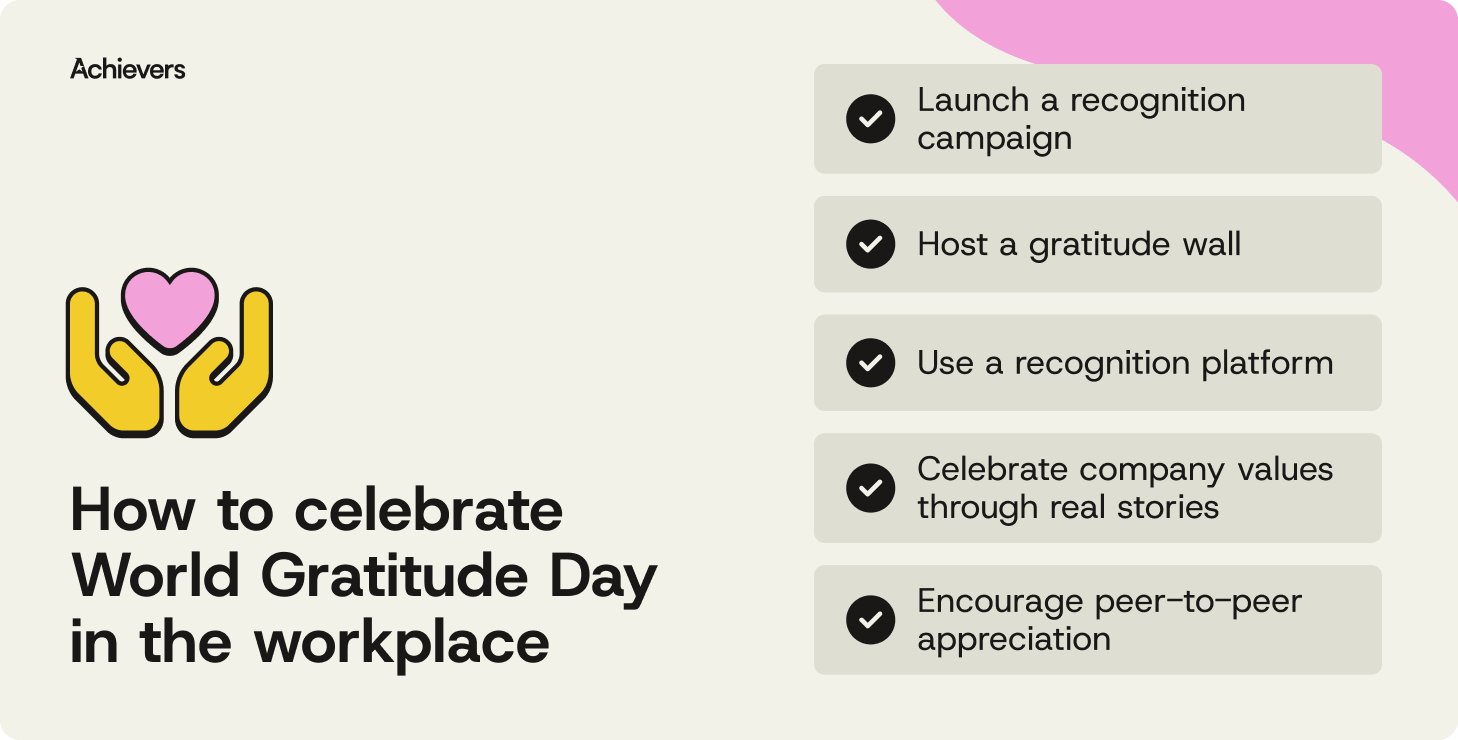
World Gratitude Day serves as an excellent springboard for organizations to launch or reinvigorate their recognition initiatives. Here are enriched examples of ways companies can celebrate and, crucially, embed gratitude into their daily operations:
- Launch a Targeted Recognition Campaign: Initiate a simple, high-visibility campaign encouraging widespread participation in peer-to-peer recognition. This could involve an internal communications blitz with automated prompts, ready-made templates, or specific themes (e.g., "Teamwork Tuesday," "Innovation Spotlight"). The goal is to lower the barrier to entry, making it exceptionally easy for employees to highlight colleagues who exemplify company values or go above and beyond. By making recognition a streamlined process, organizations ensure higher participation rates and a broader impact.
- Host a Digital or Physical Gratitude Wall: Create a dedicated shared space for employee appreciation. This could manifest as a social-style feed within an intranet or recognition platform, allowing mobile-friendly posting from anywhere. Alternatively, a physical "gratitude wall" in common areas with sticky notes or cards can be highly effective, especially for hybrid or in-office teams. Such initiatives provide a visible testament to collective appreciation, allowing everyone to see and feel the positive impact of their work and the work of their colleagues.
- Celebrate Company Values Through Real Stories: Move beyond abstract definitions of values by spotlighting concrete moments where employees have brought them to life. Share these narratives through internal newsletters, team meetings, or company-wide announcements. For instance, if "innovation" is a core value, highlight a team member whose creative solution saved resources or improved a process. These stories not only make individuals feel genuinely seen and appreciated but also subtly reinforce desired behaviors, guiding the culture and performance in a positive direction.
- Empower Managers with Comprehensive Gratitude Toolkits: Managers are pivotal in shaping employee experience. Equip them with practical resources such as prompts for meaningful recognition, customizable message templates, and small nudges or reminders for consistent acknowledgment. Providing real-time insights into team recognition patterns can also help managers identify gaps and opportunities. Investing in manager enablement ensures that recognition becomes a consistent practice, building trust and fostering stronger manager-employee relationships, which are critical for engagement and retention.
- Encourage Peer-to-Peer Appreciation: Recognition should not be solely top-down. Establish and promote mechanisms for teammates to appreciate each other for their collaboration, support, and even small daily wins. Non-monetary appreciation, such as a heartfelt message, a public shout-out, or a small token of gratitude, can be incredibly impactful. When appreciation is quick, personal, and visible to others, it significantly boosts morale and reinforces a culture of mutual support.
- Leverage Employee Recognition Platforms: Integrate specialized recognition tools to streamline and amplify gratitude initiatives. Modern platforms support recognition in the moment, across any device, offering features like automated nudges, social feeds, and analytics. These tools make appreciation simple, consistent, and accessible to everyone, transforming World Gratitude Day from a one-off event into the genesis of a sustainable, year-round recognition habit.
Best Practices for Cultivating Sustainable Workplace Gratitude
To ensure that the spirit of World Gratitude Day extends beyond a single observance, organizations should adopt several best practices for embedding gratitude into their daily operations:
- Make it Frequent and Consistent: Sporadic recognition loses its impact. Establish routines for regular appreciation, whether daily, weekly, or monthly.
- Be Specific and Sincere: Generic "good job" messages are less effective. Detail what the employee did, why it mattered, and what impact it had. Authenticity is key.
- Tie Recognition to Company Values: Connect acts of appreciation directly to organizational values to reinforce desired behaviors and cultural norms.
- Promote Inclusivity: Ensure that recognition opportunities are available and visible to all employees, regardless of their role, tenure, or location.
- Train Leaders and Managers: Provide ongoing training for managers on how to effectively recognize their teams and foster a grateful environment.
- Measure and Adapt: Use data from recognition platforms and employee surveys to understand what works best and continuously refine your gratitude strategies.
- Lead by Example: Senior leadership must visibly and consistently demonstrate gratitude, setting the tone for the entire organization.
The Profound Impact of Gratitude on Performance and Well-being
The relationship between gratitude and performance at work is multi-faceted and deeply impactful. When gratitude is a consistent element of the workplace experience, it manifests in several positive ways:
- Increased Motivation and Drive: Feeling appreciated fuels intrinsic motivation, encouraging employees to strive for excellence and take ownership of their work.
- Enhanced Problem-Solving and Creativity: A positive work environment, nurtured by gratitude, reduces stress and fosters psychological safety, allowing employees to be more open to new ideas and innovative solutions.
- Improved Resilience: Employees who feel valued are better equipped to handle challenges and setbacks, demonstrating greater resilience in the face of adversity.
- Better Decision-Making: A sense of well-being, often a byproduct of a grateful culture, can lead to clearer thinking and more effective decision-making.
- Stronger Customer Relationships: Engaged and appreciated employees are more likely to deliver exceptional customer service, leading to higher customer satisfaction and loyalty.
- Reduced Burnout: Regular recognition acts as a buffer against burnout, reminding employees that their efforts are noticed and valued, thereby sustaining their energy and commitment.
Beyond September 21: Embedding Gratitude as a Core Cultural Pillar
World Gratitude Day is an invaluable moment for organizations to pause, reflect, appreciate, and reset their approach to employee engagement. However, its true, lasting impact hinges on what transpires after September 21, once the immediate celebration fades and teams revert to their daily routines. This period represents a significant opportunity for leaders and HR teams to leverage the day’s momentum as a catalyst.
The challenge, and the opportunity, lies in transforming a singular observance into a continuous practice. HR departments, in collaboration with managers, can utilize the awareness generated by World Gratitude Day to build and reinforce the habits that integrate gratitude into the everyday employee experience. This involves consistently noticing exceptional work, articulating specific appreciation for it, and consciously reinforcing the behaviors that enable individuals to perform at their highest potential.
At organizations like Achievers, which specialize in employee engagement and recognition solutions, the transformative power of consistent recognition is a well-documented reality. Their experience consistently demonstrates that when employees genuinely feel seen, heard, and appreciated, the entire organizational ecosystem functions more effectively. It fosters a virtuous cycle where positive reinforcement leads to higher engagement, which in turn drives better performance, ultimately contributing to a more resilient, innovative, and human-centric workplace culture.
The 2026 Engagement and Retention Report serves as a clear call to action. World Gratitude Day offers a powerful, globally recognized platform to begin answering that call, not just for a day, but for the sustained well-being and success of organizations and their people throughout the year and beyond.