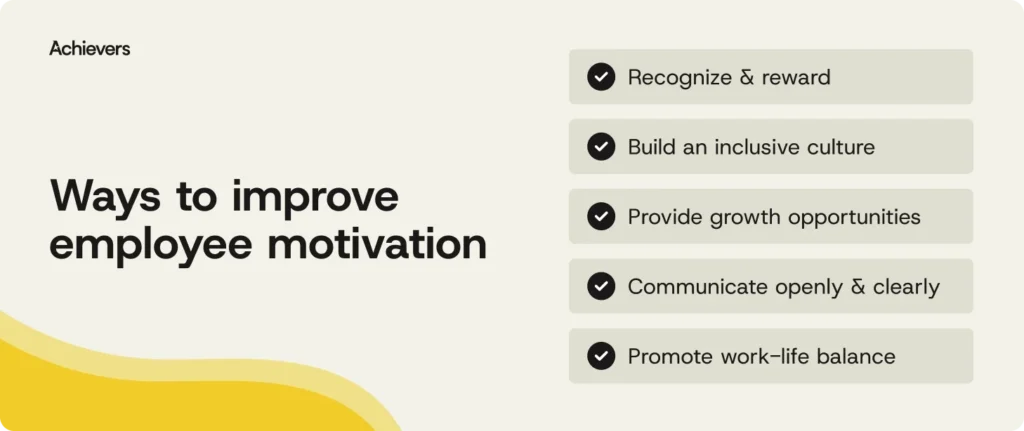
Employee motivation serves as the indispensable catalyst for organizational performance, particularly within the dynamic landscape of mid-market companies where operational efficiency and strategic investment are paramount. Unlike their larger counterparts, mid-market organizations often operate with leaner teams and closely scrutinized budgets, leaving minimal margin for error in talent management strategies. Misdirected efforts in fostering motivation not only impede momentum but directly undermine critical business outcomes, including productivity, employee retention, and overall return on investment (ROI). The challenge is exacerbated by the ephemeral nature of motivational drivers; what resonates with employees today may quickly become obsolete tomorrow. For leaders navigating the complexities of growth, market fluctuations, and finite resources, a decline in employee engagement is more than a fleeting concern—it represents a significant, unquantifiable risk that demands immediate and strategic intervention. Recent findings from Gallup underscore this precarious situation, revealing that U.S. employee engagement has receded to a mere 31%, a stark indicator that organizational vitality can diminish rapidly if proactive measures are not consistently adopted and adapted. This critical juncture necessitates the exploration of practical, scalable motivation strategies specifically tailored for mid-market organizations, enabling leaders to achieve measurable impact without introducing undue operational complexity.
At its core, employee motivation encompasses the commitment, energy, and creative input individuals consistently bring to their roles. In the context of mid-market organizations, this commitment directly correlates with team performance, impacting productivity, adaptability, and the capacity for organic growth without the immediate necessity of expanding headcount. The encouraging news for business leaders is that motivation is not an elusive or random phenomenon; rather, it is a cultivable asset, nurtured through a synergistic blend of robust support systems and consistent recognition. While traditional motivators such as salary increases and promotions retain their significance, contemporary workforces place equal, if not greater, value on factors like flexible work arrangements, transparent career development pathways, and pervasive, everyday recognition. These elements are crucial for developing motivation strategies that can scale effectively as the business expands, ensuring sustained engagement. A highly motivated workforce translates directly into heightened engagement, superior productivity, and a significantly improved retention rate. The process of cultivating such a workforce need not be a speculative endeavor. By thoughtfully integrating recognition, professional growth opportunities, and a genuine commitment to employee well-being, mid-market organizations can forge environments where employees feel genuinely valued and empowered, all without placing undue strain on their often-lean human resources and people teams. The subsequent sections delve into actionable strategies designed to cultivate and sustain this vital organizational asset.
The Shifting Paradigm: Understanding Employee Motivation in the 21st Century
The concept of employee motivation has undergone a profound evolution over the past few decades. Historically, extrinsic motivators, primarily financial incentives and hierarchical promotions, dominated organizational thinking. The industrial era model largely viewed employees as cogs in a machine, with output directly tied to monetary reward. However, the rise of the knowledge economy and the increasing understanding of human psychology in the workplace have brought intrinsic motivators to the forefront. Pioneers like Frederick Herzberg distinguished between "hygiene factors" (which prevent dissatisfaction but don’t motivate, like salary and working conditions) and "motivators" (which actively drive satisfaction and performance, like achievement and recognition). This conceptual shift became even more pronounced with the digital age, increased connectivity, and the COVID-19 pandemic, which collectively reshaped employee expectations regarding work-life integration, purpose, and psychological safety. Today, a holistic approach that balances both intrinsic and extrinsic drivers is considered essential.
Key Pillars for Cultivating Sustainable Motivation in Mid-Market Firms
Successful motivation strategies for mid-market firms must be agile, impactful, and easily integrated into existing operations. They are built upon several interconnected pillars:
1. Fostering a Culture of Appreciation and Belonging Through Recognition
Recognition stands as one of the most potent, yet frequently underutilized, tools in the motivational arsenal. When employees perceive their contributions as valued and acknowledged, their engagement levels surge, productivity improves, and their propensity to remain with the organization significantly increases. For mid-market entities, the efficacy of recognition programs hinges on their simplicity and frequency, crucially designed to minimize administrative overhead. This often involves implementing intuitive peer-to-peer recognition systems, equipping managers with accessible tools for timely acknowledgement, and offering rewards that genuinely resonate with the diverse preferences of the workforce.
Empirical data consistently supports the power of recognition. The Achievers Workforce Institute’s (AWI) State of Recognition Report indicates that employees who receive recognition at least once a month are three times more likely to trust their managers and two and a half times more likely to perceive their leaders as effective. This illustrates a direct correlation between consistent recognition and the cultivation of trust, which, in turn, fortifies performance and nurtures a workplace culture where individuals are inspired to deliver their utmost. Furthermore, a study by Deloitte found that organizations with strong recognition programs have 31% lower voluntary turnover rates. The implication is clear: limiting recognition to annual performance reviews diminishes its motivational impact, transforming it into a bureaucratic formality rather than a dynamic driver of engagement. Effective recognition programs seamlessly integrate into daily operations, celebrating both large achievements and incremental progress, thus reinforcing desired behaviors and organizational values.

Beyond individual recognition, the broader company culture exerts a profound influence on employee motivation. A workplace ethos founded on principles of trust, mutual respect, and genuine belonging provides a compelling reason for employees to remain engaged and contribute their best. When individuals understand how their daily tasks contribute to the overarching purpose and mission of the company, intrinsic motivation naturally flourishes. Public acknowledgement of achievements, particularly when linked to core company values, serves to concretize these values, illustrating how everyday actions contribute to a larger, shared objective. Peer-to-peer recognition amplifies this effect, creating a positive ripple across teams and fostering a collective sense of achievement and mutual support. Conversely, if cultural values exist merely as decorative statements on office walls, they fail to inspire, becoming superficial rather than foundational elements of the employee experience.
2. Investing in Growth and Development: Charting Clear Career Pathways
A significant motivator for employees is the demonstrable commitment of their organization to their professional future. Even within constrained budgets and lean team structures characteristic of mid-market firms, providing clear avenues for skill development and career progression can dramatically enhance engagement and motivation, concurrently reducing the likelihood of employees seeking opportunities elsewhere. The perception of a viable growth trajectory instills confidence and a sense of long-term investment.
Growth opportunities are not exclusively tied to substantial financial outlays. Mentorship programs, which pair experienced employees with those seeking development, offer invaluable guidance and knowledge transfer at minimal cost. Cross-functional projects provide employees with diverse experiences, broaden their skill sets, and enhance their understanding of the broader business operations. Short, targeted training modules, often available through online platforms, can be highly effective in addressing specific skill gaps without requiring extensive time or financial commitments. The fundamental driver here is the genuine intent of the company to invest in employee development, moving beyond mere rhetorical commitments outlined in employee handbooks to tangible, accessible opportunities for advancement. Research by LinkedIn Learning indicates that 94% of employees would stay at a company longer if it invested in their learning and development. This highlights that growth isn’t just about climbing a ladder; it’s about continuous learning and the acquisition of new capabilities that empower employees to remain relevant and valuable.
3. Clarity, Autonomy, and Trust: Empowering the Workforce
Ambiguous communication is a potent inhibitor of motivation. Employees require explicit understanding of their roles, performance expectations, and how their individual contributions align with broader organizational objectives. Clarity fosters confidence, and confidence, in turn, fuels motivation. However, effective communication transcends periodic corporate announcements or quarterly town halls. It necessitates regular check-ins, fostering open dialogue, and establishing robust feedback mechanisms that flow both horizontally and vertically. Tools such as pulse surveys and Voice of Employee (VoE) platforms enable leaders to actively listen, prioritize concerns, and implement rapid, data-driven interventions, circumventing protracted approval processes or complex change management initiatives. If communication remains a top-down monologue, it inevitably disengages the workforce, eroding trust and commitment.
Complementing clear communication is the principle of autonomy. Micromanagement is a direct route to employee disengagement. Individuals are significantly more motivated when they possess a sense of ownership over their work, are empowered to make decisions within defined parameters, and feel trusted by their leadership. Autonomy cultivates accountability and provides the necessary space for employees to optimize their performance. This empowerment does not imply an absence of managerial oversight; rather, it redefines the managerial role. Managers should act as coaches and enablers, providing guidance, support, and clear boundaries, intervening only when necessary. This approach mirrors the role of a spotter in a gym: present for support and safety, but not constantly handling the weights for the lifter. A study by the Harvard Business Review highlighted that companies that empower employees with autonomy see higher job satisfaction and lower turnover rates.
4. Prioritizing Well-being and Meaningful Rewards
The detrimental impact of burnout on employee motivation is well-documented. Employees who feel overwhelmed, overworked, and stretched thin exhibit reduced engagement, diminished productivity, and a higher propensity to seek employment elsewhere. Implementing flexible work arrangements, offering comprehensive wellness benefits, and providing accessible mental health support convey a unequivocal message that employee well-being is a core organizational priority. This commitment is not merely altruistic; it is a strategic imperative for sustaining a healthy, productive workforce.
Achieving work-life balance does not necessarily demand radical policy overhauls. It can be instantiated through practical measures such as flexible working hours, realistic workload management, and access to wellness programs (e.g., discounted gym memberships, stress management workshops, or mindfulness resources). The overarching objective is to cultivate an environment where employees can channel their full energy into their work, rather than operating from a state of chronic exhaustion. Furthermore, while foundational benefits like health coverage and retirement plans are expected, their motivational impact is often limited. To truly inspire, rewards must transcend generic offerings and resonate on a personal level. This could involve bespoke incentive programs, such as wellness stipends, customizable perks, or a points-based reward system that allows employees to choose items or experiences they genuinely value. The critical factor is aligning incentives with the diverse preferences and values of the workforce, ensuring that rewards are perceived as meaningful rather than arbitrary. Offering incentives that are not desired by employees is akin to generating organizational "noise" rather than genuine motivation.
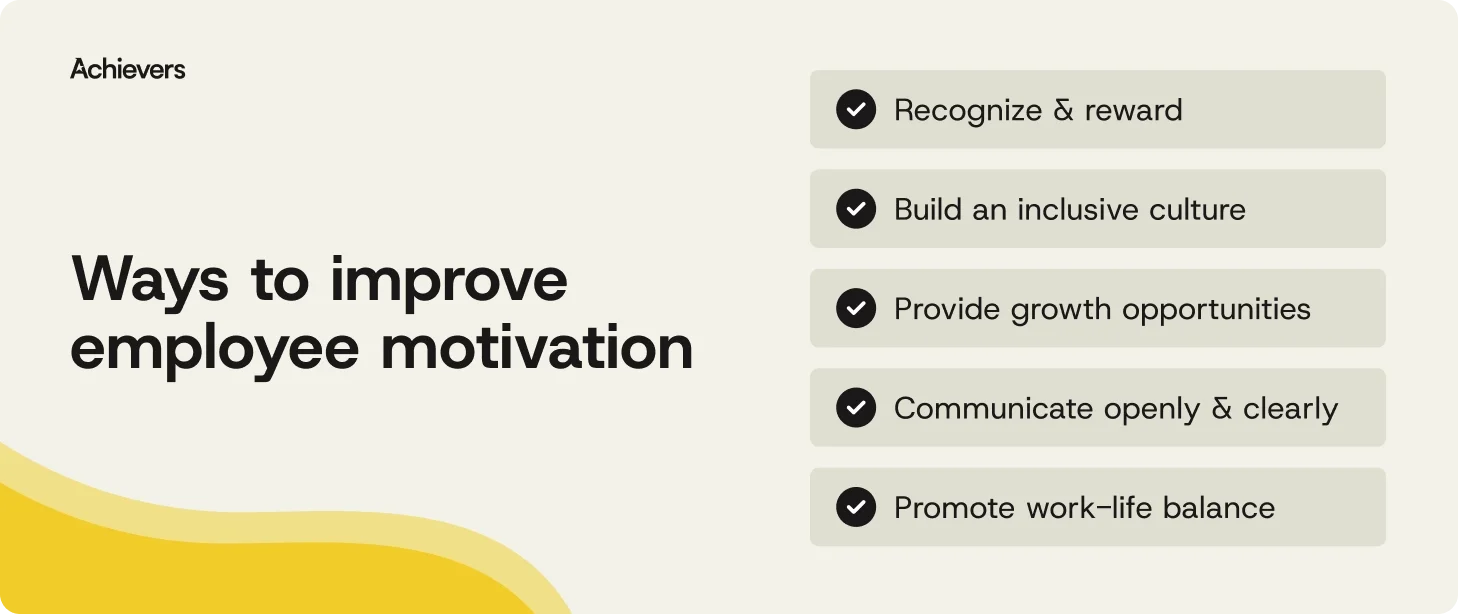
5. The Power of Proactive Feedback and Responsive Action
Motivation rapidly erodes when employees feel their voices are unheard. However, mere listening is insufficient. The true catalyst for trust and sustained motivation lies in demonstrably acting upon employee feedback. In the lean and agile environment of mid-market organizations, closing the feedback loop swiftly and transparently builds trust, which is often the decisive factor in retaining valuable talent versus incurring the significant costs associated with employee turnover and the arduous process of restarting recruitment.
Establishing robust channels for feedback—be it through regular one-on-one meetings, anonymous surveys, or suggestion boxes—is only the first step. The subsequent, and more crucial, step involves analyzing this feedback, communicating actionable plans, and demonstrating tangible changes based on employee input. This iterative process reinforces to employees that their perspectives are not only heard but valued and instrumental in shaping the organizational environment. Companies that actively solicit and act on feedback consistently report higher employee satisfaction and engagement.
Intrinsic and Extrinsic Drivers: A Symbiotic Relationship
The strategies outlined above effectively leverage both intrinsic and extrinsic motivational factors.
- Intrinsic Motivation: This emanates from an individual’s internal drive, fueled by the inherent satisfaction derived from meaningful work. It encompasses the joy of problem-solving, the fulfillment of achieving personal milestones, or the sense of contribution to a collective team triumph. This form of motivation is highly sustainable and often persists even in the absence of immediate external rewards. Strategies like providing growth opportunities, fostering autonomy, and linking work to a larger purpose directly tap into intrinsic motivation.
- Extrinsic Motivation: This is propelled by external factors, including recognition, tangible rewards, and various incentives. A timely expression of gratitude, a performance bonus, or a points-based reward system can significantly bolster extrinsic motivation. While extrinsic motivators can provide immediate boosts, their long-term efficacy is often tied to their perceived fairness, relevance, and consistency. When poorly executed, extrinsic rewards can quickly become expected entitlements rather than motivational tools.
The symbiotic relationship between intrinsic and extrinsic motivation is crucial. Intrinsic motivation provides the enduring foundation, while extrinsic motivators act as powerful accelerators and reinforces. The link between motivation and engagement is straightforward: motivation explains why employees undertake actions and maintain effort, while engagement reflects how consistently and thoroughly they execute those actions. Motivation is the initial spark; engagement is the steady, sustained flame that propels work forward.
The Quantifiable Impact of Employee Motivation on Business Outcomes
The strategic investment in employee motivation directly translates into the critical business outcomes that mid-market leaders prioritize: enhanced performance, accelerated execution, and reduced employee turnover, all without necessarily incurring prohibitive additional costs. The power of recognition, as a primary motivator, is particularly well-supported by data. According to the AWI’s State of Recognition Report, organizations with effective recognition programs exhibit:
- Higher Employee Engagement: Consistently recognized employees are more invested in their work and the company’s success.
- Improved Retention: A sense of appreciation significantly reduces the likelihood of employees seeking opportunities elsewhere, mitigating the substantial costs associated with recruitment and training new hires (which can range from 50% to 200% of an employee’s annual salary).
- Increased Productivity: Motivated employees are more focused, efficient, and proactive, contributing to higher output and quality of work.
- Stronger Organizational Culture: Recognition reinforces positive behaviors and values, creating a more cohesive and supportive work environment.
- Enhanced Innovation: Employees who feel valued and trusted are more likely to take calculated risks and propose innovative solutions.
Furthermore, the consistency of recognition acts as an informal health monitor for the workplace. A decline in recognition typically precedes a drop in engagement and trust, which are critical precursors to increased retention risk. Conversely, a robust, continuous recognition framework helps identify and address potential issues before they escalate, preserving institutional knowledge and maintaining team cohesion. For mid-market organizations, where the loss of even a few key personnel can have a disproportionate impact, proactive motivation strategies are not merely beneficial but essential for long-term stability and competitive advantage.
Companies like Achievers provide scalable solutions that transform daily recognition into measurable outcomes, offering the sophistication typically found in enterprise-level platforms with the user-friendliness and cost-effectiveness required by mid-sized teams. By integrating recognition into everyday workflows, providing rewards that genuinely resonate with employees, and delivering real-time insights into employee sentiment, such platforms enable leaders to cultivate motivation in ways that are both lasting and impactful. The ultimate result is a thriving organizational culture where every employee feels seen, heard, and consistently supported, fostering an environment where energy, creativity, and collaboration naturally flourish, propelling the business forward.