
The modern HR technology stack, a seemingly robust collection of engagement surveys, performance reviews, recognition platforms, and development planning tools, often appears comprehensive on paper. Supported by an HRIS that acts as a central repository, each component is designed to address critical aspects of employee management. However, the critical flaw lies not within the individual tools themselves, but in the chasm that exists between them. A subtle dip in employee engagement, for instance, might never translate into a proactive conversation during a manager’s one-on-one. Similarly, the recognition of a high-performing employee could fade, failing to connect with the burgeoning retention risk that silently builds beneath the surface. The vital signals are present, but they remain isolated, never converging to paint a complete, actionable picture.
This pervasive issue, termed the "disconnected data problem," is more than just an operational inconvenience; it directly impacts an HR department’s ability to confidently address executive inquiries, proactively identify potential employee departures, and dedicate valuable time to strategic initiatives rather than manual data reconciliation. The challenge is not a deficit of data, nor is it necessarily a need to overhaul existing technological investments. The imperative is to foster interoperability, enabling these disparate systems to communicate and share insights. Understanding the silent financial drain of disconnected data and the transformative benefits of integrated people analytics is crucial for modern organizations.
Defining Disconnected People Data
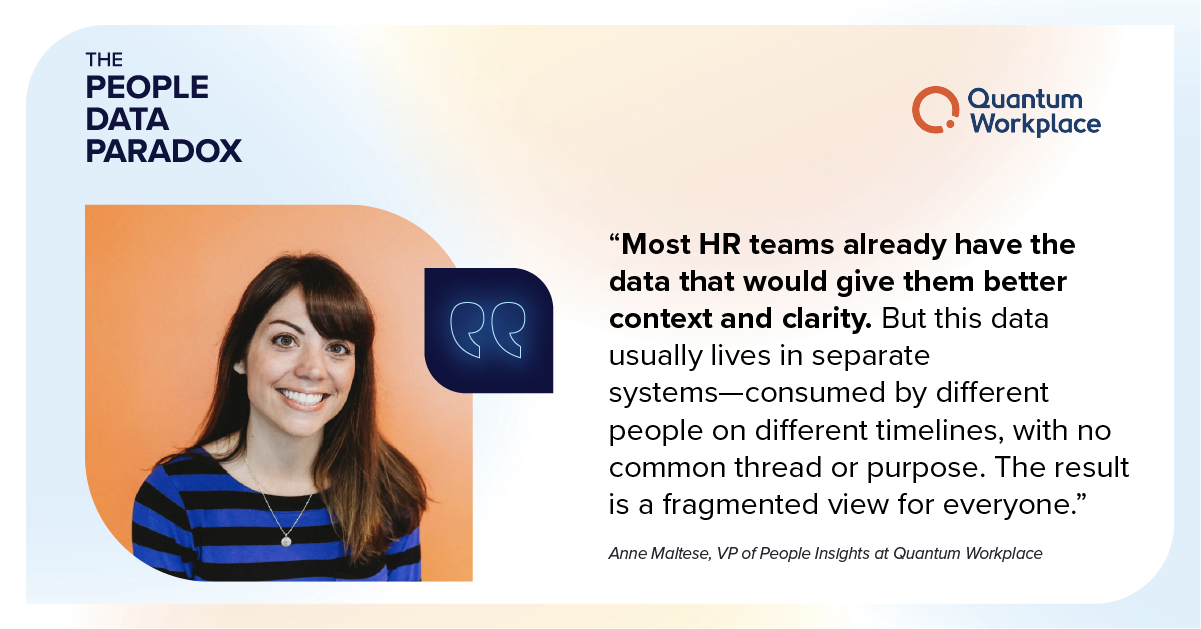
At its core, disconnected people data describes a scenario where critical employee information—spanning engagement surveys, performance appraisals, recognition activities, individual development plans, and HRIS records—resides in siloed systems. These platforms, often implemented at different times and from various vendors, were rarely designed with seamless integration in mind. Each system captures a segment of the employee experience, but no single platform offers a holistic view of team dynamics and individual well-being. This fragmentation forces HR professionals to manually aggregate scattered data points, attempting to construct a coherent narrative that can inform strategic decisions, a process that is both time-consuming and prone to oversight.
The Escalating Cost of Fragmented People Data
The financial ramifications of disconnected people data are substantial, manifesting as lost productivity, preventable employee turnover, and missed opportunities for talent optimization. For a mid-sized company with 2,500 employees, the annual cost attributed to under-equipped managers and unaddressed retention risks can approach an astounding $4 million. This figure underscores a critical disconnect: the inability to leverage data to empower managers and retain top talent.
The familiar frustration of extracting reports from multiple, disparate systems to answer a single executive question is a direct consequence of this fragmentation. While the necessary insights are often embedded within the data, accessing them in a clear, timely, and reliable manner becomes an arduous task. This data gap is not a reflection of individual HR capabilities or a simple technological glitch; it represents a systemic issue within organizational infrastructure. Research consistently highlights this challenge: HR leaders typically utilize between two to four HR solutions from different providers, yet a significant minority, around 39%, report that these systems are not effectively integrated. The data volume continues to grow, but the clarity and actionable intelligence derived from it lag considerably.
This fragmentation manifests in several critical areas, each with a tangible impact on organizational performance:

1. The Erosion of Managerial Effectiveness
Managers serve as the primary conduit for employee engagement and performance. When managers are equipped and supported, their teams flourish. Conversely, their struggles inevitably cascade throughout their reporting structures. The root cause of managerial deficiency is often not a lack of inherent talent, but rather an absence of the necessary resources and insights to excel. The average manager shoulders approximately 51% more responsibility than is realistically manageable, and a concerning 39% have never received formal leadership training.
The business consequences are stark. Managers within the top decile of leadership effectiveness generate twice the net revenue of their less effective counterparts. This performance disparity is not merely a developmental concern but a significant, ongoing performance deficit within organizations. The inability to provide managers with integrated data on their team’s engagement, performance trends, and developmental needs cripples their ability to provide targeted support and foster high performance. Without a clear view of these interconnected factors, managers are left to navigate complex team dynamics with incomplete information, leading to suboptimal outcomes.
2. The Blind Spot for High-Potential Talent
High performers are not just valuable contributors; they are disproportionately so, generating between 400% to 800% more output than an average employee. Despite this outsized impact, a concerning 57% of organizations lack a formal process for identifying these individuals. In the absence of connected data, talent identification often relies on subjective factors like visibility and advocacy, leading to situations where the employees generating the most significant impact are overlooked. Each quarter of unacknowledged contribution represents a missed opportunity for an organization to fully leverage its most impactful talent.
When data sources are fragmented, identifying high-potential employees becomes a matter of who is nominated or who has the right advocates, rather than an objective assessment of their contributions and potential. Engagement scores might be high, performance reviews consistently excellent, and development goals actively pursued, but if these indicators are not synthesized, the holistic picture of an employee’s potential remains incomplete. This can lead to valuable employees feeling undervalued or overlooked, increasing their susceptibility to external opportunities.
3. The Unseen Risk of Employee Attrition
The decision to resign is rarely sudden; it is typically the culmination of months of mounting dissatisfaction. Warning signs—a decline in survey sentiment, a cessation of development discussions, or a reduction in recognition—are often present but, in isolation, fail to trigger an alert. When viewed collectively, however, these signals can paint a clear narrative of impending departure.
The cost of replacing an employee can range from 50% to 200% of their annual salary. Moreover, research indicates that a significant portion of departing employees believe their exit could have been prevented. The crucial predictive data often exists within an organization’s systems, but its fragmentation prevents early detection and intervention. A dip in engagement scores, for example, might go unnoticed by managers if it’s not cross-referenced with recent performance feedback or any changes in recognition frequency. This lack of integration means that critical retention risks are often identified only after the employee has already made the decision to leave.
The Cumulative Financial Impact of Data Fragmentation
Consider an organization with 2,500 employees and 250 managers. If 50 of these managers are inadequately equipped, and 10% of their direct reports consequently disengage, the annual loss in productivity alone could amount to $1.7 million.
Now, factor in retention risks. If 10 high performers depart due to a lack of recognition or development opportunities, the cost of replacing them at double their salary adds another $2 million. This brings the total financial impact of disconnected data to nearly $4 million annually, a figure that does not even account for the broader inefficiencies arising from misaligned efforts, slow skill development, and unrecognized potential. This substantial financial drain highlights the critical need for a more integrated approach to people data management.
The Transformative Power of Connected Data
For years, the prospect of connecting disparate data sources was a resource-intensive undertaking, often beyond the practical capacity of many HR departments. However, advancements in artificial intelligence are now enabling continuous analysis across engagement, performance, development, and recognition data, juxtaposed against HRIS records and external benchmarks. This allows for the identification of previously invisible patterns and trends.
The fundamental shift is not about accumulating more data, but about finally deciphering the insights that existing data has been attempting to convey. When these signals are interconnected, organizations can begin to answer the pressing questions that concern HR and executive leadership:
- Which managers are at risk of burnout or disengagement, and how is it impacting their teams? Connected data can identify subtle shifts in manager sentiment and team performance, allowing for proactive support.
- Who are the high-potential employees whose contributions are not being fully recognized or developed? By correlating performance, engagement, and development data, hidden talent can be surfaced.
- What are the leading indicators of flight risk for critical talent, and what interventions can be implemented? Integrating engagement dips with performance trends and recognition patterns can provide early warnings.
- How do development initiatives correlate with actual performance improvements and engagement levels? Connected data allows for a clear understanding of the ROI of development programs.
- Are recognition programs effectively driving desired behaviors and improving morale across the organization? By linking recognition data with engagement and performance metrics, the impact can be quantified.
Transforming Fragmented Data into Actionable Talent Insights
The true value of unified insights lies in their ability to drive meaningful change. Quantum Workplace offers a solution that connects engagement, performance, development, and recognition data into a single, cohesive view. This integration empowers leaders to move beyond piecing together fragmented snapshots and gain a clear understanding of their teams’ realities. AI-driven insights highlight the patterns obscured by siloed systems, and each finding is accompanied by clear, prioritized next steps, contextualized by organizational priorities and benchmarks, and delivered directly to leaders within their workflow.
Connected data empowers HR teams to:
- Proactively identify and address managerial effectiveness gaps: By providing managers with real-time insights into their team’s engagement and performance, and highlighting areas where they might need support or training.
- Develop targeted retention strategies: By pinpointing employees who exhibit multiple risk factors for departure, allowing HR to intervene with personalized support and development opportunities.
- Optimize talent identification and development processes: By creating a more objective and data-driven approach to identifying high-potential employees and tailoring development plans to their specific needs and the organization’s future requirements.
- Measure the impact of HR initiatives: By providing clear metrics on how engagement, performance, and recognition programs influence overall organizational health and productivity.
- Foster a culture of continuous improvement: By enabling data-informed decision-making at all levels, from individual managers to executive leadership, driving a more agile and responsive organizational strategy.
The journey from fragmented data to connected talent insights is no longer an aspirational goal but an achievable necessity. Organizations that embrace this integration will be better positioned to unlock the full potential of their workforce, mitigate critical risks, and achieve sustained strategic success in an increasingly competitive landscape. The silent drain of disconnected data can be transformed into a powerful engine for growth and employee well-being.