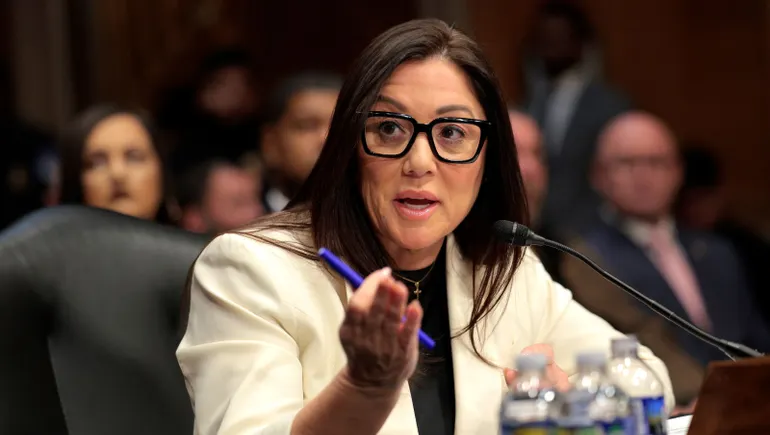
A scathing 90-page report released on September 3 by the U.S. Department of Labor’s Office of Inspector General (OIG) has unveiled a "recurring pattern" of workplace misconduct by former Secretary of Labor Lori Chavez-DeRemer and several top aides. The extensive investigation, launched in early January, meticulously details allegations ranging from the creation of a hostile work environment to an inappropriate relationship with a security team member, flagrant disregard for travel regulations, unauthorized alcohol consumption, misuse of subordinates for personal tasks, and the improper acceptance of gifts. The revelations paint a troubling picture of leadership at the highest levels of a critical federal agency, culminating in Chavez-DeRemer’s resignation in April amidst the swirling controversy.
Chronology of a Scandal
The timeline of events leading to the OIG’s damning findings began to unfold in early 2023. Lori Chavez-DeRemer, a prominent figure, had been confirmed as the Secretary of Labor in March 2023, stepping into one of the most significant Cabinet roles responsible for enforcing and administering laws governing workplace activities for more than 150 million workers. Her tenure, however, proved to be remarkably short and fraught with ethical challenges.
Just months after her confirmation, in early January, the OIG initiated a formal investigation following an anonymous complaint. This complaint, a crucial mechanism for accountability within federal agencies, alleged a litany of serious transgressions. It specifically implicated Secretary Chavez-DeRemer, her chief of staff, and her deputy chief of staff in fostering a hostile work environment. Furthermore, it raised concerns about an alleged inappropriate personal relationship between the Secretary and a member of her security detail, potential violations of travel regulations, alcohol consumption at DOL premises and during work hours, the assignment of personal tasks to direct reports, and the acceptance of gifts without adhering to the department’s stringent ethics policy.
As the investigation gathered momentum and the scope of the allegations became increasingly clear, the pressure on Secretary Chavez-DeRemer mounted. On April [specific date not provided, but inferring April 2023], she officially resigned from her position, citing the controversy as the primary reason. Her departure left a void at the helm of the Department of Labor, with former Deputy Secretary of Labor Keith Sonderling stepping in as acting secretary while his own confirmation process remains pending. The OIG continued its exhaustive probe, culminating in the public release of its comprehensive report on September 3, detailing the findings that substantiated many of the initial allegations.
The Role of the Department of Labor and Ethical Imperatives
The U.S. Department of Labor (DOL) plays a pivotal role in promoting the welfare of American wage earners, job seekers, and retirees, improving working conditions, advancing opportunities for profitable employment, and assuring work-related benefits and rights. The Secretary of Labor, as the head of this vital department, is entrusted with immense responsibility and is expected to uphold the highest standards of integrity, professionalism, and ethical conduct. Federal employees, especially those in leadership positions, are bound by a complex web of regulations designed to prevent conflicts of interest, ensure the proper use of government resources, and maintain a respectful and productive work environment. These include statutes like the Standards of Ethical Conduct for Employees of the Executive Branch, which explicitly prohibit the use of public office for private gain, the acceptance of gifts from prohibited sources, and the misuse of government property or official time. The OIG’s findings underscore a significant departure from these foundational principles.
An Investigation of Broad Scope and Depth
The OIG’s investigation was thorough, extending beyond just the former Secretary. It also scrutinized the conduct of her two chiefs of staff, the security team member allegedly involved in the inappropriate relationship, and the director of advance—a key individual responsible for planning the Secretary’s public appearances, events, and travel. To build a comprehensive picture, the DOL’s Office of Inspector General interviewed a substantial number of individuals, specifically 53 current and former DOL employees. These interviews were supplemented by an exhaustive review of more than 500 documents, images, and videos. The sheer volume of evidence collected and analyzed underscores the gravity and detail of the investigation. The report unequivocally stated that "a preponderance of the evidence substantiated multiple violations of DOL policy by all five former DOL officials who were subjects of this investigation." This legal standard, indicating that the evidence makes it more likely than not that the allegations are true, leaves little room for doubt regarding the findings.
The Pervasive Shadow of a Hostile Work Environment
One of the most disturbing findings of the OIG report was the pervasive "toxic, intimidating and humiliating" work environment fostered around Chavez-DeRemer, with her chief of staff and deputy chief of staff frequently cited as central figures in this culture. Thirty-eight witnesses provided consistent accounts of an atmosphere characterized by fear and disrespect.
Employees recounted instances where performance matters were openly discussed in front of other staff members, including discussions about "whether employees had cried" during performance-related meetings. Such practices are widely recognized as unprofessional and detrimental to employee morale and psychological safety. The report detailed "widespread fear and job insecurity" throughout the department, a direct consequence of perceived favoritism towards senior staff and a pattern of what employees termed "beatdowns." These "beatdowns" involved workers being severely berated for perceived performance issues, often publicly, creating a climate of anxiety where employees feared expressing concerns or making mistakes.
The bullying and intimidation extended to other key personnel. The director of advance, for instance, was implicated in aggressive behavior. Witnesses described one particularly unsettling incident where the director backed a career employee into a cubicle during a confrontational exchange over unpaid travel vouchers. Such actions not only violate basic professional courtesy but can also constitute workplace harassment, leading to significant stress, reduced productivity, and potential legal liabilities for the organization. A 2023 study by the Workplace Bullying Institute, for example, found that 30% of U.S. workers have directly experienced bullying, and another 21% have witnessed it, highlighting the widespread nature and damaging impact of such environments. For a federal agency, maintaining a respectful workplace is not just an ethical obligation but a legal one under various civil service protections and anti-discrimination laws.
Breaching Professional Boundaries: The Inappropriate Relationship
The OIG report delved deeply into the alleged inappropriate relationship between Secretary Chavez-DeRemer and a member of her protective detail, interviewing 35 witnesses on this sensitive matter. These witnesses described interactions that they viewed as "inconsistent with the professional boundaries ordinarily expected between a Cabinet-level protectee and a protective-detail agent." Such boundaries are critical in security contexts, as they ensure the agent’s focus remains solely on the protectee’s safety and prevents any perception of favoritism or compromise of duties.
Employees observed the two individuals regularly exchanging text messages, often outside of work hours and concerning non-departmental matters, which raised flags about the nature of their communication. Descriptions included unusually informal interactions, an instance of a massage, and the use of sexual innuendo. Perhaps most damningly, the OIG obtained door lock records from hotels where the two had traveled. These records revealed "activity that appeared to indicate the two subjects spending at least portions overnight in the other’s room," providing concrete evidence of a relationship extending beyond professional bounds.
The impact of this relationship was not confined to the two individuals but directly affected other staff members and compromised official duties. During an official trip to Oregon, the Secretary reportedly requested a stop at an establishment featuring "partially nude dancers." She entered with the security member and her driver, and then gave her driver money to give to a performer. When the driver expressed hesitation, the security member allegedly intervened, instructing the driver to comply with the Secretary’s request. This incident not only placed a subordinate in an uncomfortable and potentially compromising position but also demonstrated a clear disregard for appropriate conduct during official travel. The report explicitly concluded that the relationship "interfered with the agent’s ability to perform his protective duties," a critical finding given the paramount importance of security for a Cabinet-level official. Such a breach of professional conduct can erode trust within the protective detail and raise serious questions about the integrity of the security operations.
Misuse of Public Resources and Ethics Lapses
Beyond the allegations of harassment and the inappropriate relationship, the investigation uncovered a pattern of misusing public resources and disregarding established ethics policies. These included:
- Improper Combination of Personal and Official Travel: Chavez-DeRemer was found to have improperly combined personal and official travel, blurring the lines between private expenses and taxpayer-funded trips. Federal regulations strictly govern travel expenses to prevent misuse of public funds.
- Violation of Vehicle Rental Policies: The former Secretary violated the department’s vehicle rental policies, indicating a lack of adherence to guidelines designed to ensure cost-effectiveness and accountability in transportation.
- Unauthorized Alcohol Consumption and Storage: Investigators found that Chavez-DeRemer regularly drank and stored alcohol on-site at the DOL without the proper approval. Federal agencies typically have strict policies regarding alcohol on premises, often requiring special authorization for events, to maintain a professional environment and ensure employee safety.
- Directing Subordinates to Perform Personal Tasks: The report detailed instances where subordinates were directed to perform personal tasks, a classic example of using one’s official position for private gain, which is explicitly prohibited by federal ethics rules.
- Improper Acceptance of Gifts: Chavez-DeRemer accepted gifts, such as tickets to a rodeo and an alligator-hide wallet, without going through the proper ethics channels. Federal employees are generally prohibited from accepting gifts from prohibited sources or gifts given because of their official position, with strict reporting requirements for any exceptions. The failure to declare or seek approval for such gifts undermines transparency and creates the potential for perceived undue influence.
These violations collectively demonstrate a systemic disregard for the ethical framework designed to govern the conduct of federal officials, particularly those in high-profile leadership roles.
OIG Recommendations: Charting a Path Forward
In light of its extensive findings, the OIG issued several critical recommendations aimed at preventing similar misconduct in the future and strengthening ethical governance within the Department of Labor:
- Establish Structural Independence for the Division of Protective Operations: This recommendation seeks to ensure that the security detail responsible for protecting senior officials operates with greater autonomy and is less susceptible to undue influence or pressure from those it protects. This could involve reporting lines outside the immediate office of the Secretary, enhancing accountability and professionalism.
- Establish Independent and Recurring Oversight of DOL Senior Official Travel: To prevent future abuses of travel privileges and misuse of public funds, the OIG recommended a robust, independent system for reviewing and approving travel plans for senior officials. This would add an additional layer of scrutiny beyond internal departmental approvals.
- Establish or Revise a Department-Wide Policy Regarding Relationships Between Supervisors and Subordinates: This is a crucial recommendation in the wake of the inappropriate relationship findings. A clear, comprehensive policy would define professional boundaries, address potential conflicts of interest, and provide guidelines for reporting and addressing such relationships, especially when one party holds a position of authority.
- Mandate Training on Inappropriate Workplace Relationships: Beyond policy, mandatory training would educate all employees, particularly supervisors, on what constitutes an inappropriate relationship, its potential ramifications, and the importance of maintaining professional boundaries. Such training is a proactive measure to foster a culture of respect and ethical conduct.
- Strengthen Whistleblower Protections: The entire investigation was initiated by an anonymous complaint, underscoring the vital role of whistleblowers in uncovering misconduct. Strengthening protections would encourage employees to come forward with concerns without fear of retaliation, thereby reinforcing accountability and transparency within the department.
These recommendations collectively aim to bolster the ethical infrastructure of the Department of Labor, ensuring that future leadership operates within a framework of accountability, transparency, and respect.
Broader Implications and Public Trust
The scandal surrounding former Secretary Chavez-DeRemer and her top aides carries significant implications, both for the Department of Labor and for public trust in government institutions. Internally, the detailed findings of a "toxic" work environment and widespread fear can have a lasting negative impact on employee morale, productivity, and retention. Rebuilding trust among staff and fostering a positive, respectful culture will be a significant challenge for the current and future leadership.
From a broader perspective, such high-profile ethical lapses at a Cabinet level erode public confidence in government. When leaders entrusted with safeguarding workers’ rights and promoting fair labor practices are found to be engaging in misconduct and misusing public resources, it sends a troubling message about accountability and integrity. This incident could lead to increased scrutiny for future Cabinet nominees and potentially prompt other federal agencies to review and strengthen their own ethics policies and oversight mechanisms.
The OIG’s report serves as a stark reminder that ethical conduct is not merely a suggestion but a fundamental requirement for public service. The swiftness of the investigation and the detailed nature of its findings, even after the Secretary’s resignation, underscore the federal government’s commitment to holding its officials accountable. As Keith Sonderling continues in his role as acting secretary, the Department of Labor faces the task of implementing the OIG’s recommendations and demonstrating a renewed commitment to ethical leadership and a healthy, respectful workplace culture.
HR Dive, which originally broke the news of Chavez-DeRemer’s resignation, attempted to reach her for comment through Think Big, the PR firm where she is now listed as a senior advisor. However, no response was received by press time, leaving her side of the story unaddressed in the public record. The findings of the OIG report, therefore, stand as the definitive account of the extensive misconduct that marked a tumultuous, brief tenure at the helm of a crucial U.S. federal agency.