The contemporary business landscape has evolved into a highly saturated and demanding environment where public perception is no longer a peripheral concern but a central pillar of corporate survival. As traditional advertising loses its efficacy in an era of skepticism, the role of public relations (PR) has shifted from simple media placement to the strategic cultivation of trust. According to the 2025 Edelman Trust Barometer, approximately 80% of consumers globally report that they trust the brands they currently use, suggesting that brand loyalty is increasingly predicated on consistent, clear, and relevant communication. This transition underscores a fundamental reality: modern PR is far more than the distribution of press releases; it is the art of turning expertise into visibility and values into meaningful global conversations.
The Strategic Framework of Effective Public Relations
A successful PR campaign is defined not by the volume of noise it generates, but by the resonance of its message. To achieve this, industry analysts identify several core components that must align to move the needle on public perception. The first is relevance, ensuring the story addresses a genuine societal trend or a specific audience concern rather than forcing a corporate agenda. This is followed by news value, which requires the information to be timely, surprising, or insightful enough to warrant editorial interest.
Credibility remains the most critical factor. In a digital ecosystem prone to misinformation, brands must support their claims with verified data, expert testimony, or transparent reporting. When these elements are combined with emotional resonance and strategic amplification—leveraging journalists, industry influencers, and community leaders—a PR initiative transcends simple marketing to become a cultural touchstone. For B2B organizations, this framework is essential for humanizing technical expertise and establishing authority within competitive sectors like HR Tech, AI, and Learning Management Systems (LMS).
Historical and Modern Benchmarks of PR Success
To understand the mechanics of high-impact public relations, one must examine the campaigns that redefined their respective industries. These examples illustrate the diverse tactics available to brands, ranging from purpose-led narratives to data-driven storytelling.
Purpose-Driven Narrative: The Dove and Patagonia Models
In 2004, Dove launched the "Campaign for Real Beauty," a movement that challenged the narrow aesthetic standards of the fashion and beauty industries. By 2024, the campaign had expanded into a massive global research initiative involving 33,000 participants across 20 countries. This longevity demonstrates how a purpose-led campaign can become a permanent brand platform if the organization remains committed to the underlying message.
Similarly, Patagonia’s 2011 "Don’t Buy This Jacket" Black Friday advertisement in The New York Times serves as a masterclass in counterintuitive PR. By explicitly telling consumers to avoid overconsumption, Patagonia reinforced its environmental credentials. While seemingly detrimental to short-term sales, the campaign built immense long-term brand equity by aligning with the values of an environmentally conscious consumer base.
Product Storytelling: Spotify and Airbnb
PR is often most effective when it empowers the customer to become the storyteller. Spotify Wrapped, launched in its current form in 2015, transformed proprietary listening data into a viral annual event. By 2023, the campaign engaged a record 227 million monthly active users. The brilliance of Wrapped lies in its personalization; it provides users with a social currency that they are eager to share, effectively turning millions of customers into brand ambassadors.

Airbnb followed a similar trajectory in 2016 with the launch of "Experiences." Rather than focusing on the logistics of home-sharing, the company pivoted its PR strategy to highlight the human element of travel—local expertise and community connection. This shift allowed Airbnb to generate stories around people and transformations rather than just software and property listings.
The Power of Research and Data-Led PR
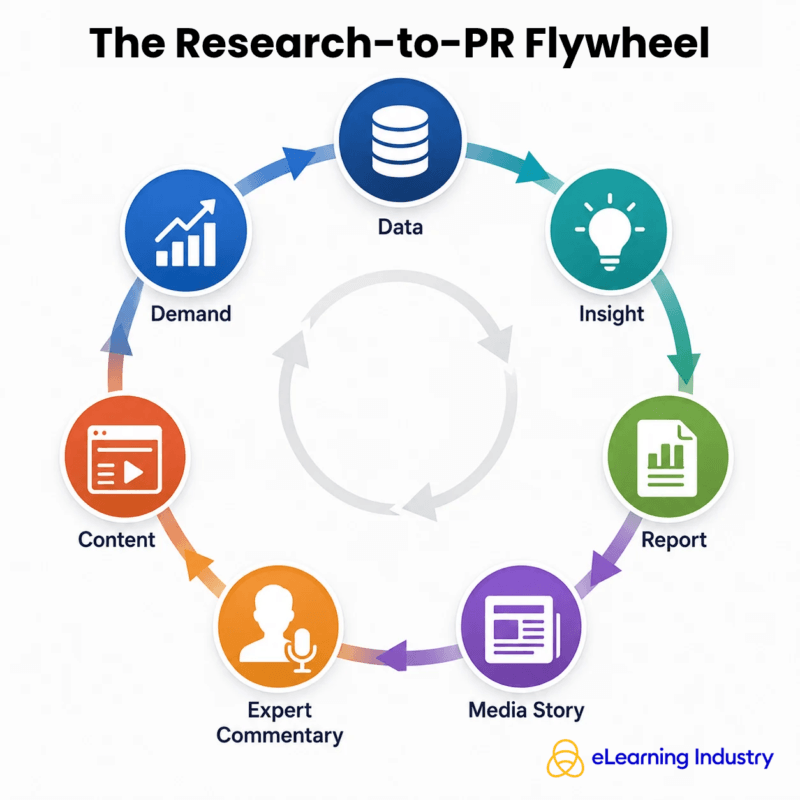
In the B2B sector, data is the most potent tool for earning media coverage. By leveraging internal platform insights, companies can provide journalists with exclusive looks at economic or social trends.
LinkedIn and the Economic Graph
LinkedIn’s "Future of Recruiting" reports are prime examples of research-led PR. By combining billions of data points from its platform with surveys from over 1,000 talent professionals, LinkedIn positions itself as the primary authority on the global workforce. This data-driven approach ensures that the company is cited in major financial and news outlets whenever labor trends are discussed, providing a level of credibility that traditional advertising cannot buy.
Spotify’s Cultural Insights
Beyond individualized "Wrapped" stats, Spotify utilizes its massive data sets to identify shifts in global culture. In 2025, the platform released methodology-backed reports on the rise of cross-genre collaborations and global fandoms. By explaining what is happening in the world through the lens of music, Spotify maintains a constant presence in cultural conversations, reinforcing its role as an industry leader.
Experiential and Reactive Public Relations
Sometimes, PR requires a bold, physical manifestation of a brand’s identity or a lightning-fast response to real-world events.
Red Bull Stratos: A Global Spectacle
On October 14, 2012, Felix Baumgartner’s jump from the edge of space (38,969.4 meters) became a defining moment in experiential PR. The event, which saw Baumgartner reach speeds of 1,357.6 km/h, was watched live by 9.5 million people on YouTube. Red Bull did not need to "pitch" this story in the traditional sense; the sheer scale and scientific ambition of the feat made it inherently newsworthy, cementing Red Bull’s association with extreme performance.
Reactive PR: Oreo and Aviation Gin
The ability to respond to cultural moments in real-time can generate massive engagement with minimal budget. During the 2013 Super Bowl blackout, Oreo’s social media team famously tweeted, "You can still dunk in the dark." The post generated over 525 million media impressions. Similarly, in 2019, Aviation Gin responded to a controversial Peloton holiday ad by casting the same actress in a parody commercial within days. Both examples highlight how speed and brand-appropriate humor can hijack a news cycle and turn it into a positive brand moment.
Executive Leadership and Community Building
For many organizations, the face of the company is its most valuable PR asset. Executive thought leadership, when executed correctly, builds trust through transparency and expertise.
The Microsoft Transformation
Since becoming CEO of Microsoft in 2014, Satya Nadella has used his public platform to signal a profound shift in corporate culture toward a "growth mindset" and "responsible AI." His communication strategy has been intrinsically linked to Microsoft’s product evolution, such as the rollout of Copilot. By connecting leadership messaging with substantive organizational change, Microsoft has successfully repositioned itself as a forward-thinking innovator rather than a legacy software giant.
Salesforce and the Trailblazer Community
Salesforce’s PR strategy focuses heavily on its ecosystem. The "Trailblazer Community" serves as a platform where users and developers share expertise. This model shifts the PR burden from the corporation to the community, where peer validation acts as a powerful credible signal for prospective buyers.
Implications for Search Visibility and AI Recognition
In the modern digital landscape, PR serves a dual purpose: building reputation and enhancing technical visibility. High-quality media mentions from reputable publications act as strong signals for search engines. This is increasingly relevant for Generative Engine Optimization (GEO), where AI models like ChatGPT and Perplexity look for consistent, authoritative third-party references to cite in their responses.
While PR is not a direct substitute for SEO, the backlinks and brand mentions earned through successful campaigns improve a company’s "share of voice" in search results. When a prospect searches for a solution, seeing a brand mentioned in a major industry report or a national news outlet provides a layer of social proof that can significantly shorten the buyer journey.
Measuring Impact and Avoiding Common Pitfalls
To determine the success of a PR campaign, organizations must move beyond vanity metrics like total impressions. Instead, measurement should focus on:
- Authority: Tracking the quality of backlinks and the seniority of the publications covering the story.
- Engagement: Analyzing social shares, comments, and the depth of the conversation.
- Reputation: Monitoring changes in brand sentiment and the frequency of "unbranded" searches for the company.
- Commercial Impact: Observing correlations between PR activity and lead generation or shortened sales cycles.
Conversely, many campaigns fail due to common mistakes such as lack of focus, poor timing, or a "one-size-fits-all" approach to media outreach. The most frequent error is treating PR as a purely promotional tool. If a story lacks a genuine human element or useful data, it is unlikely to be picked up by reputable journalists or shared by the public.
The Future of PR in B2B Markets
For B2B brands, particularly those in the Learning Tech and AI sectors, the future of PR lies in the intersection of proprietary data and human expertise. By turning anonymized platform insights into industry trends and empowering executives to act as educators rather than salespeople, companies can build a "reputation moat" that is difficult for competitors to breach.
As the market continues to grow more crowded, the strongest public relations campaigns will be those that prioritize evidence over claims. Whether through a record-breaking stunt, a deeply researched white paper, or a timely social media response, the goal remains the same: to give the audience something worth discussing, sharing, and ultimately, trusting. Professional PR is no longer about telling a story; it is about providing the evidence that makes the story undeniable.