The U.S. Department of Homeland Security (DHS) initiated a significant policy shift on Friday, September 11, 2026, by formally proposing a rule that would dismantle the existing 60-day grace period for certain nonimmigrant visa holders, including those under the H-1B, L-1, O-1, E, and TN classifications, who lose their employment. This proposed change, detailed in a Notice of Proposed Rulemaking published in the Federal Register, signifies a potential return to a stricter immigration enforcement regime, eliminating a crucial safety net that has allowed highly skilled foreign workers and their families to remain legally in the United States while seeking new employment. The move has immediately ignited a fierce debate among immigration advocates, legal experts, and technology industry leaders, who warn of severe consequences for individuals, families, and the nation’s competitive edge in the global talent market.
Background: The Evolution of Nonimmigrant Visa Policies and the 60-Day Grace Period
The H-1B visa program, established under the Immigration Act of 1990, is a cornerstone of U.S. immigration policy, designed to allow American employers to temporarily employ foreign workers in specialty occupations. These occupations generally require a bachelor’s degree or higher in a specific field. The program is vital for sectors like technology, healthcare, engineering, and scientific research, which often face domestic talent shortages. Annually, the U.S. government caps the number of new H-1B visas issued, typically at 65,000, with an additional 20,000 reserved for those with a U.S. master’s degree or higher. Demand consistently outstrips supply, often necessitating a lottery system to allocate these coveted visas.
For decades, the cessation of employment for an H-1B visa holder often meant an immediate loss of legal status, compelling individuals to depart the U.S. within a matter of days or face being deemed "out of status." This created immense pressure and instability for workers and their families, particularly during economic downturns or unexpected layoffs. Recognizing the challenges this posed to skilled workers and the U.S. economy, the Obama administration introduced a significant reform. In January 2017, effective with the final rule published in November 2016, the DHS implemented the 60-day grace period. This rule allowed H-1B and certain other high-skilled nonimmigrant visa holders to remain in the U.S. for up to 60 consecutive days, or until the end of their authorized validity period, whichever was shorter, after their employment ended. This period was intended to provide a reasonable window for these individuals to find new qualifying employment, change their immigration status, or make arrangements to depart the country without violating their immigration terms.
The introduction of the 60-day grace period was widely lauded by the tech industry, business organizations, and immigrant advocacy groups. It was seen as a pragmatic approach to foster talent retention, reduce administrative burdens for both employers and employees during transitions, and provide a much-needed humanitarian consideration for individuals who had contributed significantly to the U.S. economy. It facilitated greater job mobility for highly skilled workers, allowing them to transition between employers more smoothly and reducing the risk of a "brain drain" where talented individuals might be forced to leave the U.S. due to unforeseen circumstances.
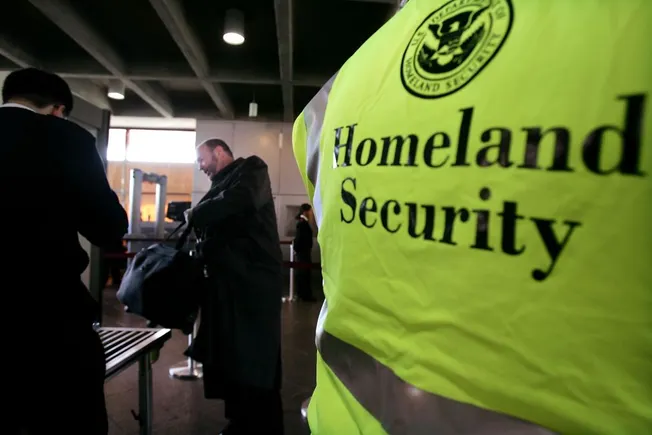
DHS Rationale: "Administrative Burden" and "Program Integrity"
In its Notice of Proposed Rulemaking, the DHS outlined several justifications for rescinding the 60-day grace period. Primarily, the agency cited a desire to "reduce an administrative burden." The DHS argued that "the process of determining when the up to 60-day grace period may apply, reviewing the information submitted, and determining whether to shorten or eliminate the grace period may be time consuming and complex for the agency and confusing or unpredictable for the petitioner, alien and the alien’s dependents.” This suggests that the discretion involved in applying the grace period, and the subsequent review processes, has proven more cumbersome than anticipated for immigration authorities.
Beyond administrative efficiency, the DHS also contended that the grace period is "inconsistent with the purpose for which Congress created the relevant nonimmigrant classifications." The agency elaborated that "restoring the expectation that aliens depart the United States upon cessation of the employment or activity upon which the alien’s status was based, would better promote program integrity and be more consistent with statutory purpose.” This argument suggests a philosophical return to a stricter interpretation of nonimmigrant visas as tied directly and solely to a specific employment relationship, with any deviation requiring immediate departure.
Critics of the proposed rule, however, immediately challenged these justifications. Many argue that the "administrative burden" argument is weak, especially when weighed against the significant human and economic costs of eliminating the grace period. Furthermore, they contend that the grace period, far from undermining program integrity, actually enhances it by providing a structured pathway for job transitions, thereby preventing individuals from inadvertently falling out of status or being forced into precarious situations. The argument regarding "statutory purpose" is also contentious, as many believe the flexibility offered by the grace period aligns with the broader goal of attracting and retaining global talent essential for U.S. innovation and economic growth.
The Immediate and Far-Reaching Impact on H-1B Visa Holders
The elimination of the 60-day grace period would have profound and immediate repercussions for hundreds of thousands of H-1B visa holders and their families residing in the United States. Under the proposed rule, if an H-1B employee is laid off even two years into a three-year visa approval, they would effectively be left with no cushion period whatsoever. This contrasts sharply with the pre-2016 scenario where a 10-day grace period was sometimes observed, though inconsistently and not applicable to all situations. As noted by Steven Brown, a partner at immigration law firm Reddy Neumann Brown, a return to this prior informal practice "would not cover all affected workers" and specifically "only would apply ‘after the validity period ends’ for a visa." This means that an H-1B worker whose employment is terminated mid-visa term would face immediate pressure to depart.
The implications for individuals are dire:

- Forced Departures: Thousands of skilled workers, many of whom have established lives, purchased homes, and have children enrolled in U.S. schools, would be compelled to leave the country within days of job loss. This creates immense personal stress, financial hardship, and potential family separation if immediate travel is not feasible for all dependents.
- Loss of Stability: The grace period offered a semblance of stability, allowing workers to confidently seek new opportunities without the looming threat of immediate deportation. Its removal injects a new layer of anxiety and precarity into the lives of H-1B workers.
- Reduced Job Mobility: The ability to transition between employers is crucial for career growth and for companies to attract top talent. Without the grace period, the risk associated with changing jobs or facing a layoff becomes astronomical, potentially leading workers to stay in undesirable positions or to avoid seeking new opportunities.
- Humanitarian Concerns: The rule does not account for unforeseen personal emergencies, health issues, or other circumstances that might prevent immediate departure, potentially creating humanitarian crises for individuals and families suddenly stripped of their legal status.
Implications for U.S. Employers and the Tech Sector
The impact extends far beyond individual visa holders to the very fabric of American industry, particularly the tech sector, which heavily relies on H-1B talent.
- Talent Retention Challenges: U.S. companies, especially those in fast-paced and competitive fields like technology, will find it significantly harder to retain top international talent. The increased instability associated with H-1B visas could deter highly skilled individuals from choosing the U.S. as a career destination, opting instead for countries with more predictable and humane immigration policies.
- Increased Relocation Costs: Employers sponsoring H-1B visas "would remain liable for the reasonable cost of return transportation abroad" for any individuals dismissed prior to their authorization period, as noted by Steven Brown. While this liability already exists, the absence of a grace period means companies may incur these costs more frequently and abruptly, adding to operational expenses.
- Reduced Flexibility in Hiring and Firing: Companies face increased pressure when considering layoffs or restructuring. The immediate departure requirement could force employers to make difficult decisions, potentially leading to the loss of valuable employees who could have otherwise found new roles within the U.S. economy.
- Innovation and Competitiveness: The U.S. has historically benefited from being a magnet for global talent, driving innovation and economic growth. Policies that make it harder for skilled immigrants to live and work in the U.S. risk a "brain drain," where talent moves to competitor nations like Canada, the UK, or Australia, which offer more welcoming immigration pathways. This could diminish America’s global leadership in science, technology, engineering, and mathematics (STEM) fields.
- Administrative Complexity for HR: Human Resources departments will face increased administrative burdens in managing the abrupt departure of employees, ensuring compliance with new regulations, and potentially dealing with the emotional and logistical challenges faced by affected workers.
Reactions from Stakeholders: A Wave of Concern
The proposed rule has triggered a strong backlash from various stakeholder groups:
- Immigration Law Firms and Advocates: Immigration attorneys and advocacy organizations have universally condemned the proposal. They emphasize the practical hardships it would impose on individuals and families, arguing that it is a punitive measure that undermines the stability and predictability essential for attracting and retaining global talent. They are preparing for a robust public comment campaign and potential legal challenges should the rule be finalized. Groups like the American Immigration Lawyers Association (AILA) are expected to mobilize their networks to submit extensive comments, highlighting the adverse consequences.
- Technology Industry Leaders: Major tech companies, from Silicon Valley giants to burgeoning startups, are likely to voice strong opposition. They depend heavily on H-1B workers to fill critical roles and drive innovation. Industry associations like CompTIA and the National Association of Software and Services Companies (NASSCOM) are anticipated to issue statements warning of the rule’s detrimental impact on the U.S. tech ecosystem, its ability to compete globally, and the overall economy. They will likely argue that the rule exacerbates existing talent shortages.
- Academia and Research Institutions: Universities and research centers, which often employ H-1B visa holders for post-doctoral positions and specialized research, will also express concern. The instability created by the rule could make it harder to attract top researchers, potentially slowing down scientific advancements and innovation originating from U.S. institutions.
- Government Spokespersons (DHS/USCIS): The DHS and U.S. Citizenship and Immigration Services (USCIS) are expected to reiterate their official stance, emphasizing program integrity and administrative streamlining. They may argue that the proposed rule is merely aligning policy with the original intent of Congress for these nonimmigrant categories, focusing on the temporary and employment-specific nature of these visas.
Legal and Administrative Challenges Ahead
The proposed elimination of the grace period is not a final decision. The Notice of Proposed Rulemaking opens a 60-day public comment period, concluding on November 10, 2026. During this time, individuals, organizations, and legal experts can submit formal comments, data, and arguments against the rule. The DHS is legally required to review and consider all timely comments before issuing a final rule.
This public comment period is crucial. Immigration advocacy groups and legal firms are expected to organize campaigns to flood the Federal Register with comments, outlining the practical, economic, and humanitarian arguments against the proposal. These comments can highlight data on the contributions of H-1B workers, the economic benefits of the grace period, and the potential negative impacts on families and communities.
Even if the rule is finalized, it could face legal challenges in federal courts. Opponents might argue that the DHS has exceeded its statutory authority, acted arbitrarily and capriciously, or failed to adequately consider the economic and social impacts of its decision. Such litigation could delay implementation or even lead to the rule being overturned or modified. The ongoing debate around immigration policy, particularly regarding skilled workers, often culminates in legal battles that shape the eventual outcome.

Looking Ahead: Uncertainty and the Future of Skilled Immigration
The proposed elimination of the 60-day grace period introduces significant uncertainty for current and prospective H-1B visa holders and their employers. It signals a potential tightening of immigration policies for high-skilled workers, a trend that could have long-term implications for the U.S. economy and its standing as a global leader in innovation.
The coming months will be critical, as the public comment period unfolds and stakeholders mobilize to influence the final decision. The outcome of this proposal will not only determine the fate of thousands of individuals but also send a powerful message about America’s commitment to attracting and retaining the world’s brightest minds in an increasingly competitive global landscape. The debate highlights the perpetual tension between immigration enforcement, economic necessity, and humanitarian considerations in U.S. policy.