The past week has seen a diverse array of developments impacting the American workforce, spanning from intricate interpretations of labor law regarding compensable time to the psychological profiles shaping workplace behavior and significant shifts in technology employment. These varied insights, captured through a series of key figures and reports, offer a snapshot of the complex landscape facing human resources professionals, legal departments, and employees alike as the labor market continues to evolve. From the U.S. Department of Labor’s (DOL) rulings on break times to an investigation into alleged misconduct by a former Labor Secretary, the week’s headlines underscore the multifaceted challenges and opportunities defining modern employment.
Understanding Workplace Personalities: The "Colorful" Type Under Pressure
A significant finding from Hogan Assessment highlights that 14.3% of working adults exhibit what is termed a "colorful" personality type. These individuals are characterized by their expressiveness and social confidence, traits often associated with charisma and strong communication skills. However, the report cautions that under pressure, these same strengths can manifest as a tendency toward attention-seeking behavior or difficulty sharing the spotlight. This insight is crucial for organizations striving to build effective teams and cultivate robust leadership.
Hogan Assessments, a globally recognized leader in personality assessment and leadership development, categorizes personality traits to help employers predict job performance and identify potential derailers. The "colorful" profile, while often bringing energy and dynamism to a team, also carries a inherent risk of ego-driven challenges when stress levels rise or collaboration becomes paramount. In high-stakes environments, such as project deadlines or competitive team settings, a colorful individual’s desire for recognition might inadvertently overshadow team accomplishments or create internal friction. For HR and management, recognizing this dynamic is the first step toward proactive talent management. Strategies might include providing specific coaching on collaborative leadership, establishing clear team roles and recognition protocols, or ensuring a balanced team composition that can mitigate potential interpersonal conflicts. The broader implications suggest that while diversity in personality types is beneficial, understanding how these traits adapt under stress is vital for organizational resilience and maintaining a healthy workplace culture. Effective leadership development programs are increasingly incorporating such psychological insights to equip managers with the tools to harness the strengths of diverse personalities while mitigating their potential downsides, ensuring that individual drive contributes positively to collective success rather than becoming a source of disruption.
Compensable Time: The 14-Minute Rule for Break Walks
The U.S. Department of Labor (DOL) recently issued an opinion letter clarifying that a worker does not necessarily need to be compensated for a 14-minute-long walk to a break area for lunch. This determination sheds light on the intricacies of the Fair Labor Standards Act (FLSA) regarding compensable time, particularly concerning "de minimis" activities. The DOL noted the "comparatively brief" nature of the walk relative to the full break time, suggesting that minor travel time associated with an otherwise non-compensable break typically falls outside the scope of paid work.
This ruling has significant implications for employers, particularly those with large campuses or facilities where break areas might be a considerable distance from workstations. The FLSA generally requires employers to pay employees for all hours worked, which includes not only time spent performing primary job duties but also certain activities "integral and indispensable" to those duties. However, the "de minimis" rule allows employers to disregard insubstantial or insignificant periods of time that cannot practicably be recorded for payroll purposes. While the DOL’s opinion letter provides guidance, it’s important to note that judicial interpretations can vary, and some courts have approached similar issues differently, sometimes considering the specific circumstances of the travel and the employer’s control over the employee’s movements.
For instance, if an employer mandates a specific, distant break location and prohibits employees from taking breaks elsewhere, or if the walk itself involves significant physical exertion or safety risks, a court might view the situation differently. Employers are thus advised to review their policies, considering factors such as the actual time spent, the frequency of such walks, and the level of control exerted over employees during this period. Labor advocacy groups, while acknowledging the DOL’s interpretation, might continue to push for clearer guidelines that prioritize employee well-being and ensure fair compensation for all work-related activities, however minor. The ruling underscores the ongoing need for precise timekeeping and clear communication of company policies regarding break times and associated travel to avoid potential wage and hour disputes.
The Evolving Landscape of Technology Employment
Despite a narrative often dominated by high-profile layoffs in the tech sector, the broader landscape of technology occupation employment demonstrates robust growth. According to an analysis by CompTIA, based on data from the U.S. Bureau of Labor Statistics, technology occupation employment grew by 86,000 workers in August. This expansion occurred even as tech companies themselves cut 14,700 positions, illustrating a critical distinction between the health of the tech industry and the demand for technology skills across the entire economy.
This dichotomy suggests that while established tech giants may be undergoing restructuring or rightsizing after periods of rapid expansion, the fundamental demand for tech talent remains strong across various sectors, including finance, healthcare, manufacturing, and retail. Roles in areas such as cybersecurity, artificial intelligence, cloud computing, and data analytics are experiencing particularly high demand, indicating a pervasive digital transformation across industries. The layoffs often reported in the news typically involve specific tech companies, sometimes due to over-hiring during the pandemic boom, shifts in business strategy, or economic pressures impacting venture capital funding. However, the underlying need for professionals capable of developing, implementing, and managing technological solutions continues to outstrip supply.

For HR professionals, this trend highlights the critical importance of a skills-based hiring approach rather than solely focusing on candidates from traditional tech companies. It also emphasizes the need for continuous upskilling and reskilling initiatives within organizations to equip existing employees with the necessary digital competencies. The broader economic implication is that technology is no longer a niche sector but a foundational element of nearly every industry, driving productivity and innovation. Government and educational institutions are increasingly recognizing this, investing in STEM education and vocational training programs to bridge the growing skills gap. This robust growth in tech occupations, even amidst sector-specific contractions, signals a fundamental and enduring shift in the labor market, where digital fluency is becoming an indispensable asset for individual career progression and national economic competitiveness.
Investigation into Former Labor Secretary Lori Chavez-DeRemer
The U.S. Department of Labor’s Office of Inspector General (OIG) conducted a comprehensive investigation into alleged misconduct that occurred under the leadership of former Labor Secretary Lori Chavez-DeRemer. In connection with this inquiry, 53 current and former employees were interviewed, underscoring the serious nature and scope of the allegations. The report from the agency detailed recurring policy violations, including incidents involving rodeo tickets and nude dancers, raising significant ethical and operational concerns within the department.
Chronology of Events and Investigation:
- Pre-2025 (Period of Alleged Misconduct): The reported misconduct, involving policy violations such as inappropriate expenditures and activities, is alleged to have occurred during the tenure of Lori Chavez-DeRemer as Labor Secretary. While the specific dates of each incident are not detailed in the summary, the "recurring policy violations" suggest a pattern over time.
- Early 2025: Initial complaints or concerns regarding the former Labor Secretary’s conduct likely surfaced, prompting the OIG to launch a formal investigation. The OIG, an independent oversight body within the DOL, is responsible for detecting and preventing waste, fraud, and abuse.
- Mid-2025 (Investigation Period): The OIG commenced its thorough investigation. This phase would have involved gathering evidence, reviewing internal documents, financial records, and conducting interviews with relevant personnel. The fact that 53 current and former employees were interviewed indicates a broad outreach to gather comprehensive perspectives and evidence related to the allegations. The interviewees would have included senior staff, administrative personnel, and others who might have had direct knowledge of the alleged incidents or the general operational environment under Chavez-DeRemer.
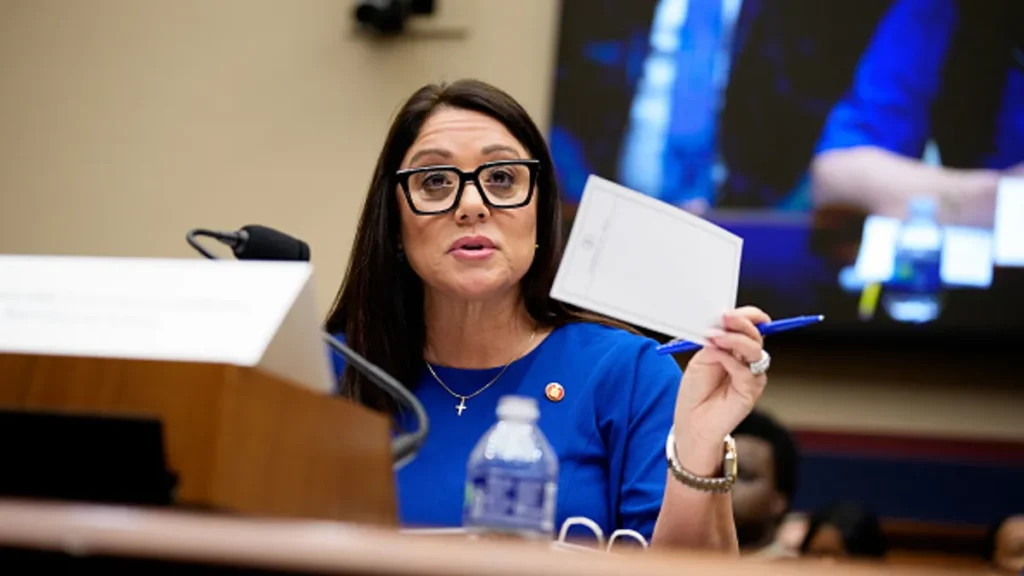
- June 5, 2025: Lori Chavez-DeRemer is pictured speaking during a House committee hearing on Capitol Hill in Washington, D.C. While this image is from the same period as the investigation, it is important to note that public appearances do not necessarily reflect the status or findings of an ongoing internal investigation.
- Late 2025 / Early 2026: The OIG would have compiled its findings into a comprehensive report. These reports typically detail the allegations, the investigative methods, the evidence found, and conclusions regarding whether policy violations or misconduct occurred.
- September 10, 2026 (Report Publication/Summary): A report from the agency, presumably the OIG’s findings, was released or summarized, detailing the allegations of misconduct and the extent of the investigation. The mention of "rodeo tickets and nude dancers" would have been part of these detailed findings, indicating specific instances of alleged misuse of funds or inappropriate behavior.
Official Responses and Broader Implications:
Following the release of such a report, the DOL would likely issue a statement reaffirming its commitment to ethical conduct and accountability. While Chavez-DeRemer is no longer the Secretary, the findings could still lead to various repercussions, including potential civil or criminal referrals if warranted, or at the very least, a public admonishment and a stain on her professional reputation. The investigation serves as a stark reminder of the stringent ethical standards expected of public officials and the critical role of independent oversight bodies like the OIG in maintaining integrity within government agencies.
The implications extend beyond the individuals involved, potentially prompting a review of internal policies, ethics training, and oversight mechanisms within the DOL to prevent similar occurrences in the future. For the broader public, such investigations are crucial for maintaining trust in government institutions and ensuring that taxpayer money is used responsibly and ethically. The detailed nature of the allegations and the extensive number of interviews highlight a systemic effort to uncover the truth and uphold accountability, reinforcing the principle that no official is above scrutiny.

Navigating Disruptive Change: The Recovery Challenge
Disruptive change, whether economic downturns, technological advancements, or global health crises, is an inevitable aspect of the modern business environment. Findings from the learning and development company Insights reveal that more than 4 in 10 companies affected by disruptive change took at least three months to recover. This statistic underscores a significant challenge for organizational resilience and highlights that many leaders may underestimate the time and resources required to adapt effectively to unforeseen challenges.
The concept of "disruptive change" encompasses a wide range of events, from sudden market shifts and supply chain interruptions to cybersecurity breaches and the rapid adoption of new technologies like artificial intelligence. The report suggests that a substantial portion of organizations are not adequately prepared to pivot quickly or to mitigate the long-term impacts of such disruptions. A recovery period of three months or more can translate into significant financial losses, decreased productivity, loss of market share, and damage to employee morale and engagement.
Analysis of Implications:
The protracted recovery times indicate a potential lack of strategic foresight, agile operational frameworks, and investment in organizational learning and development. Companies that struggle to recover quickly often lack robust crisis management plans, flexible workforce strategies, and a culture that embraces continuous learning and adaptation. In contrast, resilient organizations typically prioritize:
- Agility and Flexibility: The ability to rapidly reallocate resources, adjust strategies, and adapt business models in response to changing circumstances.
- Strong Leadership and Communication: Leaders who can effectively guide their teams through uncertainty, maintain transparent communication, and foster a sense of psychological safety.
- Investment in Skills Development: Proactive upskilling and reskilling programs to ensure the workforce has the competencies needed to navigate new operational demands or technological shifts.
- Data-Driven Decision Making: Leveraging analytics to anticipate potential disruptions, assess impacts, and inform recovery strategies.
- Robust Risk Management: Identifying potential threats and developing contingency plans before a crisis hits.
The implication for HR is profound. HR departments are increasingly expected to play a central role in fostering organizational resilience, from developing future-ready talent strategies to cultivating adaptive cultures and supporting employee well-being during periods of stress. Leaders who underestimate the impact of future disruptions risk not only their company’s financial stability but also their ability to attract and retain top talent, as employees increasingly seek employers who demonstrate stability and foresight in turbulent times. The data serves as a compelling call to action for businesses to invest proactively in building adaptive capabilities and resilience, transforming challenges into opportunities for growth and innovation.