Understanding and actively cultivating employee engagement is no longer a secondary concern for organizations; it is a fundamental driver of productivity, retention, and overall business success. In today’s dynamic work environment, where remote and hybrid models are prevalent, discerning genuine employee investment from superficial participation is paramount. This necessitates a strategic approach to measuring engagement, moving beyond annual surveys to a continuous, multi-faceted assessment of the employee experience.
The Achievers Engagement and Retention Report highlights a significant trend: a staggering 72% of employees would prioritize a workplace where they feel valued over a higher-paying job that lacks support or recognition. This underscores a critical shift in employee priorities, where meaningful connection and appreciation often outweigh purely financial incentives. Engagement metrics, therefore, serve not merely as a diagnostic tool but as a comprehensive roadmap, illuminating areas of strength, identifying potential weaknesses, and guiding targeted interventions to foster sustained motivation and loyalty.
Key Metrics for Gauging Employee Engagement
To effectively measure employee engagement, organizations must look beyond simple satisfaction scores and delve into a range of quantifiable indicators. These metrics provide a nuanced understanding of the employee experience and pinpoint specific areas for improvement.
1. Employee Net Promoter Score (eNPS)
A widely adopted metric, eNPS quantifies an employee’s likelihood to recommend their organization as a place to work. It offers a concise yet powerful snapshot of overall employee sentiment and the health of the company culture. A high eNPS score suggests a positive and engaging work environment, while a low score signals potential issues that require deeper investigation. This metric serves as a valuable early warning system for potential disengagement.
2. Recognition Frequency and Reach
Recognition is a potent driver of engagement, acting as a leading indicator of employee connection and motivation. Tracking the frequency of recognition, the individuals or teams involved in giving and receiving it, and its distribution across the organization is crucial. A robust recognition culture, characterized by high-frequency, peer-driven appreciation, is strongly correlated with increased employee connection, motivation, and retention. Conversely, limited or siloed recognition can indicate a lack of connection and appreciation.
3. Real-Time Feedback Activity
The implementation of "always-on" feedback tools provides a continuous pulse on employee sentiment. Key indicators include the frequency of employee input, the responsiveness of managers to feedback, and the extent to which feedback translates into tangible actions. High participation rates suggest a trusting environment where employees feel their voices are heard. Conversely, low participation can indicate a lack of trust in the feedback process or a perception that input is not valued or acted upon.
4. Sentiment Trends Over Time
Analyzing engagement data over time is more insightful than examining isolated data points. By tracking trends in survey scores, the themes emerging from comments, or patterns in recognition activity, organizations can identify shifts in employee confidence, detect rising frustration, and proactively address areas that may require managerial attention before they escalate into significant challenges. This longitudinal perspective allows for a more strategic and preventative approach to engagement management.
5. Manager Effectiveness Scores
Managers play a pivotal role in shaping the daily employee experience. Metrics related to manager effectiveness, such as clarity of communication, provision of support, coaching quality, recognition practices, and follow-through on commitments, are vital. Tracking these scores helps organizations identify where leadership development or additional resources are needed to equip managers with the skills to foster highly engaged teams. According to Achievers Workforce Institute (AWI) data, 53% of employees report that a supportive manager is instrumental in helping them navigate unexpected challenges.
6. Turnover and Retention Indicators
Engagement and retention are inextricably linked. Monitoring early warning signs, such as a decrease in recognition activity, declining satisfaction scores, or reduced participation in feedback channels, can help organizations intervene before employees begin seeking opportunities elsewhere. These indicators are critical for proactive retention strategies.
7. Participation in Development and Growth Opportunities
Engaged employees are typically invested in their professional development. Tracking participation in learning programs, internal mobility initiatives, and career conversations provides insight into employees’ perception of their future within the organization. High engagement with growth pathways suggests that employees see a long-term future with the company, extending beyond merely collecting a paycheck.
Strategic Approaches to Measuring Employee Engagement
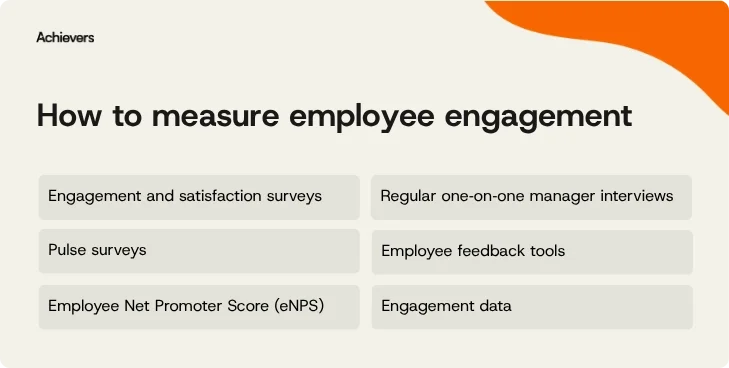
Moving beyond infrequent annual surveys, organizations must adopt a continuous listening strategy to truly understand and influence employee engagement. This involves creating accessible channels for employees to voice their experiences, both positive and negative, and ensuring their feedback is genuinely considered.
1. Engagement and Satisfaction Surveys
Well-designed engagement and satisfaction surveys provide a foundational understanding of employee sentiment regarding their work, leadership, and overall experience. They establish a baseline for culture health and highlight areas where support, clarity, or recognition might be lacking. However, the challenge lies in their infrequent administration. The 2026 Engagement and Retention Report indicates that only 38% of organizations provide feedback at least weekly, highlighting a widespread reliance on outdated survey cadences.
Best Practice: Conduct engagement surveys regularly and use the results to establish clear organizational priorities. Focus on a limited number of high-impact themes and leverage other listening methods for deeper exploration.
2. Pulse Surveys
Pulse surveys offer short, frequent check-ins designed to monitor sentiment in real-time. They are invaluable for tracking how engagement fluctuates in response to organizational changes, such as new leadership, shifts in workload, or evolving company policies. The true power of pulse surveys lies in their consistency and the subsequent follow-through, providing leaders with early signals and employees with confidence that their feedback leads to action.
Best Practice: Utilize pulse surveys to monitor engagement trends, particularly during periods of transition. Keep questions focused and relevant, and transparently share high-level findings with employees. Develop clear action plans based on the results and communicate them broadly.
3. Employee Net Promoter Score (eNPS)
As previously discussed, eNPS serves as a widely recognized indicator of overall engagement and culture health by measuring employees’ willingness to recommend their organization as a workplace.
Best Practice: Focus on tracking eNPS trends rather than isolated scores. Combine eNPS results with qualitative feedback to understand the underlying drivers of employee sentiment, enabling a move beyond the number to actionable insights.
4. Regular One-on-One Manager Interviews
Consistent one-on-one meetings are essential for fostering trust, ensuring clarity, and facilitating meaningful feedback. Despite their importance, data from the Achievers Workforce Institute (AWI) reveals that only 20% of employees have regular one-on-one meetings with their managers.
Best Practice: Establish one-on-one meetings as a consistent expectation for all managers. Encourage leaders to use engagement insights as a contextual basis for these conversations, focusing on support, priorities, and individual development.
5. Employee Feedback Tools
Integrated employee feedback tools simplify the process for employees to share input throughout the workday. These platforms can include quick polls, open comment sections, and recognition-based insights, making feedback accessible and timely.
Best Practice: Embed feedback tools into daily workflows to encourage easy and frequent participation. Crucially, close the feedback loop by acknowledging input and communicating the actions being taken in response.
6. Holistic Engagement Data Analysis
Consolidating data from surveys, feedback channels, recognition activities, and participation trends provides a comprehensive view of employee engagement. This aggregated data enables organizations to move from assumptions to data-driven prioritization of actions that genuinely improve performance, connection, and retention.
Best Practice: Look for overarching patterns and correlations within engagement data rather than focusing on isolated metrics. Use this analysis to prioritize areas for intervention, reinforce positive behaviors, and identify where leaders may require additional support.

7. Manager Effectiveness Tools
Tools designed to measure manager effectiveness assess how well leaders support, recognize, and coach their teams. This is critical as managers directly influence the day-to-day employee experience.
Best Practice: Leverage manager effectiveness data to understand which leadership behaviors contribute to employee engagement and which require development. Share insights constructively with managers, tied to clear expectations around communication, support, and recognition. Use this data to guide professional development and ongoing check-ins, enabling managers to focus on improving team engagement.
Foundational Questions for Measuring Engagement
To gain a deep understanding of the factors influencing employee engagement, organizations should pose specific, targeted questions. These questions cover the fundamental aspects of the employee experience and help uncover genuine sentiment.
1. How likely are you to recommend this company as a great place to work?
This question directly measures the Employee Net Promoter Score (eNPS) and serves as a quick assessment of overall employee sentiment and culture health. A high score suggests a positive culture, while a low score indicates a need for deeper exploration.
2. How well do you understand the company’s goals and mission?
Employees seek to be part of something larger than themselves. Clarity on company direction and the connection of their work to broader objectives are essential for motivation. This understanding should be reflected not only in mission statements but also in daily recognition and reward practices.
3. How happy are you in your role?
While happiness is subjective, a positive response often indicates a strong foundation of clear expectations, meaningful work, and supportive teams. Declining happiness scores can signal deeper issues such as burnout, misalignment, or a lack of recognition.
4. Do you feel valued for your contributions?
Recognition is a cornerstone of employee connection. When employees feel seen and appreciated by managers, peers, and leadership, they are more likely to remain engaged and committed. A decline in this area may necessitate a reevaluation of daily appreciation practices, potentially through a modern recognition platform.
5. Do you have the support and resources you need to do your job well?
This question addresses employee empowerment directly. A lack of necessary tools, clarity, or coaching can significantly diminish engagement. Effective managers act as facilitators, removing obstacles rather than creating them, ensuring employees are equipped for success.
Best Practices for Effective Engagement Measurement
The decline in global employee engagement to 21% in the past year, as reported by Gallup’s State of the Global Workplace Report, serves as a critical wake-up call for organizations. Measuring engagement effectively is not a compliance exercise; it is the bedrock of building a thriving workplace culture.
Organizations should approach engagement measurement with intentionality, focusing on transparency, purpose, and decisive action. When these principles are prioritized, the measurement of engagement transcends a mere metric and becomes an integral component of a culture where individuals feel recognized, heard, and empowered to contribute.
The Transformative Value of Employee Engagement Software
Accurate assessment and meaningful improvement of employee engagement are impossible without understanding the underlying dynamics. Guesswork is an insufficient strategy; this is where dedicated employee engagement software becomes indispensable.
Platforms like Achievers offer a comprehensive solution that goes beyond traditional tools. They provide a centralized, always-on system for capturing feedback from multiple channels—including quick polls, open comments, and recognition activities—and transforming this data into actionable, real-time insights. With flexible and customizable reporting capabilities, these platforms deliver a complete picture, not just raw data.
Key differentiators of leading engagement platforms include:
- Integrated Feedback Mechanisms: Seamlessly collect diverse forms of employee input.
- AI-Powered Insights: Leverage artificial intelligence to identify trends, patterns, and potential risks.
- Global Rewards Marketplace: Facilitate meaningful recognition through a wide array of customizable rewards.
- Actionable Dashboards: Provide clear visualizations and reporting to guide strategic decision-making.
- Continuous Listening Capabilities: Enable ongoing monitoring of employee sentiment.
Organizations that fully adopt such platforms often report a significantly greater impact on engagement, productivity, and retention, sometimes up to five times the impact compared to traditional methods. When providing feedback is effortless, interpreting data is straightforward, and taking action is facilitated, employee engagement becomes a tangible outcome that organizations can actively shape.
Leveraging eNPS to Quantify Engagement ROI
While many organizations track employee engagement, fewer successfully link these metrics to tangible business outcomes. The Employee Net Promoter Score (eNPS) offers a straightforward method for demonstrating the return on investment (ROI) of engagement initiatives. Serving as a leading indicator, eNPS, when combined with data on retention, productivity, and recognition, can provide compelling evidence of engagement’s business impact.
Calculating and Utilizing eNPS for ROI
The eNPS calculation is simple: employees are asked, "How likely are you to recommend this organization as a great place to work?" on a scale of 0 to 10. Responses categorize employees into promoters, passives, or detractors, yielding a benchmark score. The true value emerges when these scores are correlated with key business metrics, such as:
- Retention Rates: Analyzing whether higher eNPS scores correspond with lower voluntary turnover.
- Productivity Metrics: Investigating potential links between employee advocacy and performance indicators.
- Recognition Activity: Assessing if increased recognition efforts correlate with improved eNPS scores.
- Customer Satisfaction: Exploring whether engaged employees contribute to enhanced customer experiences.
When improvements in eNPS align with positive trends in these business outcomes, leaders gain concrete evidence that their engagement investments are yielding measurable returns.
A Framework for Tracking Engagement ROI with eNPS
To make eNPS actionable and demonstrate ROI, organizations can adopt a practical framework:
- Establish a Baseline: Regularly measure eNPS to understand current sentiment and identify initial trends.
- Identify Drivers: Pair eNPS data with qualitative feedback and other engagement metrics to pinpoint specific factors influencing employee advocacy.
- Implement Targeted Interventions: Develop and execute strategies, such as enhanced recognition programs or improved manager training, based on identified drivers.
- Measure Impact: Continuously track eNPS alongside key business outcomes to quantify the effectiveness of interventions and demonstrate ROI.
This systematic approach transforms eNPS from a standalone metric into a powerful tool for evaluating the success of employee experience initiatives.
Recognition: Turning eNPS Insights into Action
When eNPS data reveals declining engagement, recognition often emerges as one of the most impactful and immediate levers organizations can pull. Employees who feel genuinely valued and connected to their work are more likely to become vocal advocates for their employer.
By integrating eNPS tracking with a strategic recognition and rewards program, organizations can move beyond simply measuring engagement to actively fostering it. This creates a clearer line of sight between employee sentiment, workplace culture, and the critical business outcomes that drive organizational success.
Pro Tip: The ultimate goal is not merely achieving a higher eNPS score, but understanding the underlying reasons for score fluctuations. Leading organizations utilize eNPS as an ongoing listening tool, coupling these insights with meaningful action, recognition, and a commitment to continuous improvement.
Measuring Employee Engagement the Right Way
Ultimately, measuring employee engagement is only the initial step. The true impact lies in the subsequent actions taken: recognizing positive behaviors, responding effectively to employee feedback, and cultivating a culture where every individual feels seen, heard, and valued.
Achievers facilitates this process by embedding recognition and real-time feedback into the daily workflow, making it easier to identify what truly motivates employees and to implement actions that yield lasting results. From AI-driven insights to a global rewards marketplace, the platform is designed to strengthen connections, boost retention, and shape the desired organizational culture. By making engagement an integral part of daily operations, rather than just a metric to track, companies can foster a more engaged and productive workforce.