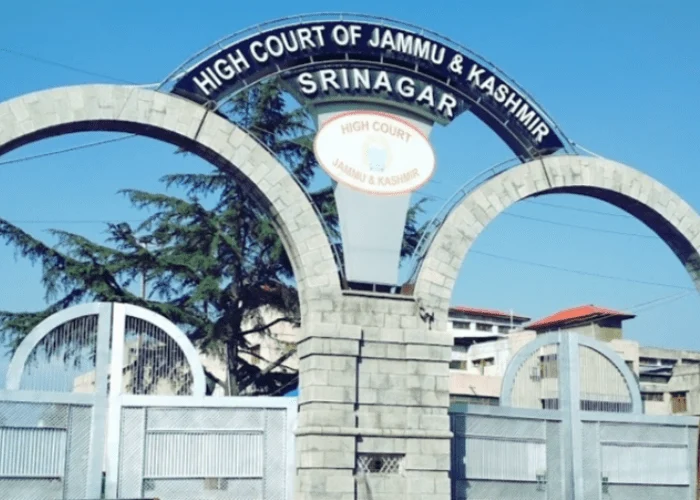
The High Court of Jammu & Kashmir and Ladakh has delivered a landmark ruling, asserting that the onus of obtaining vigilance clearance and ensuring the meticulous maintenance of Annual Performance Reports (APRs) rests squarely with the employer department, not the individual employee. This pivotal judgment, arising from a service petition concerning the denial of crucial service benefits, underscores a fundamental principle of administrative law: departments cannot penalize employees for their own internal administrative inefficiencies. The court emphatically stated that withholding promotions, Modified Assured Career Progression (MACP) benefits, pension, or other retiral dues on grounds of awaited vigilance clearance or incomplete APRs is arbitrary, especially when the employee has superannuated or possesses a long, unblemished service record.
The ruling, which carries significant implications for public sector employees across the Union Territories and potentially sets a persuasive precedent for other jurisdictions, directs the immediate release of consequential benefits to the petitioner within a stipulated timeframe. The High Court cautioned that attempting to shift the burden of securing internal clearances onto the employee constitutes a direct violation of Articles 14 (Equality before law) and 16 (Equality of opportunity in matters of public employment) of the Constitution of India, thereby subverting the very essence of service jurisprudence.
The Genesis of the Ruling: Understanding Service Benefits and Administrative Hurdles
The case brought before the division bench highlighted a pervasive issue within government administration: the arbitrary withholding of legitimate employee benefits due to procedural delays often beyond the employee’s control. Service benefits, such as promotions, MACP, and pensions, are not merely privileges but accrued rights earned through years of dedicated public service.
Modified Assured Career Progression (MACP), introduced by the Sixth Pay Commission, is designed to ensure career advancement opportunities for employees who might otherwise face stagnation in a single cadre. It provides for financial upgradation after a specified period of service (typically 10, 20, and 30 years) even if a promotion post is not available. Eligibility for MACP, like promotions, is heavily reliant on a clear vigilance record and satisfactory performance reports.
Pension and Retiral Dues represent the financial security promised to employees post-retirement, a fundamental aspect of their right to a dignified life. Delays in releasing these dues can cause immense financial hardship and emotional distress, particularly for elderly individuals who often rely solely on their pension for sustenance.
Historically, administrative processes, particularly those involving multi-departmental clearances, have been plagued by bureaucratic inertia. Employees frequently find themselves caught in a Catch-22 situation: requiring a clearance that only the department can generate, yet being held responsible for its absence. This judgment aims to dismantle such administrative bottlenecks by clearly defining accountability.
Vigilance Clearance: An Internal Administrative Prerogative
The court meticulously dissected the nature of vigilance clearance, defining it as an inherently internal administrative process. This clearance is a crucial integrity check, designed to ascertain whether an employee has any pending disciplinary actions, criminal proceedings, or integrity issues that might impede their career progression or entitle them to higher responsibilities.
The standard procedure dictates that vigilance clearance is to be initiated and generated by the concerned administrative department through the General Administration Department (Vigilance). An individual employee, by the very design of the system, has no direct role in "securing" this clearance. They are passive subjects in a process managed entirely by the state machinery. The court’s observation, therefore, directly challenges any departmental practice that expects an employee to chase or produce this document.
Crucially, the judgment reiterated that vigilance clearance cannot be routinely denied unless there is a concrete basis, specifically:
- A pending disciplinary proceeding.
- Suspension from service.
- A criminal prosecution culminating in cognizance by a court of law.
This distinction is vital. The court explicitly stated that the mere pendency of a preliminary inquiry or a First Information Report (FIR) without subsequent judicial proceedings does not, by itself, amount to a "blemish" sufficient to deny service benefits. This nuanced clarification protects employees from being unfairly prejudiced by unproven allegations or investigations that may never lead to formal charges. It aligns with the principle of "innocent until proven guilty" and prevents departments from using preliminary stages of inquiry as a tool for administrative harassment or indefinite deferral of benefits.
Annual Performance Reports (APRs) / Annual Confidential Reports (ACRs): The Employer’s Exclusive Domain
Similar to vigilance clearance, the court clarified the administrative responsibility for the maintenance and preservation of Annual Performance Reports (APRs), formerly known as Annual Confidential Reports (ACRs). These reports are fundamental tools for performance evaluation, assessing an employee’s work ethic, efficiency, conduct, and overall contribution. They serve as primary documents for decisions regarding promotions, MACP, training opportunities, and even inter-departmental transfers.
The responsibility for the accurate writing, timely submission, and secure preservation of APRs/ACRs rests exclusively with the designated reporting and reviewing authorities, and ultimately, the custodial department. The court emphasized that an employee cannot be penalized for gaps, non-writing, or non-availability of such records. This stance protects employees from administrative oversight where their superiors or the record-keeping departments fail to fulfill their duties.
The only exception articulated by the court is if the lapse is "directly attributable" to the employee. This might include instances where an employee deliberately refuses to submit their self-appraisal form, despite repeated reminders, thereby hindering the completion of their APR. However, such instances are rare and must be clearly documented by the department. In the vast majority of cases where reports are missing or incomplete, the fault lies with the administrative machinery, and the employee cannot be made to suffer for it.
The Petitioner’s Plight and the Wider Context of Service Petitions
The specific service petition that prompted this ruling is emblematic of a broader administrative malaise affecting countless government employees across India. Many public servants, after decades of dedicated service, face bureaucratic hurdles at the twilight of their careers, often when they are most vulnerable. The denial of promotions, financial upgradations, or, most critically, post-retirement benefits, can plunge individuals and their families into severe financial distress and mental anguish.
Data, while specific figures are hard to consolidate nationally, indicates that service petitions constitute a significant portion of the workload for High Courts and Administrative Tribunals throughout the country. Issues ranging from seniority disputes, disciplinary actions, and transfer policies to, most commonly, the denial or delay of financial and career progression benefits, routinely clog the legal system. The emotional and financial toll on employees who have to pursue legal recourse for what should be automatically disbursed benefits is substantial, often extending over several years and involving considerable legal expenses. This judgment offers a beacon of hope for such individuals, reinforcing their rights and placing clear accountability on the employer.
Chronology of Judicial Scrutiny and Constitutional Safeguards
This ruling by the Jammu & Kashmir and Ladakh High Court is not an isolated judicial pronouncement but rather aligns with a consistent trajectory of judicial activism in India aimed at safeguarding the rights of public servants against administrative apathy and arbitrary actions. Indian courts, particularly the Supreme Court and various High Courts, have repeatedly intervened to ensure fairness, transparency, and accountability in government employment.
Timeline of Judicial Principles:
- Post-Independence Era: Early judicial pronouncements established basic service law principles, emphasizing natural justice in disciplinary proceedings.
- 1970s-1980s: Expansion of judicial review in administrative matters, with courts increasingly scrutinizing arbitrary actions of the state. The right to livelihood and dignified employment began to gain prominence.
- 1990s-2000s: Focus on timely disposal of departmental inquiries and disciplinary proceedings. Courts began to hold that inordinate delays could vitiate proceedings. The concept of "speedy justice" extended to administrative matters.
- 2010s onwards: Increased emphasis on the fundamental rights enshrined in Articles 14 and 16 of the Constitution. Courts have consistently held that administrative inaction or delay leading to the denial of accrued benefits is arbitrary and discriminatory, thus violating these constitutional provisions. The principle of "right to pension" as a fundamental right, not a bounty, has been firmly established.
The current ruling reinforces these established principles. Article 14 guarantees equality before the law and equal protection of the laws, ensuring that the state does not act arbitrarily. Article 16 ensures equality of opportunity in matters of public employment. By holding that administrative delays or failures cannot penalize an employee, the court upholds these constitutional mandates, preventing the state from taking advantage of its own wrongs. This judgment builds upon a robust legal framework that endeavors to protect employees from administrative overreach and systemic failures.
Implications for Government Administration and Policy
The High Court’s directive carries profound implications for government departments and their administrative practices. It necessitates a systemic overhaul in how vigilance clearances are processed and how performance reports are managed.
Key Implications:
- Enhanced Accountability: Departmental heads and record-keeping authorities will face increased accountability for lapses in maintaining employee records and ensuring timely clearances. This could lead to disciplinary action against officials responsible for such delays.
- Streamlined Processes: Departments will be compelled to streamline their internal administrative processes for generating vigilance clearances and completing APRs/ACRs. This might involve adopting digital solutions for record-keeping and establishing clear, time-bound protocols.
- Proactive Management: A shift from reactive to proactive administration is expected. Instead of scrambling for clearances and reports when an employee is due for promotion or retirement, departments will need to ensure these documents are updated and available well in advance.
- Training and Sensitization: There will be a greater need for training and sensitization programs for reporting officers, reviewing officers, and administrative staff regarding their responsibilities in completing and preserving performance reports.
- Resource Allocation: Departments might need to allocate more resources, both human and technological, to their vigilance and personnel departments to manage records efficiently and prevent future backlogs.
- Financial Impact: The immediate financial impact will be the release of withheld benefits, potentially with interest, as directed by the court. In the long run, efficient administration can prevent costly litigation and interest payments.
This ruling pushes government departments towards a model of good governance where efficiency, transparency, and employee welfare are prioritized over bureaucratic inertia.
Broader Impact on Public Service Employees
The judgment is a significant victory for public service employees, offering them renewed confidence in the justice system and greater protection against administrative arbitrariness.
Positive Impacts for Employees:
- Boost to Morale: Employees can serve with greater peace of mind, knowing that their career progression and post-retirement benefits will not be unfairly jeopardized by departmental delays.
- Protection against Arbitrariness: The ruling provides a clear legal basis for employees to challenge the denial of benefits based on administrative lapses, reinforcing the principle that government action must be reasonable and non-arbitrary.
- Empowerment: Employees are empowered to demand timely action from their departments regarding their service records and clearances.
- Right to Dignified Retirement: The emphasis on the timely release of pension and retiral dues ensures that employees can look forward to a dignified retirement, free from financial uncertainty caused by administrative red tape.
- Reduced Litigation: In the long term, if departments internalize and implement the spirit of this judgment, it could lead to a reduction in the number of service petitions filed by employees, as many common grounds for litigation would be mitigated.
The ruling reinforces the fundamental tenet of service jurisprudence: that employees, particularly those who have dedicated their lives to public service, deserve fair treatment and that their legitimate dues cannot be held hostage to administrative lethargy.
Expert Legal Opinion and Future Outlook
Legal experts have largely lauded the Jammu & Kashmir and Ladakh High Court’s judgment as a progressive and necessary step towards fostering a more accountable and employee-friendly administrative environment. "This judgment is a powerful reaffirmation of constitutional principles, particularly Articles 14 and 16," stated a prominent service law attorney, preferring anonymity due to ongoing professional engagements with government departments. "It sends a clear message that administrative convenience cannot override an employee’s fundamental rights. Departments must now introspect and overhaul their systems, rather than passing the buck."
Another legal scholar noted, "The court’s clear distinction on what constitutes a ‘blemish’ for vigilance clearance is particularly significant. It prevents departments from using preliminary inquiries as a tool to indefinitely delay benefits, thus upholding the presumption of innocence until proven guilty."
While the judgment is definitive for the Union Territories of Jammu & Kashmir and Ladakh, its persuasive value for other High Courts across India is substantial. It is anticipated that similar rulings might emerge in other jurisdictions, or that existing rulings upholding similar principles will be reinforced.
Future Outlook:
- Potential for Appeal: The government departments concerned might consider appealing the judgment to the Supreme Court. However, given the consistent stance of various High Courts and the Supreme Court on similar matters, the likelihood of a reversal of these core principles remains low.
- Policy Reforms: The judgment could spur central and state governments to initiate comprehensive policy reforms to standardize and streamline administrative processes for vigilance clearances and performance report management across all departments.
- Technological Integration: Increased adoption of technology, such as integrated HR management systems and digital record-keeping, will be crucial in preventing such administrative lapses in the future.
- Strengthening of Employee Grievance Mechanisms: The ruling may also lead to a strengthening of internal grievance redressal mechanisms within departments, encouraging employees to seek resolution within the department before resorting to litigation.
Conclusion
The Jammu & Kashmir and Ladakh High Court’s ruling is a significant landmark in Indian service jurisprudence. By unequivocally placing the responsibility for vigilance clearance and APR maintenance on the employer, the court has championed employee rights, reinforced constitutional safeguards, and demanded greater accountability from government administration. This judgment serves as a powerful reminder that while administrative processes are essential, they must never become instruments for arbitrary denial of legitimate employee entitlements. It heralds a potential shift towards a more transparent, efficient, and just administrative system, where the welfare and rights of public servants are paramount. The message is clear: the state cannot take advantage of its own administrative delays and deficiencies to the detriment of its employees.