The landscape of the social sector is characterized by a constant flux of funding streams, policy reversals, and unexpected shifts in partnerships. For organizations dedicated to creating positive societal change, these challenges are not anomalies but rather the persistent hum of their operating environment. While the instinct in the face of such relentless change is often to safeguard direct service delivery – the tangible manifestation of their mission – this can inadvertently create a critical vulnerability. The reality for many social sector entities is that they are simultaneously navigating two distinct forms of change: the deliberate, mission-driven transformation they aim to effect in the world, and the unpredictable, often turbulent operational shifts that buffet them from the outside.
This dual challenge intensifies when external pressures mount. Resources become strained, the urgency of the mission remains paramount, and the inclination to temporarily suspend non-essential investments, such as capacity-building initiatives, feels like a prudent, albeit short-sighted, response to a perceived need for stability. However, for a significant portion of the social sector, volatility is not an exception but the norm. Sustained, long-term mission impact hinges on the presence of individuals capable of steering through ambiguity, fostering internal alignment, and cultivating robust external partnerships. It is precisely this capacity that leadership development endeavors to strengthen, and the evidence underscoring its efficacy is both compelling and increasingly undeniable.
Capacity-building for nonprofits is not merely an abstract concept; it is the strategic enhancement of an organization’s ability to fulfill its mission effectively and sustainably over time. This encompasses a multifaceted approach that includes nurturing leadership acumen, refining organizational systems, forging resilient partnerships, and cultivating the adaptability necessary to weather evolving circumstances. At its core, it is about empowering the human capital that drives social impact.
The Undeniable Link: Strengthening Leaders, Amplifying Mission Impact
Social sector leaders are typically endowed with profound subject matter expertise, clinical proficiency, policy acumen, and deep-seated community credibility. These foundational elements are indispensable. However, the ability to effectively collaborate across diverse boundaries and stakeholder groups, and to shepherd progress toward enduring outcomes, necessitates a distinct set of capabilities that specialized knowledge alone cannot guarantee. The development of these critical leadership competencies forms a cornerstone of effective nonprofit capacity-building.
As articulated by a seasoned nonprofit stakeholder, "When you invest in the leadership skills…you increase the odds and the pace and the sustainability of impact. Can they get there without it? Sure, some will. But you will get higher numbers, you will get longer-term vision and outcomes. You will have even bigger thinking when you invest in this kind of space." This sentiment encapsulates a fundamental truth: investing in leadership is not an ancillary expenditure but a strategic imperative that directly influences the scale, speed, and longevity of positive change.
Extensive research has illuminated the profound and lasting impact of such investments. A comprehensive, multi-study examination of capacity-building initiatives for nonprofits, drawing upon qualitative interviews and survey data from nearly 300 social sector leaders who participated in targeted programs, revealed a direct correlation between leadership investment and tangible, measurable outcomes. These outcomes span a spectrum of critical social advancements, including the expansion of healthcare access, significant reductions in maternal mortality rates, and the implementation of civic initiatives designed to dismantle systemic inequities.
The transformative power of leadership development lies not solely in the acquisition of new skills, but more profoundly in how leaders begin to perceive their own capabilities and recalibrate their understanding of what is achievable. This fundamental shift in standards and leadership identity often serves as the catalyst for broader organizational change. It influences how leaders engage with others, the ambitiousness of their goals, and their resilience in the face of adversity.
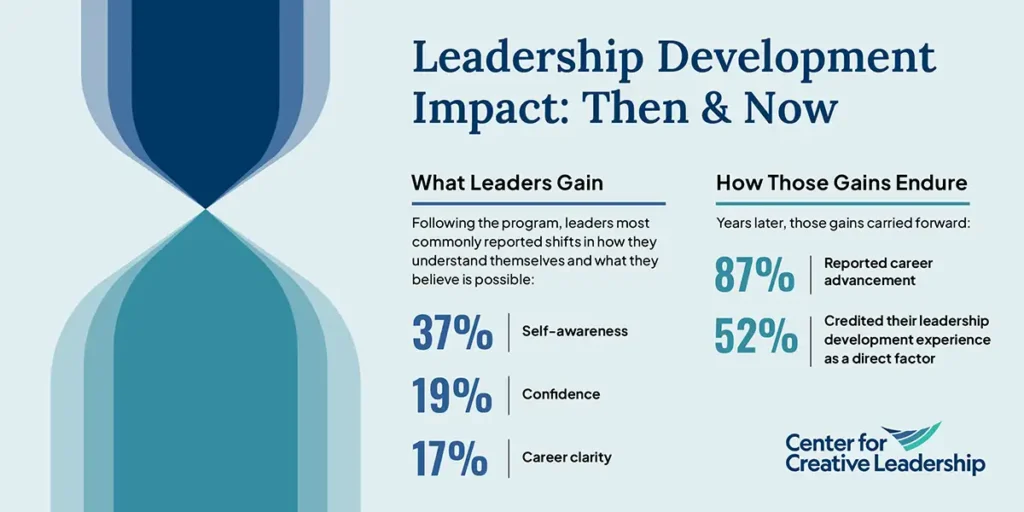
Within one study involving 261 nonprofit leaders, the most frequently reported gains were heightened self-awareness (37%), increased confidence (19%), and enhanced career clarity (17%). Testimonials often highlight profound personal transformations, such as a leader learning to acknowledge and value her accomplishments, thereby mitigating feelings of inadequacy, or an individual overcoming significant "imposter syndrome" to gain a clearer vision of their potential to create impact.
These internal shifts are not merely theoretical; they manifest as observable behavioral changes. A leader who previously hesitated to speak in meetings now contributes with newfound assertiveness. A program director, emboldened by an expanded sense of possibility, pursues larger grant opportunities or initiates new, strategic partnerships. These evolved leadership behaviors invariably shape decision-making processes and bolster an organization’s capacity to respond effectively under pressure.
Three Pillars of Effective Nonprofit Capacity-Building
The positive effects of leadership development have been demonstrated to be remarkably durable over extended periods. A follow-up survey, administered years after nonprofit leaders had completed a capacity-building program, revealed that an impressive 87% reported career advancement, with more than half explicitly attributing this progress to their leadership development experiences.

This enduring impact is consistently linked to three core elements that underpin effective capacity-building for nonprofits:
- Strategic Vision and Goal Setting: This involves equipping leaders with the ability to articulate a compelling, long-term vision for their organization and to translate that vision into actionable, measurable goals. It fosters an environment where ambitious yet realistic objectives are set, driving the organization forward with a clear sense of purpose.
- Resource Mobilization and Management: Effective leadership in the social sector necessitates a sophisticated understanding of how to secure and optimally deploy financial, human, and material resources. This includes cultivating skills in fundraising, grant writing, financial stewardship, and efficient operational management to maximize impact within budgetary constraints.
- Stakeholder Engagement and Collaboration: Building and maintaining strong relationships with a diverse array of stakeholders – including funders, beneficiaries, community members, government agencies, and partner organizations – is paramount. Capacity-building in this area empowers leaders to foster trust, build consensus, navigate complex collaborations, and advocate effectively for their mission.
When these three elements are actively cultivated and integrated, the positive impact cascades outward, extending far beyond individual growth. Conversely, their absence can lead to progress stalling at the individual level, limiting the organization’s overall potential.
The Imperative of Investment: Why Leadership Matters, Especially Now
The prevailing notion that moments of resource constraint are a signal to curtail investments in nonprofit capacity-building is, for many organizations, precisely the wrong approach. In fact, periods of heightened uncertainty often present the most compelling case for such investments.
During times of instability, organizations become even more acutely reliant on the strength and adaptability of their people. The capacity to lead effectively does not emerge spontaneously, nor can it be sustained without ongoing reinforcement. Leadership development programs are designed to deliberately cultivate this capacity, and decades of experience within the social sector have consistently demonstrated a significant, durable, and far-reaching return on this investment.
Social sector organizations that choose to invest in their people during times of change are not acting out of a surplus of resources. Instead, they are acting from a profound understanding that their long-term mission impact is inextricably linked to the preparedness and support of individuals equipped to lead as circumstances inevitably shift. This proactive approach ensures that the organization remains agile, resilient, and capable of navigating complex challenges to achieve its ultimate goals.
The current landscape, marked by economic uncertainties, evolving philanthropic priorities, and shifting political climates, underscores the critical need for robust leadership within the social sector. Organizations that prioritize leadership development are not merely investing in individual growth; they are investing in the sustained capacity of their entire ecosystem to adapt, innovate, and continue delivering vital services and driving meaningful change.
Broader Implications and Future Outlook
The implications of prioritizing leadership development in the social sector extend beyond individual organizations. A more robustly led nonprofit sector translates into more effective solutions to societal problems, greater accountability and transparency, and increased public trust. As philanthropic funding models evolve and the demand for measurable impact intensifies, organizations that can demonstrate strong leadership and a clear capacity to adapt will be better positioned to attract and retain support.
Furthermore, the challenges faced by the social sector are often interconnected with broader societal issues. Enhanced leadership within these organizations can foster more effective advocacy for policy changes, promote greater collaboration across sectors, and ultimately contribute to more resilient and equitable communities. The ability to navigate complex policy environments, mobilize diverse coalitions, and communicate a compelling vision for the future are all hallmarks of strong leadership that can have ripple effects far beyond the immediate scope of a single organization’s work.
Looking ahead, the trend towards increased demand for accountability and demonstrable impact will likely continue. This necessitates a strategic focus on building the internal capacities of social sector organizations, with leadership development standing as a critical component of this imperative. As the complexities of global challenges grow, so too will the need for leaders who are not only knowledgeable and passionate but also adaptable, collaborative, and resilient. The ongoing commitment to strengthening leadership within the social sector is, therefore, not just a matter of organizational effectiveness but a fundamental prerequisite for addressing the most pressing issues of our time.
Ready to Take the Next Step?
For decades, we have partnered with nonprofits, foundations, and social sector organizations to cultivate enduring leadership. Explore our comprehensive capacity-building solutions designed specifically for nonprofits and social sector organizations, and discover how a strategic partnership can translate into tangible, long-term impact.