Securing a placement for a contributed article in a reputable publication requires a sophisticated blend of industry expertise, audience awareness, and editorial alignment. For Business-to-Business (B2B) companies and subject-matter experts, these placements serve as more than just visibility; they are critical tools for establishing executive authority, driving relevant traffic to corporate resources, and building a robust backlink profile. However, the primary challenge remains the pitch itself. Editors at major trade journals and news outlets are often inundated with hundreds of proposals weekly, making it essential for contributors to present ideas that are inherently valuable to the reader rather than purely promotional for the brand.
The Fundamental Distinction: Article Pitch vs. Media Pitch
In the realm of public relations and corporate communications, it is vital to distinguish between an article pitch and a media pitch. An article pitch is a proposal for a full-length piece of content that the contributor intends to write. In this scenario, the contributor provides the narrative, the data, and the conclusion, while the editor provides the platform and oversight. For example, a Chief Technology Officer might pitch an article explaining a specific framework for auditing artificial intelligence (AI) in the workplace.
Conversely, a media pitch is an attempt to interest a journalist in a story that they will write themselves. This might involve sharing a proprietary data set, offering an interview with an executive, or providing a "source" for a breaking news story. While both strategies aim for brand visibility, the article pitch offers the contributor significantly more control over the narrative and the depth of the expertise shared.
Pre-Pitch Protocol: Researching the Editorial Landscape
Before an email is ever drafted, a rigorous research phase must occur. Industry data suggests that the most common reason for pitch rejection is a lack of relevance to the publication’s specific audience. Practitioners should begin by identifying whether a publication even accepts "contributed" or "guest" content. Some outlets have strict "staff-only" policies, while others rely heavily on outside experts.
Once a target publication is identified, the contributor must analyze recent coverage to ensure the proposed topic has not been covered recently or, if it has, that the new pitch offers a significantly different angle. A successful pitch must answer five core questions:
- Why this publication? (Alignment with the outlet’s mission)
- Why this topic? (Relevance to current industry challenges)
- Why now? (Timeliness or evergreen urgency)
- Why these readers? (Direct benefit to the target demographic)
- Why this author? (Proof of specific, verifiable expertise)
Twelve Strategic Frameworks for Successful Article Pitches
To assist marketers and executives in navigating this process, the following twelve frameworks illustrate how to transform professional knowledge into compelling editorial proposals.
1. The Original Research Pitch
This is perhaps the most effective pitch type. Editors value exclusive data that provides a pulse on the industry. If a company has surveyed 500 decision-makers, the pitch should focus on the "why" behind the numbers. For instance, instead of just reporting that AI adoption is up, the pitch should examine why a specific subset of leaders is prioritizing integration over new features.
2. The Contrarian Thought Leadership Pitch
Challenging the status quo is a reliable way to garner attention, provided the argument is defensible. A pitch that argues "More AI features will not fix SaaS retention" offers a counter-intuitive perspective that invites readers to reconsider their current strategies. This must be backed by evidence or anonymized case studies to move beyond mere provocation.
3. The Emerging Trend Pitch
This identifies a shift in market behavior before it becomes common knowledge. For example, noting that procurement teams are entering the software buying cycle earlier than in previous years allows the author to provide a "survival guide" for vendors navigating this new reality.

4. The Practical Framework Pitch
Readers often look for "how-to" content. A pitch offering a "Five-Step Readiness Assessment" provides immediate utility. This format works best when it draws on the author’s direct advisory work, showing readers how to identify gaps and assign responsibilities within their own organizations.
5. The Data + Opinion Pitch
This combines external research with internal expertise. By connecting a recent industry report with the author’s personal experience leading a relevant department, the pitch offers an interpretation of data that readers cannot find elsewhere.
6. The "Lessons Learned" Case Study
While traditional case studies can feel promotional, a "Lessons Learned" pitch focuses on mistakes and unexpected difficulties. An article titled "Five Lessons from a 10,000-Person AI Rollout" is valuable because it acknowledges where assumptions failed, providing a cautionary and constructive roadmap for others.
7. The Executive Experience Pitch
Founders and C-suite executives can offer "behind-the-curtain" perspectives. A pitch focusing on the transition from $1 million to $10 million in Annual Recurring Revenue (ARR) focuses on the evolution of sales processes and qualification criteria, making it a "must-read" for other growth-stage leaders.
8. The "What Everyone Gets Wrong" Pitch
This identifies a specific misconception in the industry. Rather than a broad critique, it should focus on a technical or strategic error—such as misinterpreting AI visibility reports—and offer a practical correction or a new reporting checklist.
9. The Timely Reaction Pitch
When a major regulation or industry development occurs, editors need expert commentary quickly. A pitch that offers to clarify what a new law means for technology buyers within a 24-hour window is highly likely to be accepted if the author has the necessary credentials.
10. The Predictions Pitch
Usually most effective in the fourth quarter of the year, this pitch looks ahead to the next 12 to 24 months. To be successful, predictions must be specific and include "signals to monitor," rather than being vague guesses about the future of the industry.
11. The Content Gap Pitch
This is a high-level strategy that involves finding a "missing" piece in a publication’s existing coverage. If an outlet has covered "AI for content creation" extensively but has ignored "AI governance and review," a pitch filling that specific gap demonstrates deep respect for and knowledge of the publication’s work.
12. The Expert Guide Pitch
This addresses a recurring, evergreen problem. A guide on "How to Build Trust Before a Demo" addresses a constant pain point for B2B vendors. It relies on the author’s long-term research and provides a checklist that remains relevant regardless of the current news cycle.
Structural Requirements of the Pitch Email
A professional pitch email should be concise and structured for quick scanning. Editors often prefer a subject line that clearly indicates the email is a "Pitch" followed by a working title. The body of the email should include a "hook" that establishes publication fit, a brief summary of the proposed article (3–5 bullet points), the specific takeaway for the reader, and a short bio establishing the author’s credentials.
It is generally recommended to avoid sending a full draft unless the publication’s guidelines specifically request it. Instead, offering a detailed outline allows the editor to suggest changes or a different angle before the author spends hours writing.
The Role of Contributed Content in SEO and Brand Authority
From a strategic marketing perspective, article pitching supports three modern pillars: Search Engine Optimization (SEO), Generative Engine Optimization (GEO), and Brand Authority.
SEO and Discoverability: While the primary goal should be editorial value, the secondary benefit is the acquisition of high-quality backlinks. A link from a high-authority publication to a company’s original research can significantly boost the company’s own search rankings. However, most editors will reject content if the links feel forced or promotional.
Brand Authority: When an executive is published in a leading industry outlet, it serves as a third-party validation of their expertise. This "earned media" is often viewed with more trust than "owned media" (corporate blogs) or "paid media" (advertising).
GEO and AI Visibility: As AI-driven search engines (like Perplexity or ChatGPT’s Search) become more prevalent, they rely on a "Knowledge Graph" built from reputable sources. Being featured in major publications increases the likelihood that AI models will cite the brand or executive when answering user queries about industry trends or best practices.
Ethics and Follow-Up Etiquette
Maintaining professional ethics is paramount in article pitching. This includes disclosing any potential conflicts of interest and ensuring that all data shared is accurate and properly cited.
Regarding follow-ups, the industry standard is to wait approximately one week before sending a single, polite inquiry. If there is no response after the second email, it is usually best to move on to a different publication. Pressuring an editor or sending multiple follow-ups in a short period can damage the long-term relationship between the brand and the outlet.
Implications for the Future of B2B Media
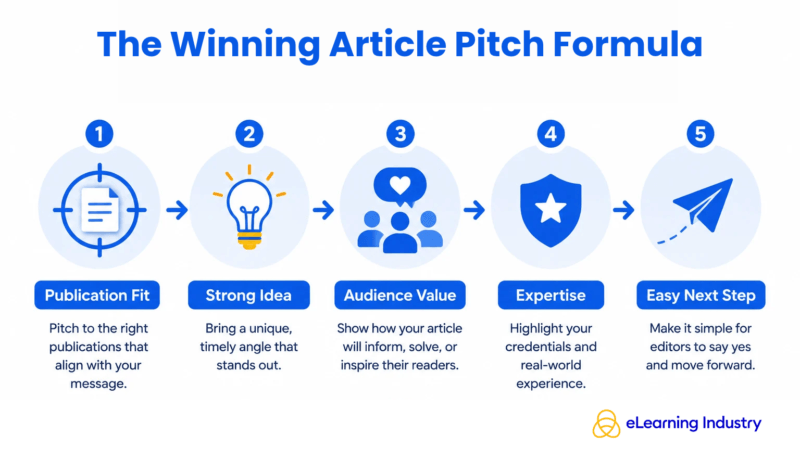
As traditional newsrooms continue to shrink, the reliance on "contributed" expertise is likely to grow. This creates a symbiotic relationship: publications receive high-quality, expert-driven content at no cost, and B2B companies receive a platform to reach their target audiences. The successful contributors of the future will be those who view themselves as educators and industry stewards rather than just marketers. By focusing on the "Winning Formula"—Publication Fit, Strong Idea, Audience Value, and Expertise—brands can move beyond the noise and establish a permanent presence in the industry conversation.