In the rapidly evolving landscape of human resources, artificial intelligence (AI) has emerged as a transformative force, promising unprecedented efficiency in tasks ranging from candidate screening to interview scheduling. One of its most heralded applications is the automated generation of job descriptions (JDs). With just a job title and a few bullet points, AI tools can instantaneously produce a seemingly polished and comprehensive job listing. However, beneath this veneer of efficiency lies a significant and often unaddressed challenge: the insidious potential for AI to embed and even amplify biases within these critical recruitment documents. The pressing question, therefore, is not merely whether AI can draft a job description, but whether that draft is genuinely free of bias and accurately reflects the role.
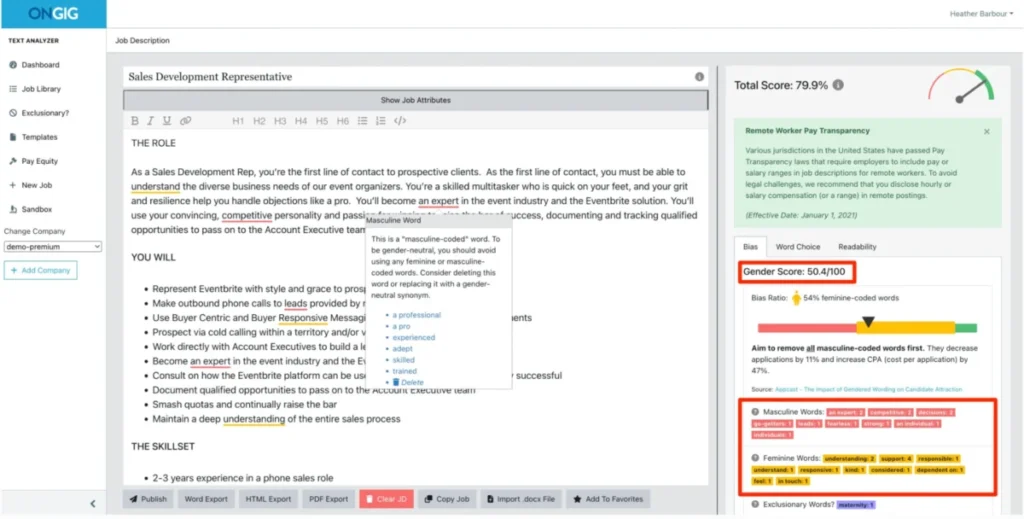
The answer, as recent findings suggest, is likely no. Ongig, a prominent platform specializing in inclusive job descriptions, conducted a revealing experiment that underscored this concern. A sales and marketing job description generated by ChatGPT, a leading large language model (LLM), scored a mere 19.4 out of 100 for gender bias when analyzed by Ongig’s proprietary Text Analyzer. This alarming score highlights a fundamental flaw in relying solely on AI for such sensitive tasks and immediately raises a more profound inquiry: if AI authors the job description, whose responsibility is it to scrutinize it for bias and factual accuracy before it reaches potential candidates?
This article delves into the mechanisms through which AI-generated job descriptions can inadvertently introduce hidden biases, outlines specific red flags to watch for, and proposes a robust, human-centric framework for review before publication.
The Rise of AI in Recruitment and the Inherent Risk of Bias
The integration of AI into recruitment processes gained significant traction in the mid-2010s, initially focusing on automating repetitive tasks like resume parsing and candidate matching. The promise was clear: reduce human error, accelerate hiring cycles, and broaden talent pools. As AI capabilities advanced, particularly with the advent of sophisticated large language models (LLMs) in the late 2010s and early 2020s, the scope expanded to content generation, including job descriptions. While this innovation offers undeniable speed and convenience, it also inherits a critical vulnerability: AI models learn from vast datasets of existing text, much of which reflects historical human biases, societal stereotypes, and entrenched discriminatory patterns.
When an AI system is trained on historical job postings, news articles, and professional profiles, it absorbs the language patterns prevalent in those materials. If, for instance, a particular industry or role has historically been dominated by a specific demographic, the training data will likely contain language subtly or overtly associated with that demographic. The AI, in its effort to generate text that aligns with these learned patterns, will then reproduce these biases in new job descriptions. This "garbage in, garbage out" principle is a foundational challenge in AI ethics.
Beyond Inherited Bias: The Emergence of Novel Biases
The problem of AI bias is not limited to the mere reproduction of historical prejudices. More recent research, such as that presented at the International Conference on Machine Learning (ICML), suggests that generative AI can also produce entirely new combinations of biased language. This emergent bias occurs when models identify subtle patterns within their vast training data and apply them in novel contexts, creating discriminatory language that doesn’t stem from a single, overtly biased source. Instead, these biases can manifest from the complex interplay of how the model ranks, predicts, and connects information, often making them harder to detect through traditional review methods.
The insidious nature of these biases lies in their subtlety. Not all discriminatory patterns are obvious. Sometimes, they are woven into words that, at first glance, appear perfectly normal and professional within a job description. For example, an AI might describe an ideal candidate as "aggressive," a "champion," or a "ninja." While these terms might ostensibly convey confidence, drive, or exceptional skill, they often carry masculine-coded associations. Studies in social psychology and linguistics have consistently shown that such language can subtly deter women and other underrepresented groups from applying, narrowing the talent pool and undermining diversity efforts. Conversely, words like "support," "collaborative," or "understanding" tend to be feminine-coded and can similarly impact the applicant demographic.
The good news is that recognizing and addressing these linguistic biases is a significant step towards creating more inclusive job descriptions. By consciously removing common masculine- or feminine-coded words, organizations can proactively broaden their appeal. However, the scope of bias extends far beyond gender. Recruiters and HR professionals must also be vigilant for biases related to age, disability, mental health, LGBTQ+ identity, socioeconomic status (e.g., requiring specific university degrees or unpaid internships), immigration status, and even criminal history. A comprehensive approach necessitates creating and regularly updating a list of potentially biased words and phrases across all these categories, then meticulously screening every job description against it. Specialized tools, such as Ongig’s Text Analyzer, can automate the detection of thousands of such biased words, offering suggested inclusive alternatives at scale.
Illustrative Examples of Biased Language and Inclusive Alternatives:
To underscore the practical application of bias detection, consider the following examples:
| Biased Word | Bias It Carries | Inclusive Alternative |
|---|---|---|
| Chairman | Gender | Chairperson |
| Mastermind | Gender | Strategist |
| He or She | Non-binary exclusion, LGBTQ+ | They or You |
| Walk | Disability (physical) | Move |
| Guys | Gender, LGBTQ+ | Folks or People |
| MBA from a top university | Elitism, socioeconomic | Have an MBA |
| High pressure | Mental health, neurodiversity | Fast-paced, dynamic |
| Experienced worker | Age | Demonstrated skills |
| English native speaker | Immigration, nationality | Fluent/Proficient in English |
| Criminal background check | Criminal history, socioeconomic | Background check |
This table serves as a starting point, illustrating how seemingly innocuous terms can carry subtle biases that limit candidate diversity. The goal is not merely to remove "bad" words but to cultivate a language that actively invites a wider, more diverse array of qualified individuals.
AI as a Drafting Partner: The Necessity of Human Judgment
The inherent limitations of AI, particularly its reliance on existing data patterns, mean it performs best when tasked with drafting the repeatable, structured components of a job description. These often include standard sections such as:
- Role summary and objectives
- Key responsibilities (in a structured format)
- Basic qualifications and requirements
- Reporting structure
- Standard company boilerplate information
However, once this initial draft is generated, human intervention becomes not just beneficial, but absolutely critical. The details that imbue a job description with personality, reflect unique company culture, and differentiate it from countless similar roles are precisely what AI cannot provide. These crucial human-added elements include:
- Specific team goals and strategic priorities for the role in the next 3-6 months.
- The unique challenges and opportunities within the team or organization.
- Details about the company culture, values, and working environment.
- Information on growth opportunities and career paths specific to the company.
- Unique benefits, perks, or employee resource groups.
The importance of this human layer extends beyond simply adding "fluff." AI lacks the nuanced understanding of what truly matters to a specific team, the strategic direction of the company, or the subtle motivations of ideal candidates. It can format a list of responsibilities, but it cannot discern whether the hiring manager prioritizes building new tools over optimizing existing processes, or whether a candidate needs to hit a specific revenue target within a tight timeframe. These specific, context-rich details are what truly resonate with candidates, giving them a compelling reason to consider a particular role over others, and critically, helping organizations like Abacus Global attract finance professionals whose experience genuinely aligns with their specialized needs.
The synergy between AI and human oversight offers a dual advantage: it accelerates the drafting process significantly while ensuring the final document is both accurate and genuinely inclusive.
A Holistic Review: Beyond Word Choice to Sentiment and Accuracy
Even after systematically replacing potentially biased words with inclusive alternatives, the task is only half complete. A job description can employ perfectly inclusive language yet still convey an overly demanding, negative, or intimidating tone. The overall sentiment is as crucial as individual word choices. For instance, simply changing "aggressive" to "driven" fails to address the underlying issue if the rest of the description demands a candidate who must "thrive under constant pressure and deliver results at all costs." Such language can still alienate candidates seeking a healthy work-life balance or those with neurodiverse needs.
To ensure the tone is appropriate and inviting, reviewers should ask critical questions:
- Does the language sound realistic and approachable?
- Does it encourage a diverse range of candidates to apply, or does it inadvertently screen some out?
- Does it accurately represent the day-to-day realities and challenges of the job without being overly negative or demanding?
- Is the language generally positive and encouraging?
- Does it reflect the company’s commitment to inclusivity and employee well-being?
The ultimate objective is to craft an honest and transparent tone that clearly communicates the job’s demands while maintaining an inviting and supportive demeanor.
Furthermore, AI’s tendency to generalize can lead to inaccuracies. When prompted with a title like "Senior Product Manager," ChatGPT might add responsibilities such as roadmap planning, user research, analytics, and team leadership. While these are common duties for such a role, they might not be entirely accurate or relevant for a specific company’s Senior Product Manager position. This is a direct consequence of AI relying on patterns from similar roles rather than understanding the unique context of your organization.
Instead of allowing AI to define the role, human judgment, informed by input from subject matter experts, is indispensable. This ensures that role-specific nuances, internal jargon, proprietary acronyms, and critical process notes are accurately captured. For highly specialized fields, like healthcare, generic AI tools frequently hallucinate medical terminology or misrepresent crucial details. Involving a knowledgeable professional, such as a virtual medical administrative assistant, to review job listings guarantees that patient-scheduling requirements, HIPAA compliance, and other regulatory responsibilities are precisely articulated before publication.
Navigating the Legal Landscape: AI and Compliance
While AI can assist in drafting standard compliance language, it is crucial to understand that it is not a legal expert. Relying on AI for legal compliance is fraught with peril. AI models can pull generic or superseded laws from the internet, apply regulations that do not pertain to the specific hiring location, or even "hallucinate" non-existent legal requirements. The legal landscape of employment is complex and highly localized, with significant variations in disclosure requirements, anti-discrimination laws, and data privacy regulations across different jurisdictions.
Before any AI-generated job description is published, it must undergo a rigorous compliance review. This involves cross-referencing the document against the specific employment laws and disclosure requirements applicable to the hiring location. For organizations recruiting across multiple regions, engaging HR and legal teams is essential to ensure every detail is accurate and legally compliant. Key areas for review include:
- Salary Transparency Laws: Many regions now mandate the disclosure of salary ranges.
- Equal Employment Opportunity (EEO) Statements: Ensuring non-discriminatory language and policies.
- Data Privacy Regulations: Compliance with GDPR, CCPA, and other privacy acts regarding candidate data.
- Immigration and Work Authorization Requirements: Clear stipulations on eligibility.
- Disability Accommodations: Affirming commitment to reasonable adjustments.
- Veteran Status Affirmation: Compliance with affirmative action for veterans.
- Child Labor Laws: Ensuring adherence to age restrictions.
Failing to meet these compliance standards can lead to significant legal complications, fines, and reputational damage.
The Feedback Loop: Continuous Improvement through New Hires
Even with meticulous pre-publication review, some inaccuracies or misrepresentations in a job description only become apparent once someone is actually performing the role. This makes new hires an invaluable source of feedback for refining future job descriptions. Engaging with them to understand their initial expectations versus the reality of the role can provide critical insights. Questions to ask might include:
- What aspects of the job description accurately reflected the role?
- What responsibilities were more or less important than advertised?
- Were any key expectations or challenges missing from the description?
- Did the role evolve differently from what they anticipated during the hiring process?
For frontline and deskless employees, leveraging employee experience platforms like Blink can facilitate this feedback loop, providing direct communication channels to managers through chat or quick polls. This allows for timely collection of feedback while the hiring experience is still fresh, enabling organizations to make iterative improvements to their job descriptions.
Crafting an Ethical Workflow: A Synergistic Approach
The optimal strategy for job description creation does not involve choosing between manual drafting and full AI automation. Instead, it necessitates a symbiotic workflow that leverages AI’s efficiency while anchoring the process in human judgment and ethical oversight. Here’s a practical, seven-step job description review process designed for accuracy and inclusivity:
- Generate the First Draft Using AI: Provide the AI with a comprehensive prompt including the exact job title, a detailed list of responsibilities, specific team dynamics, location, and any pre-approved inclusive language guidelines. The more context provided, the more accurate and relevant the initial output will be.
- Add the Human Judgment Layer: The hiring manager and relevant team members must then enrich the AI-generated draft with unique organizational context. This includes specific team goals, cultural nuances, strategic priorities, and any differentiating factors that make the role unique to the company.
- Check for Language Bias: Run the entire description through an automated bias and inclusivity checker, such as Ongig’s Text Analyzer. This tool can swiftly flag potentially biased words and phrases, suggesting neutral or inclusive alternatives, thereby catching subtle biases that human reviewers might miss.
- Check the Tone and Sentiment: Read the full job description aloud. Evaluate whether the tone is realistic, encouraging, and approachable. Ensure it accurately conveys the job’s demands without being overly aggressive, intimidating, or negative.
- Verify the Details: Engage subject matter experts (SMEs), current team members, and the hiring manager to meticulously confirm the accuracy of responsibilities, required qualifications, specific tools or technologies, experience level, reporting structure, and key performance indicators. This step safeguards against AI "hallucinations" or generalizations.
- Conduct a Compliance Audit: Review the job description against all applicable local, national, and international employment laws and disclosure requirements. This includes salary transparency, EEO statements, data privacy, and immigration regulations. Involve HR and legal teams for multi-jurisdictional hiring.
- Integrate Post-Hire Feedback: Establish a system for collecting feedback from new hires after they’ve settled into the role. Use these insights to continuously refine and improve future job descriptions, ensuring they accurately reflect the actual job experience.
While several of these steps can be performed manually, the sheer volume of cross-referencing and iterative revisions can be time-consuming. Leveraging an integrated, AI-powered platform like Ongig can streamline this entire process, managing multiple stages from drafting to compliance checks within a single ecosystem.
The Broader Impact: Cultivating Diverse Workforces and Mitigating Risk
The ultimate objective of publishing a job description is to attract a diverse pool of highly talented professionals. To achieve this, the document must be fundamentally inclusive and impeccably accurate. AI in recruitment offers undeniable speed and efficiency, but speed alone does not guarantee an unbiased or effective job description.
A commitment to creating truly inclusive job descriptions has far-reaching implications. It directly contributes to an organization’s diversity, equity, and inclusion (DEI) goals, fostering a workplace that reflects the rich tapestry of society. Conversely, biased job descriptions can lead to a less diverse applicant pool, perpetuating existing inequalities and potentially exposing the organization to legal challenges and reputational damage. In an era where corporate ethics and social responsibility are under increasing scrutiny, ensuring fair and equitable hiring practices is paramount.
The optimal approach, therefore, is a harmonious blend of technological prowess and human intelligence. AI excels at the repeatable, data-driven aspects of job description generation. However, human hiring managers bring the irreplaceable context, empathy, and strategic insight, while specialized tools like Ongig provide the crucial layer of bias detection and remediation. This "human-in-the-loop" model represents the most robust and ethical path forward for leveraging AI in talent acquisition, ensuring that the pursuit of efficiency does not compromise the fundamental principles of fairness and inclusion. Organizations that embrace this integrated strategy will not only accelerate their hiring processes but also cultivate more diverse, innovative, and ultimately, more successful workforces.
Frequently Asked Questions
Can AI-generated job descriptions be biased?
Yes. AI models learn from vast datasets that often reflect historical human biases. As a result, AI can reproduce or even generate new forms of gender, age, disability, racial, socioeconomic, or other biases in job descriptions. It is critical to review every AI-generated job description for potential biases before publishing.
How can you check an AI-generated job description for bias?
A comprehensive check involves reviewing both individual words and the overall tone of the description. Look for gendered, exclusionary, ableist, age-related, or other biased language. Additionally, utilize specialized bias detection tools, such as Ongig’s Text Analyzer, which can identify subtle linguistic biases that human reviewers might miss and suggest inclusive alternatives.
Should you use AI to write job descriptions?
Yes, but strategically. AI is an excellent tool for generating the first draft of a job description, handling repeatable and structured content quickly. However, it should not replace human judgment. The process requires human reviewers to verify responsibilities, requirements, tone, inclusivity, and legal compliance before the description is published to ensure accuracy and ethical standards.