A well-crafted job description is far more than a mere enumeration of duties; it serves as a critical touchpoint, shaping candidate expectations, conveying a company’s unique culture, and ultimately influencing a potential hire’s decision to pursue an opportunity. In the rapidly evolving landscape of talent acquisition, Artificial Intelligence (AI) has emerged as a transformative force, capable of generating polished drafts in mere minutes. This speed is invaluable for recruiters contending with escalating requisition loads and stringent deadlines. However, this efficiency introduces a subtle yet significant challenge: the pervasive problem of linguistic homogeneity, where similar AI tools, prompts, and foundational data often produce strikingly similar, generic language.
Candidates are increasingly discerning, noticing the repetitive promises of a "fast-paced environment" or the ubiquitous search for a "passionate self-starter" across numerous employer postings. This article delves into the profound ways AI is reshaping the creation of job descriptions, examines why this growing sameness undermines employer branding, and presents six actionable strategies for recruiters to integrate automation with specific, authentically human writing to maintain distinctiveness and appeal.
The Ascendancy of AI in Talent Acquisition
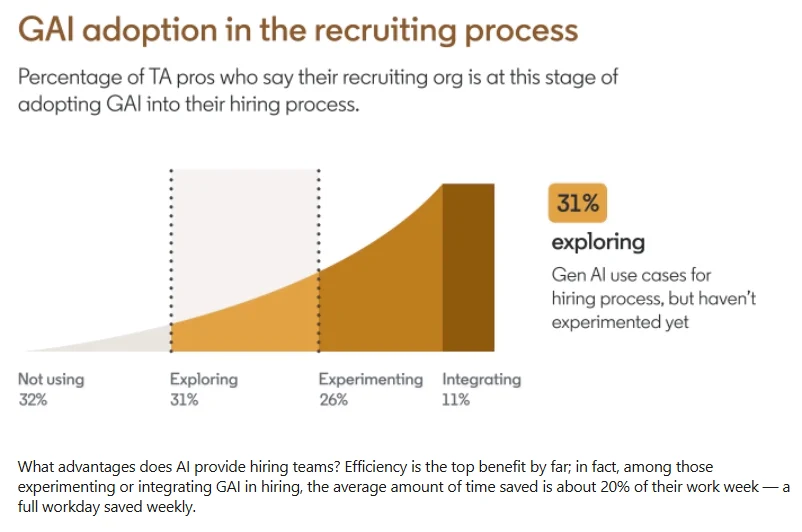
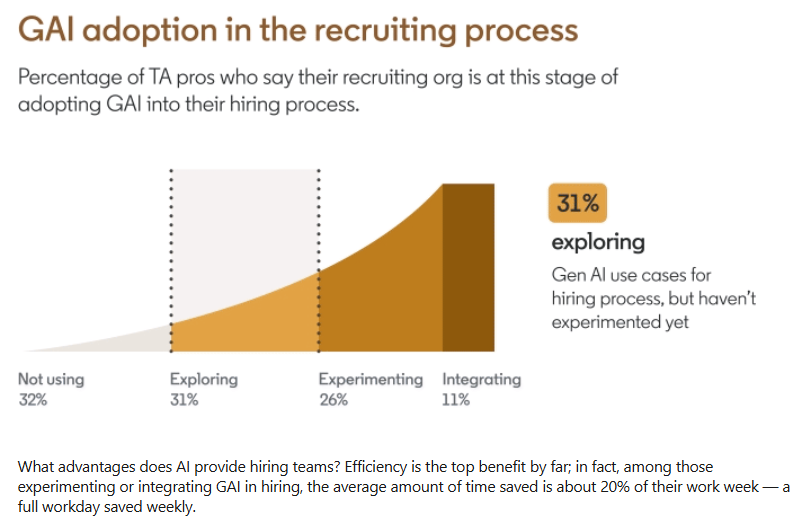
The integration of AI into human resources, particularly talent acquisition, has been a defining trend of the past decade, accelerating dramatically with the advent of sophisticated generative AI models. What began as basic automation in Applicant Tracking Systems (ATS) for resume parsing has evolved into comprehensive AI-driven solutions impacting nearly every stage of the hiring pipeline. LinkedIn’s "Future of Recruiting" report underscores this shift, revealing that a substantial 31% of talent acquisition professionals were actively exploring generative AI for hiring purposes, while another 26% were already experimenting with its capabilities. Those who have embraced AI, either through experimentation or full integration, reported saving a remarkable 20% of their workweek – effectively, an entire day dedicated to higher-value tasks.
This adoption is not confined to a single function. AI now plays a pivotal role in sourcing potential candidates, automating initial screening processes, streamlining interview scheduling, facilitating objective assessments, and, critically, drafting job descriptions. Hiring teams are leveraging a diverse array of AI tools, from features embedded within their ATS platforms to advanced large language models, sophisticated language checkers, and specialized platforms designed specifically for optimizing job descriptions.
Alex Byder, founder of BD Homebuyer, a company that recently scaled its acquisitions team using AI-driven hiring tools, highlights the practical advantages. Byder notes, "AI has quietly become the first draft for almost every requisition we post. It handles the structure, the formatting, and the baseline language, which lets our recruiters spend their energy on the parts of hiring that actually require a human, like understanding what a team truly needs in its next hire." This sentiment reflects a broader industry recognition that AI can offload time-consuming, repetitive tasks, freeing human recruiters to focus on strategic engagement and nuanced decision-making. The appeal is straightforward: recruiters can generate a functional first draft swiftly, ensuring basic structural integrity, and then dedicate more time to meaningful conversations with hiring managers to truly define roles, or with candidates to assess fit. A robust, AI-assisted job description process also simplifies multi-stakeholder reviews, expediting approvals in complex organizational structures.
The Double-Edged Sword: Speed, Consistency, and the Peril of Sameness
While AI’s ability to rapidly generate job descriptions offers undeniable advantages, it simultaneously introduces challenges that demand careful consideration. The technology is fundamentally altering both the speed and the very nature of job description development.
Faster Drafting and Editing: One of AI’s most lauded benefits is its capacity for rapid content generation. By providing a job title, seniority level, key responsibilities, and a desired tone, AI can assemble a comprehensive draft within minutes. It can transform disparate notes from a hiring manager into a structured overview, clear responsibilities, essential qualifications, and a compelling benefits section. However, speed does not automatically equate to quality. A Pew Research Center study found that while 40% of workers using AI chatbots reported completing work faster, only 29% felt the tools significantly improved quality. This disparity serves as a crucial warning: the efficiency gain must be carefully managed to prevent a decline in content excellence.
Greater Consistency Across Roles: AI can enforce standardized sections and language, enhancing consistency across dozens of open positions. This helps preserve essential company-wide messaging, legal disclaimers, approval protocols, and formatting, while allowing for customization of role-specific details. This consistency is beneficial for establishing a uniform brand presence and streamlining internal processes. However, consistency must be a vehicle for clarity, not an eraser of organizational personality. While a finance analyst, a warehouse supervisor, and a software engineer might share core company values, their respective job summaries should never be identical. Each posting requires a unique articulation of its specific decisions, working conditions, collaborative environment, and metrics of success. The goal is to set a common framework, then safeguard the space for authentic differentiation.
Skills-First and Tailored Descriptions: AI’s analytical capabilities allow it to map responsibilities to established occupational frameworks, facilitating a "skills-first" approach to hiring. This helps differentiate truly essential skills from inherited, potentially outdated, or unnecessary requirements. Furthermore, AI can adapt vocabulary and tone for specific job families, career levels, and target candidate audiences, making job descriptions more relevant and appealing. This capability makes scaling a skills-first approach considerably easier, promoting more equitable and effective hiring practices.
Bias and Compliance Checks: Language analysis tools can identify and flag exclusionary terms, unnecessary degree requirements, and phrasing that might inadvertently discourage qualified but diverse candidates. They can also assist in spotting potential issues related to pay transparency regulations or equal employment opportunity (EEO) concerns. However, these automated checks are not infallible. No algorithm possesses a complete understanding of every jurisdictional nuance or specific organizational context. Human review remains indispensable to confirm legal requirements, assess the true necessity of each qualification, and ensure recommendations align with ethical hiring practices.
More Polished but Generic Language: This is where AI’s efficiency can become a detriment. While AI excels at producing grammatically correct and professionally sounding text, without highly detailed and specific inputs, it tends to gravitate towards familiar, generalized phrases. These phrases, while polished, often reveal little about the unique team, the specific manager, or the actual day-to-day work environment. This is the point where efficiency metastasizes into pervasive sameness. Distinctive writing is paramount for capturing candidate attention long before they even consider applying.
The Problem of Homogeneity and its Impact on Employer Branding
The convergence of AI-written job descriptions into a homogenous mass stems from the fundamental nature of how these models operate. AI models predict the most probable language based on vast training datasets, and generic prompts naturally steer them towards safe, average expressions. Common phrases become prevalent not because they are uniquely descriptive of a particular workplace, but simply because they are common in the corpus of data AI has learned from.
Consider the implications: compare job postings for product managers across disparate sectors like technology, finance, and healthcare. One might encounter identical promises of "innovation," "collaboration," "competitive benefits," and "rapid growth." While these attributes might genuinely exist in all these organizations, the underlying decisions, specific risks, and unique customer bases are entirely different. The language, while not inherently incorrect, becomes too vague to genuinely assist a candidate in discerning meaningful differences between opportunities.
This issue of depersonalization is a growing concern within the industry. HR.com’s "Future of Recruitment Technologies 2025–26" research found that 51% of talent acquisition professionals were concerned about AI leading to depersonalization in recruitment. This finding perfectly encapsulates the risk posed by homogenized job descriptions: while the drafting process accelerates, the resultant language often feels less human, less specific, and disconnected from the tangible reality of the workplace.
For employers, this linguistic repetition actively undermines differentiation. If a posting for a Head of Customer Success sounds indistinguishable from a competitor’s, the company has forfeited one of its earliest and most crucial opportunities to showcase the distinct value proposition of that role and its organizational context. Furthermore, search visibility can suffer. Google’s spam policies explicitly recommend useful, original, people-first content and warn against repetitive material generated primarily for search engines. Prioritizing candidates by offering unique, valuable content is therefore not just good practice, but also a strategic imperative for search engine optimization.
Erosion of Employer Branding and Candidate Experience
A job description often represents a candidate’s first extended interaction with an employer’s brand. When this initial conversation feels "canned" or generic, candidates can reasonably infer that the actual employee experience might be similarly impersonal. This challenge extends beyond job descriptions; as AI increasingly shapes interactions throughout the hiring journey, from initial chatbots to automated assessments, the overall candidate experience risks becoming dehumanized if not carefully managed.
Specific, authentic language is a cornerstone of credibility. A compelling job description should articulate what unique problems the team is solving, how decisions are made, the degree of autonomy afforded to the role, and concrete examples of success within the first 90 or 180 days. Such details build trust and provide a realistic preview.
Moreover, the language used profoundly influences who feels invited to apply. Research published in Psycnet has demonstrated that gendered wording can subtly affect how individuals perceive roles, highlighting the critical importance of careful linguistic choices in fostering inclusivity. Clear, day-to-day details offer a more realistic preview of the role, enabling candidates to self-select more effectively with better information. This reduces the likelihood of mismatches that highly polished but ultimately empty copy can conceal. ZipRecruiter’s Q2 2026 New Hire Survey underscored this point, finding that 26% of new hires reported that mismatched expectations would cause them to begin searching for another job, reinforcing the imperative for precise and transparent role definitions.
Navigating the Ethical and Regulatory Landscape
While AI tools offer valuable assistance in identifying potential biases and ensuring compliance, their application requires careful human oversight. Automated bias checks can flag terms that might be exclusionary or inadvertently perpetuate stereotypes. However, the efficacy of these tools is limited by their training data and algorithmic design; they may not detect all subtle forms of bias or fully comprehend the nuanced implications of certain phrasing within specific cultural or industry contexts.
Similarly, AI can help identify potential concerns regarding legal compliance, such as adherence to pay transparency laws or equal employment opportunity guidelines. However, regulatory landscapes are complex, dynamic, and vary significantly by jurisdiction. No automated check can fully substitute for human legal expertise. Organizations leveraging algorithms in employment decisions must rigorously review guidance from bodies like the Equal Employment Opportunity Commission (EEOC) regarding adverse impact. Assigning a named owner responsible for confirming local legal requirements before publication is a critical safeguard against inadvertent non-compliance. The human element is crucial for navigating the ethical complexities and legal ambiguities that AI alone cannot fully address.
Strategies for Harmonizing AI Efficiency with Human Authenticity
The challenge for hiring teams is not to choose between automation and originality, but to master their synergistic integration. AI should be leveraged for its strengths – structure, generating alternative phrasing, and initial compliance checks – while human judgment and creativity are deployed to infuse the context and specificity that a model cannot infer. Every AI-generated draft should be treated as raw material, a foundation upon which human insight builds. The critical differentiator lies in thoughtful human editing, adding details about team communication norms, common pressures, critical trade-offs, and tangible accomplishments expected within specific timeframes.
Here are six practical strategies to make every job posting clearer, more recognizable, and more effective:
-
Cultivate a Distinct Voice Guide and Cliché Blacklist: Develop a concise, one-page guide articulating your company’s communication style. This should detail preferred terminology, words to actively avoid, and examples of acceptable tone across various roles (e.g., technical, frontline, leadership). Crucially, include a "blacklist" of overused, generic phrases such as "rockstar," "ninja," "wear many hats," or "dynamic environment." Integrate this guide into AI prompts, recruitment workflows, and review checklists to ensure consistent application by all contributors.
-
Inject Authentic Company and Role Details: The quality of AI output is directly proportional to the quality of its input. Provide AI with concrete, specific details: team collaboration practices, the specific tools used, the customer base, operational constraints, and examples of successful employee attributes. Mention an on-call rotation, a legacy system migration, a regulated workflow, or a weekly customer review meeting when these elements genuinely define the work. Generic inputs inevitably yield generic outputs; specific, truthful details will produce distinct and informative copy.
-
Define Outcomes and Realistic Expectations: Shift the focus from a mere list of duties to tangible 90-to-180-day outcomes. For instance, instead of "Manage customer feedback," state: "Within 90 days, establish a weekly customer feedback loop that consistently informs the product roadmap and demonstrably reduces churn risk by 10%." Furthermore, consider including a concise "What this role is not" statement. This clarifies boundaries, manages expectations, and helps candidates self-select more effectively, leading to a higher quality of applications and fewer mismatches.
-
Prudent Use of Inclusion and Compliance Tools: Employ language checkers for inclusivity and compliance, but critically review their suggestions rather than accepting them blindly. While these tools can highlight potential issues, human judgment is essential to ensure that proposed changes align with the role’s true requirements and legal obligations without diluting standards. Refer to resources like inclusive job description examples to understand how subtle wording adjustments can broaden appeal without compromising role integrity. Always confirm local legal requirements with a designated owner, especially concerning sensitive areas like pay transparency or EEO.
-
Data-Driven Refinement through A/B Testing: Where application volume allows, implement A/B testing for various elements of job postings, including titles, summaries, requirements, and benefits. Track meaningful metrics beyond raw application volume, such as the qualified application rate, completion rate, time to fill, interview conversion rates, and even first-90-day performance of new hires. Document what changes after each revision and systematically apply these learnings to future postings to continuously optimize for effectiveness.
-
Regular Audits for Originality and Impact: Proactively combat sameness by regularly auditing new job descriptions against your internal library and comparable public postings. Utilize n-gram overlap or semantic similarity checks to identify repeated passages before they reach candidates. Sample at least 10 postings each quarter, highlighting recurring openings, claims, adjectives, and benefit language. Then, critically assess whether this repetition serves a legitimate policy or merely reflects ingrained habit. Maintain necessary consistency for policy-driven elements, but actively rewrite anything that prevents a candidate from grasping the role’s unique value. Task a human reviewer with replacing generic sections with concrete, role-specific evidence, integrating these insights into a recurring job description optimization review process to monitor readability, inclusivity, consistency, and time savings without sacrificing brand voice.
The Evolving Role of the Recruitment Professional
The advent of sophisticated AI does not diminish the role of the recruitment professional; rather, it elevates it. Recruiters are shifting from content generators to strategic curators, leveraging AI for foundational work while focusing their expertise on understanding the nuanced needs of hiring teams, the psychological drivers of candidates, and the art of authentic brand storytelling. AI becomes an enabler, freeing up time for higher-value activities such as candidate relationship building, strategic talent mapping, and fostering truly inclusive hiring practices. The future of recruitment is not about replacing humans with AI, but about empowering humans with AI.
Conclusion
AI offers an unparalleled opportunity for talent acquisition teams to produce job descriptions with greater speed and consistency. However, speed alone does not equate to utility or effectiveness. The most compelling and successful job descriptions will be those that master the delicate balance between AI-driven efficiency and human-centric creativity. This involves a practical, multi-step workflow: generating a structured draft with AI, immediately enriching it with team-specific context and authentic details, meticulously removing clichés and generic phrasing, rigorously verifying requirements for accuracy and compliance, and completing a final, discerning human read.
By consistently applying this hybrid approach, organizations can ensure their job openings transcend the noise of generic feeds. They will transform into genuine invitations – clear, meaningful, and distinct – from a particular team, offering a specific role, to undertake truly defined and impactful work. Embracing this synergy between artificial intelligence and human ingenuity is the key to unlocking the full potential of job descriptions in the modern recruitment era.