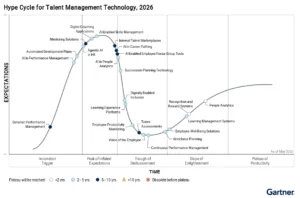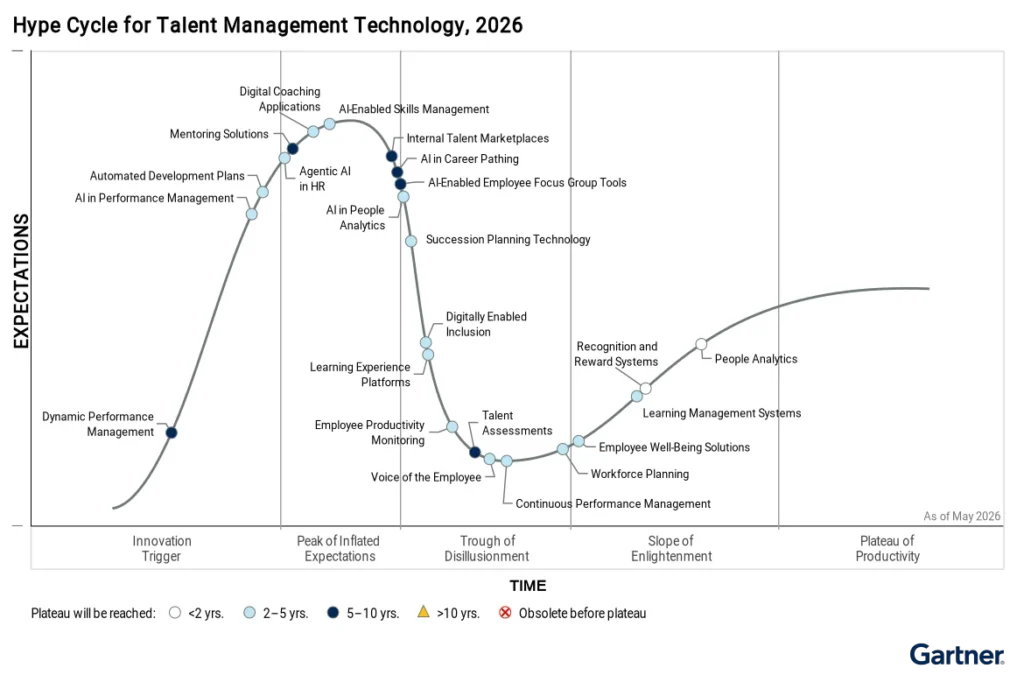
Gartner’s recently released 2026 Hype Cycle for Talent Management Technology underscores a significant challenge facing HR leaders today: the widespread fragmentation and underutilization of existing human capital management (HCM) solutions. The report, a crucial guide for organizations navigating the complex landscape of HR technology investments, maps over 20 distinct talent technologies, charting their journey from nascent innovations to established tools, and critically, revealing where most currently reside: the "Trough of Disillusionment." This placement is not a testament to the inherent failure of these technologies, but rather a stark indicator of missing foundational infrastructure, most notably, a lack of seamless data integration between disparate systems and a persistent issue with poor data quality.
This analysis from Gartner, a leading research and advisory firm, arrives at a pivotal moment for talent management. As organizations grapple with evolving workforce dynamics, the demand for agile and effective people management strategies has never been higher. However, the current state of HR technology stacks often acts as a bottleneck, preventing leaders from realizing the full potential of their investments. The report’s findings suggest a critical need for a strategic shift from fragmented data points to interconnected insights that can drive meaningful action.
Quantum Workplace, a prominent player in the HR technology space, has been recognized by Gartner across five key talent management categories in the 2026 report: AI in Performance Management, Continuous Performance Management, Voice of the Employee, Succession Planning Technology, and Recognition and Reward Systems. This broad inclusion highlights the company’s comprehensive approach to talent management and its alignment with Gartner’s identified areas of significant market activity and future potential.
The Fragmented State of HR Technology Stacks
The current reality for many HR departments is a patchwork of specialized software. An HRIS system typically manages core employee records, while separate platforms handle engagement surveys, performance reviews, and often, a standalone application for employee recognition, acquired at different times and from various vendors. The critical failing of this fragmented approach is the lack of interoperability. These tools operate in silos, creating data islands that prevent a holistic view of the employee lifecycle. Consequently, the actionable insights derived from this data are often delayed, lack crucial context, or are simply inaccessible to the very individuals—people managers and HR leaders—who need them to make informed decisions.
Supporting data from industry analyses corroborates this challenge. A recent report by HR.com indicated that while HR leaders commonly deploy between two to four HR solutions from different providers, a concerningly low 39% reported that these systems are usefully integrated. This integration gap directly contributes to the dissatisfaction Gartner identifies, where changing demands for agile people management are hampered by limited data flow and compromised data integrity. The erosion of trust in the output of these systems is a direct consequence, hindering effective talent strategy development and execution.
The strategic imperative for forward-thinking HR teams is clear: to move beyond isolated data points and cultivate a connected ecosystem of insights. This transformation requires breaking down the traditional silos, creating a unified and clear picture that empowers leaders with the context and confidence to act decisively on talent-related matters.
AI in Performance Management: Maturing into a Market Reality
Gartner has classified "AI in Performance Management" as "early mainstream," signifying that the technology is not only functional but is also experiencing active adoption within organizations. This category encompasses AI applications designed to enhance the quality and efficiency of performance management processes. This includes assisting in the formulation of performance goals, drafting constructive feedback, summarizing key discussion points from employee check-ins, and streamlining the preparation for performance calibration sessions.
The business case for AI in this domain is robust. Gartner highlights the significant burden placed on managers and the resource-intensive nature of traditional performance processes. Furthermore, the inconsistency in the quality of feedback delivered across organizations presents a significant developmental hurdle. AI offers a potent solution to bridge these gaps. However, Gartner emphasizes a critical prerequisite for successful implementation: organizations must invest in comprehensive training for managers. This training is essential to equip them with the skills to effectively leverage AI-generated feedback and integrate it meaningfully into their management practices.
Quantum Workplace’s new "Insights Hub" is designed to address this need at scale. Instead of merely presenting raw data dashboards, Insights Hub analyzes an organization’s engagement, performance, and development data to generate graded insights, complete with confidence signals. These insights are then delivered directly to leaders, framed in accessible coaching language rather than technical data jargon. By connecting these various signals across an organization’s people data, Insights Hub continuously learns what is most impactful within the company, providing leaders with the clarity and context necessary to make more informed business decisions.
Continuous Performance Management: A Mature Foundation Facing Adoption Hurdles
Continuous Performance Management (CPM) has officially entered the "Trough of Disillusionment" according to Gartner’s framework. This classification signifies that while the technology itself is well-established and the methodologies are proven—with market penetration exceeding 50%—broader adoption is encountering challenges. Gartner defines CPM as an ongoing, iterative process where managers and employees collaboratively track and update goals, capture informal and formal feedback, and engage in regular check-ins throughout the year.
The core issue is not the efficacy of CPM technology itself, but rather the underlying organizational culture. Gartner unequivocally states that a robust feedback culture is a prerequisite for the sustained feedback loops that CPM demands. Without this foundational cultural support, even the most sophisticated CPM platform risks becoming underutilized "shelf-ware."
Quantum Workplace’s Performance Management software is engineered to support the entire CPM lifecycle, encompassing goal setting, regular check-ins, feedback exchange, and formal performance reviews within a single, integrated experience. Crucially, its placement on a unified platform prevents performance data from becoming isolated. Goals directly inform one-on-one discussions, feedback seamlessly integrates into review processes, and all these elements are interconnected with broader engagement and development initiatives. This integrated approach provides managers with a comprehensive view of their team’s performance, rather than a fragmented and incomplete picture. The ultimate benefit is that leaders can dedicate less time to data aggregation and more time to coaching, aligning their teams, and fostering an environment where individuals can achieve their best work.
Recognition and Reward Systems: Rapid Maturation and Strategic Underutilization
Recognition and reward systems have also advanced to Gartner’s "Slope of Enlightenment," indicating a period of increasing understanding and practical application. The technologies in this category facilitate expressions of gratitude for achievements and behaviors that align with organizational goals and values, enabling employees, managers, and leaders to participate. Modern solutions increasingly leverage AI and analytics to deliver personalized and timely recognition, often integrated with collaborative work tools.
Gartner’s strategic recommendation is for organizations to actively explore integrating recognition systems with their performance management and voice-of-the-employee platforms. This integration is key to developing a comprehensive view of employee contributions and sentiment. The current gap, Gartner observes, lies in the fact that most organizations still treat recognition primarily as a transactional gifting function, rather than as a strategic lever for building a positive and engaged organizational culture.
Quantum Workplace’s recognition and rewards software, now enhanced through its integration with Assembly, directly connects recognition events to the engagement and performance signals that are most critical to HR. When a manager acknowledges a team member’s contribution, this moment is captured and becomes an integral part of a connected talent narrative. This broader context can significantly influence retention decisions, inform performance conversations, and shape future development plans.
Voice of the Employee: Transitioning from Listening to Actionable Impact
Voice of the Employee (VoE) solutions are designed to systematically collect and analyze employee sentiment through surveys, feedback tools, and various other data streams. The primary objective is to deliver actionable insights that can lead to improvements in employee engagement, overall employee experience, and ultimately, performance.
A significant obstacle highlighted by Gartner, and one familiar to many HR leaders, is the persistent struggle organizations face in translating VoE feedback into timely and impactful actions. Industry data suggests that only about one-third of employees believe their organization effectively acts on their feedback. This deficiency is often attributed to a lack of accountability among leadership and difficulties in identifying concrete solutions to the issues raised in feedback mechanisms.
Quantum Workplace’s Employee Engagement software is specifically built to bridge this "survey-to-action" gap. By connecting engagement survey data with performance and development signals, the platform ensures that employee sentiment is never disconnected from the actions managers are taking. A key feature, "Action Planning," transforms general guidance into tangible momentum. Team reports provide managers with clear explanations of key terms and metrics, while preset focus areas ensure alignment with company-wide objectives. Furthermore, AI-powered discussion starters and action ideas equip leaders with the tools to translate conversations into concrete, best-practice-grounded next steps. Built-in tracking mechanisms and nudges help maintain progress on these action plans, ensuring that initiatives do not falter once the survey period concludes.
Succession Planning Technology: Scaling Beyond the Elite Few
Despite succession planning being a top priority for Chief Human Resource Officers (CHROs), the technology supporting it often falls short of expectations. Data indicates that only 57% of organizations have a formalized process for identifying high-potential talent. Gartner notes that many existing Human Capital Management (HCM) succession modules fail to meet user expectations regarding data visualization, process automation, and secure cross-functional data sharing. While they may function as data repositories, they often lack the ability to build crucial connections across different HR functional areas.
The overarching ambition for many organizations is to expand succession planning beyond the top 5-7% of critical roles. Gartner is observing a growing interest in scaling and integrating succession planning with broader development and workforce management strategies to achieve this goal.
Quantum Workplace’s succession planning tools are designed precisely to facilitate this shift. Moving away from static, top-down spreadsheet exercises, the platform empowers any leader to nominate potential successors. They can provide context on strengths and skill gaps, thereby taking ownership of their segment of the talent pipeline. This approach enables succession planning to scale effectively beyond a select few executive-level positions. Features such as readiness tracking, integrated performance data, and visibility into diversity metrics ensure that succession plans are grounded in concrete signals rather than mere guesswork. When it comes time to report on progress, board-ready insights are updated in real-time, eliminating the scramble to compile outdated snapshots. This represents a more dynamic and responsive approach to succession planning, one that aligns with the organic growth and evolving needs of an organization.
Implications for HR Technology Procurement Decisions
Gartner’s 2026 Hype Cycle for Talent Management Technology delivers a clear strategic directive for HR leaders: the technologies that yield the greatest value are not necessarily the newest or most innovative. Instead, the most impactful solutions are those that effectively connect disparate data sources, are readily adopted and utilized by organizational leaders, and provide the confidence required to take decisive action.
Before embarking on the evaluation of any new talent technology, HR leaders are encouraged to engage in honest self-assessment. Key questions to consider include:
- Does the technology integrate seamlessly with our existing HR systems?
- Is the data it provides actionable and contextually relevant for our people managers?
- Can our leaders easily access and interpret the insights generated by the technology?
- Does the technology support our broader talent strategy and organizational goals?
If the answers to these questions reveal significant gaps, it is likely not an indictment of the technology itself being outdated, but rather an indication that the systems are not communicating effectively with one another. The path forward requires a strategic focus on integration and a commitment to building a connected talent ecosystem that drives tangible business outcomes.
Gartner does not endorse any vendor, product, or service depicted in its research publications and does not advise technology users to select only those vendors with the highest ratings or other designation. Gartner research publications consist of the opinions of Gartner’s research organization and should not be construed as statements of fact.