A diversity statement, traditionally a concise public affirmation of a company’s commitment to inclusion and equity, has undergone significant evolution by 2026, transitioning from a mere promise to a data-backed, compliance-driven articulation of organizational values and measurable outcomes. These statements, strategically placed on career portals, dedicated diversity, equity, and inclusion (DEI) pages, or appended to job descriptions, continue to serve as a critical touchpoint for prospective candidates, yet their content and underlying philosophy reflect a profound shift in corporate strategy, driven by both internal efficacy and external scrutiny. The most impactful statements today are characterized by their specificity, honesty, clear alignment with an organization’s core mission, and a demonstrative focus on tangible results rather than abstract ideals.
The Paradigm Shift: From Public Promises to Proven Results
The year 2026 marks a pivotal point where the success of inclusion initiatives is predominantly gauged by verifiable results, moving beyond the era of aspirational public declarations. This shift is not arbitrary but is a direct consequence of a changing regulatory environment and increased legal scrutiny. Beginning in early 2025, a series of federal executive orders initiated a significant curtailment of agency-level DEI programs, signaling a broader governmental recalibration of diversity mandates. This policy change, following a post-inauguration period, prompted a widespread re-evaluation of corporate DEI strategies across the private sector.
According to a comprehensive report by Gravity Research, approximately 40 major corporations publicly adjusted their DEI stances in the wake of these federal directives. However, critically, the same research indicates that a substantial 80% of these entities simultaneously reaffirmed their commitments to inclusion, belonging, or accessibility in some form, illustrating a strategic pivot rather than an abandonment of principles. This duality underscores a sophisticated response to evolving legal landscapes and public sentiment, where companies seek to preserve their internal culture while mitigating potential legal and political risks.
Further evidence of this tactical adaptation is seen in the communications strategies of S&P 500 companies. A review of over 1,000 corporate filings revealed a marked reduction in the use of the acronym "DEI," which had become increasingly polarized in public discourse. In its place, companies have strategically rebranded departments and initiatives, opting for more neutral, business-centric nomenclature such as "People & Culture" or "Employee Experience." This linguistic shift is not merely cosmetic; it represents a deliberate effort to shield internal programs from legal challenges or political backlash, reframing diversity and inclusion efforts as integral components of talent management, operational efficiency, and overall business success, rather than standalone social justice mandates. Legal experts, often consulted during this rebranding phase, advised companies to emphasize universal principles of fairness, equal opportunity, and merit-based advancement, aligning internal practices more closely with established employment law frameworks.
Crafting Effective Diversity Statements in the New Era
In this transformed environment, the art and science of writing effective diversity statements have become paramount. Companies are increasingly leveraging sophisticated analytical tools, such as Ongig’s Text Analyzer software, to scrutinize their statements for linguistic nuances, including gendered language, potentially offensive terms, emotional tone, and overall readability. This data-driven approach ensures that statements are not only inclusive in their intent but also in their execution.
Several key principles guide the creation of compelling diversity statements:
-
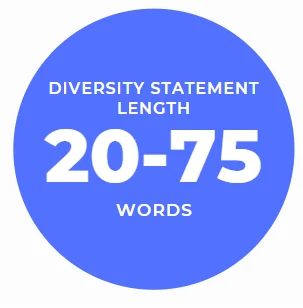
Conciseness and Impact: For primary statements featured on career pages or in job descriptions, brevity remains crucial. The most effective statements typically range from 20 to 75 words. This concise format ensures maximum impact and retention, particularly for busy candidates. Longer, more detailed narratives are reserved for dedicated diversity pages, where companies can elaborate on specific programs, initiatives, and data-driven achievements.
-
Compelling Headlines: A strong, unique headline is vital for capturing attention and conveying a company’s distinct approach to diversity. Generic titles like "Diversity Statement" are often replaced with more engaging phrases that immediately convey value and differentiation, such as T-Mobile’s compelling headline and sub-headline approach, which aims to win over candidates even before they delve into the full text.
-
Readability for Broad Accessibility: Accessibility in language is a cornerstone of effective communication. While many employers write at an 11th-grade reading level, leading organizations consistently aim for an 8th-grade level or lower. This practice, advocated by communication experts, significantly enhances comprehension and ensures that the message resonates with the widest possible audience. Shorter sentences, ideally eight words or less for optimal retention, further contribute to clarity and impact. Research from The Public Relations Society of America (PRSA) indicates that retention rates can plummet from 100% for eight-word sentences to a mere 10% for 43-word sentences, underscoring the importance of concise phrasing.
-
Positive and Affirming Language: The strategic use of positive, inclusive language is essential. Words and phrases that evoke feelings of belonging, opportunity, collaboration, respect, and growth contribute to a welcoming tone. This conscious choice of vocabulary helps to create an emotional connection with candidates and reinforces the company’s commitment to a supportive work environment.
-
Mission Alignment and Specificity: The most credible diversity statements seamlessly integrate with the company’s overarching mission and values. Companies like Google, Ford Foundation, Amazon, and Uber exemplify this by explicitly tying their diversity efforts to their core business objectives and societal impact. Furthermore, specificity builds trust. Instead of vague promises, organizations that highlight concrete examples, such as named employee resource groups (ERGs) or specific initiatives (like Stanley Black & Decker), demonstrate genuine commitment and provide tangible evidence of their efforts. This also includes calling out specific underrepresented communities by name, where appropriate and legally sound, to show a targeted approach.
Leading Examples in a Transformed Environment
Several organizations continue to set the benchmark for effective diversity statements in this evolving landscape:
- Pfizer: Under the headline "Merit-Based Diversity, Equity, and Inclusion: Who We Are," Pfizer’s statement emphasizes a culture where "hard work, talent, and contributions drive success, and barriers to opportunity are removed." This language aligns perfectly with the current focus on meritocracy and legal compliance, while still affirming diversity as a strength.
- Google: With "We’re building a Google for all of us to build helpful products for everyone," Google’s statement, articulated by VP Melonie Parker, directly links diversity to product innovation and global impact, framing inclusion as a business imperative.
- Netflix: Their "Stories That Reflect Our World" and "Inclusion Unlocks Innovation" headlines highlight the direct correlation between internal diversity and external product success, particularly in their content creation and global audience engagement.
- Capital One: Their focus on "Building a culture of belonging where everyone can thrive" positions their Diversity, Inclusion and Belonging (DIB) strategy as a core "talent strategy," aiming to foster an "open culture of ideas where all associates have a voice." This reflects the shift towards framing DEI as a critical component of human capital management.
- Target: Their "Belonging at the Bullseye" headline creatively ties inclusion to brand identity, emphasizing how a diverse team serves diverse guests and builds community relationships, illustrating a direct business benefit.
These examples underscore a common thread: linking diversity and inclusion not just to ethical imperatives but also to tangible business outcomes, such as innovation, market reach, employee performance, and customer satisfaction.
The Pitfalls of Genericity: Avoiding AI-Generated Statements
In the age of artificial intelligence, a cautionary note emerges regarding AI-generated diversity statements. While AI tools offer efficiency, they often produce generic, formulaic language that lacks authenticity. Research in psychology and marketing has shown that when audiences perceive diversity representation as artificially generated rather than genuinely intentional, it can trigger a lower sense of belonging and elicit a negative reaction toward the brand. The solution is not to shun AI entirely but to relegate it to refinement and editing, rather than initial drafting. A truly human diversity statement is distinguished by its specific references: named employee resource groups, explicit mention of underrepresented communities, stated metrics or commitments, and a headline that is uniquely tailored to the company’s mission and values. These elements imbue statements with credibility and resonance, fostering genuine connection.
Broader Implications for Corporate Culture and Talent Acquisition
The transformations witnessed by 2026 carry significant implications for corporate culture and talent acquisition. For DEI professionals, the role is evolving from advocacy to strategic integration, requiring a deeper understanding of legal frameworks, data analytics, and business impact. The emphasis is now on demonstrating return on investment for diversity initiatives, aligning them with organizational performance metrics.
For employees and candidates, the shift means greater scrutiny of corporate claims. While public statements remain important, there is an increased demand for transparency regarding measurable progress and authentic internal cultures. Companies that can genuinely articulate and demonstrate how diversity, equity, and inclusion contribute to their business success and foster an equitable workplace will hold a significant advantage in attracting and retaining top talent. The conversation has matured; it’s no longer just about who is represented, but how inclusion drives better decisions, innovation, and a stronger, more resilient workforce.
Ultimately, the diversity statement in 2026 is a reflection of a more mature and pragmatic approach to inclusion. It is a document that, while still aspirational, is grounded in measurable realities, legal compliance, and strategic business objectives. It signifies a future where true diversity, equity, and inclusion are not just "the right thing to do" but are demonstrably integral to sustainable organizational success in a complex global environment.