The Crisis of Traditional Metrics in the Modern Enterprise
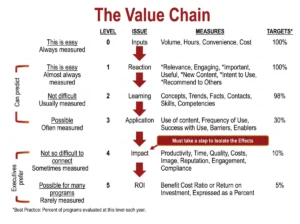
The disconnect between L&D activities and business outcomes has long been a point of friction between HR departments and executive leadership. According to recent industry surveys, while over 90% of organizations express a desire to measure the impact of their training programs, fewer than 15% are actually able to demonstrate a direct link to business performance. This gap is largely attributed to the reliance on "Level 1" and "Level 2" data in the Kirkpatrick Model—reaction and learning. While these metrics provide proof that an event occurred, they fail to account for the "transfer of learning," which is the application of new skills in the actual flow of work.
In a recent industry webinar hosted by Chief Learning Officer, a live poll of hundreds of L&D professionals revealed that more than 50% of organizations still primarily track completions and participation. This reliance on activity-based reporting stems from a lack of resources, fragmented data systems, and an outdated operating model that prioritizes the "speed of rollout" over the "speed of capability."
A Chronology of Measurement: From the 1950s to the AI Era
To understand the current shift, it is essential to look at the evolution of measurement frameworks. In 1959, Donald Kirkpatrick introduced his four-level model, which became the gold standard for the industry. This was followed by Jack Phillips’ ROI Methodology in the 1990s, which added a fifth level focused on financial impact. By the early 2000s, the Training Delivery Reporting standards (TDRp) attempted to bring a more accounting-like rigor to the field.
Despite these frameworks, the industry remained stuck at the "Behavior" level (Level 3) for decades. Measuring behavior change historically required human observation—managers with clipboards, peer reviews, or expensive external coaches. Because these methods were impossible to scale across a global workforce, behavior change became the "missing link" in L&D reporting.
The timeline of change accelerated significantly with the 2023-2024 explosion of Generative Artificial Intelligence. For the first time, organizations have the tools to automate the observation of behavior at scale, allowing for a more nuanced understanding of how training translates into workflow actions, decision-making, and interpersonal engagements.
Redefining Learning Velocity: Speed of Improvement vs. Speed of Content
A critical component of this new measurement paradigm is the concept of "Learning Velocity." Traditionally, velocity in L&D was measured by how quickly a course could be developed and launched. Today, the definition has shifted to mean how fast the business becomes measurably better at its work.
True learning velocity is visible only through leading indicators. These are signals that move before lagging business metrics (like quarterly revenue or customer churn) show up. Examples of high-velocity leading indicators include:
- Decision Speed: How quickly a manager can resolve a conflict or approve a project after training.
- Confidence to Act: A self-reported but crucial metric that correlates with reduced hesitation in high-stakes environments.
- Willingness to Experiment: The frequency with which employees apply new frameworks in non-routine tasks.
- Reduced Hesitation: A decrease in the time spent seeking clarification on standard operating procedures.
When organizations focus on content volume rather than capability speed, they often encounter "learning overload," where more training actually leads to slower decisions and increased employee burnout.
AI as the Scalable Observer: Breaking the Measurement Bottleneck
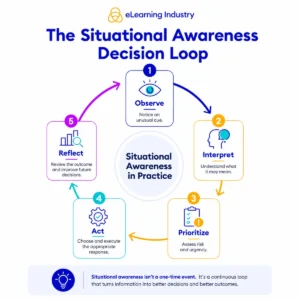
The most significant barrier to measuring behavior change has always been the "observation gap." AI is now serving as an accelerator for measuring behavior by performing tasks that were previously too expensive or time-consuming for humans.
One practical application involves using AI to evaluate soft skills, such as executive presence. In a recent pilot program for project managers, participants were tasked with recording their meetings and feeding the transcripts into an AI tool equipped with a specific rubric for communication excellence. The AI evaluated the participants on communication style, message structure, and audience engagement, providing individualized feedback that was once only available through high-priced executive coaching.
Beyond feedback, AI-enabled facilitators are being integrated into the "Rhythm of the Business" (ROB). For instance, in new manager onboarding, an AI tool can be synchronized with HR data to know when a manager’s first quarterly performance review cycle begins. The AI then "nudges" the manager with relevant practice scenarios and role-plays exactly when the skill is needed. This moves measurement away from a generic "time-to-competency" benchmark and toward a model where reinforcement follows the actual cadence of the work.
The 2025 Measurement Maturity Model
As organizations transition to this behavior-centric approach, they typically move through a maturity model across three categories: people, technology, and process.
The Emerging Stage
In the emerging stage, organizations are characterized by a "reactive" posture. Data is siloed, and measurement is treated as an afterthought.
- People: L&D teams focus on administrative tasks and course creation.
- Technology: Reliance on a standard Learning Management System (LMS) that only tracks logins and completions.
- Process: Reporting is done annually or at the end of a program, focusing on "smile sheets" (learner satisfaction).
The Mature Stage
In the mature stage, measurement is woven into the strategy of the business.
- People: Teams include data analysts and performance consultants who partner with business leaders to define success before training begins.
- Technology: Integration of AI, xAPI (Experience API), and business intelligence tools that pull data from CRM and ERP systems.
- Process: Continuous, real-time monitoring of behavior change and leading indicators.
Supporting Data: The 2025 Business Impact Report
According to the "2025 Measuring the Business Impact of Learning Report," there is a growing consensus among C-suite executives regarding what they value most from L&D. The report highlights that:
- 72% of CEOs want to see evidence of improved employee performance and behavior change.
- Only 8% of CEOs currently see the business impact they desire from their L&D investments.
- Organizations using AI for behavior reinforcement report a 35% higher rate of skill application compared to those using traditional methods.
These statistics underscore the urgency for learning leaders to adopt more rigorous methodologies. The report also suggests that the "attribution gap"—the difficulty in proving that training caused a specific outcome—can be narrowed by focusing on "small-data" signals, such as the quality of written work or the frequency of specific managerial actions, rather than just large-scale "big-data" business results.
Addressing the Attribution Gap and Halo Bias
One of the most complex challenges in L&D measurement is the "attribution gap." When an organization sees an increase in sales, it is difficult to isolate whether that increase was caused by a new training program, a change in market conditions, a better product, or effective coaching from managers.
Furthermore, "self-reporting" metrics are often plagued by the "halo bias," where employees rate their own progress more favorably than their actual performance would suggest. This is particularly common immediately following a high-energy training event.
AI changes this equation by providing a direct, objective read on what happened. When an AI evaluates a recording of a sales call or a piece of technical documentation, it provides a data point that is not a self-rating or a subjective opinion. It is a repeatable, scalable observation. While this does not entirely close the attribution gap, it provides a much stronger "leading indicator" that can be correlated with later business results.
Broader Implications for the Future of Work
The shift toward measuring behavior change via AI has profound implications for the future of corporate education. It suggests a move away from "just-in-case" learning (where employees take courses they might need someday) toward "just-in-time" and "in-the-flow" learning.
For the employee, this means more personalized development and feedback that is relevant to their daily tasks. For the organization, it means a more agile workforce that can adapt to new challenges with measurable speed. For L&D leaders, it provides the "seat at the table" they have long sought, backed by the kind of hard data that executive committees respect.
As we move toward 2025, the hallmark of a successful learning organization will not be the size of its course catalog or the number of hours its employees spend in training. Instead, success will be defined by the ability to observe, measure, and accelerate the specific behaviors that drive business value. The transition from measuring activity to measuring impact is no longer a theoretical goal; it is a technological and strategic necessity in an increasingly competitive global economy.