The landscape of corporate education and talent development is undergoing a seismic shift as executive leadership demands greater accountability and tangible evidence of value from their internal programs. Recent research sponsored by the Association for Talent Development (ATD) reveals a stark reality for human resources and learning professionals: 96 percent of CEOs from Fortune 500 companies now identify "business impact" as their primary metric for evaluating talent development programs. While return on investment (ROI) remains a critical secondary measure, the overwhelming consensus among top-tier executives is that learning initiatives must directly correlate with the organization’s core business objectives.
This executive mandate reflects a broader trend across both the private and public sectors. Whether an organization is a multinational corporation or a mission-driven nonprofit, the fundamental drivers of success remain consistent: output, quality, cost, and time. For talent development to remain relevant in an era of tightening budgets and data-driven decision-making, it must move beyond "smile sheets" and basic participation rates to demonstrate how it moves the needle on these key performance indicators. The methodology used to bridge this gap, known as the ROI Methodology, has emerged as the global standard for organizations seeking to align their human capital investments with strategic business outcomes.
The Historical Evolution of Evaluation Models
To understand the current state of talent development evaluation, one must look back at the logic models that laid the foundation for modern systems. The concept of a value chain in training is not a recent invention; its roots can be traced back to the late 19th century, though it was formalized in the mid-20th century. In 1952, Raymond Katzell published a version of a logic model that categorized training outcomes into a series of building blocks. This framework was later popularized by Donald Kirkpatrick, whose four-level model—reaction, learning, behavior, and results—became the industry standard for decades.

However, as the complexity of the global business environment grew, practitioners realized that Kirkpatrick’s model stopped short of providing the financial data required by Chief Financial Officers (CFOs). In response, the ROI Institute expanded upon these foundational concepts to create a more rigorous, twelve-step methodology that includes the isolation of program effects and the calculation of actual monetary return. Today, this methodology is utilized by more than 10,000 organizations worldwide, making it the most widely adopted evaluation system in the professional world.
Decoding the Value Chain: From Input to ROI
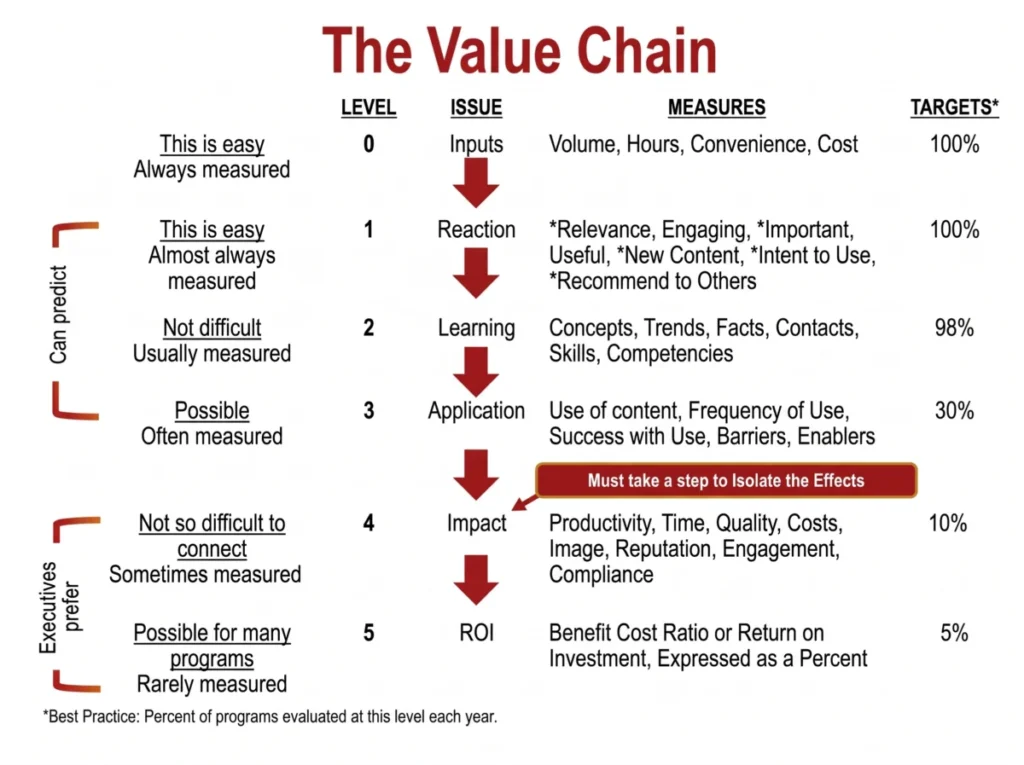
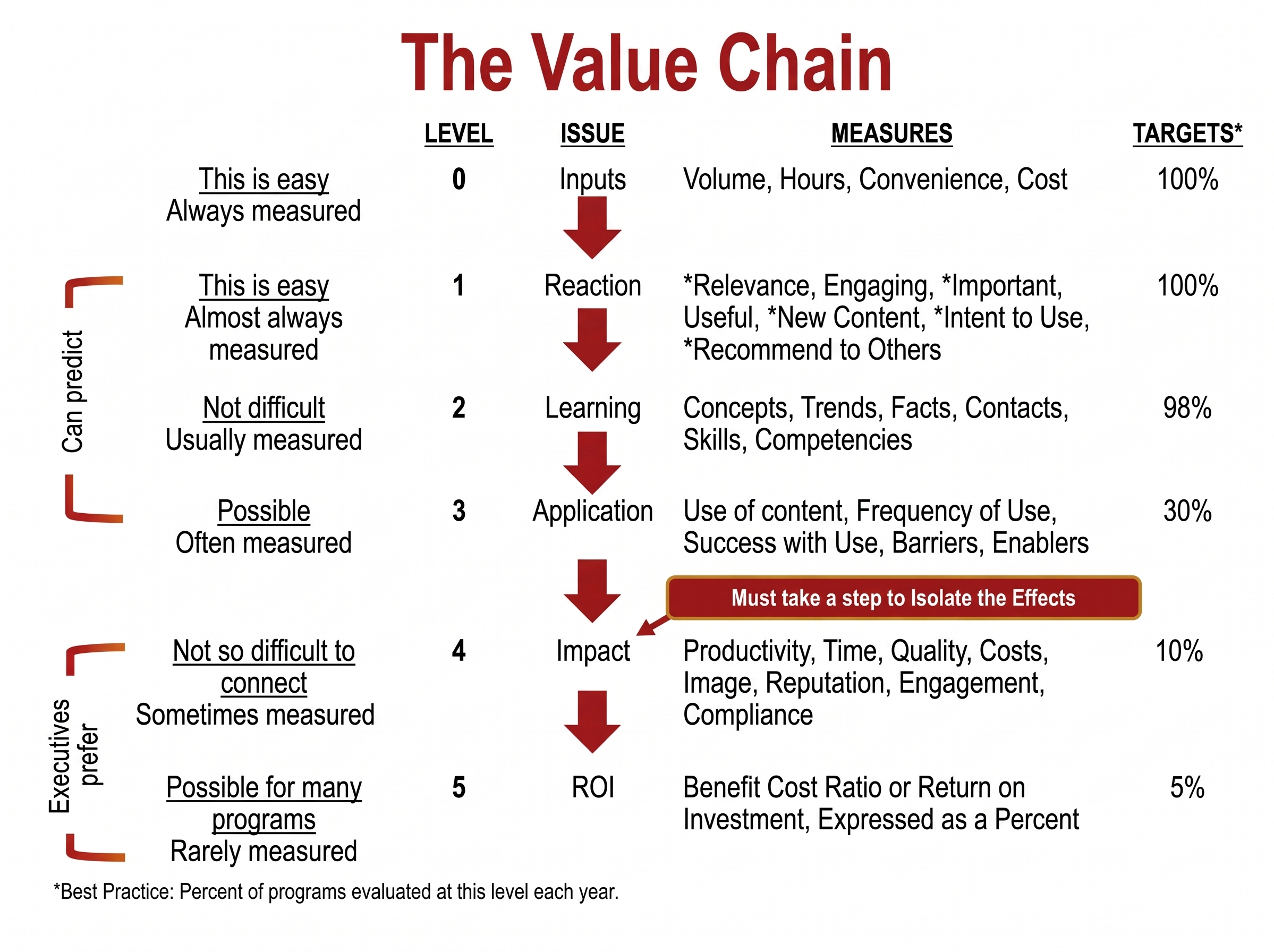
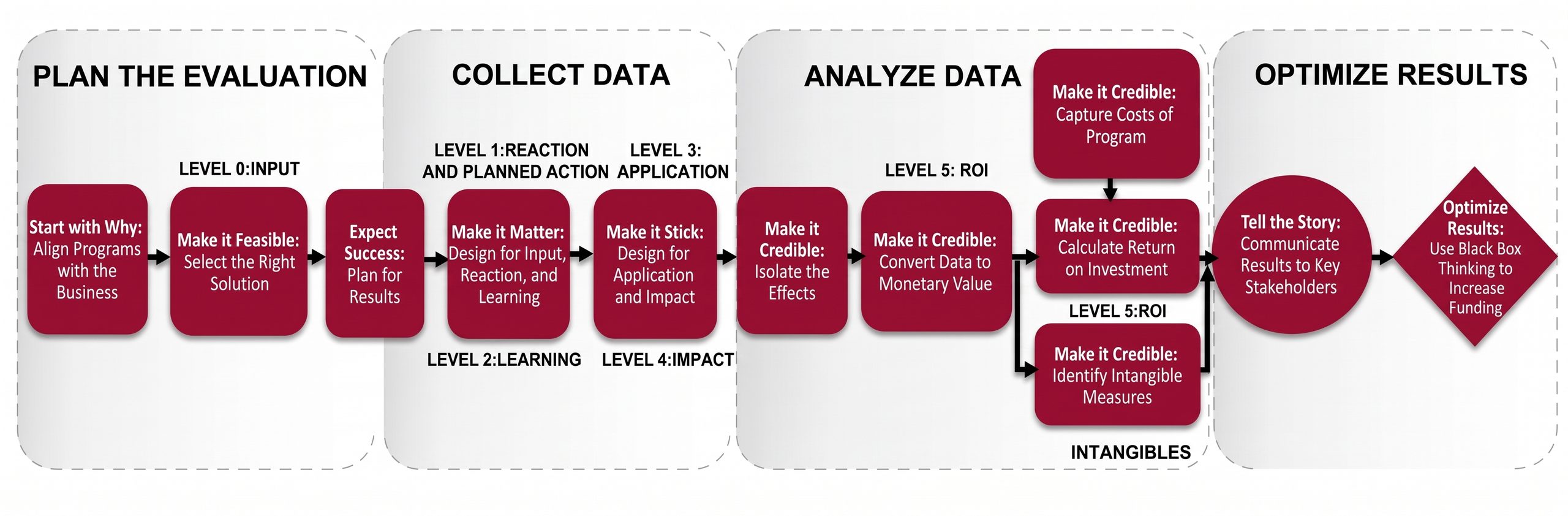
The ROI Methodology operates on a value chain that ensures data is captured at every stage of a program’s lifecycle. This chain consists of six distinct levels of data, beginning with "Level 0" and culminating in "Level 5."
Level 0, or Input, serves as the baseline, tracking the number of participants, the duration of the program, and the initial costs involved. Following this, Level 1 (Reaction) measures how participants perceive the value of the project. While often dismissed as "soft" data, positive reaction is a prerequisite for success; if participants do not find the material relevant or important, the likelihood of successful application is minimal.
Level 2 (Learning) focuses on the acquisition of skills and knowledge. This is the traditional domain of testing and assessment. However, the methodology emphasizes that learning alone is insufficient. Level 3 (Application) tracks whether those skills are actually used in the workplace. It identifies the barriers that prevent application and the enablers that encourage it.

The most critical jump occurs at Level 4 (Impact). This level measures the consequences of application, such as increased sales, reduced error rates, or improved cycle times. To ensure credibility, the ROI Methodology requires that the effects of the program be isolated from external factors, such as market shifts or other internal initiatives. Finally, Level 5 (ROI) converts these impacts into monetary values and compares them against the total cost of the program, providing a clear benefit-cost ratio.
The 12-Step Process for Delivering Results
The strength of the ROI Methodology lies in its systematic approach. It is not merely a post-program autopsy but a design-thinking framework that influences the program from its inception. The process is divided into four major phases: planning the evaluation, collecting data, analyzing data, and optimizing results.
Phase 1: Planning the Evaluation
The first three steps of the methodology are perhaps the most vital. Step 1 requires practitioners to "start with why" by aligning the program with a specific business measure. This involves asking whether the problem being addressed is worth solving and identifying the specific metrics—such as turnover rates or manufacturing defects—that will reflect success. Step 2 ensures that the proposed program is actually the right solution for the identified problem, rather than a "bandage" for a deeper systemic issue. Step 3 involves setting clear expectations for success and developing a comprehensive data collection plan.
Phase 2: Collecting Data
Data collection occurs both during and after program implementation. Step 4 involves gathering reaction and learning data, which most organizations do as a matter of routine. Step 5, however, requires a more rigorous approach to capture application and impact data. This often involves the use of action plans, follow-up surveys, or direct observation to see how the training has altered day-to-day operations.
Phase 3: Analyzing Data
This phase is where the methodology addresses the "credibility challenge." Step 6 involves isolating the effects of the program. Practitioners use techniques ranging from experimental control groups to trend line analysis and expert estimates. Step 7 converts impact data into monetary value. For example, if a program reduces employee turnover by 10 percent, the methodology calculates the cost savings associated with recruitment and onboarding for those retained employees.
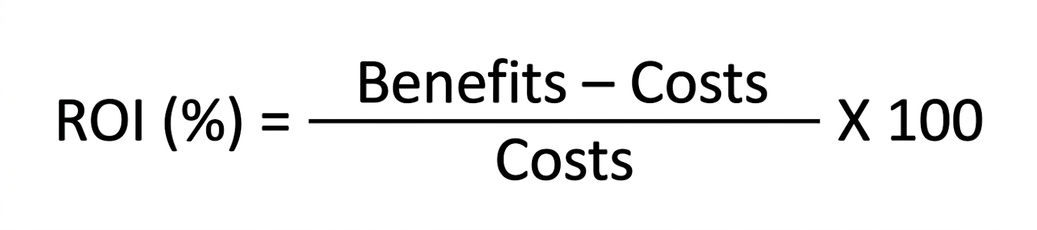
Step 8 identifies "intangibles"—benefits that are important but cannot be credibly converted to cash, such as brand reputation or employee morale. Step 9 ensures that all costs, including the "hidden" costs of participant time and travel, are accounted for. Step 10 is the final calculation of the ROI, providing the definitive answer to the question: "Was it worth it?"
Phase 4: Optimizing Results
The final steps focus on communication and improvement. Step 11 involves telling the story of the program’s success through a blend of hard data and qualitative narratives. Step 12 uses the findings to optimize future results, allowing leaders to make informed decisions about which programs to scale, which to modify, and which to discontinue.
Conservative Standards and Credibility
A primary reason for the ROI Methodology’s acceptance by C-suite executives is its adherence to conservative guiding principles. In any evaluation, there is a risk of overstating results to justify a department’s existence. To counter this, the methodology employs twelve guiding principles that act as a "checks and balances" system.
One such principle is the philosophy of "when in doubt, leave it out." If a specific impact cannot be credibly linked to the program or if its monetary value is highly speculative, it is excluded from the ROI calculation and reported only as an intangible. Conversely, when calculating costs, the rule is "when in doubt, leave it in." By including all potential costs and being conservative with benefits, the final ROI figure becomes a highly defensible number that can withstand the scrutiny of even the most skeptical CFO.
Broader Implications for the Talent Development Industry
The shift toward impact-based evaluation has profound implications for the future of the talent development profession. For years, HR and L&D departments were often viewed as "cost centers"—necessary expenses that provided intangible benefits but lacked a direct link to the bottom line. By adopting a rigorous ROI framework, these departments can transition into "profit centers" or strategic partners that drive organizational growth.
Furthermore, this data-driven approach fosters a culture of continuous improvement. When practitioners can see exactly where a program is failing—whether it is a lack of initial learning (Level 2) or a lack of managerial support for application (Level 3)—they can make precise adjustments rather than scrapping entire initiatives.
The methodology also bridges the gap between different organizational functions. By speaking the language of business—ROI, impact, and cost-benefit ratios—talent development professionals gain a seat at the table during strategic planning sessions. They are no longer just "training providers" but are instead seen as architects of business performance.
Conclusion: Starting with the End in Mind
As organizations navigate an increasingly volatile and competitive global market, the pressure to demonstrate the value of every dollar spent will only intensify. The research is clear: CEOs are no longer satisfied with knowing that their employees "enjoyed" a training session. They want to know how that session increased output, improved quality, saved time, or reduced costs.
The ROI Methodology provides the roadmap for this transition. By starting with the "why," aligning solutions with business needs, and following a disciplined 12-step process, talent development professionals can prove the worth of their programs in a way that is both credible and compelling. In doing so, they not only secure the future of their own functions but also contribute significantly to the long-term success and sustainability of their organizations. As the methodology continues to evolve, its core tenet remains the same: for learning to be truly valuable, it must be inextricably linked to the business results it was designed to achieve.