For nearly three decades, the landscape of work has been a dynamic, ever-shifting terrain, marked by a parade of trending themes: digital transformation, employee wellbeing, the rise of hybrid work, fervent pushes for diversity and inclusion, and more recently, the pervasive influence of Artificial Intelligence. Yet, beneath the surface of these cyclical preoccupations lies a more profound and persistent shift, one that has fundamentally reshaped the relationship between employees and their employers. This enduring trend, the "Great Decoupling," is characterized by a significant and sustained decline in trust and a growing detachment of workers from their corporate anchors, a phenomenon now amplified and accelerated by the advent of AI.
A Legacy of Shifting Priorities and Declining Trust
The trajectory of organizational focus over the past thirty years reveals a pattern of reactive adjustments rather than proactive, long-term strategies for worker welfare. Initial waves of interest in topics like digital transformation and employee wellbeing, while seemingly progressive, often served as preludes to more fundamental economic realignments. The subsequent emphasis on hybrid work and diversity and inclusion, though crucial for equitable workplaces, has, in many instances, been overshadowed by a perceived rollback of these initiatives in the face of economic pressures and evolving corporate priorities.
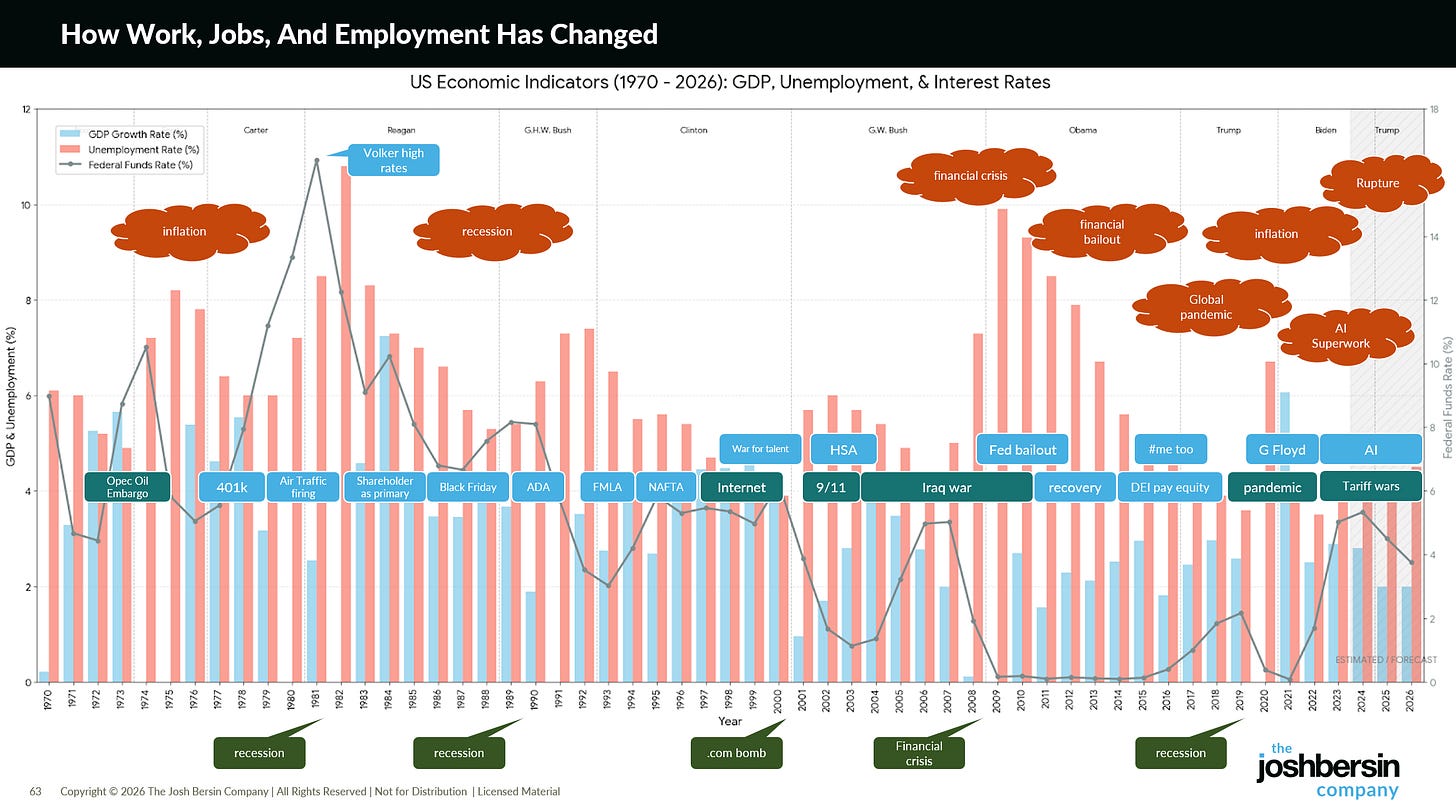
This evolving corporate ethos has manifested in increasingly precarious employment conditions. The casualness with which companies now initiate layoffs, often communicated via a simple email with minimal notice, stands in stark contrast to past norms. Similarly, discussions around issues like pay equity, once a significant focus, have been somewhat marginalized, particularly as the compensation for specialized roles, such as AI engineers, reaches unprecedented heights, creating vast disparities within the workforce. The current discourse surrounding AI’s potential to boost "productivity" has, for many employees, translated into heightened anxiety about job security, a sentiment underscored by the very same companies that previously championed employee wellbeing.
The Erosion of Trust: A Deepening Chasm
A pervasive and deeply concerning trend that has spanned over three decades is the steady erosion of trust between employees and their employers. Numerous studies from reputable organizations, including Pew Research Center and Edelman, consistently document this decline. In 2024, a PwC report revealed that only 67% of employees generally trust their employers. This figure drops even more dramatically for frontline workers, who constitute over 72% of the workforce, with less than half expressing confidence in their employers.
The decline in trust extends even further to leadership. In 2019, a mere 25% of workers reported trusting their company’s leaders. This figure has since dwindled to approximately 19% and continues to trend downwards. While trust saw a temporary uptick during the initial phases of the COVID-19 pandemic, likely due to shared adversity and a perceived need for solidarity, it has since plummeted as corporate leaders increasingly discuss AI-driven layoffs. This creates a feedback loop where fear of job displacement further erodes the already fragile trust between management and staff.
The "Great Decoupling": Workers Detaching from Employers
While the decline in trust is a significant concern, the more substantial and transformative trend is the "decoupling" of workers from their employers. This phenomenon is not a new development, but rather a culmination of decades of economic and technological shifts. Today, over 65% of workers engage in side-hustles, supplementing their primary income or pursuing entrepreneurial ventures. Concurrently, the rates of layoffs and job-hopping have surged. Research indicates that the average U.S. worker can expect to be laid off approximately 2.5 times in their career, a number that has more than doubled in the last thirty years.
This trend can be traced back to a deliberate shift in economic policy and corporate strategy, beginning in earnest in the late 20th century. The decline of labor unions, a reduction in collective bargaining power, and a legislative environment less inclined to champion worker protections have all contributed to this decoupling. This era saw the rise of what President George H.W. Bush termed the "ownership economy," where responsibility for retirement planning, healthcare, and career development increasingly shifted to the individual. Programs like 401(k)s, health savings accounts, and employer-supported vocational training, while offering some autonomy, also transferred significant financial risk and administrative burden to employees.

Furthermore, globalization, exemplified by trade agreements like NAFTA, facilitated the outsourcing of many traditionally stable, albeit less specialized, jobs, further diminishing the sense of long-term employment security.
A Shifting Corporate Landscape: Shortened Lifespans and Increased Volatility
The very nature of corporate stability has also transformed. In the 1970s and 1980s, companies on the S&P 500 typically enjoyed a lifespan of 12 to 13 years. Today, this average has contracted to approximately 4 to 5 years, a stark reflection of the relentless pace of technological innovation and global competition. While this dynamism can foster innovation, it also exacerbates the instability experienced by the workforce.
The current anxieties surrounding AI are, in many ways, a heightened manifestation of this long-term trend. While some view AI as a tool for augmentation and opportunity, the immediate perception for many is one of threat. The narrative of "self-career management" – encouraging individuals to become entrepreneurs, content creators, or technical specialists – becomes less liberating and more of a survival imperative when economic buffers are thin.
Economic Precarity: The Foundation of Anxiety
The prevailing narrative of empowerment through self-reliance often overlooks a critical reality: the financial fragility of a significant portion of the U.S. workforce. More than half of American workers have less than three weeks’ worth of savings, leaving them highly vulnerable to economic shocks. This precariousness is exacerbated by persistent inflation, rising gas prices, and stagnant wages, pushing many into a relentless cycle of work simply to survive.
The once-perceived liberation of the gig economy, epitomized by services like Uber and DoorDash, has increasingly morphed into a necessity. As these platforms mature and consolidate market power, labor costs are often driven down, transforming flexible work into a means of survival rather than an avenue for entrepreneurial growth. This pervasive sense of being "labor" that is at risk of automation, even if not entirely accurate, is a palpable sentiment across various sectors, including among HR professionals themselves.
The Inevitable March Towards Decoupling: Historical Context and Technological Catalysts
The "decoupling" of workers from employers, while accelerated by current trends, has roots stretching back to the latter half of the 20th century. This process, arguably initiated during the Reagan administration with a focus on market liberalization and deregulation, has been profoundly amplified and institutionalized by the internet and, more recently, by AI.
The digital age has made it remarkably easy for companies to source talent globally, engaging contractors and freelancers with unprecedented ease. Furthermore, the proliferation of sophisticated monitoring and performance management tools allows for precise tracking of individual productivity, making it simpler to identify and replace workers deemed less efficient. This technological infrastructure has solidified the shift towards a more transactional and less relational employment model.
While highly skilled tradespeople, such as nurses, machinists, plumbers, and electricians, continue to command strong demand and relatively stable employment, many white-collar professions, including accounting and administrative roles, face increasing uncertainty. The often-repeated advice to "go out and start your own gig" or leverage AI tools like Claude, while aspirational, often fails to acknowledge the significant financial and personal resources required to successfully transition into independent work, especially for those lacking a substantial financial cushion.
The Stagnation of the Minimum Wage: A Symbol of Government Indifference
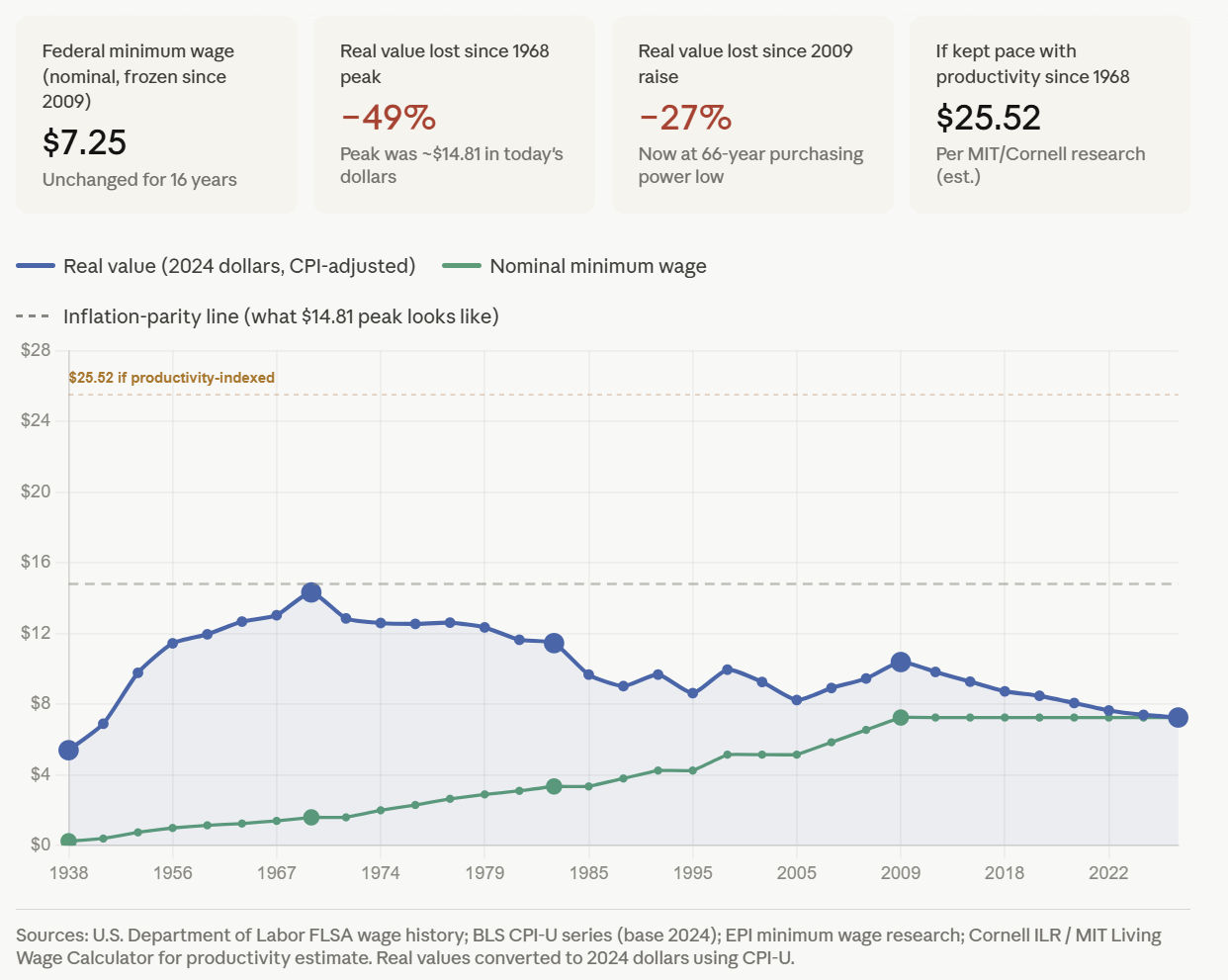
Adding to the economic precarity is the alarming stagnation of the U.S. federal minimum wage. As of 2026, it will have remained at $7.25 per hour for a staggering 17 years, a period longer than any other in U.S. history without an increase. This prolonged freeze has resulted in a nearly 49% loss of purchasing power, effectively diminishing the real income of the lowest-paid workers. While the majority of the workforce earns above minimum wage, this statistic serves as a potent symbol of the government’s perceived indifference to the economic well-being of its labor force, framing such issues as individual rather than collective responsibilities.
Worker Adaptation and the Widening Wage Gap
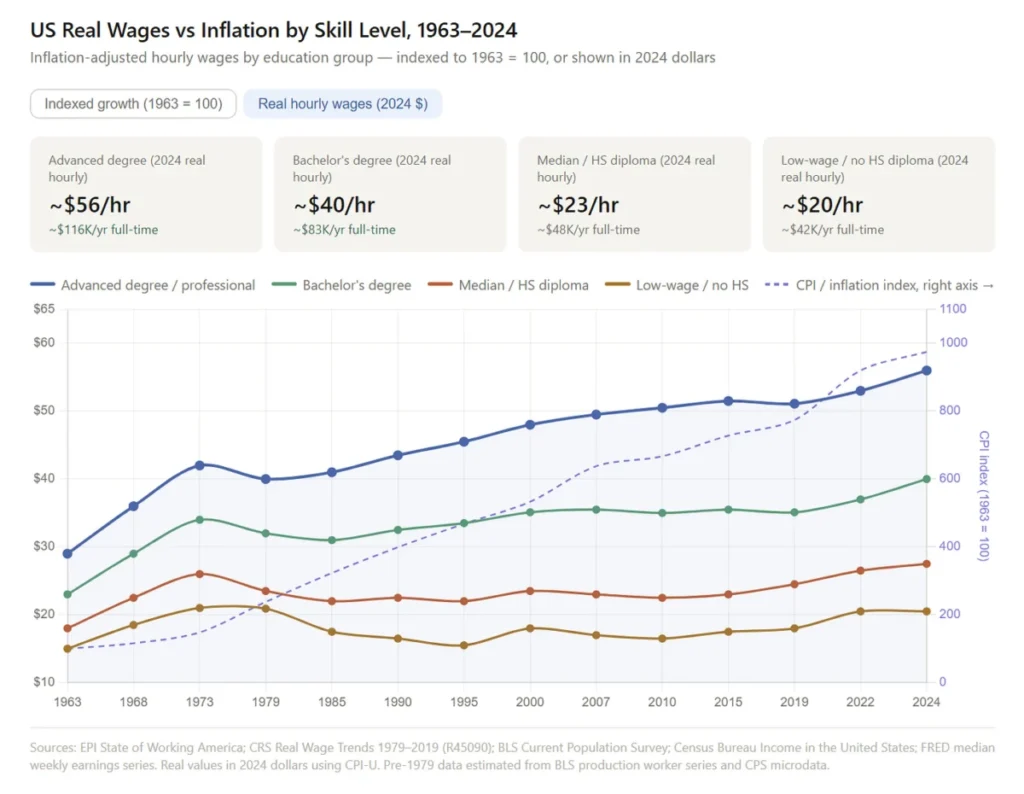
The impact of these economic shifts on workers is starkly illustrated by long-term wage trends relative to inflation. Data from the 1960s and 1970s, prior to the widespread implementation of decoupling strategies, shows wages generally outpacing inflation. However, the inflation shock of the 1970s marked a turning point, after which wages began to lag significantly.
The effects have been unevenly distributed across the workforce:
- Low-wage workers and high school graduates experienced the most immediate and severe decline in their standard of living, beginning in the early 1980s.
- College graduates initially fared better but began to see their wage growth plateau in the late 1990s.
- Individuals with advanced degrees experienced strong wage growth until around 2020, the year the COVID-19 pandemic began, after which they too have started to see a decline.
The narrative of young college graduates struggling to find employment, while sometimes episodic, masks a more fundamental reality: the economic return on a college degree has diminished significantly over the past two decades. This is a disquieting trend for individuals and for the broader economy, which relies on an educated and upwardly mobile populace.
Addressing the Great Decoupling: A Multifaceted Approach
The "Great Decoupling" is not merely a matter of wages versus inflation; it is fundamentally about how employers perceive and treat their workforce. The prevailing sentiment among many companies is a diminished sense of obligation towards the long-term financial well-being of their employees. This, in turn, has fostered a reciprocal detachment, with employees prioritizing their own career mobility and seeking the next best opportunity.
This dynamic is tacitly supported by the financial markets. Layoffs often result in an immediate uptick in stock prices, a phenomenon that was not as prevalent in previous decades. This is largely because financial analysts and the market at large tend to view labor as a "cost" rather than an "investment." The accounting principles that treat human capital as an expense, rooted in an agrarian economic model, persist, hindering a fundamental shift in corporate thinking.
Pathways to Mitigation and Renewal
While the trends are stark, the situation is not without potential solutions. However, these solutions require a departure from conventional approaches and a renewed focus on long-term human capital development.
Re-evaluating Social Safety Nets and Economic Support
While the author expresses skepticism towards massive income redistribution or "guaranteed income" schemes, acknowledging their historical experimental failures, the underlying principle of providing a safety net for the vulnerable remains crucial. However, the focus of intervention should perhaps shift from direct redistribution to robust support for reskilling, upskilling, and lifelong learning.
The Imperative of Foundational Education and "Power Skills"
A critical concern highlighted is the state of foundational education in the U.S. Reports indicate that a significant percentage of U.S. adults do not read at a 12th-grade proficiency level. This deficit is particularly concerning with the rise of AI, which often requires individuals to synthesize complex information, infer meaning, and evaluate dense documents – skills typically honed through advanced literacy.
The call for improved reading comprehension, historical understanding, and critical thinking skills is paramount. These "power skills," cultivated through a robust liberal arts education, are becoming even more vital in an AI-driven world, where the ability to "use AI" is secondary to the ability to think critically and creatively. Employers have a role to play by investing in broader educational opportunities for their workforce, moving beyond narrow technical training. Initiatives like those championed by companies such as Guild, which partner with employers to offer educational benefits, are vital in this regard.
Rethinking Workforce Management and Talent Retention
As an HR expert, the author points to a significant deficiency in how many companies approach workforce planning and talent management. The prevalent strategy of continuous layoffs, team shrinking, and simultaneous aggressive hiring reflects a short-term, transactional view of human capital. This approach, while seemingly financially expedient, carries substantial long-term costs: erosion of company culture, loss of institutional knowledge and skills, and a deepening distrust among the remaining workforce.
A fundamental "management shift" is required. CEOs and CFOs need to move away from viewing employees as interchangeable units that can be easily replaced. This involves slowing down hiring processes, being more selective, and designing businesses for sustainable growth rather than simply managing headcount. Treating every individual as a potential future leader, or "talent density," necessitates a more responsible and long-term approach to workforce planning.
The Strategic Choice: Long-Term Investment vs. Short-Term Gains
The "Great Decoupling" is not an immutable force of nature; it is a consequence of strategic choices made by businesses. Companies that adopt a high-growth, venture-backed startup model, characterized by rapid scaling and a focus on immediate market capture, are more likely to embrace the decoupling trend. In such environments, employee retention is often secondary to rapid expansion, with the expectation that talent can be readily reacquired if needed.
Conversely, enduring companies, whether in technology (e.g., Nvidia, Microsoft), hospitality (e.g., Wynn, Marriott), or consumer goods (e.g., L’Oréal), demonstrate a commitment to long-term human capital responsibility. While facing market pressures, they prioritize retaining their existing workforce and avoid excessive hiring, recognizing the intrinsic value of experienced and dedicated employees.
Embracing the Future: People as the Appreciating Asset
As AI presents unprecedented opportunities for reinvention, the strategic imperative for businesses is to lean into their existing talent. Empowering current employees to drive innovation and adaptation is a more sustainable and effective path to growth than a constant churn of personnel. The true leadership challenge lies in fostering this internal transformation.
Ultimately, people are the only truly appreciating asset in a business. Investment in long-term development, retention, and growth yields dividends that compound over time. In an era of rapid decisions and market-driven reactions, leaders must cultivate a long-term perspective, recognizing that taking care of their people is not merely a matter of corporate social responsibility but a strategic imperative for sustained success, value creation, and innovative ideation. The choice is clear: embrace the decoupling and its inherent instability, or invest in the enduring strength of a committed and skilled workforce.