In a significant move poised to reshape the landscape of small business health benefits, the Centers for Medicare & Medicaid Services (CMS) and the U.S. Small Business Administration (SBA) have officially announced the rebranding of Individual Coverage Health Reimbursement Arrangements (ICHRAs) as CHOICE Arrangements. This strategic rebranding, unveiled at a press conference in Indiana, aims to demystify the complex world of health benefits for employers and employees alike, fostering greater clarity, encouraging adoption, and ultimately expanding access to flexible, affordable healthcare options. The event also served to highlight Indiana’s pioneering 2024 law, which establishes the nation’s first state-level tax credit designed to incentivize small businesses to offer these innovative health reimbursement models.
The Evolution of ICHRAs: From Concept to CHOICE
To fully appreciate the significance of this rebranding, it is essential to understand the origins and evolution of ICHRAs. Introduced in 2020 through regulations from the Departments of the Treasury, Labor, and Health and Human Services, ICHRAs were designed to provide a flexible alternative to traditional group health plans, particularly for employers struggling with escalating premium costs. Under an ICHRA, employers offer employees a tax-free allowance to reimburse them for qualified medical expenses, including premiums for individual health insurance plans purchased on the open market or through state and federal marketplaces. This model empowers employees to choose a plan that best fits their personal and family needs, providers, and prescription requirements, while employers gain cost predictability and reduced administrative burden.
Despite their inherent advantages, ICHRAs faced a persistent challenge: a lack of widespread awareness and understanding. The technical jargon, coupled with the novelty of the approach, often deterred small businesses and their advisors from exploring this viable option. The initial "ICHRA" acronym, while accurate, did not immediately convey the core benefit of the arrangement. This gap in comprehension became a primary barrier to broader adoption, prompting federal agencies and industry stakeholders to seek a more intuitive and approachable designation. The rebrand to "CHOICE Arrangements" directly addresses this issue, clearly communicating the fundamental principle of employee empowerment and selection that lies at the heart of this benefits model.
The Strategic Rationale Behind "CHOICE Arrangements"
The decision to rename ICHRAs to CHOICE Arrangements is more than a superficial marketing exercise; it represents a deliberate strategy to enhance accessibility and understanding of a critical healthcare option. By emphasizing "choice," CMS and SBA intend to highlight the central advantage for employees: the ability to select health coverage tailored to their specific circumstances, rather than being limited to a single, employer-selected group plan. For employers, the term "arrangements" subtly conveys the flexibility and customization inherent in the model, moving away from the rigid connotations often associated with traditional insurance "plans."
During the announcement, senior leadership from CMS and SBA underscored the rebrand’s strategic importance. "Rising health care costs have made the traditional one-size-fits-all approach increasingly difficult for employers and employees alike," stated Cathy Grason, Oscar Health’s VP and Head of Government Affairs, whose organization has been a vocal proponent of these arrangements. She added, "CHOICE Agreements offer a more flexible path: employers can continue investing in benefits while employees have greater ability to select coverage that works for their families, providers, prescriptions, and local market. State interest in CHOICE legislation is an important proof point. CMS and states are showing what is possible when policy and market innovation move in the same direction." This sentiment encapsulates the collaborative vision of federal and state entities working in tandem with private sector innovators to address healthcare affordability and access.
Accompanying the rebranding, CMS and SBA simultaneously launched new, user-friendly resources designed to educate employers and consumers. These comprehensive guides explain how employers can provide tax-free contributions for employees to purchase individual health insurance, detailing benefits such as predictable employer contributions, extensive employee plan choice, portability of coverage, and administrative flexibility. The SBA specifically positions CHOICE Arrangements as a compelling solution for small businesses grappling with escalating group premiums or those looking to offer health benefits for the first time, thereby leveling the playing field with larger corporations. CMS further hinted at upcoming regulatory activities aimed at streamlining the adoption process for employers, signaling a sustained commitment to fostering the growth of this model.
Indiana’s Pioneering Role: A National Blueprint
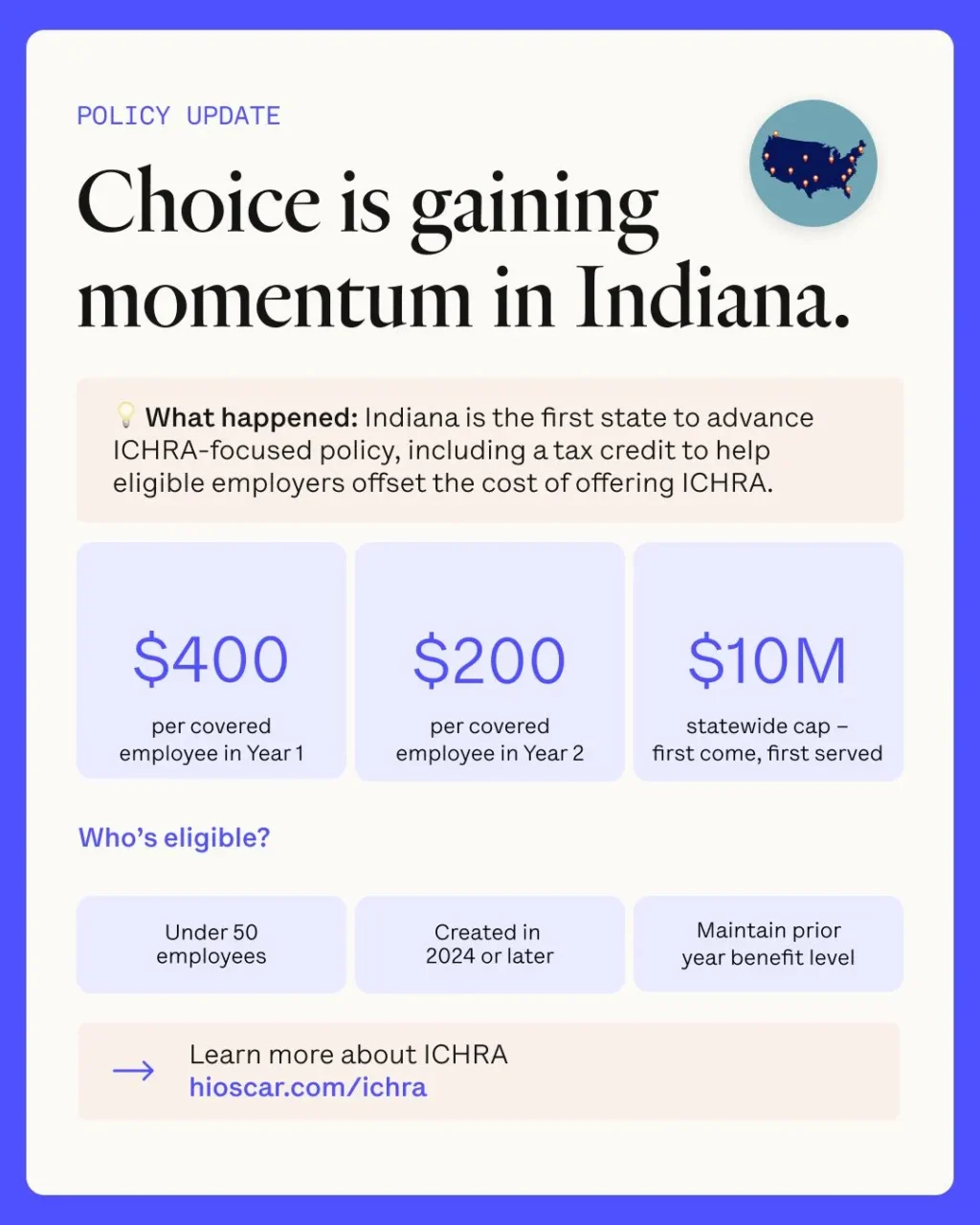
The press conference’s location in Indiana was no coincidence. The Hoosier State has emerged as a national leader in promoting innovative health benefit solutions for small businesses. In 2024, Indiana enacted groundbreaking legislation establishing the nation’s first state-level tax credit for small businesses offering ICHRAs (now CHOICE Arrangements). This landmark law provides tangible financial incentives, allowing qualifying Indiana employers with fewer than 50 employees to receive an ICHRA tax credit of up to $400 per covered employee in the first year and $200 per covered employee in the second year.
Indiana Governor Eric Holcomb, alongside senior leadership from CMS and SBA, highlighted the transformative potential of this initiative. The tax credit directly lowers the cost of providing benefits, making it more feasible for small businesses to offer competitive health packages. This not only supports employee well-being but also enhances the ability of small enterprises to attract and retain talent in a competitive labor market. The Indiana model is anticipated to serve as a powerful case study, encouraging other states to consider similar incentives to boost awareness and uptake of CHOICE Arrangements nationwide. The bipartisan support for such initiatives underscores their broad appeal, marrying fiscal responsibility with expanded healthcare access.
A Growing National Momentum

Indiana’s innovative approach is part of a broader, accelerating trend across the United States. Following Indiana’s lead, states like Mississippi and Connecticut have recently enacted their own tax credits or legislative frameworks to support CHOICE Arrangements. This growing interest is not confined to a few states; since 2022-2023, at least 13 states have considered similar legislation or executive actions related to ICHRAs, with many looking towards implementation in 2025 and beyond. This widespread engagement demonstrates the bipartisan momentum behind a model that offers a market-driven solution to healthcare challenges.
The appeal of CHOICE Arrangements transcends political divides because they offer practical benefits that resonate across the economic spectrum. For conservative policymakers, they represent a move towards consumer-directed healthcare and market-based solutions, reducing reliance on employer-mandated group plans. For progressive policymakers, they enhance access to coverage, increase employee choice, and can potentially stabilize individual insurance markets, particularly when coupled with subsidies for lower-income individuals. This convergence of interests suggests a robust future for CHOICE Arrangements as a cornerstone of small business benefits strategy. The ability for employees to choose plans from diverse carriers, including those on the ACA marketplaces, ensures that the flexibility offered is coupled with regulatory protections and potential financial assistance for eligible individuals.
Oscar Health’s Advocacy and Expert Perspective
As a prominent health insurance technology company, Oscar Health has been at the forefront of advocating for ICHRAs and now, CHOICE Arrangements. Their insights offer a valuable industry perspective on the practical implementation and broader implications of these benefit models.
Andrew Reeves, Oscar Health’s VP of ICHRA, emphasized the growing recognition of CHOICE Arrangements as a serious benefits strategy. "CHOICE Arrangements are becoming a more serious benefits strategy for employers navigating rising health care costs and increasingly diverse workforces," Reeves noted in a LinkedIn post. He further elaborated on the nuances of effective implementation: "They can be a great choice for employers, and when designed thoughtfully, they can create greater predictability for employers and more choice for employees. That thoughtful implementation matters. Contribution strategy, workforce segmentation, local market dynamics, broker guidance, and employee decision all shape whether the model works in practice. CMS’s new resources should help employers and advisors evaluate those decisions more clearly."
This perspective highlights the critical role of careful planning and expert guidance. While CHOICE Arrangements offer immense flexibility, their optimal utility depends on several factors:
- Contribution Strategy: How much an employer contributes can significantly impact the attractiveness and affordability of plans for employees.
- Workforce Segmentation: The ability to offer different types of benefits to different employee classes (e.g., full-time vs. part-time) adds another layer of customization.
- Local Market Dynamics: The availability and cost of individual health plans vary by region, influencing employee choices.
- Broker Guidance: Experienced brokers are crucial in helping employers navigate the complexities and design the most effective arrangement.
- Employee Decision Support: Ensuring employees have the information and tools to make informed choices about their health plans is paramount.
Oscar Health’s consistent engagement with federal and state policymakers reflects its commitment to overcoming the initial barriers of limited awareness and education. The company actively champions solutions that simplify these arrangements, making them more accessible and understandable for employers of all sizes. The rebranding to CHOICE Arrangements and the release of new federal resources are direct outcomes of these ongoing advocacy efforts, representing a significant stride toward achieving Oscar Health’s vision of a healthcare system with affordable, quality, and flexible benefits for all.
Broader Implications and Future Outlook
The rebranding of ICHRAs to CHOICE Arrangements, coupled with supportive state legislation and comprehensive federal resources, carries profound implications for various stakeholders:
- For Small Businesses: CHOICE Arrangements offer a powerful tool to manage escalating healthcare costs while remaining competitive in the talent market. They provide predictable budget control, freeing businesses from the annual unpredictability of group plan renewals. This stability allows small businesses to reinvest in growth, expand operations, and create more jobs. By offering a robust benefits package, even the smallest employers can attract and retain top talent, previously a challenge when competing with larger corporations offering traditional, expensive group plans.
- For Employees: The shift to CHOICE Arrangements empowers employees with unprecedented control over their healthcare. Instead of a "one-size-fits-all" plan, individuals can select coverage that perfectly aligns with their personal health needs, preferred doctors, prescription requirements, and financial situation. This flexibility is particularly valuable for diverse workforces, multi-generational families, and those with specific health conditions. Moreover, the portability of individual plans means employees are not tied to their employer’s plan, offering greater continuity of care even if they change jobs.
- For the Health Insurance Market: Increased adoption of CHOICE Arrangements is expected to stimulate the individual health insurance market. As more employees opt for individual plans, carriers will face increased demand, potentially leading to greater competition, more innovative product offerings, and a wider array of choices for consumers. This market dynamism can drive down costs and improve the quality of individual health plans over time.
- Economic Impact: By making health benefits more accessible and affordable for small businesses, CHOICE Arrangements can foster economic growth. Small businesses are the backbone of many local economies, and empowering them to offer competitive benefits can lead to job creation, increased entrepreneurship, and greater economic stability.
- Regulatory Landscape: The hint from CMS about upcoming regulatory activity suggests a continued effort to refine and simplify the operational aspects of CHOICE Arrangements. This could involve further guidance, streamlined reporting requirements, or additional flexibilities that encourage even broader adoption.
Challenges and Continued Efforts
Despite this encouraging progress, challenges remain. The fundamental barrier of limited awareness, while addressed by the rebrand, still requires sustained educational efforts. Employers, especially those without dedicated HR departments, will need clear, concise, and accessible information to understand how to implement CHOICE Arrangements effectively. The role of insurance brokers and advisors becomes even more critical in guiding businesses through the selection, setup, and ongoing administration of these models. Furthermore, the success of CHOICE Arrangements hinges on the availability of robust individual health insurance markets across all states, offering diverse and affordable plan options.
The new CHOICE Arrangements rebrand and the comprehensive resources from CMS and SBA represent meaningful progress on a priority that Oscar Health and many other stakeholders champion. Together with proactive state actions like Indiana’s tax credit, these developments are set to significantly increase awareness and uptake among small businesses nationwide. It marks an encouraging, collaborative step toward a future where affordable, quality, and flexible health benefits are not just an aspiration but a tangible reality for more businesses and workers across the United States. This reorientation toward employee choice and employer flexibility is poised to become a defining characteristic of modern small business health benefits.