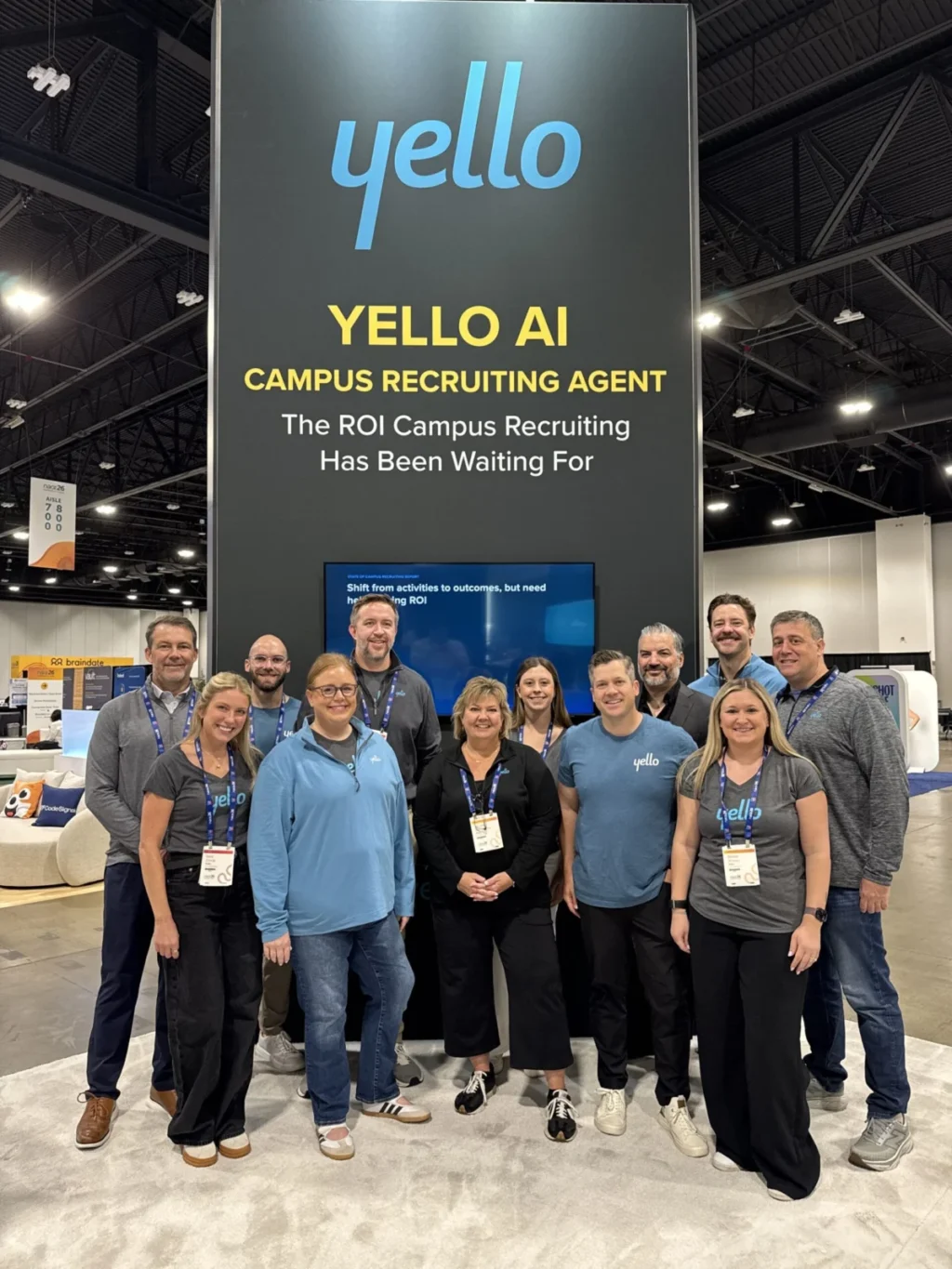
The annual NACE26 conference in Denver recently served as a pivotal gathering for the early talent community, bringing together colleges, universities, and employers to discuss the dynamic shifts in campus recruiting. Yello, a leading innovator in early talent acquisition technology, participated prominently as a platinum sponsor, leveraging the platform to engage with industry leaders, host insightful speaking sessions, and unveil significant advancements in its technological offerings. The event underscored several critical trends shaping the future of early talent recruitment, particularly the transformative role of artificial intelligence, the evolving philosophy behind recruitment events, and the persistent challenge of candidate reneges.
NACE26: A Confluence of Early Talent Innovators
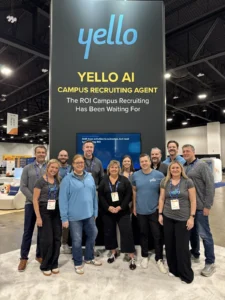
The National Association of Colleges and Employers (NACE) is renowned for its commitment to connecting college career services and HR/staffing professionals. Its annual conference, NACE26, is a premier event that fosters collaboration, shares best practices, and explores emerging trends in the early talent landscape. This year’s conference, held in Denver, brought together thousands of attendees, ranging from university career counselors to corporate talent acquisition specialists. Yello’s robust presence as a platinum sponsor highlighted its deep integration within this community, marked by a visible booth, a series of thought-provoking discussions, and a highly anticipated rooftop happy hour, all designed to foster connections and dialogue. The atmosphere was charged with discussions on how to navigate a recruitment environment increasingly influenced by technology and changing candidate expectations.
The Paradigm Shift: AI’s Dual Role in Campus Recruiting
Artificial intelligence has rapidly moved from a nascent concept to an indispensable tool across various industries, and early talent acquisition is no exception. However, the discourse at NACE26, particularly during Yello’s sponsored sessions, revealed a nuanced understanding of AI’s optimal application in recruiting. While a significant percentage of campus teams are integrating AI into their processes, a key takeaway from Yello’s recent "State of Campus Recruiting" report indicates that its current usage is heavily concentrated in top-of-funnel activities, with 26% dedicated to sourcing and 25% to candidate communications. This initial adoption primarily focuses on automating repetitive tasks, a crucial step but one that, according to experts, misses AI’s full potential.
The critical gap identified by recruiters at the conference lies in AI’s underutilization for deeper data analysis and proving return on investment (ROI). This sentiment was echoed repeatedly throughout discussions, with talent acquisition professionals expressing a desire for AI that augments, rather than dictates, human decision-making. The consensus favored AI as a powerful assistant for administrative burdens and recurring tasks, thereby liberating recruiters to focus on high-value interactions with candidates. This distinction formed the core of the session titled "Can Campus Recruiting Be Autonomous? The Answer Is Complicated." Panelists Tamara Welch from LPL Financial, Matthew Brink of NACE, and Dan Bartfield from Yello delved into the intricacies of this debate. Their collective insight underscored that the ultimate goal is not fully autonomous recruiting, which might alienate candidates, but rather enabling recruiters to dedicate more time to strategic engagement and relationship building.
Matthew Brink further elaborated on the candidate perspective, highlighting a pervasive wariness among students regarding employers who rely too heavily on undisclosed AI in their hiring processes. An impersonal, AI-driven experience risks deterring highly qualified candidates and subtly eroding employer brand reputation. For AI to be truly effective and accepted, it must be purpose-built to address the specific nuances and challenges of campus recruiting, prioritizing human connection over complete automation. Industry analysts suggest that the global HR technology market, including AI solutions, is projected to reach over $30 billion by 2025, emphasizing the significant investment and transformative potential of these tools, provided they are implemented thoughtfully and ethically.
Rethinking Event Strategy: Purpose Over Presence
The landscape of recruitment events is undergoing a profound transformation. Historically, career fairs were synonymous with high-volume interactions, where success was often measured by the sheer number of resumes collected. However, as Vincent Bond of Synchrony, Kristin Leek of Boeing, and Christopher Cantu of Marathon Petroleum discussed in their session, "Purpose Over Presence: Rethinking Your Event Strategy for Better ROI," this traditional model is becoming increasingly inefficient. The panelists observed a curious paradox: application volumes continue to climb, yet the challenge of identifying genuinely qualified candidates has intensified. A significant contributing factor, as Bond articulated, is the rise of AI-assisted resume tools, leading to a homogenization of applications where "every resume looks the same now." This phenomenon creates an "AI fighting AI" scenario, where candidates use AI to optimize resumes, and employers use AI to screen them, often resulting in a deluge of seemingly perfect but not always authentic profiles.
In response to this evolving dynamic, leading employers are recalibrating their event strategies, shifting focus from mere presence to purposeful engagement. The new emphasis is on earlier, more intentional investment in relationships, primarily through targeted in-person events designed for deeper interactions rather than broad sweeps. The metric for success is no longer activity-based (e.g., number of attendees at a booth) but outcome-based, focusing on the quality of hires and tangible ROI. Cantu vividly described career fairs as the "end zone"—the culmination point where offers are closed, not where relationships are initiated. The foundational work, he argued, must commence months, or even years, prior through consistent touchpoints and highly targeted engagements. This proactive, relationship-centric approach is becoming the competitive differentiator in campus recruiting, enabling teams to cut through the noise of soaring application volumes and mitigate the risks of candidate fraud. Research indicates that companies with strong employer branding and proactive engagement strategies can reduce their cost-per-hire by up to 50%, underscoring the financial implications of this strategic shift.
Tackling Candidate Reneges: Sustaining Engagement Post-Offer
One of the most pressing and discussed challenges at NACE26 was the persistent issue of candidate reneges. In today’s highly competitive early talent market, an accepted offer no longer guarantees a done deal. Employers are increasingly recognizing that the period between offer acceptance and the candidate’s start date is a critical, active recruiting phase. The most successful teams are those that prioritize consistent, personalized communication and engagement during this interim period to retain top talent. Panelists at the conference shared anecdotal evidence and data indicating that strong, pre-existing relationships built during the recruitment process significantly contribute to lower renege rates.
The financial and operational costs associated with reneges are substantial. Industry estimates suggest that a single renege can cost an employer anywhere from 1.5 to 3 times the candidate’s annual salary, accounting for lost productivity, repeated recruitment efforts, and potential damage to team morale. To address this, Yello’s Ahva Sadeghi presented the "KEEP framework" during a virtual session titled "Designing the Complete Journey: From Pre-Boarding to Off-Boarding." The KEEP framework comprises four pillars: Kick Off, Engage, Enable, and Perform. This holistic approach guides employers through the entire candidate journey, from offer acceptance to Day One and beyond, ensuring sustained engagement and a smooth transition. Sadeghi also shared compelling insights into the underlying reasons why candidates renege and highlighted how Symba customers have achieved impressive reductions in their renege rates, exceeding 55%, by implementing robust pre-boarding and engagement strategies. These success stories underscore the critical need for structured post-offer engagement to safeguard talent investments.
Yello’s Transformative Announcements at NACE26
NACE26 served as the launchpad for two pivotal announcements from Yello, poised to significantly reshape how early talent acquisition teams operate. These innovations directly address the challenges and trends discussed at the conference, particularly the need for more efficient AI applications and broader candidate access.
The Yello Campus Recruiting Agent: Automating for Strategic Engagement
Yello officially unveiled its new AI Campus Recruiting Agent, a solution designed to automate manual tasks and streamline key recruitment processes. This AI-powered agent aims to liberate recruiting teams from the administrative burdens of event building, candidate sourcing, campaign management, and interview scheduling, allowing them to redirect their focus to meaningful candidate engagement.
The core philosophy behind the Yello Campus Recruiting Agent is to fundamentally "flip the model" of campus recruiting. Traditionally, recruiters would attend events, hoping to encounter suitable candidates at their booths. The AI Campus Recruiting Agent reverses this by proactively identifying best-fit candidates and pre-scheduling interviews even before an event commences. It automates the heavy lifting of event management, candidate matching and prioritization, targeted outreach, and intricate interview scheduling. This means recruiters can arrive at an event with a pre-filled interview schedule of highly qualified candidates who align with their specific roles, transforming a historically reactive process into a highly proactive and efficient one. This strategic use of AI not only enhances operational efficiency but also ensures that valuable recruiter time is spent on impactful, face-to-face interactions rather than logistical coordination.
Strategic Partnership with Symplicity: Expanding Candidate Reach
In a move set to significantly broaden candidate access for its users, Yello also announced a strategic partnership with Symplicity. Symplicity is a global leader in student employability and engagement solutions, boasting a vast network of over 600,000 early talent candidates. This collaboration means that Yello customers, particularly those leveraging the new Campus Recruiting Agent, will now gain direct access to Symplicity’s extensive database of active candidates.
This integration is a powerful enhancement to Yello’s existing sourcing capabilities. Employers utilizing the Yello Campus Recruiting Agent can now match against a significantly expanded pool of talent, drawing from the Symplicity database in addition to candidates already present in their own Applicant Tracking Systems (ATS), the Yello database, WayUp, and over 35 other diverse web sources. This partnership addresses a crucial pain point for recruiters: the fragmentation of candidate data across multiple platforms. By consolidating access to a broader, more diverse talent pool, Yello and Symplicity are empowering recruiters to identify and engage with top early talent more effectively and efficiently, fostering a more inclusive and robust hiring ecosystem.
Broader Implications for Early Talent Acquisition
The announcements from Yello at NACE26, coupled with the overarching themes discussed at the conference, paint a clear picture of the future of early talent acquisition. The industry is moving towards a model where technology, particularly purpose-built AI, serves as a powerful enabler for human connection, not a replacement. The emphasis on data-driven decision-making, evidenced by the push for AI in ROI analysis, will lead to more strategic and defensible recruitment investments. Furthermore, the shift in event strategy highlights a maturation of employer engagement, moving towards quality over quantity and prioritizing long-term relationship building. Addressing candidate reneges through proactive engagement frameworks like KEEP will become standard practice, recognizing the significant investment in each hire.
These developments collectively suggest a more intelligent, integrated, and candidate-centric approach to early talent acquisition. The collaboration between technology providers like Yello and Symplicity underscores a growing trend of ecosystem partnerships designed to offer comprehensive solutions to complex recruitment challenges. As the talent landscape continues to evolve, companies that embrace these technological advancements and strategic shifts will be best positioned to attract, engage, and retain the next generation of top talent, securing their competitive edge in the global marketplace.