In a significant move poised to reshape the landscape of small business health benefits, the Centers for Medicare & Medicaid Services (CMS) and the U.S. Small Business Administration (SBA) jointly announced the rebranding of Individual Coverage Health Reimbursement Arrangements (ICHRAs) as "CHOICE Arrangements." This strategic rebrand, unveiled at a high-profile press conference in Indiana, is designed to simplify understanding and boost the adoption of a flexible health benefits model, offering a new pathway for employers to provide robust health coverage while empowering employees with greater choice. The Indiana event itself underscored the national momentum behind this initiative, highlighting the state’s landmark 2024 law, which establishes the nation’s first tax credit for small businesses offering ICHRAs, a move intended to inspire similar legislative action across other states and increase overall awareness and utilization of the model.
The Evolution of Health Reimbursement Arrangements: From ICHRAs to CHOICE
To fully appreciate the significance of the CHOICE Arrangements rebrand, it is crucial to understand the historical context and purpose of ICHRAs. Individual Coverage Health Reimbursement Arrangements were established by the Trump administration in 2019, building upon earlier iterations of HRAs. Their creation was a direct response to the escalating costs of employer-sponsored health insurance and the administrative complexities faced by small businesses attempting to provide traditional group health plans. Prior to ICHRAs, many small businesses found themselves in a difficult position: either unable to afford offering health benefits at all, or forced into "one-size-fits-all" plans that often failed to meet the diverse needs of their employees.
ICHRAs emerged as a flexible alternative, allowing employers of any size to offer tax-free reimbursements for individual health insurance premiums and qualified medical expenses. Under an ICHRA, employers define a fixed contribution amount, which employees then use to purchase health insurance plans directly from the individual market, including state and federal exchanges. This model effectively decouples the employer from the direct provision of health insurance, transferring the choice and responsibility of selecting a plan to the employee. This offered several advantages: predictable costs for employers, greater plan choice for employees, and the potential for employees to retain their health insurance even if they changed jobs, fostering portability.
Despite their inherent benefits, ICHRAs faced significant hurdles to widespread adoption. A primary challenge was a general lack of awareness and understanding among employers, employees, and even benefits advisors. The name "Individual Coverage Health Reimbursement Arrangement" was often perceived as complex and technical, failing to immediately convey the core advantages of the model. Furthermore, the regulatory framework, while offering flexibility, still required careful navigation, leading to hesitation among businesses unsure about implementation. These barriers limited the full potential of ICHRAs, keeping them from becoming a mainstream solution for many small and medium-sized enterprises.
The Strategic Rebrand: Emphasizing Choice and Simplicity
The rebranding of ICHRAs to CHOICE Arrangements represents a deliberate and strategic effort by CMS and SBA to overcome these historical challenges. The new name, "CHOICE Arrangements," is intentionally designed to be more accessible, intuitive, and evocative, immediately highlighting the central benefit: employee choice. By simplifying the terminology, the agencies aim to demystify the concept and make it more appealing to a broader audience of employers and consumers. This rebranding is not merely a cosmetic change; it reflects a concerted push to increase education, reduce perceived complexity, and ultimately drive greater adoption of this flexible benefits model.
The joint announcement by two key federal agencies – CMS, responsible for administering Medicare, Medicaid, and the Children’s Health Insurance Program, and regulating the health insurance market; and SBA, the primary advocate for small businesses – underscores the comprehensive federal commitment to this initiative. This partnership signals a unified approach to addressing healthcare access and affordability for the small business sector, recognizing that health benefits are critical for attracting and retaining talent.
Accompanying the rebrand, CMS and SBA simultaneously released a suite of new resources. These materials are tailored to explain in clear, concise language how employers can implement CHOICE Arrangements to provide tax-free contributions for employees to purchase individual health insurance. The resources meticulously outline the benefits for employers, including predictable contribution costs, simplified administration, and enhanced budget control. For employees, the materials highlight the unparalleled flexibility in selecting a health plan that best fits their unique family needs, preferred providers, prescription requirements, and local market options. The emphasis is on empowerment and personalization, moving away from the traditional "one-size-fits-all" approach. These comprehensive guides are available on the respective CMS and SBA websites, serving as invaluable tools for businesses and their advisors contemplating this benefits strategy.
Indiana’s Pioneering Role and Growing State-Level Momentum
The choice of Indiana as the venue for this landmark announcement was far from arbitrary; it celebrated the state’s pioneering legislative efforts. Indiana’s 2024 law stands as a beacon for other states, establishing the nation’s first tax credit specifically designed to incentivize small businesses to offer ICHRAs (now CHOICE Arrangements). This bold initiative demonstrates a proactive approach to addressing the healthcare challenges faced by the state’s small business community.
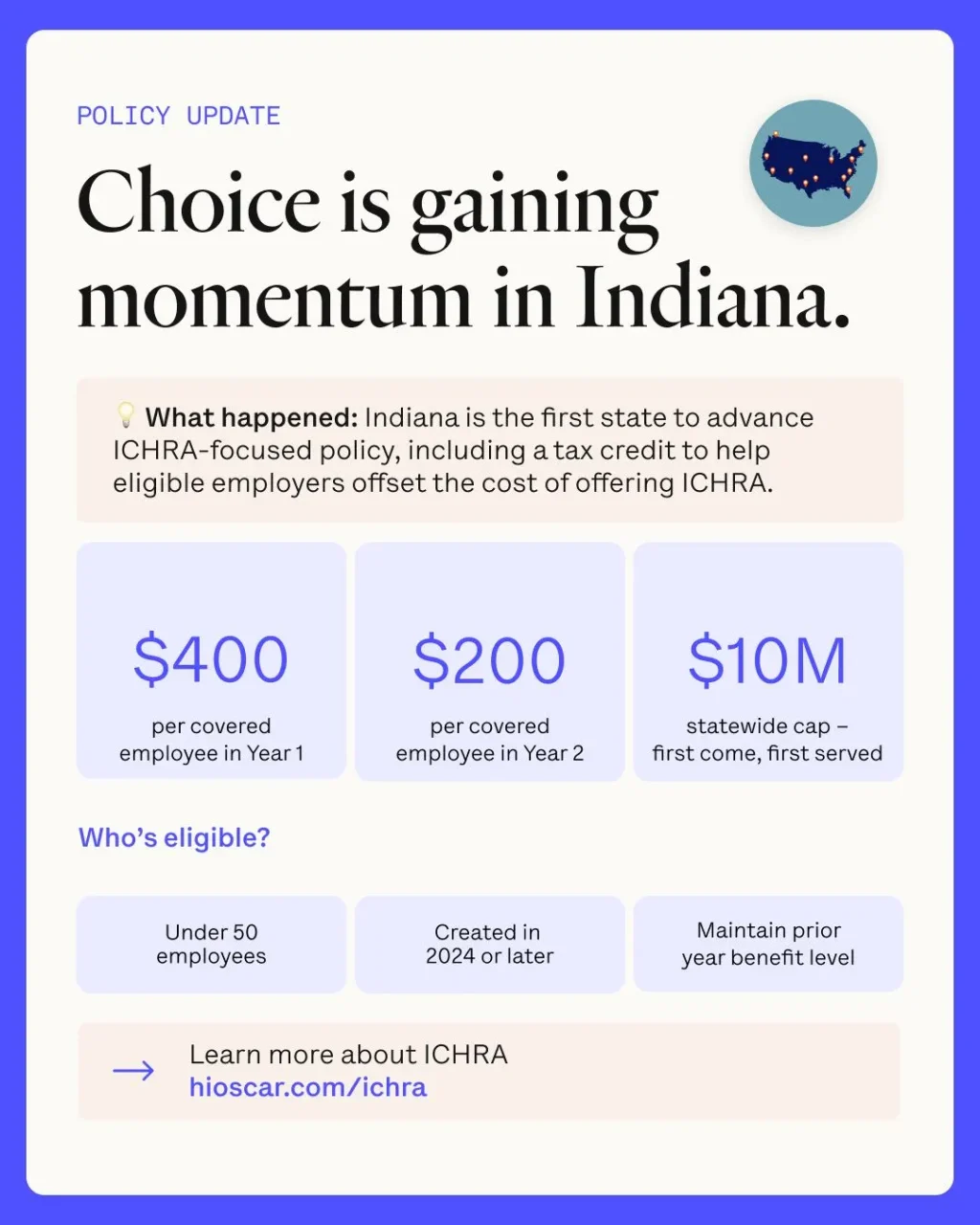
Under Indiana’s innovative program, qualifying employers with fewer than 50 employees can receive a substantial ICHRA tax credit. In the first year of offering a CHOICE Arrangement, eligible businesses can claim up to $400 per covered employee, significantly offsetting the initial costs of implementing a new benefits structure. This incentive is further extended into the second year, with a credit of $200 per covered employee. Such financial incentives are critical, especially for small businesses operating on tight margins, as they directly lower the cost of providing benefits, making comprehensive health coverage more attainable. This not only eases the financial burden on employers but also enables them to offer competitive benefits packages, crucial for talent attraction and retention in a tight labor market.
Indiana’s leadership has already inspired similar actions elsewhere. States like Mississippi and Connecticut have recently enacted their own versions of tax credits or incentives for ICHRAs, signaling a growing recognition of this model’s potential. The trend extends beyond these early adopters, with reports indicating that since 2025, no fewer than 13 states have considered similar legislation or executive actions concerning ICHRAs. This widespread interest, cutting across various political affiliations, underscores the bipartisan appeal and practical utility of CHOICE Arrangements as a viable solution to benefit businesses and workers nationwide. The momentum at the state level is a powerful indicator that policymakers are increasingly viewing this flexible model as a key strategy to expand access to affordable health benefits.
Key Stakeholder Perspectives and Endorsements
The press conference featured a lineup of influential figures, reflecting the broad support for CHOICE Arrangements. Among those in attendance were Dr. Mehmet Oz, the CMS Administrator; Kelly Loeffler, the SBA Administrator; Peter Nelson, Director of the Center for Consumer Information and Insurance Oversight (CCIIO); and key representatives from Oscar Health: Andrew Reeves, VP of ICHRA; Cathy Grason, VP of Government Affairs; and Eric Lail, Director of Public Affairs.

Dr. Oz, representing CMS, likely emphasized the administration’s commitment to consumer choice and market-based solutions in healthcare. His remarks would have focused on how CHOICE Arrangements empower individuals to select plans that best fit their health needs and financial situations, ultimately leading to greater satisfaction and better health outcomes. The administrator would have highlighted the role of CMS in fostering a dynamic individual health insurance market where employees can find competitive and comprehensive coverage options.
SBA Administrator Kelly Loeffler’s presence underscored the direct benefit to small businesses. Her statements would have undoubtedly positioned CHOICE Arrangements as a vital tool for small business owners grappling with the complexities and costs of traditional group health insurance. She would have stressed how this model offers a predictable and budget-friendly way for businesses, especially those facing rising group premiums or those looking to offer benefits for the first time, to provide essential health coverage, thus levelling the playing field with larger corporations in the competition for skilled labor. The SBA specifically champions CHOICE Arrangements as an accessible option for its constituency, recognizing that healthcare access is a significant concern for entrepreneurs.
Cathy Grason, Oscar Health’s VP and Head of Government Affairs, articulated the industry perspective, stating, "Rising health care costs have made the traditional one-size-fits-all approach increasingly difficult for employers and employees alike. CHOICE Arrangements offer a more flexible path: employers can continue investing in benefits while employees have greater ability to select coverage that works for their families, providers, prescriptions, and local market. State interest in CHOICE legislation is an important proof point. CMS and states are showing what is possible when policy and market innovation move in the same direction." Her comments highlight the alignment between market needs and policy solutions, emphasizing the innovative potential of these arrangements.
Andrew Reeves, Oscar Health’s VP of ICHRA, further elaborated on the practical implications in a LinkedIn post, noting, "CHOICE Arrangements are becoming a more serious benefits strategy for employers navigating rising health care costs and increasingly diverse workforces. They can be a great choice for employers and when designed thoughtfully, they can create greater predictability for employers and more choice for employees. That thoughtful implementation matters. Contribution strategy, workforce segmentation, local market dynamics, broker guidance, and employee decision all shape whether the model works in practice. CMS’s new resources should help employers and advisors evaluate those decisions more clearly." Reeves’ insights underscore the critical importance of careful planning and expert guidance for successful implementation, ensuring that the benefits are fully realized.
From a broader perspective, the reactions from other related parties can be logically inferred. Small business owners, particularly those who have struggled with providing health benefits, are likely to view this rebrand and the associated resources as a welcome simplification and a practical solution to a persistent problem. Employees, on the other hand, would appreciate the autonomy and personalization that CHOICE Arrangements offer, allowing them to choose plans that genuinely meet their individual and family health needs. Health insurance brokers and consultants, who play a crucial role in advising businesses, would likely welcome the enhanced clarity and federal backing, as it provides a stronger framework for them to recommend and implement these arrangements for their clients.
Broader Impact and Implications for the Future of Health Benefits
The rebranding of ICHRAs to CHOICE Arrangements, coupled with the robust support from federal agencies and pioneering state initiatives, carries significant implications for the future of health benefits in the United States.
For Small Businesses: The most immediate impact will be the increased accessibility and affordability of offering health benefits. By providing predictable contributions and reducing administrative burdens associated with traditional group plans, CHOICE Arrangements can transform how small businesses manage employee healthcare. This enables smaller enterprises to compete more effectively with larger companies for talent, improving employee morale and retention. For many small businesses, this could mean offering health benefits for the first time, a critical step towards enhancing employee well-being and productivity.
For Employees: The shift to CHOICE Arrangements fundamentally empowers employees. They gain control over their healthcare decisions, moving away from a single employer-selected plan. This flexibility allows them to choose a plan that aligns with their personal health priorities, preferred doctors, prescription drug needs, and financial situation. The portability of individual plans is also a significant advantage, as employees can often keep their chosen coverage even if they change jobs, fostering greater job mobility and reducing anxieties about healthcare continuity.
For the Healthcare Market: A wider adoption of CHOICE Arrangements is likely to stimulate growth and innovation in the individual health insurance market. As more employees enter this market with employer contributions, insurers will face increased competition to offer diverse, attractive, and cost-effective plans. This could lead to a more robust and responsive individual market, benefiting all consumers. The role of brokers will also evolve, becoming even more critical in guiding both employers through implementation and employees through plan selection.
Policy and Regulatory Outlook: The CMS announcement that it would tease upcoming regulatory activity intended to make CHOICE Arrangements easier for employers to adopt signals a sustained commitment from the federal government. This proactive regulatory stance could further streamline processes, clarify ambiguities, and ultimately reduce barriers to entry for businesses. Coupled with ongoing state-level legislative efforts, this suggests a dynamic policy environment that is increasingly supportive of flexible health benefit solutions. The bipartisan momentum observed in state legislatures indicates that this model transcends political divides, recognized for its practical benefits.
Economic Impact: By making health benefits more affordable and accessible, CHOICE Arrangements could have a positive ripple effect on the broader economy. Reduced healthcare costs for businesses free up capital for investment, expansion, and job creation. A healthier, more secure workforce is also a more productive workforce, contributing to overall economic growth.
Challenges and Continued Considerations
Despite the overwhelmingly positive outlook, the successful widespread adoption of CHOICE Arrangements will still require ongoing effort and careful consideration.
- Education and Awareness: While the rebrand aims to simplify understanding, sustained educational campaigns will be crucial to reach the millions of small businesses and their employees. Misconceptions about ICHRAs may linger, and clear communication will be paramount.
- Broker and Advisor Engagement: The role of health insurance brokers and benefits advisors remains central. They are the frontline educators and implementers. Ensuring they are well-versed in the nuances of CHOICE Arrangements, including contribution strategies, workforce segmentation rules, and local market dynamics, is vital for successful employer adoption.
- Individual Market Stability: The efficacy of CHOICE Arrangements is dependent on a robust and competitive individual health insurance market. The availability of diverse and affordable plans in all geographic areas is essential to ensure employees truly have meaningful choices.
- Thoughtful Implementation: As Andrew Reeves highlighted, "thoughtful implementation matters." Employers need guidance on designing their CHOICE Arrangement to best suit their specific workforce demographics and financial capabilities. This includes determining appropriate contribution levels and understanding the regulatory requirements.
Conclusion
The rebranding of ICHRAs to CHOICE Arrangements marks a pivotal moment in the ongoing effort to provide affordable, flexible, and quality health benefits to small businesses and their employees. This strategic initiative, spearheaded by CMS and SBA and powerfully amplified by Indiana’s pioneering tax credit, represents a significant step forward in simplifying a complex benefits model and increasing its accessibility. By prioritizing clarity, emphasizing employee choice, and offering tangible financial incentives, federal and state policymakers are creating an environment where more businesses can offer comprehensive benefits, and more workers can access healthcare plans tailored to their unique needs. This encouraging development paves the way for a future where flexible health benefits are not just an aspiration but a tangible reality for businesses and workers across the nation.