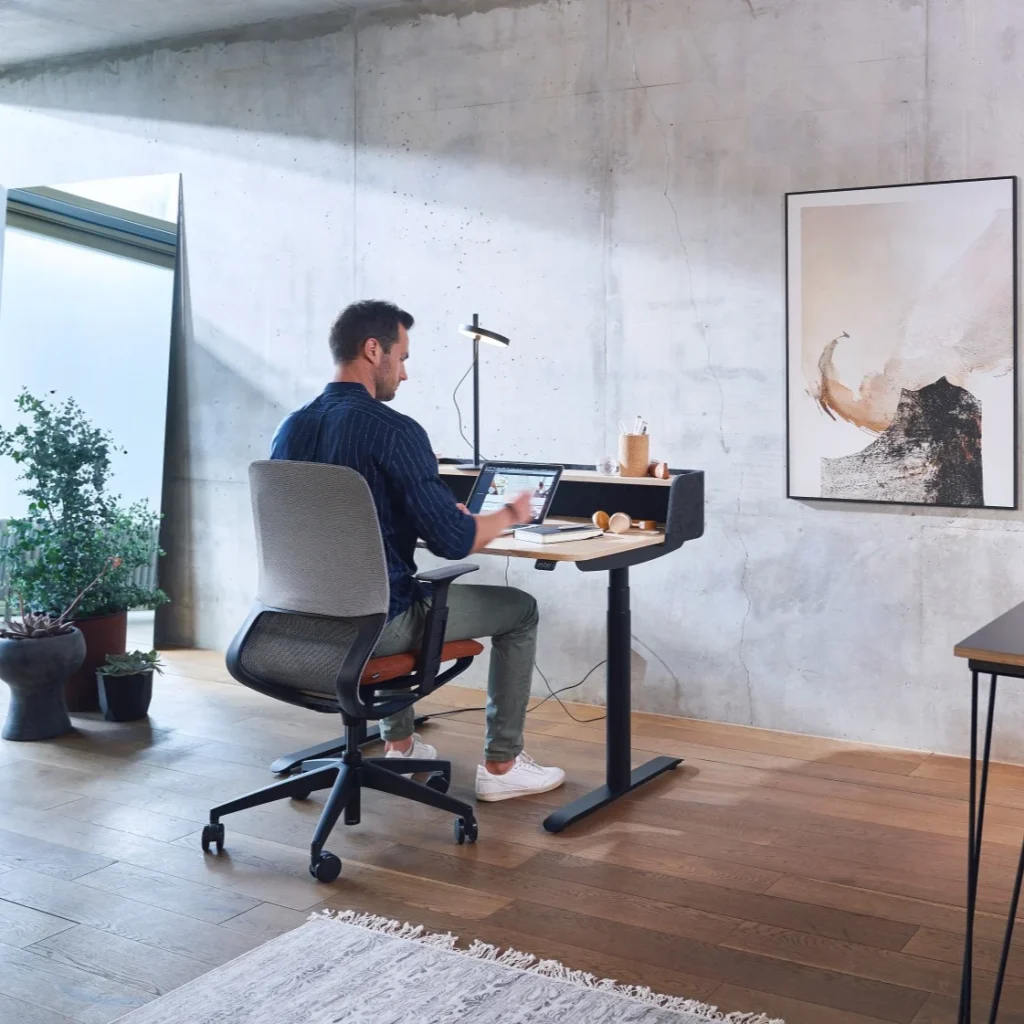
New research from King’s Business School at King’s College London suggests that men who work from home for the majority of the week may encounter more significant career disadvantages than women when it comes to job opportunities and promotions. The study, which analyzed nearly 13,000 assessments from over 5,300 employed individuals in the UK and Germany, found that individuals described as working remotely were rated less favorably than their office-based counterparts. This "homeworking penalty" intensified considerably for those spending three to four days per week working from home, compared to one or two. Notably, fathers and workers without children generally experienced more substantial declines in their ratings, though the researchers caution against interpreting this as an advantage for mothers. In the UK, mothers already received relatively lower ratings even when described as working entirely in the office, indicating a complex interplay of gender, parental status, and remote work perceptions.
The Escalating Impact of Homeworking Frequency
The study’s findings underscore the critical role that the frequency of remote work plays in shaping perceptions. Employees who worked from home for one or two days a week experienced a less pronounced reduction in their ratings. However, the decline became significantly steeper for those working remotely for three or four days.
In the UK, the "homeworking penalty" was quantified on a 10-point scale. Ratings for individuals working remotely one or two days a week fell by 0.56 points compared to their office-based counterparts. This decline more than doubled to 0.94 points for those working remotely three or four days a week. Germany exhibited a similar trend, albeit with slightly less pronounced penalties. In Germany, ratings decreased by 0.24 points for one to two days of remote work and by 0.74 points for three to four days.
These figures highlight a pervasive negative perception of homeworking in both nations, a sentiment that persists despite the widespread adoption of remote and hybrid working models in the wake of the COVID-19 pandemic. The study’s authors suggest that the structural shift towards flexible working has not entirely eradicated underlying biases.
Gender and Parental Status: A Complex Interplay
The research also revealed that gender and parental status significantly influence the magnitude of this homeworking penalty. For mothers, working from home for one or two days a week did not result in a statistically significant reduction in their ratings in either country. Similarly, women without children in Germany did not experience a significant rating decline.
In contrast, men generally began with a stronger perceived standing when described as office-based. This initial advantage meant that introducing homeworking had a greater potential to lower their ratings.
This distinction is particularly crucial when examining the findings for mothers. In the UK, mothers already tended to receive lower ratings when depicted as office-based employees, especially when compared to women without children. Therefore, the smaller additional homeworking penalty observed for mothers might, at least partially, reflect their lower starting point rather than a more favorable treatment when working remotely. This suggests that pre-existing biases against mothers in traditional office settings may be compounded by the introduction of flexible work arrangements.
Professor Heejung Chung, a lead author of the study and Professor of Work and Employment at King’s Business School, emphasized that these findings challenge the common perception of flexible working as solely a "mothers’ issue." "Flexible working has often been seen as a mothers’ issue, but this study shows that fathers also need protection from career penalties when they use it," Professor Chung stated. She further posited that normalizing flexible working among fathers could foster a more equitable division of caring responsibilities. "Making flexibility safe and normal for fathers can support mothers’ employment while improving outcomes for fathers and children," she added. This perspective suggests that broader societal and organizational shifts are needed to ensure that flexible work arrangements benefit all employees and families.
UK Workers Face a Sharper Penalty for Limited Homeworking
A notable divergence emerged when comparing the impact of limited homeworking (one to two days a week) between the UK and Germany. The penalty associated with this level of remote work was significantly less pronounced in Germany than in the UK. However, when employees worked remotely for three to four days a week, the difference in penalties between the two countries was no longer statistically significant. This suggests that while both nations exhibit biases against remote work, the UK’s workforce may be more susceptible to negative perceptions even with moderate adoption of flexible working.
The researchers propose that national institutions and workplace cultures play a pivotal role in shaping attitudes towards flexible workers. The mere provision of homeworking options does not automatically dismantle ingrained negative assumptions about employees who utilize them. This points to a critical distinction between organizations formally sanctioning flexible working and employees feeling genuinely empowered to use these arrangements without fear of career repercussions.
The authors advocate for employers to critically examine their promotion and performance evaluation processes. They suggest that an overemphasis on employees’ physical visibility in the workplace might be contributing to proximity bias. Instead, a greater focus on tangible outcomes and results, rather than the sheer amount of time spent in the office, is recommended. Addressing proximity bias—the tendency to favor individuals who are physically present—is crucial for fostering a truly equitable work environment.
Furthermore, the study emphasizes the importance of normalizing flexible working across the entire workforce. The researchers argue that framing flexibility primarily as an arrangement for mothers or employees with caregiving responsibilities risks reinforcing stereotypes. This framing could inadvertently discourage fathers and other male employees from embracing flexible working options, thereby perpetuating traditional gender roles in the workplace and at home.
Understanding the Research Methodology
It is important to clarify that this research does not definitively prove that employees who work from home are inherently less likely to be promoted or hired. The study’s methodology involved participants assessing hypothetical candidates rather than making actual recruitment or promotion decisions. Consequently, the researchers did not track the subsequent career trajectories of individuals. The experiment, therefore, provides compelling evidence that otherwise comparable workers can be evaluated differently based on their chosen working arrangements.
The data for this comprehensive study was collected in the latter half of 2023. Participants were presented with fictional candidate profiles, where characteristics such as gender, parental status, and frequency of homeworking were systematically varied. This experimental design allowed the researchers to isolate the impact of these specific factors on evaluators’ perceptions.
The research was a collaborative effort led by Professor Heejung Chung, in conjunction with Assistant Professor Senhu Wang from the National University of Singapore and Dr. Yvonne Lott from the Institute of Economic and Social Research at the Hans-Böckler Foundation. Their findings have been published in the journal Community, Work & Family under the title, "Flexibility stigma in the UK and Germany post-pandemic: intersectionality of stigma across gender and parental lines." This publication adds significant academic weight to the ongoing discourse surrounding the future of work and the challenges of equitable flexible working arrangements. The study’s findings have far-reaching implications for organizational policies, management practices, and societal attitudes towards work-life integration in the post-pandemic era.
Broader Implications for the Future of Work
The research raises critical questions about the sustainability and equity of current approaches to flexible working. As organizations navigate the evolving landscape of work, it is imperative that they move beyond simply offering remote or hybrid options and actively address the underlying biases that can penalize employees for utilizing them.
The findings suggest a need for a paradigm shift in how employee performance is assessed and valued. Emphasizing outcomes over presenteeism, fostering inclusive leadership, and providing comprehensive training for managers on managing diverse work arrangements are crucial steps. The normalization of flexible working, championed by this research, could be a powerful catalyst for greater gender equality in both the workplace and the home, ultimately benefiting individuals, families, and society as a whole. The ongoing dialogue and research in this area are vital for shaping a future of work that is both productive and equitable for all.