
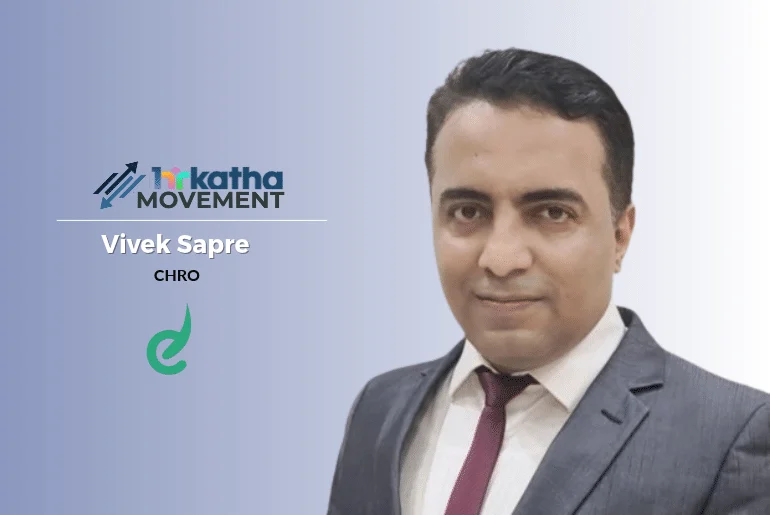
Veranda Learning Solutions, a prominent player in India’s burgeoning education technology sector, has officially announced the resignation of its Chief Human Resources Officer (CHRO), Vivek Sapre. The company confirmed this significant leadership transition through a regulatory filing with the stock exchanges, adhering strictly to the disclosure mandates set forth by the Securities and Exchange Board of India (SEBI). Sapre’s exit is slated to become effective at the close of business on September 28, 2026, marking a notably extended transition period for the organization. His resignation was directly submitted to Kalpathi S Suresh, the esteemed Chairman and Executive Director of Veranda Learning Solutions.
In his formal communication, Sapre articulated that his decision stemmed from a period of careful deliberation, ultimately driven by a compelling desire to pursue an external opportunity. This new venture, he conveyed, is meticulously aligned with his long-term career aspirations and strategic professional growth objectives. Veranda Learning Solutions, in its public statement, duly acknowledged Sapre’s substantial contributions during his tenure and conveyed profound appreciation for the comprehensive services he rendered to the company’s human capital development and organizational strategy. This announcement signals a pivotal moment for Veranda Learning Solutions as it navigates the complexities of a rapidly evolving ed-tech landscape, necessitating robust and agile leadership across all functional domains, particularly within human resources.
Vivek Sapre’s Extensive Professional Journey and Strategic Impact
Vivek Sapre’s career trajectory is a testament to his versatility and strategic acumen, spanning a diverse array of industries and functional responsibilities before his immersion into the realm of human resources leadership. His professional journey commenced in the technology sector, where he honed his foundational skills as a software and test engineer with Infosys, one of India’s global IT services giants. This initial experience provided him with an invaluable understanding of technological operations and problem-solving, skills that would later prove instrumental in his cross-functional roles.
Following his foundational years in technology, Sapre transitioned into the manufacturing and heavy machinery sector, joining Telcon at Tata Motors Hitachi in 2009 as a marketing manager. This move marked a significant pivot, showcasing his capacity to adapt to different business environments and apply analytical thinking to market dynamics. His tenure there broadened his exposure to industrial operations and customer engagement strategies. Subsequently, he moved to Mu Sigma, a leading decision sciences and data analytics firm, where he served as a senior business analyst. This role further sharpened his analytical capabilities, enabling him to leverage data-driven insights for strategic decision-making, a skill increasingly critical for modern HR leadership.
His career continued its diversified path into the financial services industry with L&T Finance. Here, Sapre took on the significant responsibility of national product and strategy manager, overseeing a broad portfolio that included auto, passenger vehicle (PV), commercial, agri, and construction vehicle finance. This experience provided him with a deep understanding of product lifecycle management, market segmentation, and strategic financial planning across multiple asset classes. Before embarking on his dedicated HR leadership journey, Sapre spent nearly three years with EY (Ernst & Young), a global professional services behemoth, where he contributed to financial services and business advisory projects. His consulting experience at EY exposed him to a wide range of organizational structures, operational efficiencies, and strategic challenges faced by diverse clients, equipping him with a holistic business perspective.
Sapre’s dedicated foray into human resources leadership commenced in 2017 when he joined NeoGrowth Credit as the Head of HR and Corporate Affairs. This role marked a pivotal shift, allowing him to apply his extensive cross-functional business understanding to shape human capital strategies. His work at NeoGrowth Credit focused on building a robust organizational culture, attracting and retaining talent, and ensuring corporate governance, laying the groundwork for his future CHRO responsibilities. In November 2023, he assumed the critical role of Chief Human Resources Officer at Veranda Learning Solutions, where he has been associated for nearly three years, playing a key role in shaping the company’s talent acquisition, development, and retention strategies amidst its aggressive growth phase. His departure from Veranda, scheduled for September 2026, highlights a carefully planned transition, indicative of both Sapre’s strategic career planning and the company’s deliberate approach to leadership changes.
Veranda Learning Solutions: A Deep Dive into its Ecosystem and Strategic Growth
Veranda Learning Solutions, founded by the visionary Kalpathi S Suresh, has rapidly carved out a significant niche in the competitive Indian education technology market. The company operates on a hybrid learning model, integrating online resources with offline physical classroom experiences, thereby catering to a diverse student demographic across various segments including test preparation, professional skilling, and higher education. Its strategic intent is to democratize quality education, making it accessible and affordable across India.
Since its inception, Veranda has pursued an aggressive growth strategy, combining organic expansion with a series of strategic acquisitions. This inorganic growth strategy has allowed the company to quickly diversify its offerings and expand its geographical footprint. For instance, Veranda has acquired companies like Edureka, a leading professional skilling platform; Brain4ce Education Solutions Private Limited (popularly known as "T.I.M.E. Institute"), a well-established player in test preparation; and more recently, J. K. Shah Classes, known for its CA and CS coaching. These acquisitions have not only broadened its portfolio but also brought in seasoned faculty, robust content, and established student bases, consolidating Veranda’s position as a multi-faceted educational provider.
The Indian ed-tech market is characterized by intense competition, rapid technological advancements, and evolving regulatory landscapes. Veranda operates alongside established players and emerging startups, all vying for a share of the burgeoning digital education pie. The post-pandemic acceleration in digital adoption has created unprecedented opportunities but also magnified challenges related to customer acquisition costs, content quality, and talent retention. Veranda’s financial performance, while subject to market fluctuations inherent in a growth-oriented sector, has shown a commitment to expansion. For the financial year ending March 31, 2023, the company reported substantial revenue growth, underscoring its operational scale and market penetration. As of recent reports, Veranda Learning Solutions caters to hundreds of thousands of students across its various platforms, employing a significant workforce that spans educators, technology professionals, sales and marketing teams, and administrative staff, highlighting the critical role of human resources in managing such a diverse and dispersed talent pool.
The Strategic Imperative of the CHRO Role in Modern Enterprises
The role of a Chief Human Resources Officer has undergone a profound transformation over the past two decades, evolving from a primarily administrative and compliance-focused function to a critical strategic partner at the highest levels of corporate leadership. In today’s dynamic business environment, especially within high-growth, technology-driven sectors like ed-tech, the CHRO is no longer merely responsible for payroll and benefits. Instead, they are pivotal in shaping organizational culture, driving talent acquisition and retention strategies, fostering employee engagement, managing organizational change, and ensuring that human capital aligns directly with the company’s strategic objectives and financial performance.
In an organization like Veranda Learning Solutions, which is rapidly expanding through both organic growth and strategic acquisitions, the CHRO’s role is even more pronounced. This involves not only integrating diverse workforces from acquired entities but also harmonizing different organizational cultures, standardizing HR policies, and ensuring a consistent employee experience across the expanded enterprise. The ability to attract top-tier educators, technology developers, and sales professionals in a highly competitive talent market is a direct reflection of the CHRO’s strategic foresight and execution capabilities. Furthermore, with the increasing emphasis on employee well-being, diversity, equity, and inclusion (DE&I), and the development of future-ready skills, the CHRO stands at the forefront of building a resilient, adaptable, and innovative workforce capable of driving sustained growth.
A strategic CHRO also plays a crucial role in succession planning for critical leadership positions, ensuring that the organization has a robust pipeline of internal talent ready to step into key roles. They are instrumental in designing performance management systems that incentivize excellence and fostering a learning culture that supports continuous professional development. Vivek Sapre’s extensive background across technology, finance, and consulting before specializing in HR, exemplifies the modern CHRO profile – a leader with a comprehensive understanding of business operations, financial implications, and technological trends, capable of translating these insights into effective human capital strategies. His departure, therefore, signifies not just a change in personnel but a strategic shift that Veranda must meticulously manage to maintain its growth trajectory and organizational stability.
Implications of a Leadership Transition for Veranda
The departure of a key executive like a CHRO, particularly with an effective date as far out as September 2026, presents both challenges and opportunities for Veranda Learning Solutions. The primary challenge lies in ensuring seamless continuity in its human resources strategy during this extended transition period. Sapre, having been associated with the company for nearly three years, would have been instrumental in establishing key HR frameworks, talent management processes, and cultural initiatives. His successor will need to quickly assimilate these strategies and build upon them without disruption.
One significant implication is the potential impact on employee morale and retention. Leadership changes, especially at the CHRO level, can sometimes create uncertainty among employees regarding future HR policies, career development opportunities, and cultural direction. Veranda will need to communicate transparently about the transition, reassuring its workforce of its commitment to their growth and well-being. Furthermore, the company’s aggressive acquisition strategy means its HR function is constantly dealing with integrating new teams and cultures. A leadership void or a prolonged search for a successor could potentially slow down these integration efforts, affecting overall operational efficiency and employee engagement across newly acquired entities.
From an opportunity perspective, this transition allows Veranda to re-evaluate its human resources strategy and potentially infuse new perspectives and innovations into its people management practices. The extended notice period provides an ample window for a well-planned succession. This could involve a thorough internal assessment for potential candidates or a comprehensive external search to bring in fresh expertise that aligns with Veranda’s future growth ambitions. The new CHRO could potentially introduce cutting-edge HR technologies, enhance data-driven HR analytics, or implement more agile talent development programs, further strengthening Veranda’s competitive edge in attracting and retaining top talent in a dynamic market. The company’s Chairman and Executive Director, Kalpathi S Suresh, will likely oversee a rigorous selection process to identify a leader who can not only maintain the current momentum but also propel Veranda’s human capital strategy to the next level.
The Broader Landscape of Executive Mobility in Ed-tech
Vivek Sapre’s move also casts a spotlight on the broader trends of executive mobility within the rapidly evolving ed-tech sector. The industry, characterized by its fast pace of innovation, intense competition, and significant venture capital investment, often sees a high degree of leadership churn. Executives are frequently sought after for their specialized skills in scaling businesses, managing rapid technological shifts, and navigating complex market dynamics. This creates a highly fluid talent market where senior leaders, especially those with diverse cross-functional experience, are in high demand.
The pursuit of "external opportunities aligned with long-term career goals," as stated by Sapre, is a common driver for executive movements in high-growth sectors. Leaders are increasingly looking for roles that offer greater strategic impact, exposure to new technologies or markets, or opportunities to build and scale businesses from the ground up. This trend underscores the premium placed on adaptable, strategic leaders who can bring fresh perspectives and drive transformative change. For HR leaders in particular, the demand for those who can bridge the gap between human capital strategy and overall business objectives has never been higher. Their ability to manage organizational culture, foster innovation, and build resilient workforces is critical for companies aiming for sustained success in a volatile market.
Industry analysts often point out that such executive transitions are a natural part of a maturing ecosystem. While they can pose short-term challenges, they also signal a vibrant market where talent is constantly being optimized and redeployed to areas of greatest impact. For Veranda Learning Solutions, this is an opportunity to reinforce its commitment to leadership development and succession planning, demonstrating its ability to attract and retain top talent even amidst departures.
Statements and Industry Perspectives (Inferred)
While specific new statements beyond the official filing are not available, it is possible to infer the likely tenor of communications from Veranda and observations from industry experts.
From Veranda Learning Solutions’ perspective, led by Kalpathi S Suresh, the emphasis would undoubtedly be on continuity and future focus. An internal communication to employees or a public statement to stakeholders might reiterate:
- Commitment to People Strategy: "We remain deeply committed to our employees and our robust people strategy. The foundation laid by Vivek and the team will continue to guide our talent development and cultural initiatives."
- Strategic Succession Planning: "The extended transition period allows us to conduct a thorough and strategic search for a successor who will build upon our strong HR foundation and align with our ambitious growth plans."
- Focus on Business Objectives: "Our core business objectives and our mission to provide quality education remain paramount. We are confident in our leadership team’s ability to drive us forward."
Industry analysts and HR consultants, observing this transition, might offer insights such as:
- Normal Course of Business: "Leadership changes are a natural and healthy part of any dynamic industry, especially in the fast-paced ed-tech sector where talent is highly sought after."
- Strategic Nature of CHRO Role: "Sapre’s diverse background is indicative of the modern CHRO’s requirement to be a business leader first, with HR expertise. His move underscores the increasing mobility of such strategic HR professionals."
- Opportunity for Innovation: "For Veranda, this provides an opportunity to bring in fresh perspectives and innovate further in its human capital management, especially as it continues its acquisition spree and consolidates its market position."
- Importance of Transition Management: "The key for Veranda will be how effectively they manage this transition, ensuring minimal disruption to employee morale and strategic HR initiatives."
Looking Ahead: Veranda’s Path Forward and the Search for a Successor
With Vivek Sapre’s departure scheduled for September 2026, Veranda Learning Solutions now faces the critical task of identifying and onboarding a new Chief Human Resources Officer. The qualities sought in the next CHRO will likely reflect the company’s strategic priorities for its next phase of growth. Given Veranda’s aggressive acquisition strategy, the successor will need proven expertise in post-merger integration, particularly in harmonizing diverse cultures and HR systems. A strong understanding of talent analytics, digital HR platforms, and innovative recruitment strategies will be paramount to attract and retain high-caliber talent in a competitive market.
Furthermore, as an education technology company, the ability to foster a learning culture, develop leadership pipelines, and manage a hybrid workforce (comprising educators, tech professionals, and administrative staff) will be crucial. The new CHRO will be expected to champion diversity, equity, and inclusion initiatives, ensuring Veranda remains an attractive employer that reflects the diverse student base it serves. This leader will also need to work closely with the executive team to anticipate future talent needs, align human capital investments with business outcomes, and navigate any evolving regulatory landscapes impacting employment and education.
The extended transition period until September 2026 affords Veranda the luxury of a comprehensive and unhurried search process. This timeframe allows for meticulous candidate vetting, detailed handover protocols, and a smooth integration of the new CHRO into the company’s strategic fabric. This careful approach underscores the strategic importance Veranda places on its human resources leadership and its commitment to ensuring long-term organizational stability and growth.
In conclusion, Vivek Sapre’s impending departure marks a significant, yet strategically managed, leadership transition for Veranda Learning Solutions. It highlights the dynamic nature of executive careers in the modern business world and the ever-increasing strategic importance of the CHRO role. For Veranda, this period will be defined by its concerted efforts to ensure continuity, identify a successor who can drive its ambitious human capital agenda, and continue its trajectory as a leading force in the Indian ed-tech landscape.







