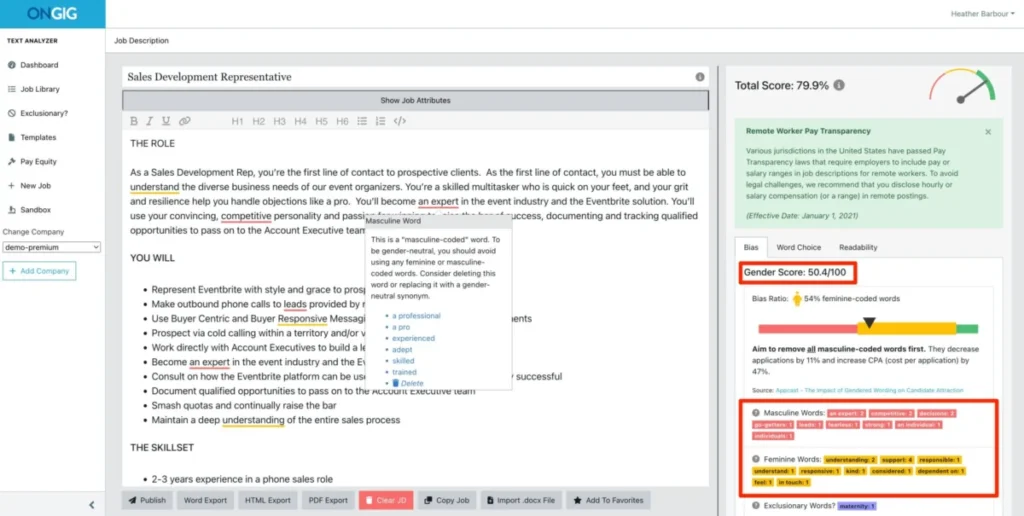
For enterprise organizations navigating the complex talent landscape of 2026, the notion that a basic job description (JD) writing tool suffices for their needs is rapidly becoming obsolete. Modern large-scale operations demand sophisticated systems that transcend mere content creation, offering comprehensive management, strategic oversight, and seamless integration across the entire talent lifecycle. The shift is clear: what was once an administrative task has evolved into a critical strategic function, necessitating robust, enterprise-grade job description software capable of orchestrating the entire JD management process from inception to publication and ongoing maintenance.
The Evolving Landscape of Job Descriptions in Enterprise HR
Historically, job descriptions were often viewed as static, administrative documents, frequently stored in disparate files, shared drives, or even individual desktops. For enterprise teams, this fragmented approach led to a myriad of inefficiencies and risks. Inconsistent language, outdated requirements, non-compliant clauses, and a lack of standardized branding became common pitfalls, directly impacting recruitment effectiveness, employee experience, and legal compliance. As organizations scaled, so did the complexity of managing thousands of unique job roles across diverse departments, geographies, and regulatory environments.
The past decade has seen a dramatic transformation in HR technology, driven by the need for greater efficiency, data-driven insights, and a focus on candidate experience and diversity, equity, and inclusion (DEI). Job descriptions, once an afterthought, are now recognized as foundational elements that influence every stage of the talent journey—from attracting top talent and setting compensation to performance management and career pathing. The rise of skills-based hiring, pay transparency laws, and increased scrutiny over biased language has further amplified the strategic importance of well-managed JDs. Companies in 2026, therefore, require a unified system that can not only create compelling JDs but also govern their lifecycle, ensure consistency, and integrate with their broader HR ecosystem.
The Imperative for Enterprise-Grade Solutions: Beyond Basic Tools
Generic document management systems like SharePoint or Google Docs, while useful for collaborative editing, fundamentally lack the specialized capabilities required for enterprise job description management. They cannot provide a live, searchable cloud library tailored for JDs, manage approvals at scale, enforce governed templates, automate repetitive updates, or integrate intelligently with Applicant Tracking Systems (ATS) and Human Resources Information Systems (HRIS). These tools, while offering basic sharing, fall short in areas critical for enterprise operations:
- Version Control and Audit Trails: Essential for compliance and tracking changes across numerous stakeholders.
- Scalability: Managing hundreds or thousands of JDs efficiently.
- Workflow Automation: Routing JDs for approval through complex organizational structures.
- Content Intelligence: Identifying biased language, ensuring inclusivity, or suggesting relevant skills.
- Integration: Seamless data flow with other critical HR systems.
The demand for specialized software stems from the recognition that job descriptions are living documents that must reflect organizational changes, market shifts, and evolving legal requirements. A static approach simply invites risk and inefficiency.
Key Features Defining Modern JD Management Platforms for Enterprises
Enterprise-level job description software is distinguished by a suite of core capabilities designed to provide control, efficiency, and strategic value. When evaluating potential solutions, organizations should prioritize systems offering:
- Centralized, Searchable Cloud Library: A single source of truth for all job descriptions, ensuring consistency, easy access, and robust version control. This eliminates duplication and ensures everyone works from the most current, approved version.
- Scalable Management and Automation: The ability to manage a vast number of JDs efficiently, with automation features for routine updates (e.g., legal disclaimers, company values) and bulk actions, significantly reducing administrative overhead.
- Configurable Approval Workflows: Streamlined, automated routing of JDs through multiple stakeholders (hiring managers, HR business partners, legal, compensation specialists) for review and approval. This minimizes bottlenecks, ensures compliance, and provides full auditability.
- Governed Templates and Standardization: Tools to create and enforce standardized JD templates that align with brand guidelines, legal requirements, and compensation frameworks. This promotes consistency across all roles and departments, strengthening the employer brand.
- ATS and HRIS Integration: Seamless connectivity with existing talent acquisition and HR management systems. This ensures data consistency, reduces manual data entry, and creates a unified view of talent data across the organization. For instance, a JD updated in the management system should automatically reflect in the ATS when a new requisition is opened.
- Inclusivity and Bias Detection: Advanced analytics to identify and flag biased language, gendered terms, or non-inclusive phrasing. This is crucial for fostering diverse talent pools and adhering to fair hiring practices.
- Compensation Alignment and Job Architecture: Features that link job descriptions directly to compensation bands, market data, and a defined job architecture. This ensures equitable pay practices and clear career leveling within the organization.
- Compliance and Regulatory Guidance: Real-time prompts and checks for adherence to labor laws, pay transparency mandates, and other regulatory requirements relevant to specific regions or industries.
- Reporting and Analytics: Dashboards and reports offering insights into JD creation cycles, approval times, content quality, and compliance status, enabling continuous improvement.
Leading Job Description Management Tools for Enterprise Teams
The market for enterprise JD management solutions has matured, with several vendors offering sophisticated platforms. Here’s an overview of prominent tools, highlighting their unique strengths for large organizations:
-
Ongig Text Analyzer: Positioning itself as a comprehensive, end-to-end system, Ongig Text Analyzer is designed to centralize the entire JD lifecycle. Its strength lies in providing a unified platform for building inclusive job descriptions, managing approval workflows, standardizing JDs through a searchable cloud library, and syncing seamlessly with ATS and HRIS systems. For enterprises, this minimizes manual management, eliminates audit gaps, and ensures content alignment across all touchpoints, with a strong focus on DEI through its text analysis capabilities. Ongig typically offers tiered pricing models to accommodate various organizational sizes and needs.
-
Payscale Job Description Management: Leveraging Payscale’s deep expertise in compensation data, this solution excels at bringing order to job architecture. Many enterprises struggle with inconsistent roles, levels, and compensation structures. Payscale’s offering ensures that job descriptions, leveling, and compensation data are housed within a single, coherent system, thereby eliminating "job data chaos." Its core value proposition revolves around integrating compensation intelligence directly into the JD creation process.
-
JDMS by Hrizons: Focused on making job description management straightforward and efficient, JDMS aims to simplify the creation and maintenance of JDs. Key features include an organized, filterable job description library and robust integration capabilities with preferred HRIS and ATS systems. For enterprises, its emphasis on ease of use and streamlined data flow makes it a strong contender for reducing administrative burden. Pricing for JDMS typically starts at a significant annual investment, reflecting its enterprise focus.
-
JDXpert: Positioned as a holistic job information management tool, JDXpert goes beyond simple JD writing. It provides a platform to build, organize, approve, and securely save job descriptions, consolidating fragmented processes into one system. Its comprehensive approach is suitable for enterprises seeking to manage all aspects of job information, ensuring consistency and control across the organization. Detailed pricing is usually provided upon request through a demo.
-
Quinto by HRSG: Quinto addresses the challenge of inconsistent job data stemming from scattered tools and formats. Its primary goal is to maintain consistency across all job-related data within a single platform, impacting not just job descriptions but also broader HR functions like promotion and succession planning. For enterprises, Quinto ensures a shared, consistent structure for all job-related information, fostering internal equity and clarity. Pricing is generally custom, based on organizational needs.
-
JobArchitect by Salary.com: As part of the broader Salary.com platform, JobArchitect is engineered for creating, approving, and maintaining job description content at scale. Its significant advantage for enterprises is the inherent link to Salary.com’s extensive compensation data, eliminating guesswork in setting appropriate pay for roles. This integration helps recruitment teams replace disparate tools with a unified system that also informs fair compensation practices. Pricing is typically determined through a demo and consultation.
-
RoleCreate by Role Mapper: RoleCreate is designed to enable the creation of inclusive, consistent, and compensation-ready JDs within a single platform. It acknowledges that job descriptions are dynamic and must evolve with market demands and company changes. For enterprises, its focus on maintaining the currency and relevance of job descriptions, coupled with its attention to inclusivity and compensation, offers a strategic advantage in talent acquisition and retention. Pricing information is available on their website.
-
Datapeople (now a Payscale company): Datapeople’s core mission is to enhance and manage JD content through data-driven guidance. Leveraging real-world hiring data, the platform provides predictive insights into how a job description will perform. It goes beyond basic grammar checks to flag non-inclusive language, missing benefits, and other critical elements that impact candidate attraction and diversity. For enterprises, Datapeople offers an intelligent layer of optimization, ensuring JDs are effective, inclusive, and compliant. Pricing details are typically available on their website.
General Factors for Strategic Selection and Deployment
While features are paramount, enterprise teams must consider broader strategic factors when investing in JD management software to ensure successful implementation and long-term value.
| FACTOR | WHAT TO CONSIDER |
|---|---|
| Ease of Use & User Experience (UX) | A complex system will face low adoption. The interface must be intuitive for various users (HR, hiring managers, legal) to ensure efficient JD creation, review, and approval. |
| Implementation & Onboarding | Understand the vendor’s implementation timeline, resource requirements, and training programs. Does the vendor offer dedicated support and comprehensive documentation to facilitate a smooth transition? |
| Total Cost of Ownership (TCO) | Beyond licensing fees, consider costs associated with implementation, training, ongoing maintenance, support, and potential integration fees. Ensure pricing models are transparent and scalable with organizational growth. |
| Content Migration Services | For enterprises with a vast existing library of JDs (e.g., from SharePoint, shared drives), evaluate the vendor’s capabilities and support for migrating legacy content into the new system efficiently and accurately. |
| Support Availability & Quality | Reliable and responsive customer support is crucial for enterprise operations. Research vendor reputation for support via online reviews, testimonials, and direct inquiries to current customers. |
| Scalability & Performance | The solution must be capable of handling the current and future volume of JDs, users, and transactions without performance degradation, especially during peak recruitment periods. |
| Security & Data Privacy | Given the sensitive nature of HR data, robust security measures, data encryption, compliance with GDPR, CCPA, and other privacy regulations are non-negotiable for enterprise deployments. |
| Integration Ecosystem | Assess how well the software integrates with the existing HR tech stack (ATS, HRIS, CRM, compensation platforms, learning management systems) to ensure a unified and efficient workflow. Open APIs are a significant advantage. |
Broader Implications and Future Outlook
The adoption of specialized job description management software signifies a strategic shift for enterprise HR.
- For Talent Acquisition: These tools enhance the candidate experience by ensuring consistent, accurate, and engaging job postings. They reduce time-to-hire by streamlining approval processes and improve the quality of applicants by leveraging data-driven insights to optimize JD content.
- For HR Operations: Automation reduces administrative burden, allowing HR teams to focus on strategic initiatives. Centralized data improves compliance, reduces legal risks, and provides valuable analytics for workforce planning.
- For Organizational Strategy: Clear, consistent job descriptions contribute to better internal mobility, clearer career paths, and a stronger employer brand. They also support strategic initiatives like skills-based talent management and internal talent marketplaces.
Looking ahead, the integration of Artificial Intelligence (AI) and Machine Learning (ML) will further refine JD optimization, offering more predictive analytics on candidate attraction and retention. Deeper connections with learning and development platforms will facilitate personalized career growth based on identified skill gaps in JDs. Real-time market data insights will become even more pervasive, allowing organizations to dynamically adjust JDs and compensation to remain competitive.
In conclusion, for enterprise teams, the journey from disparate documents to a centralized, intelligent job description management system is not merely an upgrade; it is a fundamental re-engineering of how talent is attracted, managed, and developed. By embracing these specialized solutions, organizations can transform their JDs from static forms into dynamic, strategic assets that drive business success and cultivate a truly inclusive and efficient talent ecosystem.
Published on September 28, 2026, by Harrison Mbuvi.