The National Association of Colleges and Employers (NACE) 2024 conference, NACE26, held recently in Denver, Colorado, served as a pivotal forum for the early talent community to address the rapidly transforming landscape of campus recruiting. Against a backdrop of technological disruption, shifting candidate expectations, and persistent recruitment challenges, Yello, a leading talent acquisition platform, played a significant role as a platinum sponsor, leveraging the event to unveil groundbreaking innovations and a strategic partnership designed to redefine how organizations engage with emerging professionals.
NACE, an organization dedicated to connecting college career services professionals and HR/staffing professionals who recruit college students, holds its annual conference as a cornerstone event for industry dialogue, trend analysis, and networking. NACE26, attended by hundreds of practitioners, researchers, and solution providers, focused on navigating the complexities of modern talent acquisition, particularly for entry-level and intern roles. Discussions throughout the conference coalesced around three dominant themes: the transformative, yet nuanced, role of Artificial Intelligence (AI) in recruiting; a fundamental shift in employer event strategies; and the enduring challenge of offer reneges.
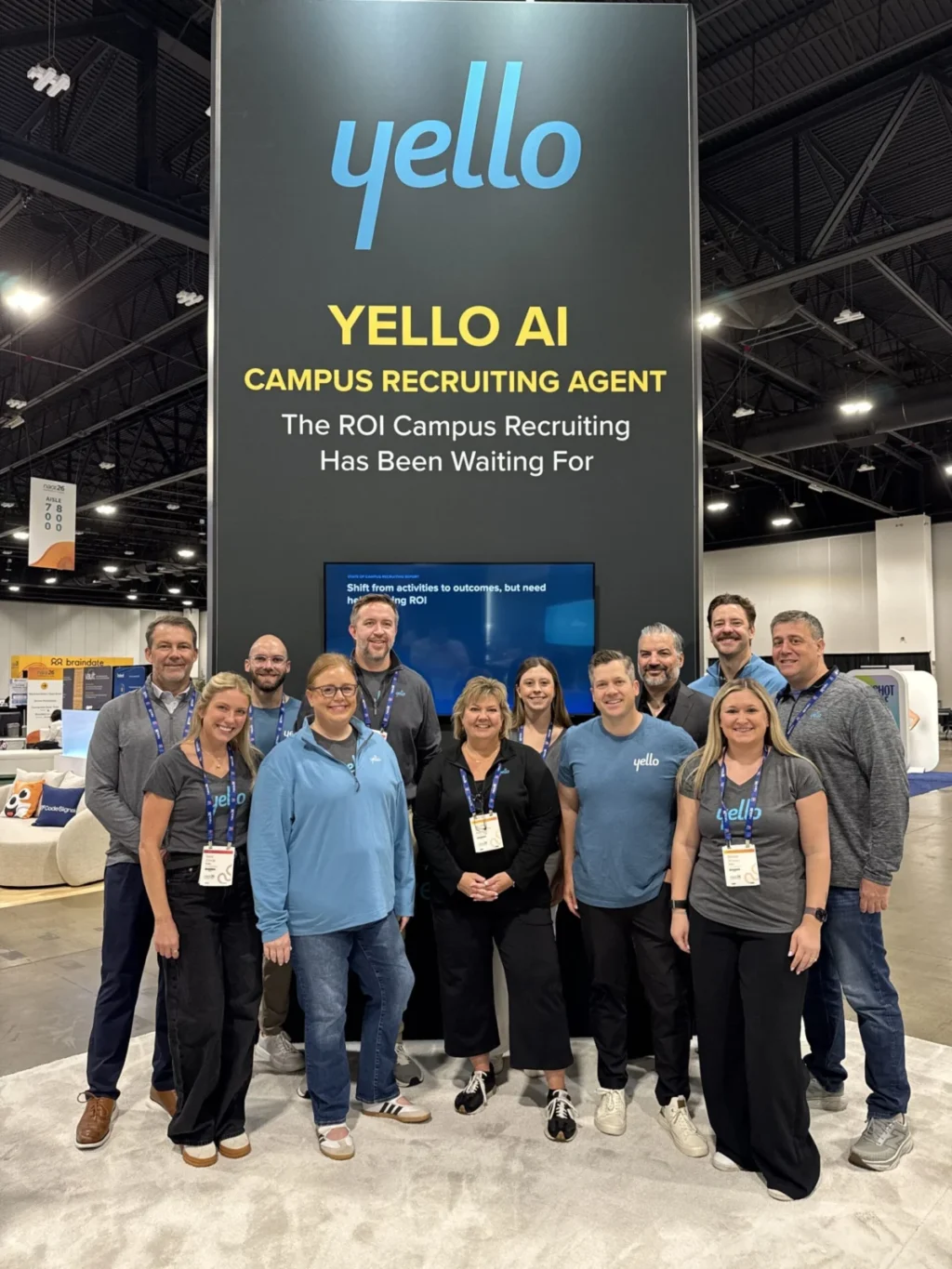
Yello’s presence at NACE26 extended beyond its platinum sponsorship, featuring several impactful speaking sessions, a well-attended rooftop happy hour, and constant engagement at its exhibition booth. The company utilized this prominent platform to introduce its innovative AI Campus Recruiting Agent and announce a new, significant partnership with Symplicity, a global leader in student success and employability solutions. These announcements were strategically timed to align with the core challenges and opportunities being discussed across the conference floor, positioning Yello as a key facilitator of future-ready recruiting practices.
The Evolving Role of Artificial Intelligence in Talent Acquisition
One of the most pervasive topics dominating conversations at NACE26 was the increasing integration of AI into recruiting processes. While the consensus affirmed AI’s growing importance, the precise manner of its application, and its ethical implications, sparked considerable debate. Yello’s own "State of Campus Recruiting report" highlighted that while 26% of current AI usage in campus recruiting is concentrated in sourcing and 25% in candidate communications—primarily top-of-funnel activities—a significant gap exists in its application for data analysis and demonstrating Return on Investment (ROI). This discrepancy resonated strongly with attendees in Denver.
Recruiters, it became clear, are not seeking AI to usurp their decision-making authority. Instead, their overwhelming desire is for AI to automate the administrative burdens and repetitive tasks that consume valuable time, thereby freeing them to engage more meaningfully with candidates. This sentiment was explicitly addressed in a Yello-sponsored session titled "Can Campus Recruiting Be Autonomous? The Answer Is Complicated." The panel, featuring Tamara Welch from LPL Financial, Matthew Brink from NACE, and Dan Bartfield from Yello, explored the dichotomy between fully autonomous recruiting and AI’s role in augmenting human recruiters for higher-value work. The audience’s response was unequivocal: the latter was the preferred outcome.
The discussion underscored that for AI to be truly effective in campus recruiting, it must be purpose-built to address the unique challenges and nuances of this specialized field. By offloading manual tasks—such as scheduling, initial candidate outreach, and data entry—AI empowers recruiters to focus on critical aspects like relationship building, candidate assessment, and strategic program development. This shift allows human expertise to be deployed where it matters most, fostering a more personalized and impactful candidate experience.
However, the ethical dimension of AI in hiring also emerged as a critical concern. Matthew Brink from NACE emphasized that students exhibit apprehension towards employers who rely excessively on AI, particularly when its use is not transparently disclosed. A hiring process perceived as impersonal or overly automated risks alienating qualified candidates and subtly eroding employer brand reputation. The implications for diversity, equity, and inclusion (DEI) were also implicitly acknowledged, with a collective understanding that AI tools must be meticulously designed and continuously audited to mitigate inherent biases and ensure fair candidate evaluation. As the talent acquisition industry progresses, the imperative for ethical AI development and transparent communication regarding its deployment will only grow.
Redefining Event Strategy for Measurable ROI
Beyond AI, the strategic approach to recruitment events underwent significant scrutiny at NACE26, reflecting a broader industry recalibration. A second Yello session, "Purpose Over Presence: Rethinking Your Event Strategy for Better ROI," featured Vincent Bond from Synchrony, Kristin Leek from Boeing, and Christopher Cantu from Marathon Petroleum, who collectively articulated a pervasive challenge: despite climbing application volumes, identifying genuinely qualified candidates has become increasingly difficult. A contributing factor, as Vince Bond noted, is the phenomenon of "AI fighting AI," where candidates utilize AI tools to craft resumes, prompting employers to deploy AI for resume evaluation, often resulting in homogenized applications.
This dynamic has necessitated a fundamental shift from a volume-centric approach to an outcomes-based strategy for events. Traditional career fairs, once the cornerstone of campus recruiting, are being re-evaluated. Employers are moving away from attending numerous events simply to maximize candidate interactions, hoping to serendipitously discover suitable hires. Instead, the focus has sharpened on investing earlier and more intentionally in relationship building, primarily through targeted, in-person engagements that yield a demonstrable return on investment in terms of quality hires.
Christopher Cantu vividly described career fairs as the "end zone"—the point of closing an engagement, rather than its inception. The foundational work, he explained, must occur months, or even years, prior through curated events and consistent touchpoints. This proactive relationship-building strategy, fostering what was termed "relationship equity," is emerging as the critical competitive differentiator in today’s campus recruiting landscape. It not only enhances the quality of hires but also serves as a robust defense against escalating application volumes and the growing concern of candidate fraud. The implications for university career services are profound, requiring adaptation to support these evolving employer strategies, potentially through more specialized events and collaborative programs that facilitate deeper, earlier engagement.
Addressing the Persistent Challenge of Offer Reneges
The conversation around relationship building naturally segued into another pressing issue: offer reneges. The consensus among NACE26 attendees was clear: an offer acceptance no longer signifies a guaranteed hire. The period between offer extension and the candidate’s start date has transformed into an active recruiting phase, demanding continuous, personalized engagement to retain top talent. Panelists consistently linked their lower renege rates to robust, proactive relationship-building efforts initiated during recruitment events.
In a virtual session titled "Designing the Complete Journey: From Pre-Boarding to Off-Boarding," Ahva Sadeghi of Yello introduced the "KEEP framework," a strategic guide designed to sustain candidate engagement throughout the entire journey from offer acceptance to Day One. KEEP, an acronym for Kick Off, Engage, Enable, and Perform, outlines four pillars for fostering commitment and integration. Sadeghi further elaborated on the multifaceted reasons why candidates renege, shedding light on the substantial true costs employers incur—which can often exceed 1.5 to 3 times the candidate’s annual salary, accounting for lost productivity, recruitment expenses, and team morale impact. She also shared compelling evidence of how Symba (a Yello acquisition) customers have successfully reduced their renege rates by over 55% through structured pre-boarding and engagement programs.
The persistence of reneges underscores a candidate-driven market, where top talent often receives multiple offers and evaluates opportunities until the last possible moment. This trend highlights the critical importance of a holistic employer brand experience that extends beyond the initial interview stages, embracing consistent communication, mentorship opportunities, and clear onboarding pathways to solidify a candidate’s commitment.
Yello’s Transformative Announcements at NACE26
Amidst these critical industry discussions, Yello seized NACE26 as the platform for two significant announcements that directly address the challenges and opportunities identified by the early talent community.
1. Launch of the Yello AI Campus Recruiting Agent: Yello debuted its AI Campus Recruiting Agent, a solution engineered to fundamentally reshape how recruiting teams manage events and engage with candidates. This new AI-powered agent automates a wide array of manual tasks, including event creation, candidate sourcing, campaign management, and interview scheduling. The core innovation lies in its ability to "flip the model" of traditional event recruiting. Historically, recruiters attended career fairs hoping the right candidates would visit their booths. The Yello AI Campus Recruiting Agent proactively identifies best-fit candidates and pre-schedules interviews before the event even begins. This capability transforms the event experience: instead of arriving with an empty schedule and an uncertain outcome, recruiters now arrive with a pre-populated interview itinerary featuring candidates precisely matched to their open roles.
The agent leverages sophisticated machine learning algorithms to analyze candidate profiles from various sources against predefined job requirements, prioritizing individuals with the highest potential fit. This strategic automation significantly reduces the administrative burden on recruiting teams, allowing them to dedicate more time to meaningful candidate interactions, relationship building, and strategic program development. Early adopters are expected to see substantial improvements in recruiter efficiency, candidate quality, and overall hiring velocity, leading to a more demonstrable ROI from campus recruiting efforts. The implications for resource allocation are considerable, freeing up human capital for more strategic tasks and enhancing the overall effectiveness of campus recruiting programs.
2. Strategic Partnership with Symplicity: In a move poised to dramatically expand candidate access for its customers, Yello announced a new strategic partnership with Symplicity. Symplicity is a well-established global leader in career services management, connecting millions of students with employers through its extensive network of over 1,300 universities and colleges. This partnership grants Yello customers unparalleled access to Symplicity’s vast network of more than 600,000 active early talent candidates.
The integration is seamless: employers utilizing the Yello Campus Recruiting Agent can now match candidates not only from their existing Applicant Tracking System (ATS), their proprietary Yello database, and platforms like WayUp, but also directly from the Symplicity database. This expansive reach, combining with access to over 35 other sources across the web, provides recruiters with an unprecedented breadth and depth of candidate pools. The partnership significantly enhances the sourcing capabilities of the Yello platform, enabling organizations to identify and engage with a more diverse and qualified talent pool than ever before. For Symplicity, this collaboration offers its university partners and their students enhanced visibility to a broader range of employers leveraging Yello’s advanced recruiting technologies. This alliance represents a significant step forward in streamlining the connection between academia and industry, fostering more efficient talent pipelines and better outcomes for both students and employers.
Broader Impact and Future Implications
The discussions and innovations showcased at NACE26, particularly Yello’s announcements, collectively point towards a future of early talent acquisition that is more strategic, technologically driven, and relationship-centric. The industry is moving beyond superficial metrics and towards measurable outcomes, prioritizing quality over sheer volume, and human connection augmented by intelligent automation.
The integration of AI, exemplified by Yello’s Campus Recruiting Agent, is poised to elevate the recruiter’s role from administrative gatekeeper to strategic talent advisor. By offloading repetitive tasks, AI enables recruiters to focus on the human elements of hiring: building rapport, assessing soft skills, and ensuring cultural fit. This shift is critical in an environment where candidates, particularly Gen Z, value authenticity and personalized engagement.
Furthermore, the re-evaluation of event strategies underscores a maturation in how employers view their investment in campus recruiting. The focus on ROI and intentional relationship building will likely lead to more bespoke, high-impact events that foster genuine connections rather than transient interactions. The Symplicity partnership amplifies this by providing wider access to pre-qualified talent, making those targeted engagements even more effective.
Finally, addressing the renege challenge through frameworks like KEEP highlights the ongoing need for robust post-offer engagement strategies. In a competitive talent market, the candidate journey does not end with an accepted offer; it extends through onboarding and beyond.
In essence, NACE26 confirmed that the early talent landscape is undergoing a profound transformation. The successful navigation of this evolution will require organizations to embrace purpose-built technology, adopt agile event strategies, and commit to continuous, personalized candidate engagement. Yello’s recent innovations position it at the forefront of this evolution, offering tools that promise to streamline processes, enhance candidate quality, and ultimately, deliver more impactful hiring outcomes for the next generation of professionals. The convergence of technology and human-centric approaches is not just a trend but the new imperative for competitive talent acquisition.