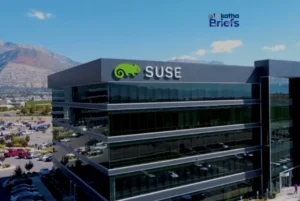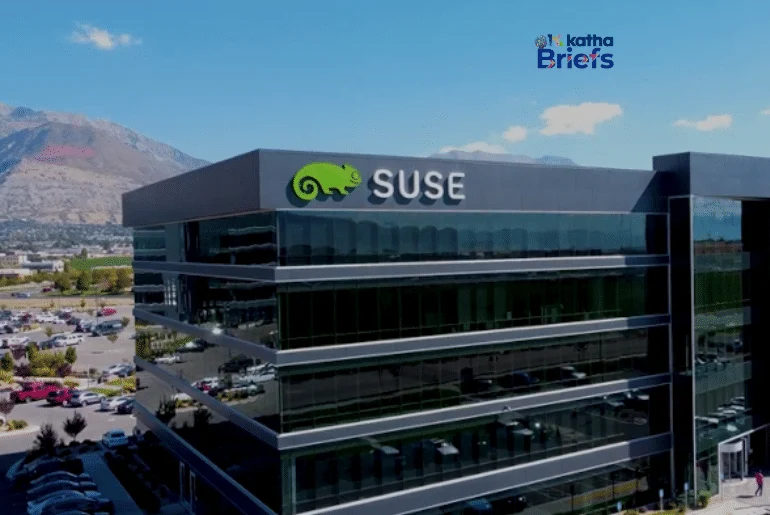
Open-source software company SUSE is implementing a significant global workforce reduction, affecting approximately 10 per cent of its employees, with artificial intelligence (AI) and automation identified as pivotal forces driving this restructuring. This strategic realignment is projected to impact around 190 individuals, based on the company’s estimated global workforce of 1,900. The decision, communicated internally by CEO Dirk-Peter van Leeuwen on Monday, November 2, 2026, underscores a broader industry trend where technological advancements are reshaping operational paradigms and staffing requirements within the software sector.
The leadership team has explicitly linked this decision to the evolving operational landscape for software companies. According to reports from The Register, automation, particularly advanced AI-driven automation tools, is enabling teams to manage substantially larger workloads with a reduced number of employees. This paradigm shift necessitates a re-evaluation of traditional roles and organizational structures, prompting SUSE to optimize its talent allocation in alignment with these new efficiencies.
The Strategic Imperative: AI and Automation in Software Development
The integration of artificial intelligence and automation into the software development lifecycle, from coding assistance and quality assurance to deployment and infrastructure management, has reached a critical inflection point. AI-powered tools are increasingly capable of automating repetitive tasks, identifying errors, and even generating code snippets, thereby significantly boosting developer productivity. This surge in efficiency allows companies to achieve output levels that previously required larger teams, fundamentally altering the economics of software production. For SUSE, a company deeply rooted in enterprise Linux and open-source solutions, embracing these technologies is not merely an option but a strategic imperative to maintain competitiveness and innovate at an accelerated pace. The shift reflects a proactive move to leverage technological advancements to streamline operations, enhance product delivery, and focus human capital on higher-value, more complex tasks requiring critical thinking and creativity.
SUSE’s Operational Realignment and Investment Focus
The restructuring initiative extends beyond simple job cuts, encompassing a comprehensive reassessment of roles and organizational priorities. While SUSE has maintained discretion regarding the specific functions or geographical locations that will bear the brunt of these changes, the company has indicated that certain existing roles have become less relevant due to the rapid evolution of technology and operating models. This suggests a strategic pivot away from areas susceptible to automation and towards functions that directly contribute to SUSE’s future growth engines. Furthermore, the company anticipates that other positions will undergo significant transformation in their scope and responsibilities over the coming years, requiring employees to adapt and acquire new skill sets.
Concurrently with the workforce reduction, SUSE is strategically redirecting its investments. Capital and resources are being channeled into areas deemed critical for future growth, while activities in lower-priority segments are being scaled back. This dual approach of optimizing human resources and reallocating financial capital is designed to bolster SUSE’s position in key emerging markets and technologies, such as advanced cloud-native solutions, edge computing, and specialized AI integrations within its product portfolio. This refocusing is crucial for an enterprise open-source provider navigating a landscape increasingly dominated by hyperscalers and sophisticated cloud offerings.
Chronology of Restructuring Efforts
The current wave of involuntary redundancies follows a preceding attempt by SUSE to manage its workforce size through voluntary means.
- September 2026: SUSE offered a voluntary exit program to long-serving employees. This initiative aimed to facilitate a graceful transition for veteran staff while allowing the company to adjust its headcount. However, reports indicate that this program did not achieve the desired level of participation, prompting the company to proceed with involuntary redundancies. This suggests a pressing need for workforce adjustment that could not be met through voluntary measures alone.
- Monday, November 2, 2026: CEO Dirk-Peter van Leeuwen formally announced the global workforce reduction in an internal communication to employees. This marked the official commencement of the involuntary restructuring process.
- Wednesday, November 4, 2026: Individual notifications are expected to be sent to the affected employees. This critical step initiates the personal impact phase of the restructuring, providing clarity to those whose roles are being eliminated.
- Early Next Week (Following November 4): One-to-one meetings are scheduled to begin, allowing for direct communication with affected individuals regarding their specific situations, severance packages, and support resources. These meetings will be complemented by consultations with employee representatives, ensuring that due process and employee rights are upheld in accordance with local labor laws and company policies.
- Monday, November 16, 2026: The remaining workforce is slated to receive an update on SUSE’s fiscal year 2027 strategy. This session is crucial for maintaining morale, providing clarity on the company’s future direction, and reassuring employees about their roles in the evolving organization. It will likely detail the strategic shifts, new investment areas, and the expected benefits of the restructuring.
Background on SUSE: A Legacy in Open Source
SUSE, founded in Germany in 1992, boasts a rich history as a pioneer in the open-source software movement, particularly with its enterprise-grade Linux distributions. Initially known for its German-language Linux distribution, SUSE quickly evolved to become a global player, providing robust, scalable, and secure operating systems and cloud solutions for enterprise customers worldwide. Its flagship product, SUSE Linux Enterprise Server (SLES), has been a cornerstone for mission-critical workloads across various industries.
Over its three-decade history, SUSE has undergone several ownership changes, each impacting its strategic direction. It was acquired by Attachmate in 2011, which was subsequently acquired by Micro Focus in 2014. Under Micro Focus, SUSE maintained a degree of autonomy, continuing to develop its core Linux and open-source portfolio. A significant shift occurred in 2018 when Swedish private equity firm EQT Partners acquired SUSE from Micro Focus for $2.5 billion, signaling a renewed focus on independent growth and market expansion. EQT then took SUSE public on the Frankfurt Stock Exchange in 2021, only to delist it again in late 2023, returning it to private ownership. This return to private status under EQT provides SUSE with greater flexibility to make long-term strategic decisions, including significant restructuring efforts, without the immediate pressures of quarterly public market reporting.
SUSE’s product portfolio has expanded significantly beyond its core Linux offerings to include a comprehensive suite of cloud-native, container management, and edge computing solutions, most notably through its acquisition of Rancher Labs in 2020. This diversification positions SUSE as a critical provider for companies navigating complex hybrid cloud environments and adopting DevOps practices. The company has operations across numerous countries, including a significant presence in India, although the precise geographical distribution of the current job cuts remains undisclosed.
The Broader Industry Context: AI’s Impact on Tech Employment
SUSE’s decision is not an isolated incident but rather a potent illustration of a growing challenge and transformation within the technology sector. The adoption of AI is rapidly moving beyond experimental phases, permeating core business functions and profoundly influencing organizational structures across the industry. Recent years have seen a broader trend of tech layoffs, often attributed to economic downturns, over-hiring during the pandemic boom, and a general recalibration of growth expectations. However, SUSE’s explicit mention of AI and automation as key drivers adds a distinct dimension to this trend.
Industry analysts have been increasingly vocal about the "future of work" in an AI-dominated landscape. Reports from leading research firms suggest that generative AI, in particular, has the potential to automate significant portions of knowledge work, including tasks traditionally performed by software engineers, quality assurance testers, and IT operations staff. While this doesn’t necessarily mean a wholesale replacement of human workers, it mandates a dramatic shift in skill requirements. Roles that involve repetitive coding, routine maintenance, or data entry are becoming increasingly susceptible to automation, while demand for roles focused on AI model training, prompt engineering, complex system design, ethical AI implementation, and human-AI collaboration is surging.
This shift presents a dual challenge: companies must strategically invest in AI capabilities to remain competitive, and employees must adapt their skill sets to remain relevant. The "do more with less" paradigm, enabled by AI, allows companies to reallocate resources from operational overhead to innovation, but it inevitably leads to a re-evaluation of workforce size and composition.
Implications for the Workforce and the Sector
The implications of SUSE’s restructuring, driven by AI, are far-reaching for both the affected employees and the broader tech sector. For the approximately 190 individuals facing redundancy, the immediate challenge will be navigating a job market that is itself undergoing rapid transformation. While severance packages and outplacement support are typically provided in such situations, the underlying message is clear: continuous learning and adaptation are no longer optional but essential for career longevity in tech.
For the remaining workforce at SUSE, the expectation will be to embrace new tools and methodologies, potentially taking on expanded responsibilities as automation handles routine tasks. This necessitates significant upskilling and reskilling initiatives from the company to ensure its talent base can effectively leverage AI and automation to drive innovation and efficiency.
More broadly, SUSE’s move serves as a stark reminder to the entire technology industry that the impact of AI on employment is real and accelerating. Companies will increasingly face the strategic decision of where to invest in automation and which human capabilities require greater emphasis. This will likely lead to further restructurings across the sector as organizations strive to build leaner, more agile, and AI-enabled teams. The focus will shift from simply adding headcount to strategically augmenting human capabilities with intelligent systems.
SUSE’s Vision for Future Growth
By redirecting investments, SUSE aims to solidify its market position and capitalize on burgeoning opportunities. Key areas of intensified focus are likely to include:
- Cloud-Native Technologies: Further enhancing its Rancher portfolio for Kubernetes management, encompassing multi-cloud and hybrid-cloud deployments, critical for modern enterprise IT.
- Edge Computing: Developing solutions that extend the power of open source and containerization to the network edge, catering to the growing demands of IoT, 5G, and distributed applications.
- AI/ML Integration: Integrating AI and machine learning capabilities directly into its enterprise Linux and cloud management platforms, offering smarter automation, predictive analytics, and enhanced security features.
- Open Source Security: Investing in advanced security features and compliance frameworks for its open-source offerings, addressing the increasing complexity and threat landscape in enterprise environments.
- Vertical Market Specialization: Potentially tailoring its solutions more specifically for high-growth vertical markets such as automotive, telecommunications, or manufacturing, where open-source and edge solutions are gaining traction.
These strategic pivots are intended to position SUSE as an indispensable partner for enterprises navigating digital transformation, ensuring its long-term relevance and growth in a highly competitive market.
Market and Analyst Reactions (Inferred)
While official market reactions are yet to unfold, industry analysts would likely interpret SUSE’s restructuring as a pragmatic and forward-looking strategic realignment. Such moves, particularly from a company recently returned to private ownership under EQT, are often seen as necessary steps to improve operational efficiency, optimize cost structures, and sharpen strategic focus away from immediate public market pressures. Analysts would likely commend the company for proactively addressing the impact of AI and automation rather than reacting to competitive pressures later. The success of this strategy, however, will hinge on SUSE’s ability to effectively execute its investment redirection and foster innovation with a leaner, more focused workforce. The market will be watching for tangible results in product development, customer acquisition, and financial performance in the coming fiscal year.
In conclusion, SUSE’s decision to reduce its global workforce, explicitly attributing the move to the transformative impact of AI and automation, serves as a significant bellwether for the technology industry. It highlights a critical juncture where efficiency gains driven by advanced technology are fundamentally reshaping organizational structures and employment dynamics. For SUSE, this is a calculated strategic maneuver aimed at optimizing resources, accelerating innovation, and fortifying its competitive standing in an ever-evolving digital landscape. For the broader tech workforce, it underscores the urgent imperative for continuous adaptation and skill development in an era where AI is not just a tool, but a determinant of future work.