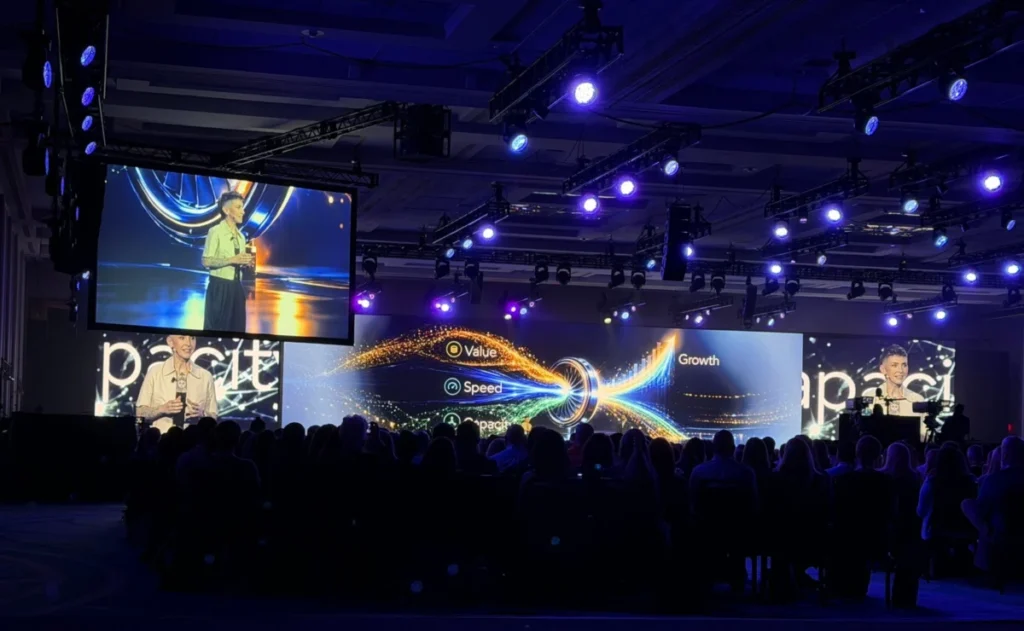
The third day of the Gartner HR Symposium/Xpo 2023 in Orlando, Florida, was marked by a palpable shift in attendee sentiment. A collective exhale, followed by audible cheers, erupted when a session moderator announced that the upcoming discussion would not be about Artificial Intelligence. This reaction, far from signaling a rejection of technological advancement, underscored a growing desire among HR professionals to move beyond the buzzwords and delve into the more fundamental, human aspects of the evolving workplace. The symposium, held annually and considered a premier event for HR leaders and practitioners, provided a critical platform for exploring the challenges and opportunities shaping the future of work. This year, the overwhelming focus on AI, while unavoidable, seemed to have fostered a sense of fatigue, prompting a deeper exploration of the employee experience, engagement, performance, development, and recognition—themes that, though not always explicitly named, permeated nearly every conversation.
The relentless pace of change, coupled with mounting pressure for increased productivity and output, has left HR teams, managers, and employees grappling with a state of continuous adaptation. The symposium, therefore, served as a vital barometer for understanding where the industry is headed and what truly matters for organizational success in this dynamic landscape. This report distills five key takeaways from the event, offering insights into how organizations can navigate the complexities of modern work and foster environments where employees can not only function but thrive.
The True Value of AI: Moving Beyond Time Saved to Value Created
A central theme at the Gartner HR Symposium/Xpo 2023, echoing through keynotes and breakout sessions alike, was the nuanced understanding of Artificial Intelligence’s impact on productivity. The opening keynote, presented by CV Viverito and Arj Bagga, titled "Productivity Isn’t the Prize—Expanding What’s Possible for Your Organization," directly addressed the common promise that AI will automate routine tasks, freeing up human capital for strategic initiatives, innovation, and enhanced customer experiences. However, the presenters cautioned that this transition is far from automatic.
The time saved by AI implementation does not inherently translate into value creation. Instead, this freed-up capacity can easily be absorbed by an increase in administrative tasks, such as email communication, more meetings, or simply the next item on an ever-growing to-do list. The critical question, as highlighted in the symposium, is who is strategically directing this newfound capacity.
Gartner’s research paints a stark picture of the potential pitfalls. A significant statistic revealed that 97% of organizations are unable to achieve their desired cost savings solely through productivity gains. Furthermore, Gartner predicts a concerning trend: 30% of employees who are terminated and replaced by AI are likely to be rehired by 2029, often at a higher cost to the organization. This data points to a significant sequencing problem: many organizations are making hasty workforce decisions, such as role eliminations, before they have fundamentally redesigned the work itself to leverage AI effectively.
The keynote provided a crucial framework for prioritizing AI implementation and workforce planning. The recommended order of operations is: Value, Speed, and then Capacity.
- Start with Value: Organizations should concentrate AI investments where they can deliver the most significant strategic impact. This requires a deep understanding of business objectives and identifying areas where AI can drive the greatest differentiation.
- Build for Speed: Once value drivers are identified, the focus shifts to shortening the cycle time between identifying a business problem and implementing a more effective solution. This involves empowering individuals closest to the work to participate in the redesign process, testing focused solutions, and iterating based on learnings.
- Decide How to Use New Capacity: Only after the first two steps are addressed should organizations determine how to best utilize the capacity created by AI. This strategic deployment is crucial for ensuring that AI’s benefits extend beyond mere efficiency to drive tangible organizational growth and innovation.
Ultimately, while AI may generate capacity, it is the strategic decisions of leadership that determine whether this capacity translates into accelerated growth and enhanced organizational capabilities. The implication is clear: a thoughtful, phased approach to AI integration, prioritizing strategic value over immediate cost savings, is essential for long-term success.
The Imperative of Connected Data for Strategic Talent Decisions
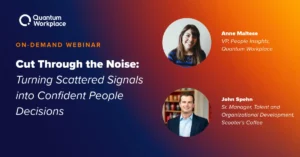
In an increasingly complex talent landscape, HR leaders and managers are tasked with making critical decisions about hiring, promotion, and development. However, these decisions are often hampered by fragmented data. A session co-led by Quantum Workplace and Scooter’s Coffee, titled "Cut Through the Noise: Turning Scattered Signals into Confident People Decisions," illustrated this challenge with a compelling scenario.
Consider the case of filling a critical leadership role. Typically, leaders might gravitate towards a candidate with a stronger performance history, longer tenure, and completion of formal leadership programs. This candidate appears to be the "safe" choice. However, when additional signals are considered—such as peer feedback, recognition received, and engagement survey data—the picture can change dramatically. The scenario presented a second candidate, with less formal experience but who demonstrably exhibits strong leadership qualities through peer trust, knowledge sharing, and a positive impact on team retention. This individual, though less experienced on paper, might be the more effective choice.
The core issue identified is that most organizations possess these crucial "signals" but they reside in disparate systems, failing to reach the decision-makers in a cohesive manner. This data siloing forces leaders to rely on the most readily accessible information, rather than the most insightful.
Scooter’s Coffee provided a practical example of overcoming this challenge. By integrating data from employee surveys, talent reviews, and retention risk assessments, their leaders gained a more holistic understanding of their talent pool. This enabled them to focus development efforts on critical areas and respond proactively to concerns arising from organizational restructuring.
The overarching takeaway from this session is the importance of starting with the decision, not the data. By adopting a more connected approach, organizations can begin by identifying a specific talent decision they are struggling to make. Platforms like Quantum Workplace can then be leveraged to aggregate relevant signals across various systems, providing a more complete view. While human interpretation and judgment remain vital, a consolidated data landscape empowers leaders to make more informed, timely, and effective talent decisions, ultimately leading to better outcomes. This approach emphasizes that a richer, more connected picture of talent is not just about data aggregation; it’s about enabling better judgment and driving the right actions at the opportune moment.
Redefining Performance in the Age of Evolving Workflows
The traditional performance management process, even when executed efficiently with high participation rates, can often fall short of its ultimate goal: improving actual performance. The mere completion of performance reviews, while indicative of process adherence, does not necessarily guarantee clearer priorities, more impactful feedback, or enhanced team effectiveness. This was a key point of discussion at the Gartner HR Symposium/Xpo 2023.
High performance, it was argued, must now encompass a more comprehensive set of criteria, moving beyond sole reliance on output. Three critical components were emphasized:
- Output: The tangible results and deliverables produced.
- Collaboration: The ability to work effectively with others, fostering teamwork and shared success.
- Innovation: The capacity to generate new ideas, approaches, and solutions.
A strong individual output, while valuable, does not tell the entire story. An employee might achieve impressive results but do so by alienating colleagues, disregarding valuable input, or creating additional work for others. Therefore, collaboration and innovation must be integrated into the definition of what constitutes high performance. Rewarding only output can inadvertently discourage the very behaviors that organizations aim to cultivate.
The increasing prevalence of AI further underscores the need to redefine high performance. With AI tools making it easier to produce large volumes of polished work, leaders must clarify the underlying quality standards. This involves asking critical questions: Is the AI-generated output accurate? Can the employee articulate and defend it? Does it address the root problem effectively? Is it genuinely useful to the intended recipients?
Consequently, the methods used to measure performance must evolve in parallel with its redefined definition. This includes:
- Incorporating peer and 360-degree feedback: To capture collaborative efforts and team dynamics.
- Evaluating the impact of innovation: Recognizing contributions to new ideas and process improvements.
- Assessing problem-solving skills: Beyond just task completion, focusing on how challenges are addressed.
- Tracking learning and development: Recognizing an individual’s commitment to acquiring new skills and knowledge.
In essence, performance criteria and processes should actively guide individuals toward understanding what truly matters, making better decisions, and driving tangible improvements. If a performance system fails to achieve these outcomes, its timely completion becomes a hollow victory. This shift necessitates a move towards a more holistic and qualitative assessment of performance, acknowledging that sustained success is a product of both individual contribution and collaborative effectiveness.
Building and Protecting Critical Skills in a Rapidly Changing Environment
The skills landscape is undergoing a profound transformation, with the competencies required for success today looking vastly different from those of even a few years ago. Roles are evolving, AI is fundamentally reshaping how work is performed, and employees are increasingly expected to navigate ambiguity, new technologies, vast amounts of information, and cross-functional collaboration. This dynamic environment was a focal point at the Gartner HR Symposium/Xpo 2023.
Gartner research indicates that the number of skills required for the average job is growing at an annual rate of 4.8%. More strikingly, a substantial 34% of the skills relevant in 2025 are projected to be obsolete by 2030. This presents a significant challenge: how do organizations identify and prioritize the emerging skills that are crucial for their future success, while also safeguarding existing skills that remain vital?
The symposium suggested that attempting to catalog every conceivable skill is an unwieldy and often ineffective approach. A more strategic starting point lies in aligning skill development with the organization’s overarching strategy. By understanding what the organization aims to achieve, HR leaders can then identify the core skills—both technical and human—that will be instrumental in realizing those objectives. These are the skills that should be prioritized in hiring, development programs, talent reviews, and workforce planning initiatives.
Gartner highlighted three interconnected skill sets that are becoming increasingly critical for organizations to cultivate:
- AI Fluency: The ability to effectively leverage and interact with AI tools and technologies.
- Human Skills: These encompass critical thinking, problem-solving, creativity, emotional intelligence, communication, and adaptability.
- Contextual Understanding: The capacity to apply knowledge and skills within specific organizational and industry contexts, informed by relationships and judgment.
Technology, particularly AI, becomes exponentially more valuable when complemented by the human elements of context, relationships, and sound judgment. Therefore, investing in these human skills should receive the same deliberate attention as developing AI proficiency.
Furthermore, organizations must actively protect the experiential learning opportunities that are essential for building key skills. Certain routine tasks, while potentially automatable, provide valuable repetition that enables individuals to recognize patterns, identify potential problems, and develop robust judgment. The opening keynote offered a poignant caution: "As AI takes work away, we have to make sure it doesn’t take the learning with it."
Before automating any task, organizations should ask:
- What critical learning or skill development might be lost?
- Is there a viable alternative way to preserve this learning opportunity?
- Can this learning be integrated into other aspects of the role or team’s work?
A robust skills strategy is one that makes deliberate choices about what to build, what to protect, and what can be safely phased out—all grounded in the organization’s strategic vision and the value it aims to create. This proactive and strategic approach to skills development is crucial for ensuring long-term organizational resilience and competitive advantage.
Empowering Managers: The Need for Multi-faceted Support Systems
Managers were consistently at the forefront of discussions at the Gartner HR Symposium/Xpo 2023. They are the critical link between organizational strategy and daily execution, tasked with translating directives, stabilizing anxious teams, coaching new behaviors, recognizing achievements, and helping employees find their footing amidst constant change. The symposium underscored that the demands placed upon managers are escalating at an unprecedented pace.
The average employee now experiences approximately 22 enterprise-wide changes annually, a significant increase from 10 changes in 2022, according to Gartner. This means managers are guiding their teams through more than double the amount of disruption while simultaneously being expected to maintain performance levels. It is unsurprising, therefore, that 79% of Chief Human Resource Officers (CHROs) report that managers are feeling overwhelmed.
This pressure is not confined to managers alone. HR teams and employees are also absorbing continuous change while facing persistent demands to enhance productivity. At this accelerated pace, individuals have diminishing opportunities to process new expectations, adapt thoughtfully, and sustain their performance over time.
Compounding these challenges, managers often absorb the friction generated by systemic issues elsewhere in the organization. Competing priorities, outdated policies, communication breakdowns, and inconsistent role modeling frequently originate at higher organizational levels. While a manager can excel at active listening and clear communication, they cannot effectively coach a team around every inherent systemic problem.
Consequently, support for managers must be multi-faceted, originating from several key sources:
- Senior Leadership: Providing clear direction, consistent messaging, and visible commitment to the changes being implemented.
- Peers: Offering a network for sharing best practices, challenges, and mutual support among fellow managers.
- Systems and Processes: Ensuring that HR systems, performance management tools, and communication channels are aligned and supportive of managerial responsibilities.
With this comprehensive support structure in place, managers can better focus on the unique aspects of their role: acknowledging employee concerns, communicating known information transparently, articulating the rationale behind change, and breaking down next steps into manageable actions. Crucially, they also require a clear channel for escalating issues that lie beyond their direct control.
The fundamental implication is that managers serve as the nexus where leadership decisions translate into daily employee experiences. If senior leaders expect managers to champion change, they must also take ownership of the conditions and support systems that enable managers to lead effectively through it. This collaborative approach is vital for fostering resilient teams and driving sustainable organizational success in an era of perpetual transformation.
The Human Contribution: The Engine of Value in a Tech-Driven World
As the Gartner HR Symposium/Xpo 2023 drew to a close, a unifying message emerged: the human contribution is not merely what remains after technology has fulfilled its role; rather, it is the essential ingredient that transforms technological capabilities into tangible organizational value. Judgment, context, creativity, connection, and a willingness to take ownership of decisions are the uniquely human attributes that drive progress.
While technology can effectively aggregate information, reduce friction in processes, and enhance the accessibility of support resources, it is human expertise that imbues this information with meaning, prioritizes what is most important, and determines the optimal course of action.
The opportunity for HR departments lies in bridging this divide—effectively integrating technology with human capabilities. This involves empowering leaders to make more informed people decisions and to implement strategies that foster environments where teams can not only adapt but truly thrive. By recognizing and nurturing the indispensable human element, organizations can harness the full potential of both their technology and their workforce, paving the way for sustained innovation and success.